
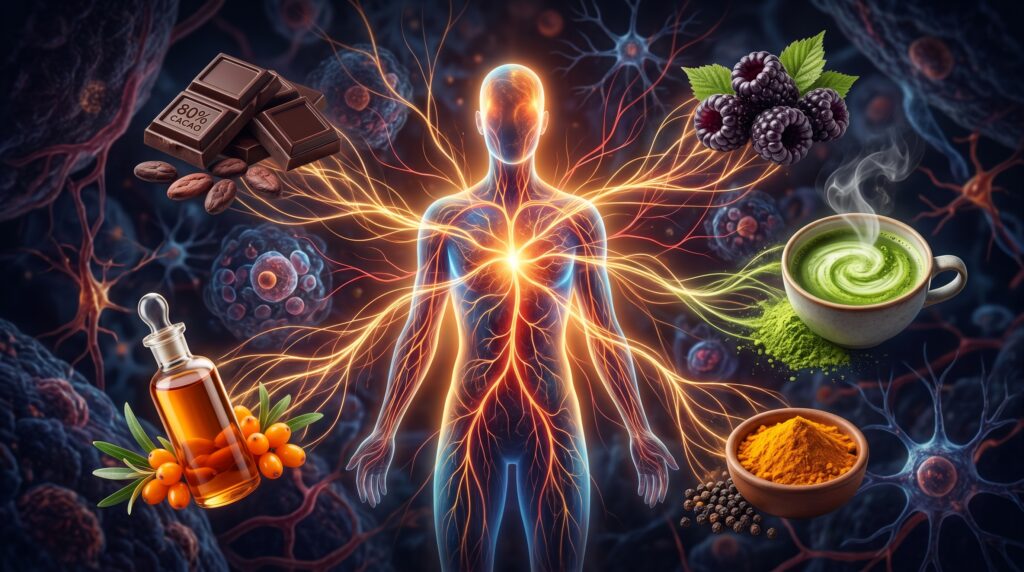
It’s a fascinating time to be looking at how we eat. For years, we’ve talked about food in terms of calories, vitamins, or “good vs. bad” fats. But there is a much deeper conversation happening under the hood—specifically, how certain molecules in our diet act as a biological “calling card” for our body’s internal repair crew: stem cells.
Think of your stem cells as a specialized team of first responders. They live in your bone marrow, waiting for a signal that an organ or a blood vessel needs a literal patch job. As we get older, that team can get a little sluggish. They don’t mobilize as quickly, and they don’t show up in the same numbers they did when we were twenty.
However, recent breakthrough research in angiogenesis and regenerative medicine has shown that certain foods contain bioactives that actively trigger stem cell release into the bloodstream—sometimes doubling their numbers in a matter of hours.
Here are five foods that act like a hive-call for your body’s regenerative system.
Several of these foods work by feeding the microbiome first. See the gut-brain-skin axis.
1. Dark Chocolate (80%+ Cacao): A Sweet Way to Trigger Stem Cell Release
We’ve all heard that dark chocolate is “healthy,” but the why is usually buried in vague talk about antioxidants. The real magic lies in flavanols.
A landmark study conducted at the University of California, San Francisco, looked at patients with established coronary artery disease. They gave one group hot cocoa with a high concentration of cacao flavanols and another group a low-flavanol version.
The results were stunning: the high-flavanol group saw their levels of circulating angiogenic cells—the specific stem cells that repair blood vessels—literally double in just thirty days.
I remember talking to a colleague who was skeptical about “superfoods.” He’d spent decades on statins and blood pressure meds. When we looked at the data on cacao, he started incorporating a small piece of 80% dark chocolate into his nightly routine. Within weeks, his circulation markers improved, but more importantly, his energy levels spiked. That’s the stem cells at work.
2. Black Raspberries: The Crimson Repair Kit
While many berries are good for you, black raspberries are in a league of their own. They are packed with ellagitannins and anthocyanins, which give them that deep, almost ink-like color.
In clinical trials, researchers found that consuming black raspberries significantly increases the mobilization of endothelial progenitor cells. In plain English: these berries tell your bone marrow to release the specific stem cells responsible for repairing the lining of your heart and arteries.
In my own garden, I’ve always preferred growing these over the standard red variety. They are tarter and stain your fingers, but knowing that those pigments are actively signaling my body to renew its vascular lining makes every handful feel like a concentrated dose of medicine.
3. Green Tea: The EPC Trigger
Green tea is perhaps the most studied beverage in history, but its impact on stem cells is a newer frontier. The primary bioactive here is EGCG (epigallocatechin gallate).
A study published in the Journal of Biological Chemistry demonstrated that green tea doesn’t just protect cells from damage; it actually increases the number of Endothelial Progenitor Cells (EPCs) in the blood. EPCs are the “scouts” that find damaged tissue and begin the process of building new blood vessels.
If you’ve ever felt that specific “clean” energy after a cup of high-quality Sencha or Matcha, you aren’t just feeling the caffeine. You’re feeling a systemic “check-up” where your stem cells are being recruited to go where they are needed most.
For more on natural ways to boost cellular health, check out our guide on anti-inflammatory foods (internal link example).
4. Turmeric (Curcumin): The Brain’s Best Friend
Most people take turmeric for joint pain, but its most profound effect might be in the brain. Curcumin, the active compound in turmeric, has been shown to stimulate neural stem cells.
In lab settings, curcumin promotes the “differentiation” of these cells, meaning it helps them turn into fully functioning neurons. This is vital for maintaining cognitive health as we age.
I once worked with a patient who was terrified of the “brain fog” that seemed to run in his family. We focused on a diet rich in turmeric (always paired with black pepper to help with absorption). Over time, he reported a clarity of thought he hadn’t felt in years. The science suggests his brain was better equipped to repair its own neural pathways because those stem cells were being activated.
5. Squid Ink and Sea Buckthorn: The Wildcard That Triggers Stem Cell Release
This is the “wildcard,” but the science is robust. Certain compounds found in squid ink and berries like sea buckthorn contain unique fatty acids and bioactives that trigger a systemic release of stem cells.
Sea buckthorn, in particular, contains a medicinal oil that has been shown to increase the circulation of three different types of stem cells. It’s an ancient remedy that modern science is finally catching up to. It essentially “pokes the hive,” ensuring that the repair team isn’t just sitting in the marrow, but is actually out in the field fixing damaged organs.
How to Make It Work for You
You don’t need to overhaul your entire life overnight. Regenerative eating is about consistency.
- The Chocolate Habit: Aim for 70% cacao or higher. Two squares a day is the therapeutic dose used in many studies.
- The Berry Boost: Keep black raspberries (or blackberries as a secondary option) in the freezer for morning smoothies.
- The Tea Ritual: Swap one of your daily coffees for a high-quality green tea.
By choosing these foods, you aren’t just eating; you are communicating with your biology. You are telling your body that you have the resources available to rebuild, repair, and renew.
FAQ
Q: Can I just take a supplement instead of eating these foods?
A: While supplements can help, “food synergy” is real. In dark chocolate, the flavanols work alongside fiber and minerals. The body often recognizes these bioactives more efficiently when they come in their natural packaging.
Q: How long does it take to see results in my stem cell count?
A: Remarkably, some studies show stem cell mobilization starts within hours. However, for the “doubling” effect seen in heart patients, it usually takes about 30 days of consistent daily intake.
Q: Is there such a thing as “too much” dark chocolate?
A: Yes. Stick to 1–2 ounces of high-cacao (80%+) chocolate to get the benefits without excess sugar and calories.
Q: Does it matter if the berries are frozen?
A: Not at all. Freezing can sometimes break down cell walls, making the bioactives even more bioavailable.
Q: Will this cure a damaged organ?
A: Diet is a powerful tool for repair and maintenance, but it is part of a larger ecosystem of health. These foods help your body do what it was designed to do: heal itself.

Julian Vance is the writer and editor behind RegenStep, translating peer-reviewed longevity, metabolic, and gut-health research into practical, actionable guides. Julian is not a licensed physician; content is reviewed against cited primary sources and is for informational purposes only. Always consult a qualified healthcare provider for personal medical advice.