
An American passenger who was exposed to the Andes strain of hantavirus on the cruise ship HV Hondius has expressed feeling “blindsided” and “misled” following a sudden shift in federal quarantine protocols.
The passengers had originally expected to be released to complete their 42‑day quarantine at home under the monitoring of local health departments. One passenger even had a legal order from his local health department prepared, which would have allowed him to isolate in a guest house on his parents’ property.
However, in a hastily arranged video call, the CDC informed the 18 American passengers that they are now under a mandatory federal order to remain at the National Quarantine Center in Nebraska until May 31. The new mandate, signed by Dr. Jay Bhattacharya, head of the CDC and NIH, was issued after three international passengers (from Spain, France, and Canada) tested positive for the virus shortly after disembarking the ship on May 10.
The passengers have expressed deep frustration over the lack of communication and the restrictive conditions of the federal facility, where they are confined to small rooms without outdoor access. Some plan to legally challenge the order, arguing they pose no public risk and would strictly adhere to home quarantine guidelines.
The decision has also drawn criticism from some public health experts. Dr. Ali S. Khan, dean of the School of Public Health at the University of Nebraska Medical Center, argued that the sudden mandate sows public mistrust and is inconsistent with how other hantavirus exposures in the U.S. have been handled via home monitoring.
The outbreak on the Dutch‑flagged HV Hondius has resulted in at least three deaths and several confirmed infections. The Andes strain of the hantavirus is particularly concerning to health officials because, unlike most hantaviruses, it is capable of rare human‑to‑human transmission.
External Links:
– CDC Hantavirus Information Page
– WHO Hantavirus Fact Sheet
What Is Hantavirus? A Scientific Overview
Hantaviruses are a family of viruses spread mainly by rodents. They can cause two serious illnesses in humans:
- Hantavirus Pulmonary Syndrome (HPS) – common in the Americas, affects the lungs and can be fatal.
- Hemorrhagic Fever with Renal Syndrome (HFRS) – more common in Europe and Asia, affects the kidneys.
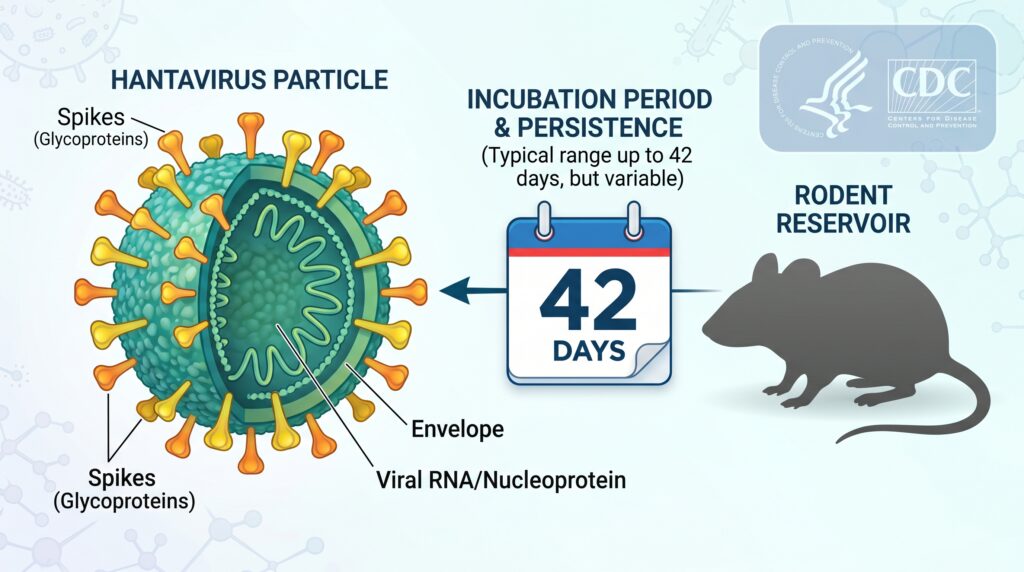
The current outbreak involves the Andes strain (Andes virus, ANDV), which is found in South America and is carried by wild rodents, particularly the long‑tailed pygmy rice rat (Oligoryzomys longicaudatus).
Why the Andes Strain Is Different
Most hantaviruses are transmitted to humans only through rodent excretions (urine, droppings, saliva) – via inhalation of aerosolized particles, direct contact, or (rarely) bites. Human‑to‑human transmission is extremely rare for most strains.
However, the Andes virus is the only hantavirus consistently documented to spread from person to person – through close contact with an infected individual during the acute phase of illness. This is why health officials treat Andes virus exposures with extra caution.
How Is Hantavirus Transmitted?
| Route | Details |
|---|---|
| Inhalation (most common) | Breathing in virus particles from dried rodent urine, droppings, or nesting materials that have become airborne (e.g., during cleaning). |
| Direct contact | Touching the mouth, nose, or eyes after handling contaminated materials. |
| Bite | Very rare, but infected rodents can transmit the virus through a bite. |
| Human‑to‑human | Only documented for Andes virus (close contact with an ill person, likely through respiratory droplets or bodily fluids). Not seen in other hantavirus strains. |
The incubation period for hantavirus is typically 1 to 8 weeks, but can range from a few days to 42 days – hence the 42‑day quarantine for exposed individuals.
Symptoms of Hantavirus Pulmonary Syndrome (HPS)
HPS progresses through two distinct phases:
Early Phase (1–7 days) – often mistaken for flu or COVID‑19:
- Fever, chills
- Muscle aches (especially large muscle groups – thighs, hips, back, shoulders)
- Headache, dizziness
- Nausea, vomiting, diarrhea
- Fatigue
Late Phase (sudden worsening – respiratory distress):
- Coughing and shortness of breath
- Rapid heart rate and low blood pressure
- Fluid accumulation in the lungs (pulmonary edema)
- Severe respiratory failure
Without prompt intensive care, HPS has a mortality rate of 30% to 50%. Early recognition is critical – there is no specific antiviral treatment, but supportive care (oxygen, mechanical ventilation) can save lives.
Internal Link: Chronic inflammation can make many infections worse. For strategies to support your immune system naturally, see our guide on Anti‑Angiogenic Foods for Disease Defense .
Why the 42‑Day Quarantine? CDC’s Rationale
The CDC’s decision to keep exposed passengers at a federal quarantine facility rather than allowing home isolation rests on three key factors:
- Andes strain human‑to‑human transmission – a unique risk not present with other hantaviruses. Home quarantine would require other household members to also isolate, or risk secondary spread.
- Long incubation period (up to 42 days) – exposed individuals must be monitored for the full window. The Nebraska facility provides daily medical checks and rapid isolation if symptoms develop.
- Three international passengers tested positive after disembarkation – indicates active transmission on the ship and a higher viral load environment than initially understood.
Dr. Ali S. Khan and others argue that home monitoring with strict protocols has worked for previous hantavirus exposures. However, the CDC maintains that the unpredictability of Andes virus human transmission justifies federal oversight.
How to Protect Yourself: Hantavirus Prevention
If you live in or travel to areas where hantavirus‑carrying rodents are common (rural South America, western United States, parts of Europe and Asia), follow these precautions:
In Homes, Cabins, or Camping Sites:
- Seal up holes and gaps where rodents can enter.
- Trap rodents safely (use snap traps, not glue traps – avoid creating stress that releases aerosols).
- Clean carefully:
- Ventilate the area for 30 minutes before cleaning.
- Wear rubber gloves and a N95 mask.
- Do not sweep or vacuum – this aerosolizes virus particles. Instead, wet surfaces with a bleach solution (1 part bleach to 9 parts water) and wipe up with paper towels.
- Dispose of contaminated materials in sealed plastic bags.
On Cruise Ships or Group Travel:
- Report any rodent sightings or droppings to crew immediately.
- Avoid direct contact with wild animals, including rodents.
- Wash hands frequently with soap and water.
After Possible Exposure:
- Monitor for fever, muscle aches, or shortness of breath for 42 days.
- Seek medical care immediately if symptoms develop – mention your potential exposure.
- If you are placed under quarantine, cooperate with health officials; home quarantine may be allowed if no human‑to‑human strain is involved.
Internal Link: Supporting your immune system through nutrition is always wise. For natural ways to reduce inflammation and support cellular health, read The Modern Blue Zones Blueprint .
FAQ: Hantavirus and the HV Hondius Outbreak
Q: Can hantavirus be treated?
A: There is no specific antiviral cure for hantavirus. Treatment is supportive: intensive care, oxygen, mechanical ventilation, and fluid management. Early hospitalization dramatically improves survival.
Q: Why did the CDC change the quarantine rules so suddenly?
A: The discovery of three additional positive cases among international passengers after disembarkation indicated that the virus may be spreading more easily than initially thought. The federal order ensures consistent monitoring and immediate access to medical care.
Q: Is there a vaccine for hantavirus?
A: No. There is no FDA‑approved vaccine for hantavirus in the U.S. Some experimental vaccines exist in other countries, but none are widely available.
Q: Should I be worried about hantavirus in my daily life?
A: The risk to the general public remains extremely low. Most hantavirus infections occur in rural areas with high rodent populations. The current outbreak is isolated to a cruise ship in international waters.
Q: Can my pet get hantavirus?
A: Dogs and cats are not known to develop hantavirus disease, but they can bring infected rodents into the home. Keep pets leashed in rodent‑prone areas and avoid hunting behaviors.
Q: How long does the virus survive outside a host?
A: Hantavirus can survive for several hours to days in dried rodent droppings or urine, depending on temperature and humidity. This is why wet cleaning with disinfectant is essential.
Final Thoughts: Balancing Public Safety and Individual Rights
The HV Hondius outbreak highlights a recurring tension in public health: when does the risk of a rare, transmissible pathogen justify overriding personal liberty? For the 18 American passengers, the sudden shift to federal quarantine feels like a betrayal. For the CDC, the emergence of human‑to‑human transmission of Andes virus after a cluster of cases on the ship is a legitimate red flag.
No one envies the position of either side. As readers, we can take away this:
- Understand the unique risks of the Andes strain.
- Respect quarantine measures – they exist to protect entire communities.
- Advocate for clear, consistent communication from health authorities.
And for those directly affected, we can only hope that their 42 days pass quickly, and that they leave the facility healthy and supported.
Hantavirus outbreak 2026, Andes strain, CDC quarantine, HV Hondius, hantavirus pulmonary syndrome, human‑to‑human transmission

Julian Vance is the writer and editor behind RegenStep, translating peer-reviewed longevity, metabolic, and gut-health research into practical, actionable guides. Julian is not a licensed physician; content is reviewed against cited primary sources and is for informational purposes only. Always consult a qualified healthcare provider for personal medical advice.