

If you spend more than five minutes scrolling through health news these days, you are bound to see an ad for a stem cell clinic. They feature glowing testimonials, pristine white coats, and promises that sound nothing short of miraculous: Reverse your arthritis! Cure your neuropathy! Turn back the clock on aging!
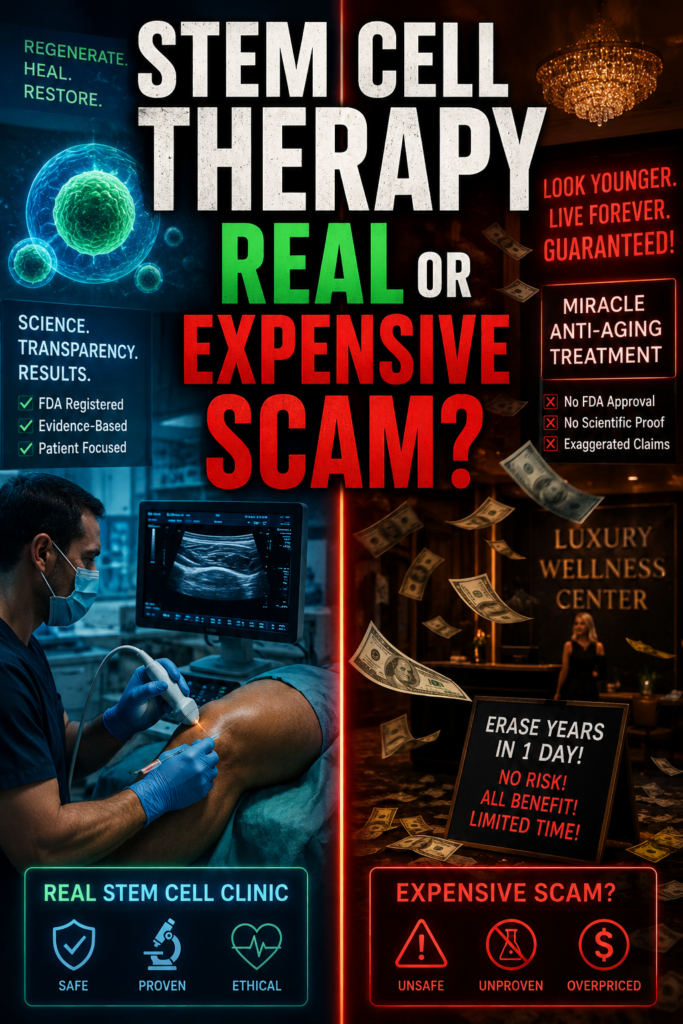
We are currently living through a biological gold rush. As we navigate 2026, the science of cellular regeneration has advanced at a staggering pace. But right alongside the genuine medical breakthroughs, a massive industry of “miracle cures” has sprung up, selling hope in a very expensive syringe.
When you are looking to protect your healthspan and stay active into your 70s, 80s, and beyond, the last thing you want is to be taken advantage of by pseudo-science.
Let’s separate the genuine clinical breakthroughs from the expensive illusions. Here is the reality of stem cell therapy in 2026—what is scientifically proven, and what is pure science fiction.
The Proven: Where the Science is Solid
When we talk about stem cell therapy that actually works right now, we are primarily talking about Mesenchymal Stem Cells (MSCs) . These are your body’s master contractors. They don’t just become new tissue; they manage the construction site, reducing inflammation and signaling your native cells to start repairing damage.
1. Orthopedic Repair (The Knee and Shoulder Savers)
If you have a bone-on-bone knee or a torn rotator cuff, stem cell therapy is no longer an experimental Hail Mary; it is a validated orthopedic tool.
- The Reality: The most successful treatments are autologous—meaning the doctor extracts stem cells from your own body (usually from your abdominal fat or bone marrow), concentrates them, and injects them directly into the damaged joint under ultrasound guidance.
- Why it works: The concentrated MSCs act as a localized anti-inflammatory bomb, halting the degradation of the joint while stimulating the growth of new cartilage over several months.
External link: A 2025 review in Stem Cells Translational Medicine found that autologous MSC injections for knee osteoarthritis provided significant pain relief and functional improvement lasting over two years. Read the study summary here click here.
2. “Bio-Liquidity” and Autologous Banking
This is the biggest shift we’ve seen recently. “Bio-liquidity” is the practice of extracting and storing your own healthy stem cells while you are relatively young and healthy, creating a biological asset you can withdraw later in life.
- The Reality: Banking your own cells is entirely proven. Your cells at 62 are significantly more robust and capable of dividing than your cells will be at 82. By banking them now, you are essentially freezing your regenerative potential in time.
3. Nutritional Stem Cell Priming (The “Hive Call”)
You don’t always need a needle to harness the power of stem cells. The science of nutritional angiogenesis and cellular signaling proves that what you put on your dinner plate directly impacts how many stem cells are circulating in your blood.
- The Reality: Clinical studies consistently show that specific bioactives—like the ellagitannins in pomegranates or the flavanols in high-cacao dark chocolate—can trigger your bone marrow to release a “hive call.” This mobilization doubles or even triples the number of active stem cells patrolling your bloodstream for damage.
For a deeper dive into the specific foods that trigger this natural stem cell release, check out our guide: 5 Foods That Act Like a Dinner Bell for Your Stem Cells click here
The Science Fiction: Red Flags to Avoid
A few months ago, a friend of mine named Richard called me, buzzing with excitement. He had found a clinic in a strip mall offering a $15,000 “Systemic Anti-Aging IV.” The brochure claimed it used “young, potent” stem cells from umbilical cords to cure everything from brain fog to his lingering back pain.
I told Richard to hold on to his wallet and run in the opposite direction.
Think of it this way: Injecting stem cells into a vein without precise guidance is like sending a team of construction workers to a city with no address. They might be the best builders in the world, but they will never find the house that needs repair.
Here is the science fiction you need to watch out for.
1. The “Cure-All” IV Drip
If a clinic claims that an intravenous (IV) drip of stem cells will simultaneously cure your arthritis, fix your vision, and prevent Alzheimer’s, they are lying to you.
- The Fiction: When you inject stem cells into a vein, they don’t magically know where to go. The vast majority of them get trapped in the “filter” of your lungs. They never make it to your knee, your brain, or your heart. True regenerative therapy requires precise, guided injections directly into the site of the injury.
2. “Off-the-Shelf” Umbilical Cord Cells
Many predatory clinics advertise that they use umbilical cord or amniotic stem cells because they are “younger and stronger” than your own cells.
- The Fiction: By the time these donor products are harvested, processed, sterilized, frozen, shipped, and thawed in a clinic, independent laboratory analyses show that nearly all the actual stem cells are dead. You aren’t getting living cells; you are getting a highly expensive injection of dead cellular debris. Always insist on autologous treatments (using your own cells).
3. Stem Cell Face Creams and Supplements
If you walk through a high-end department store, you will see $300 jars of face cream boasting “Apple Stem Cell Technology” or supplements claiming to contain “living plant stem cells.”
- The Fiction: A living stem cell cannot survive in a jar of cream sitting on a shelf for six months. Even if it could, a plant stem cell has no ability to communicate with human biology. An apple stem cell is great if you want to grow an apple tree; it will do absolutely nothing for your wrinkles.
How to Protect Your Biological Assets
The promise of regenerative medicine is real. We are moving away from simply managing the symptoms of aging and toward genuinely repairing the underlying damage. But you must be an educated consumer.
If you are considering a clinical treatment:
- Ask about the source: If it doesn’t come from your own body, be highly skeptical.
- Look for image guidance: A doctor should use an ultrasound or fluoroscope to guide the needle exactly to the site of the tear or arthritis. Blind injections are a waste of your money.
- Demand data, not testimonials: Ask the clinic what their objective success rate is for your specific condition, and what peer-reviewed research they follow.
And remember, the most powerful stem cell clinic in the world is already operating inside your own bones. Before you spend thousands of dollars on clinical treatments, ensure you are providing your body with the nutritional signaling it needs to run its own biological repair crew.
The Regenerative Evidence Ladder
The single most useful habit in this field is refusing to treat “regenerative medicine” as one category. A bone marrow transplant for leukaemia and an anti-aging IV drip are both sold under that phrase, and they are separated by roughly fifty years of evidence. It helps to sort any therapy you are offered into one of five tiers before you consider the price.
| Tier | What it means | Examples |
|---|---|---|
| 1 — Standard of care | Approved, decades of outcome data, usually covered by insurance | Haematopoietic stem cell transplant for blood and immune cancers; skin grafting; corneal limbal cell repair |
| 2 — Approved, narrow indications | Genuinely approved, but only for a defined list of conditions | Hyperbaric oxygen for decompression sickness, carbon monoxide poisoning, diabetic foot ulcers, radiation tissue injury |
| 3 — Mixed trials, used off-label | Human trials exist and disagree; reasonable to try with informed consent | PRP for tendinopathy and knee osteoarthritis; red light therapy for pain and skin |
| 4 — Mechanism plausible, outcomes thin | Convincing biology, little or no long-term human outcome data | Spermidine and autophagy supplements; fasting-driven stem cell effects; repair peptides such as BPC-157 |
| 5 — No approved product, active warnings | Regulators have issued safety notices; marketing far ahead of science | IV “stem cell” drips for aging; exosome infusions; topical stem cell cosmetics |
Tiers move. Something in tier four can climb to tier three when a decent randomised trial publishes, and a tier three therapy can fall when a larger trial fails to reproduce an early result — which is exactly what has happened repeatedly with PRP injections. Treat the ladder as a way of asking better questions, not as a permanent ranking, and check the current status of anything before you commit money to it.
“FDA-Registered” Is Not “FDA-Approved”
If you learn only one thing from this page, make it this distinction. It is the gap that separates most of the money lost in regenerative medicine from most of the value gained.
- Approved means a regulator reviewed evidence for a specific product treating a specific condition and agreed it works and is acceptably safe. This is a high bar and very few regenerative products clear it.
- Cleared is a lower bar used for many devices — it means the device is substantially similar to something already on the market, not that it produces the outcome being advertised.
- Registered or listed means a facility or product simply filed paperwork saying it exists. It carries no judgement about safety or effectiveness whatsoever.
A clinic can accurately describe itself as operating an FDA-registered facility while offering an infusion that has never been approved for anything. Both statements can be true at once, which is precisely why the phrasing is chosen. The same applies to the language of research: “IRB-approved study” describes ethical oversight of a protocol, not proven benefit, and patients are sometimes asked to pay to enrol — a strong signal to walk away, because genuine trials do not usually charge participants for the intervention being tested.
Registry listings work the same way. A treatment appearing on a public trials registry means someone registered an intention to study it. It says nothing about results, and many registered studies are never completed or published.
Ten Questions to Ask Before You Pay a Regenerative Clinic
Bring these to the consultation. A clinic operating in good faith will answer all ten without friction, and the answers tell you more than any brochure.
- What exactly is being injected or infused, by name, and what is the source material?
- Is this product approved for my condition, or is this off-label or investigational use?
- Which published human trials support this for my specific condition — not for the general mechanism?
- What is the largest trial that failed to show benefit, and why do you think it failed?
- Who performs the procedure, what is their specialty training, and how many have they done?
- What is the complete cost, including imaging, follow-up visits and any repeat sessions likely to be recommended?
- What are the realistic outcome ranges, including the chance that nothing changes?
- What are the known risks, and what is your protocol if a complication occurs?
- How will we measure whether this worked, and at what point would you tell me to stop?
- What non-invasive options should I exhaust first, and why are we skipping them?
Two answers should end the conversation: pressure to decide during the visit, and a testimonial offered in place of a trial. Reluctance to discuss the negative trials is a third. Note also that a genuinely honest clinic will sometimes tell you the answer is to wait — that is a sign of competence, not weakness.
The Free Levers That Outperform Most Paid Interventions
This is the uncomfortable arithmetic of regenerative health: the interventions with the strongest evidence for keeping tissue healthy are the ones nobody can sell you at a premium. If a paid therapy is competing against these, it should be expected to beat them, not merely to sound more advanced.
Mechanical loading
Resistance training remains the most reliable stimulus for maintaining muscle, bone density and tendon quality as you age. No injection substitutes for the signal that loading sends to connective tissue, and several clinical guidelines for joint pain place progressive exercise ahead of injectable options for exactly this reason.
Sleep, because repair is scheduled
Most tissue repair and growth hormone release is concentrated in deep sleep. Chronic short sleep undercuts every regenerative therapy you might pay for, which makes it the cheapest possible intervention with the widest effect. Tracking recovery capacity rather than chasing a score is the useful version of this — see what happened when we measured HRV over 30 days.
Controlled fasting windows
Fasting is the one lever that plausibly touches stem cell and autophagy pathways without a clinic involved, and the mechanistic work here is genuinely interesting even though long-term human outcome data remains limited. Our guide to regenerative fasting protocols covers what the windows appear to do, and mitophagy explains the cellular clean-up process behind the claims.
Protein sufficiency
Repair is limited by raw material. Chronically low protein intake caps what any regenerative intervention can achieve, and this is a far more common problem than most people expect — you can check your own target with our protein intake calculator.
Using cold correctly, not maximally
Cold exposure is free, which makes it a fair benchmark for anything you are asked to pay for. It also carries the clearest dosing lesson in this field: more is not better, and timing matters, since cold applied immediately after resistance training may blunt some of the adaptation you trained for. The details are in why three minutes is enough.
A Note on How to Use This Page
Nothing here is medical advice, and none of it can account for your history, imaging or medications. The purpose is narrower and more practical: to let you walk into a consultation able to tell the difference between a therapy with trial support for your condition and a therapy with a good story. If you are considering any invasive regenerative procedure, discuss it with a physician who has no financial interest in the treatment being recommended — ideally one who is not employed by the clinic selling it.
Explore the Full Regenerative Health Library
Regenerative medicine covers everything from injections with real clinical trial support to devices sold on hope alone. These guides go deeper on each branch, roughly ordered from the best-evidenced to the most speculative.
Start Here: Cell-Based Therapies
- I Tried Stem Cell Therapy for 30 Days: What My Blood Tests Revealed — A first-hand log of what changed on paper — and what did not.
- Stem Cell Banking: Is It Worth It for Healthy Adults? — The cost, the storage question, and who actually benefits.
- Exosome Therapy: The Cellular Communicators — Why exosomes are marketed as the next step beyond stem cells.
- Regenerative Fasting Protocols — How fasting windows influence your own stem cell activity.
Cellular Renewal and Autophagy
- Spermidine and Cellular Renewal — The autophagy compound found in food before it was a supplement.
- Mitophagy: The Cellular Reset Button — How your cells clear damaged mitochondria — and why energy depends on it.
- Neural Regeneration: Rewiring the Human Brain — What is genuinely known about growing new neural connections.
Joint, Tendon and Tissue Repair
- PRP (Platelet-Rich Plasma) for Joint Repair — The best-evidenced regenerative injection — and its real limits.
- Peptide Therapy: BPC-157 and TB-500 — What the soft-tissue repair peptides do and where regulation stands.
- Collagen Peptides vs Bone Broth — Which one actually delivers usable building blocks to joints.
- The Exact Peptide Your Collagen Supplement Needs — Why molecular weight decides whether collagen is absorbed at all.
Oxygen and Light Therapies
- Hyperbaric Oxygen Therapy: Biohacking or Real Medicine? — Approved indications versus clinic marketing.
- Soft vs Hard Hyperbaric Chambers — The pressure difference that decides whether HBOT does anything.
- Red Light Therapy: What the Clinical Trials Show — Wavelengths, dosing, and the gap between studies and devices.
Cold, Heat and Recovery Signals
- The Cold Plunge Lie: Why 3 Minutes Is Enough — Where the benefit plateaus and the risk begins.
- I Replaced My Mattress with an Ice Bath — An honest inflammation experiment with unglamorous results.
- I Tracked My HRV for 30 Days After Quitting Coffee — Using HRV as a recovery signal rather than a scoreboard.
FAQ
Q: Does Medicare or private insurance cover stem cell therapy in 2026?
A: Generally, no. Because the field is advancing faster than the insurance codes can keep up, most true stem cell treatments for joint repair remain out-of-pocket expenses. Beware of clinics that say they can “bill your insurance”—they are often performing a cheaper, unrelated procedure and upcharging you, or using unproven amniotic products.
Q: Are PRP (Platelet-Rich Plasma) and Stem Cell Therapy the same thing?
A: No. PRP uses the platelets from your blood to release growth factors. It is excellent for mild tendon issues and inflammation. Stem cell therapy uses MSCs extracted from your fat or bone marrow, which are much more powerful and capable of handling severe, degenerative joint disease. Think of PRP as the fertilizer, and stem cells as the seeds.
Q: How long does an orthopedic stem cell injection take to work?
A: This is a biological process, not a pharmaceutical painkiller. Most patients don’t feel significant relief until the 6-to-8-week mark, as the cells need time to reduce the toxic environment in the joint and begin the rebuilding phase. Peak results usually occur around 6 months post-treatment.
Q: Can I use diet to prepare for a clinical stem cell procedure?
A: Absolutely. We call this “MSC Priming.” Consuming an anti-angiogenic diet rich in cruciferous vegetables and daily green tea in the weeks leading up to an extraction creates a low-inflammation environment in your body. This ensures the cells your doctor harvests are healthy, robust, and ready to go to work.
- stem cell therapy 2026
- mesenchymal stem cells orthopedic
- autologous stem cell bankingnutritional stem cell priming
- umbilical cord stem cells scam
- PRP vs stem cells
- anti-angiogenic diet for stem cellsis stem cell therapy covered by Medicare 2026
- how to prepare for stem cell procedure with diet
- red flags in stem cell clinics
- how long does stem cell injection take to work

Julian Vance is the writer and editor behind RegenStep, translating peer-reviewed longevity, metabolic, and gut-health research into practical, actionable guides. Julian is not a licensed physician; content is reviewed against cited primary sources and is for informational purposes only. Always consult a qualified healthcare provider for personal medical advice.