
Medical Disclaimer: This article is for educational purposes only and is not medical advice. If you have diabetes, prediabetes, or take blood-sugar medication, work with your doctor before making major dietary changes, and never stop prescribed medication on your own. Diet is a powerful tool but a complement to—not a replacement for—professional care.
Let me tell you about Ken, a 51-year-old whose lab work showed “prediabetes creeping in.” His doctor said the word every patient dreads—“medication soon”—and Ken asked me the question I hear constantly: “Is there actually a best diet for this, or is it all just hype?” The good news is that this is one of the most studied questions in nutrition science, and the answer is refreshingly clear. You don’t need a gimmick. You need a pattern that decades of research keeps confirming.
Short answer: The Mediterranean diet has the strongest scientific evidence for improving insulin sensitivity—in a landmark trial it cut type 2 diabetes risk by about 52% versus a low-fat diet. It works because it’s rich in fiber, healthy fats, legumes, fish, and anti-inflammatory plant compounds. The best diet isn’t about cutting all carbs; it’s about choosing whole, high-fiber, minimally processed foods and pairing them with movement.
What Is Insulin Sensitivity (and Why It Matters)?
Insulin is the hormone that tells your cells to pull glucose out of your blood. When you’re insulin sensitive, your cells respond well and blood sugar stays stable. When you’re insulin resistant, they respond poorly, your pancreas has to pump out more and more insulin, and over time this drives prediabetes, type 2 diabetes, fatty liver, PCOS, and cardiovascular disease. Improving insulin sensitivity is one of the highest-leverage things you can do for long-term metabolic health.
What Is the Best Diet for Insulin Sensitivity?
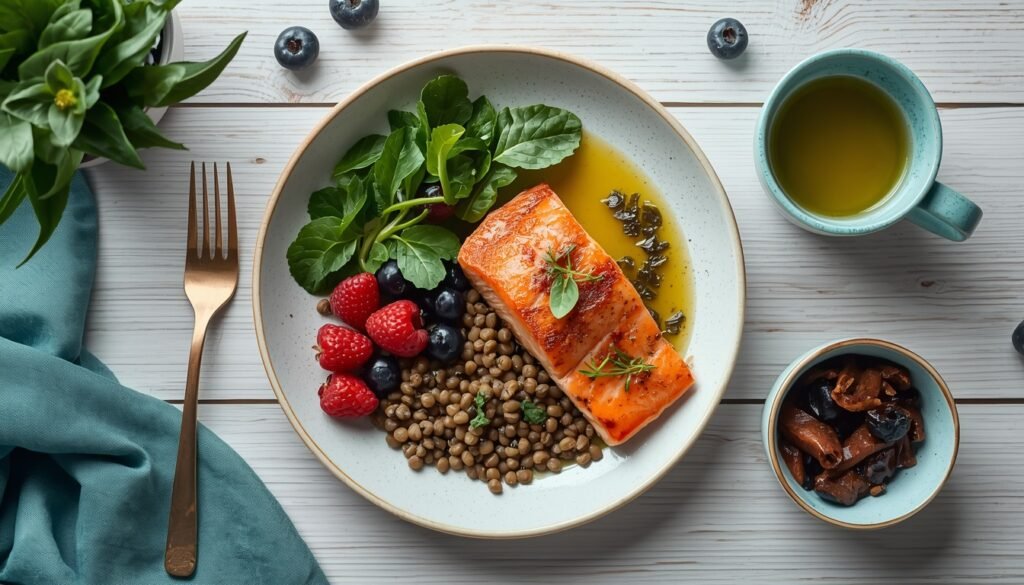
👤 Human Evidence. Across randomized trials and reviews, the Mediterranean diet comes out on top. The famous PREDIMED trial found that a Mediterranean diet enriched with extra-virgin olive oil and nuts reduced type 2 diabetes risk by about 52% compared with a low-fat diet, and reviews consistently show it improves insulin resistance more than low-fat or low-carb patterns. Why it works:
- Fiber from vegetables, legumes, and whole grains slows glucose absorption and blunts post-meal spikes.
- Monounsaturated fats (olive oil) and omega-3s (fatty fish) improve insulin signaling.
- Polyphenols and antioxidants fight the chronic inflammation that drives insulin resistance.
Other patterns have solid support too: the DASH diet, low-glycemic-index diets, plant-based diets, and time-restricted eating all improve insulin sensitivity. And adequate protein matters—it’s low on the glycemic index and helps preserve the muscle that acts as your body’s glucose sink. As the Cleveland Clinic notes, the goal isn’t cutting all carbs—it’s choosing the right ones.
The Core Insulin-Sensitizing Foods
| Food Group | Examples & Why |
|---|---|
| Non-starchy vegetables | Leafy greens, broccoli, peppers, zucchini—high fiber, low glycemic load. |
| Legumes | Lentils, chickpeas, black beans—fiber + protein, shown to improve A1C. |
| Intact whole grains | Steel-cut oats, barley, quinoa—slow, steady glucose release. |
| Fatty fish | Salmon, mackerel, sardines—omega-3s counter insulin resistance. |
| Healthy fats | Extra-virgin olive oil, nuts, seeds—improve insulin sensitivity. |
| Low-GI fruit | Berries, apples, pears—fiber-rich, gentle on blood sugar. |
What Ruins Insulin Sensitivity?
Just as important as what to eat is what to minimize. The biggest saboteurs:
- Added sugars and sugar-sweetened beverages—the fastest route to glucose and insulin spikes.
- Refined carbs (white bread, pastries, most packaged snacks) that digest too quickly.
- Ultra-processed foods, which combine refined carbs, low fiber, and additives.
- Excess visceral fat—fat around the organs is a major driver of insulin resistance.
- A sedentary lifestyle, poor sleep, and chronic stress—all impair insulin sensitivity independent of diet.
What Do Japanese People “Take” for Diabetes?
👤 Human Evidence. This is a great question, and the honest answer has two parts. Medically, Japanese doctors prescribe standard diabetes medications like metformin (and notably, DPP-4 inhibitors are especially widely used in Japan). But the more interesting answer is dietary: the traditional Japanese eating pattern is associated with lower rates of obesity and metabolic disease, and several of its staples have promising research:
- Fermented soy (natto and miso). Studies link these to reduced insulin resistance and better glycemic control. Fascinatingly, natto has even been shown to inhibit DPP-IV—the very enzyme targeted by that popular class of diabetes drugs—and its poly-gamma-glutamic acid can blunt post-meal glucose spikes.
- Green tea. Japanese cohort research associates higher green tea intake with lower type 2 diabetes risk, likely via catechins.
- Fish, seaweed, and vegetables. Omega-3s, fiber, and a naturally lower intake of ultra-processed food round out the pattern.
An honest caveat: much of this evidence is observational or mixed (soy trials haven’t always shown clear glucose benefits), so these are supportive habits—not cures, and not a substitute for medical treatment.
⚖️ Visceral Fat Is a Key Driver—Know Your Number
One of the biggest levers on insulin sensitivity is body composition—especially visceral fat around your organs. Get a clear read on where you stand so you can track progress as your diet and habits improve.
How to Manage Insulin Sensitivity Naturally
Diet is the foundation, but the full picture is a handful of powerful, well-supported habits:
- Move your muscles. Both aerobic exercise and resistance training improve insulin sensitivity—muscle is your body’s main glucose sink, so building and using it matters. See why muscle is a metabolic organ.
- Take a walk after meals. Even a 10–15 minute post-meal walk meaningfully blunts blood-sugar spikes.
- Lose excess visceral fat. Even modest fat loss can substantially improve insulin sensitivity.
- Prioritize sleep and manage stress. Both directly affect glucose control.
- Consider meal timing. Time-restricted eating may help—see our guide on what fasting does to your metabolism.
- Eat enough fiber. Aim high; it’s one of the simplest, most effective levers.
For a natural compound that’s been studied here, see our evidence review of berberine—and explore more in our Metabolism & Weight Loss library.
When To See a Doctor
If you have prediabetes, diabetes, PCOS, or symptoms like excessive thirst, frequent urination, or unexplained fatigue, work with a physician. Diet and lifestyle can dramatically improve—and sometimes reverse—insulin resistance, but they should be coordinated with proper medical monitoring, especially if you take medication. Don’t adjust or stop any prescription on your own.
The Bottom Line
The best diet for insulin sensitivity isn’t a fad—it’s the deeply researched Mediterranean pattern: whole plants, fiber, legumes, fish, and healthy fats, with refined carbs and ultra-processed foods kept to a minimum. Add movement, sleep, and visceral fat loss, and you’ve built one of the most powerful metabolic-health strategies in existence. Ken didn’t need a miracle. He swapped refined carbs for the pattern above, started walking after dinner, and at his next check-up his numbers had moved in the right direction—no medication yet. Your cells are always listening. Feed them well, and they’ll respond.
Frequently Asked Questions
What is the best diet for insulin sensitivity?
The Mediterranean diet has the strongest evidence, shown to significantly improve insulin sensitivity and reduce type 2 diabetes risk. It emphasizes vegetables, legumes, whole grains, fish, olive oil, and nuts while limiting refined carbs and processed foods. DASH, low-GI, plant-based, and time-restricted eating patterns also have supporting evidence.
What do Japanese people take for diabetes?
Medically, Japanese doctors use standard diabetes drugs like metformin and DPP-4 inhibitors. Dietarily, the traditional Japanese pattern—rich in fish, fermented soy (natto and miso), green tea, seaweed, and vegetables—is associated with lower diabetes rates. Natto in particular has shown promising effects on blood sugar, though much of this evidence is observational, not a cure.
What ruins insulin sensitivity?
The main culprits are added sugars and sugar-sweetened beverages, refined carbohydrates, ultra-processed foods, excess visceral fat, a sedentary lifestyle, poor sleep, and chronic stress. These promote glucose spikes, inflammation, and fat accumulation that impair how cells respond to insulin.
How can I improve insulin sensitivity naturally?
Combine a Mediterranean-style, high-fiber diet with regular exercise (both aerobic and resistance training), post-meal walks, losing excess visceral fat, quality sleep, and stress management. Building muscle is especially effective, since muscle is the body’s primary site for clearing blood glucose.
Can insulin resistance be reversed with diet?
In many cases, yes—especially when caught early. Dietary changes, weight loss, and exercise can substantially improve or even reverse insulin resistance for some people. Results vary by individual and severity, so this should be done alongside medical guidance, particularly if you have diabetes.
Does exercise improve insulin sensitivity?
Yes, significantly. Both aerobic exercise and resistance training make cells more responsive to insulin, and muscle contraction helps clear glucose from the blood even without insulin. A single session improves sensitivity temporarily, and regular training produces lasting benefits.
References
- Higher Adherence to a Mediterranean Diet Is Associated with Improved Insulin Sensitivity. PMC. ncbi.nlm.nih.gov/pmc/articles/PMC9608711
- Targeting Insulin Resistance Through Nutrition: Pathophysiological Insights and Dietary Interventions. Nutrients (MDPI), 2026. mdpi.com/2072-6643/18/7/1119
- Cleveland Clinic. Insulin Resistance Diet: Foods to Focus On. health.clevelandclinic.org/insulin-resistance-diet
- Hashimoto Y, et al. Fermented soybean foods and diabetes. Journal of Diabetes Investigation, 2023. onlinelibrary.wiley.com/doi/10.1111/jdi.14088
- Soy Intake and Risk of Type 2 Diabetes Among Japanese Men and Women (JACC Study). PMC. ncbi.nlm.nih.gov/pmc/articles/PMC8784605