
Medical Disclaimer: This article is for educational purposes only and is not medical advice or a personalized meal plan. If you have diabetes, prediabetes, or take blood-sugar medication, coordinate dietary changes with your doctor, and never stop prescribed medication on your own. Supplements should be discussed with a clinician, ideally after testing. This is meant to complement, not replace, professional care.
Let me tell you about Maria, a 47-year-old who understood what to eat for insulin resistance but froze at the kitchen. “I get the theory,” she said. “I just don’t know what to actually put on my plate on a Tuesday.” That gap—between knowing and doing—is where most people stall. So this article is the practical companion to the science: a real, week-long plan you can start tomorrow, plus straight answers to the questions everyone asks about reversing insulin resistance.
Short answer: The best way to reverse insulin resistance is a Mediterranean-style pattern—high in fiber, vegetables, legumes, fish, and healthy fats, low in refined carbs and sugar. Start your morning with protein and fiber, not sugar. You can meaningfully improve insulin sensitivity in a single week, and while no vitamin “cures” it, magnesium and vitamin D are the two most linked to better insulin function. Here’s the full 7-day plan.
What Is the Best Diet to Reverse Insulin Resistance?
👤 Human Evidence. The Mediterranean diet has the strongest evidence for improving—and in early cases reversing—insulin resistance, outperforming low-fat diets in trials. The core principles: build meals around non-starchy vegetables, legumes, and intact whole grains; include fatty fish and olive oil; choose low-glycemic fruit; and minimize added sugar, refined carbs, and ultra-processed food. For the full breakdown of the science, see our companion guide, The Best Diet for Insulin Sensitivity. This meal plan puts those principles on a plate.
What Should You Eat First in the Morning?
Your first meal sets your blood sugar’s tone for the day, so this matters more than people realize. The rule: lead with protein, fiber, and healthy fat—not sugar or refined carbs. A sugary cereal, pastry, or glass of juice triggers a sharp glucose spike and crash; a breakfast of eggs, Greek yogurt, or oats with nuts and berries produces a slow, steady response.
Two evidence-based tips: first, food order matters—eating your vegetables and protein before the carbs at a meal blunts the post-meal glucose rise. Second, consider front-loading your day: a substantial breakfast and lighter dinner tends to suit insulin sensitivity better than the reverse.
Your 7-Day Insulin Resistance Meal Plan
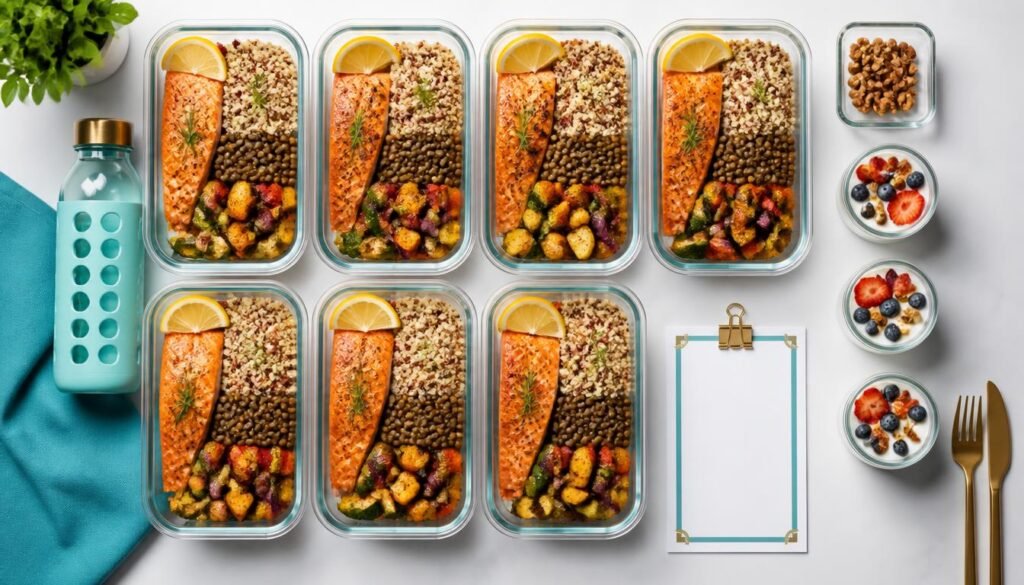
Every meal below is built on the same principle: fiber + protein + healthy fat, with smart, slow carbs. Adjust portions to your appetite and needs—this is about food quality, not calorie counting.
| Day | Breakfast | Lunch | Dinner | Snack |
|---|---|---|---|---|
| Mon | Veggie omelet with spinach + avocado | Lentil & vegetable soup, side salad with olive oil | Baked salmon, roasted broccoli, quinoa | Handful of almonds |
| Tue | Greek yogurt with chia seeds + berries | Chickpea & mixed-greens salad, feta, olive oil | Grilled chicken, sautéed greens, sweet potato | Apple with a spoon of nut butter |
| Wed | Steel-cut oats with walnuts + cinnamon | Tuna & white-bean salad over arugula | Turkey & vegetable stir-fry, brown rice | Carrot sticks with hummus |
| Thu | Scrambled eggs, sautéed mushrooms + tomato | Leftover stir-fry + a large green salad | Baked cod, roasted cauliflower, lentils | Greek yogurt with a few berries |
| Fri | Smoothie: spinach, protein, berries, flaxseed | Mediterranean bowl: quinoa, chickpeas, veg, tahini | Grilled shrimp, zucchini noodles, pesto | Small handful of pistachios |
| Sat | Cottage cheese with sliced pear + walnuts | Lentil salad with roasted vegetables | Chicken & vegetable curry, small brown rice | Celery with almond butter |
| Sun | Frittata with peppers, onion + side of berries | Salmon & avocado salad, olive oil dressing | Bean & vegetable chili, side salad | A square of dark chocolate + nuts |
⚖️ Track What Actually Drives Insulin Resistance
Visceral fat is one of the strongest drivers of insulin resistance—and one of the first things to improve on a plan like this. Get your starting number so you can measure real progress over the coming weeks.
How to Reduce Insulin Resistance in 1 Week
👤 Human Evidence. Let’s be honest: you won’t fully reverse long-standing insulin resistance in seven days—but you can meaningfully improve it fast. Insulin sensitivity responds quickly, and a focused week can produce measurable gains. Your 1-week kickstart:
- Cut the biggest offenders—added sugar, sugary drinks, and refined carbs—immediately.
- Follow the plan above and lead every meal with protein, fiber, and vegetables.
- Walk after meals. Even 10–15 minutes blunts glucose spikes—one of the fastest-acting tools you have.
- Move daily. A single exercise session improves insulin sensitivity for up to a day or more.
- Protect your sleep. Even a few nights of good sleep improves glucose handling.
Think of one week as igniting the process, not finishing it—the real reversal comes from making these habits stick.
What Vitamin Stops Insulin Resistance?
👤 Human Evidence. No single vitamin “stops” insulin resistance—but two nutrients stand out:
- Magnesium (the strongest evidence). A cofactor in glucose metabolism, magnesium is repeatedly linked to insulin sensitivity. A meta-analysis of over 500,000 people found higher magnesium intake was associated with a markedly lower risk of type 2 diabetes, and supplementation improves insulin resistance, especially in people who are deficient. Magnesium-rich foods—dark leafy greens, legumes, nuts, whole grains—are conveniently already all over the plan above.
- Vitamin D. Deficiency is associated with higher insulin resistance, and correcting a deficiency may help. Interestingly, magnesium is needed to activate vitamin D, so the two work together.
The honest takeaway: these help most when you’re deficient. Test first with your doctor, get them from food where possible, and don’t rely on megadoses to fix a diet-and-lifestyle problem.
Making the Plan Work
- Prep ahead. Batch-cook grains, legumes, and proteins so healthy choices are the easy ones.
- Never eat naked carbs. Always pair carbs with protein, fat, or fiber to slow glucose absorption.
- Hydrate, and lean on herbs, spices, olive oil, and vinegar for flavor instead of sugar.
Explore more in our Metabolism & Weight Loss library, and see how building muscle improves glucose control.
When To See a Doctor
If you have diabetes, prediabetes, PCOS, or take blood-sugar medication, coordinate this plan with your physician—improving your diet can change your medication needs and requires monitoring. Seek care for symptoms like excessive thirst, frequent urination, or unexplained fatigue. Food is powerful medicine, but it works best alongside professional guidance.
The Bottom Line
Reversing insulin resistance isn’t about a magic food or pill—it’s about a consistent, fiber-rich, whole-food pattern, a protein-forward morning, movement after meals, and correcting nutrient gaps like magnesium and vitamin D. The 7-day plan above turns that science into a grocery list and a week of real meals. Maria didn’t need more theory; she needed a plate. She followed the plan, walked after dinner, and within weeks her numbers—and her energy—were moving the right way. Start with one week. Then let it become your normal.
Frequently Asked Questions
What is the best diet to reverse insulin resistance?
A Mediterranean-style diet has the strongest evidence—rich in vegetables, legumes, whole grains, fish, and olive oil, and low in refined carbs, sugar, and ultra-processed foods. Combined with weight/visceral fat loss and exercise, it can significantly improve and, in early cases, reverse insulin resistance.
What should I eat first in the morning for insulin resistance?
Start with protein, fiber, and healthy fat rather than sugar or refined carbs—think eggs, Greek yogurt, or oats with nuts and berries. Avoid sugary cereals, pastries, and juice. Eating vegetables and protein before carbohydrates also helps blunt the post-meal blood sugar rise.
How can I reduce insulin resistance in 1 week?
You can meaningfully improve insulin sensitivity in a week by cutting added sugar and refined carbs, following a high-fiber whole-food plan, walking after meals, exercising daily, and prioritizing sleep. A single week kickstarts the process, though fully reversing established insulin resistance takes sustained habits.
What vitamin stops insulin resistance?
No single vitamin stops it, but magnesium has the strongest evidence for supporting insulin sensitivity, followed by vitamin D. Both help most in people who are deficient, so it’s best to test levels with your doctor and prioritize food sources like leafy greens, legumes, nuts, and whole grains rather than relying on high-dose supplements.
Can insulin resistance be reversed permanently?
Often it can be substantially reversed and kept in check—especially when caught early—through sustained diet, exercise, weight management, and sleep. It requires maintaining these habits long term, since reverting to old patterns can bring insulin resistance back. Work with your doctor to monitor progress.
What foods should I avoid with insulin resistance?
Limit added sugars and sugar-sweetened beverages, refined carbohydrates (white bread, pastries, most packaged snacks), and ultra-processed foods. These cause rapid glucose and insulin spikes and promote the inflammation and fat accumulation that worsen insulin resistance.
References
- Dietary Magnesium Intake Improves Insulin Resistance among Non-Diabetic Individuals with Metabolic Syndrome. PMC. ncbi.nlm.nih.gov/pmc/articles/PMC3820051
- Effect of magnesium supplementation on insulin resistance in humans: a systematic review. Nutrition. sciencedirect.com/science/article/abs/pii/S0899900717300229
- Higher Magnesium Intake Reduces Risk of Impaired Glucose and Insulin Metabolism. Diabetes Care. diabetesjournals.org/care/article/37/2/419
- Relationship among dietary vitamin D, magnesium, calcium, and glycemic control markers in type 2 diabetes. ScienceDirect, 2023. sciencedirect.com