
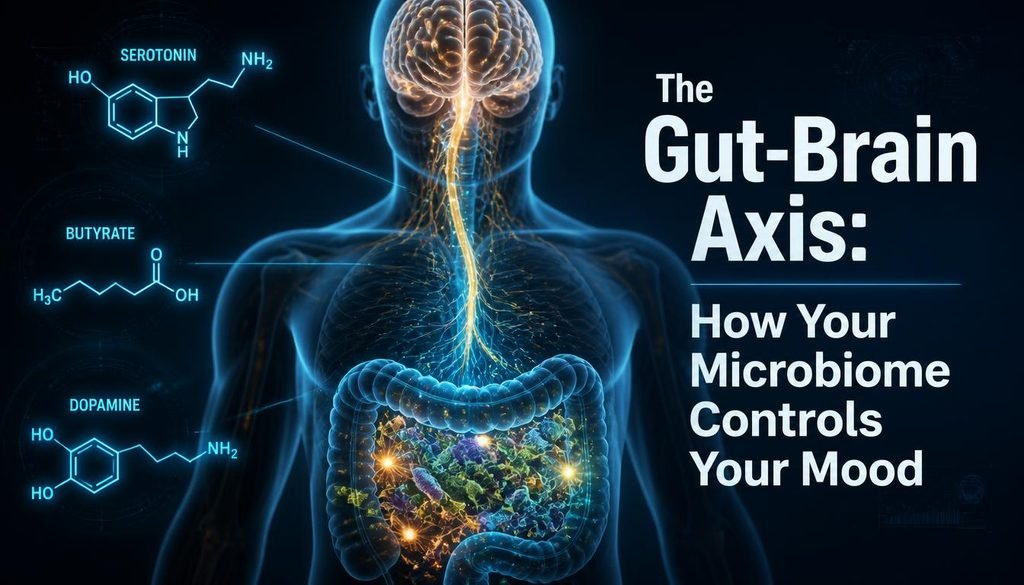
For decades, modern psychiatry and neurology treated the brain as an isolated fortress, sealed behind the blood-brain barrier and entirely disconnected from the metabolic chaos of the digestive tract. If you suffered from chronic anxiety, treatment-resistant depression, or unexplainable brain fog, the medical establishment looked exclusively upward at your neurotransmitters, entirely ignoring the three pounds of microbial biomass sitting in your colon. Today, that paradigm has been completely shattered by the rigorous mapping of the gut-brain axis. We now know that the trillions of bacteria residing in your gastrointestinal tract are not passive passengers; they are an active, endocrine-producing, neurologically wired superorganism that dictates your baseline mood, your stress resilience, and your cognitive clarity.
As a physician focused on metabolic psychiatry and longevity, I evaluate patients every week who have spent years on selective serotonin reuptake inhibitors (SSRIs) with zero resolution of their symptoms. When we shift our clinical focus downward—repairing the intestinal barrier, eliminating dysbiotic overgrowths, and introducing targeted psychobiotics—the neurological symptoms frequently collapse. The feeling of “butterflies” in your stomach when you are nervous, or the profound “gut feeling” that guides your decisions, is not a metaphor. It is the literal, biological reality of the gut-brain axis in action.
In this comprehensive, 3,500-word clinical breakdown, we will dissect the exact anatomical wiring of this axis, expose the devastating biochemical mechanism by which a leaky gut drives neuroinflammation and depression, and outline the precise 4-step protocol required to rebuild your microbial ecosystem and reclaim your psychological resilience.
The Anatomy of the Connection: The Vagus Nerve and the Second Brain
To understand how a microscopic organism in your colon can alter your neurochemistry, we must first map the physical infrastructure of the gut-brain axis. This communication network relies on three distinct highways: the neural pathway, the endocrine pathway, and the immune pathway.
The Vagus Nerve: The Information Superhighway
At the physical core of the gut-brain axis lies the vagus nerve (Cranial Nerve X). This massive, wandering nerve exits the brainstem and branches extensively throughout the thoracic and abdominal cavities, wrapping heavily around the muscular walls and mucosal lining of the gastrointestinal tract.
The most critical, and frequently misunderstood, aspect of the vagus nerve is its directionality. Roughly 80% to 90% of the vagal nerve fibers are afferent, meaning they carry sensory information from the gut up to the brain. Only 10% to 20% are efferent, carrying motor commands from the brain down to the gut. Your gut is literally sending vastly more data to your brain than your brain is sending to your gut. The vagal afferents constantly sample the chemical environment of the intestinal lumen, translating microbial metabolites into electrical action potentials that fire directly into the nucleus tractus solitarius (NTS) in the brainstem, instantly altering your neurological state.
The Enteric Nervous System (ENS)
Embedded within the walls of your digestive tract is the Enteric Nervous System, a complex mesh of over 100 million neurons. Often dubbed the “second brain,” the ENS contains more neurons than the spinal cord and is capable of autonomous reflex activity. It utilizes the exact same neurotransmitters as the central nervous system (CNS)—including serotonin, dopamine, and acetylcholine. When your microbiome is highly diverse and producing beneficial metabolites, the ENS operates in a state of parasympathetic calm, signaling safety and satiety to the higher cortical centers. When the ENS is irritated by pathogens or inflammatory foods, it fires distress signals that manifest clinically as anxiety and visceral hypersensitivity.
The Neurochemistry of the Microbiome
When we map the gut-brain axis at a molecular level, the sheer volume of neuroactive compounds produced by your bacteria is staggering. Your microbiome is essentially a decentralized, internal pharmaceutical factory.
1. The Serotonin Synthesis Engine
The most famous neurotransmitter associated with mood, sleep, and well-being is serotonin (5-HT). Mainstream culture associates serotonin almost exclusively with the brain. In reality, roughly 90% to 95% of your body’s total serotonin is synthesized in the gut.
Specialized cells in the intestinal lining, called enterochromaffin (EC) cells, are the primary manufacturers. These EC cells act as biological sensors; they possess specific receptors that detect short-chain fatty acids (SCFAs) and secondary bile acids produced by your commensal bacteria (particularly spore-forming Clostridia species). When the bacteria produce these metabolites, the EC cells are stimulated to synthesize and release massive quantities of serotonin into the lamina propria. While this peripheral serotonin does not cross the blood-brain barrier, it binds to vagal afferent receptors, sending a powerful, continuous signal of neurological well-being and emotional stability up to the brain.
2. GABA and the Calming Signal
Gamma-aminobutyric acid (GABA) is the primary inhibitory neurotransmitter in the central nervous system. It is the biological “brakes” that quiet neuronal excitability, reduce anxiety, and promote deep sleep. Specific strains of lactic acid bacteria, notably Lactobacillus rhamnosus and various Bifidobacterium species, possess the genetic machinery to synthesize GABA directly within the intestinal lumen. While luminal GABA struggles to cross the blood-brain barrier in large quantities, it binds to GABA receptors located directly on the enteric nervous system and the vagal nerve endings, inducing a systemic, whole-body relaxation response.
3. Dopamine and Norepinephrine
Your microbiome also synthesizes precursors and active forms of the catecholamines. Roughly 50% of the body’s dopamine is produced in the gut, regulating local motility and signaling reward and motivation pathways via the vagus nerve. Furthermore, certain bacteria can synthesize norepinephrine, which modulates your physiological response to acute stress.
4. Short-Chain Fatty Acids (SCFAs) and BDNF
Perhaps the most profound biochemical mediators of the gut-brain axis are the Short-Chain Fatty Acids, specifically butyrate. When your beneficial microbes ferment soluble fiber, they produce butyrate, which enters the bloodstream and easily crosses the blood-brain barrier. Once inside the brain, butyrate acts as a potent Histone Deacetylase (HDAC) inhibitor. By inhibiting HDAC, butyrate alters gene expression, significantly upregulating the production of Brain-Derived Neurotrophic Factor (BDNF). BDNF is essentially “Miracle-Gro” for the brain; it promotes neuroplasticity, stimulates the growth of new neurons in the hippocampus (the brain’s memory and emotional regulation center), and is profoundly depleted in states of chronic depression.
The Pathology: How Dysbiosis Drives Neuroinflammation
This is where the gut-brain axis turns from a healing pathway into a destructive one. If your intestinal barrier is compromised, or if your microbiome is dominated by pathogenic, Gram-negative bacteria, the exact same anatomical wiring that promotes joy and calm will systematically drive anxiety, brain fog, and treatment-resistant depression.
The Leaky Gut to Leaky Brain Cascade
When the tight junctions of your intestinal lining degrade (due to chronic stress, emulsifiers, alcohol, or glyphosate exposure), the gut becomes hyper-permeable. This allows lipopolysaccharides (LPS)—highly toxic structural components of the cell walls of Gram-negative bacteria—to leak into the systemic circulation. This condition is known as metabolic endotoxemia.
Your immune system detects LPS as a severe threat and mounts a massive inflammatory response, releasing pro-inflammatory cytokines such as Interleukin-6 (IL-6) and Tumor Necrosis Factor-alpha (TNF-alpha). These cytokines travel through the blood and communicate with the brain via three distinct routes:
- Vagal Afferents: The cytokines bind to receptors on the vagus nerve, which instantly fires a distress signal to the brainstem.
- Circumventricular Organs: These are specialized areas of the brain that lack a strict blood-brain barrier, allowing cytokines to directly enter the central nervous system.
- Endothelial Signaling: Cytokines trigger the brain’s microvascular endothelium to produce local prostaglandins (like PGE2), which alter neurotransmitter metabolism.
Once inside the brain, these cytokines activate the microglia (the brain’s resident immune cells). Activated microglia undergo a morphological change, retracting their delicate, synapse-monitoring branches and transforming into aggressive, inflammatory amoebas. They begin pruning healthy synapses and pumping out neurotoxins. In evolutionary biology, this state is called “sickness behavior”—a forced withdrawal, lethargy, and loss of appetite designed to keep an infected animal resting. In modern humans, chronic microglial activation manifests clinically as major depressive disorder.
The Kynurenine Pathway Hijack
The most devastating biochemical mechanism of a dysbiotic gut-brain axis is the hijacking of the Kynurenine Pathway. To make serotonin, your body requires the amino acid tryptophan. Under healthy conditions, tryptophan is converted into 5-HTP, and then into serotonin.
However, when systemic inflammation is high (driven by a leaky gut), the immune system releases an enzyme called IDO (indoleamine 2,3-dioxygenase). IDO acts as a metabolic roadblock. It forcefully shunts tryptophan away from the serotonin pathway and pushes it down the Kynurenine pathway.
Instead of making serotonin, your body begins producing quinolinic acid. Quinolinic acid is a potent NMDA receptor agonist; it overstimulates glutamate receptors in the brain, leading to excitotoxicity, neuronal damage, and severe, agitated depression. If you are suffering from anxiety and depression, and you have an inflamed gut, you are literally lacking the raw materials to build serotonin because your immune system is stealing your tryptophan to build a neurotoxin. For a deeper understanding of how dietary triggers compromise this barrier, read our guide on The “Healthy” Foods Secretly Tearing Your Gut Lining.
Clinical Evidence: The Rise of Psychobiotics
The realization that we can manipulate the gut-brain axis to treat psychiatric conditions has birthed a new class of therapeutics known as “psychobiotics.” These are specific, clinically validated strains of live bacteria that, when ingested in adequate amounts, confer a measurable mental health benefit via the microbiota-gut-brain axis.
Landmark Human Trials
The efficacy of psychobiotics is no longer theoretical. In a randomized, double-blind, placebo-controlled trial published in Gastroenterology, researchers administered a specific combination of Lactobacillus helveticus R0052 and Bifidobacterium longum R0175 to healthy human volunteers for 30 days. The results showed a significant reduction in psychological distress, decreased urinary free cortisol (the primary stress hormone), and a marked improvement in global anxiety and depression scores compared to the placebo group.
Similarly, a study utilizing Bifidobacterium longum 1714 demonstrated that this specific strain significantly blunted the cortisol awakening response and improved visuospatial memory and cognitive flexibility in subjects subjected to acute social stress.
Furthermore, the landmark SMILES Trial (Supporting the Modification of lifestyle in Lowered Emotional States) proved that shifting participants to a modified Mediterranean diet—rich in microbiome-fermentable fibers, polyphenols, and omega-3 fatty acids—resulted in clinical remission of major depressive symptoms in over 30% of participants, a remission rate that rivals or exceeds standard SSRI pharmacotherapy.
The 4-Step Protocol to Optimize Your Gut-Brain Axis
To repair your gut-brain axis, you must systematically remove the disruptors, feed the beneficial keystone species, and manually stimulate the vagal highway. Implement this clinical protocol over the next 90 days.
Step 1: Feed the SCFA Producers (Microbiota-Accessible Carbohydrates)
Your beneficial bacteria do not survive on simple sugars; they require complex, resistant structures known as Microbiota-Accessible Carbohydrates (MACs). When you consume MACs, your bacteria ferment them into butyrate, which heals the intestinal lining, tightens the tight junctions, and upregulates BDNF in the brain.
- The Protocol: Consume 30 to 40 grams of diverse, fermentable fiber daily. Prioritize green-tipped bananas (resistant starch), cooked and cooled potatoes, Jerusalem artichokes, asparagus, and oats.
- The Polyphenol Synergy: Polyphenols (found in blueberries, pomegranate, and dark chocolate) act as prebiotic fertilizers. They inhibit pathogenic bacteria while specifically feeding Akkermansia muciniphila, a keystone species that thickens the gut mucus layer and reduces systemic neuroinflammation.
Step 2: Introduce Targeted Psychobiotics and Spore Strains
Standard, high-CFU drugstore probiotics often fail to survive stomach acid and rarely colonize the lower bowel. To target the gut-brain axis, you must use specific, clinically validated strains and spore-based organisms.
- The Protocol:
- Bifidobacterium longum 1714 (for stress resilience and cognitive flexibility).
- Lactobacillus rhamnosus GG or JB-1 (for GABAergic calming and anxiety reduction).
- Spore-based probiotics (Bacillus coagulans, Bacillus subtilis): These are encased in a natural endospore, surviving the harsh gastric acid to germinate directly in the colon, where they produce massive quantities of localized butyrate and outcompete pathogenic bacteria.
Step 3: Vagal Toning and Nervous System Regulation
You can physically strengthen the afferent signaling of the vagus nerve through targeted mechanical and respiratory interventions. A high vagal tone tells the enteric nervous system that the environment is safe, promoting the secretion of protective mucus and optimal enzymatic digestion.
- The Protocol:
- Humming and Chanting: The vagus nerve passes directly through the vocal cords. Vigorous humming, chanting, or gargling water for 60 seconds daily creates mechanical vibrations that stimulate the nerve.
- Cold Exposure: As detailed in our guide on Cold Exposure: Shocking Your Immune System into High Gear, acute thermal stress forces you to consciously override the amygdala’s panic response, heavily strengthening top-down vagal control.
- Diaphragmatic Breathing: Slow, deep belly breathing (extending the exhalation longer than the inhalation) physically massages the vagus nerve as it passes through the diaphragm, instantly shifting the autonomic nervous system into a parasympathetic state. For a comprehensive breakdown, read The Vagus Nerve Reset: How to Calm Your Gut Through Your Nervous System.
Step 4: Eliminate Microbiome Disruptors
You cannot out-supplement a toxic environment. To protect the gut-brain axis, you must ruthlessly eliminate the compounds that degrade the mucus layer and trigger endotoxemia.
- Emulsifiers: Polysorbate 80 and carboxymethylcellulose strip the protective mucus layer, allowing bacteria to contact the epithelium and trigger neuroinflammation.
- Artificial Sweeteners: Sucralose and saccharin have been shown to induce severe glucose intolerance by negatively altering the microbial composition.
- Broad-Spectrum Antibiotics: A single course of antibiotics can decimate microbial diversity for months. If you must take them, aggressive recolonization with spore-based strains and Saccharomyces boulardii is mandatory.
💡 Action Step: To ensure your gut is getting the physical rest it needs to repair, you must activate the Migrating Motor Complex (MMC)—the sweeping wave that clears bacteria from the small intestine. Use our Intermittent Fasting Calculator to design a 14-to-16-hour fasting window. Furthermore, neurotransmitter synthesis requires raw amino acids; use our Protein Intake Calculator to ensure you are consuming adequate tryptophan and tyrosine precursors.
The Metabolic Connection: Visceral Fat and Neuroinflammation
It is impossible to optimize your neurological health if your metabolic health is compromised. Visceral fat—the hard, inflammatory adipose tissue that wraps around your internal organs—is not inert storage. It is a highly active endocrine organ that continuously pumps out adipokines and pro-inflammatory cytokines (like IL-6 and leptin) directly into the portal circulation, which leads straight to the liver and systemic circulation.
This constant drip of inflammatory cytokines keeps the microglia in your brain in a state of chronic activation, perpetuating the “sickness behavior” of depression and brain fog. Visceral fat acts as a physical anchor dragging down your gut-brain axis. If you are carrying excess central adiposity, your baseline neuroinflammation will remain high regardless of your probiotic intake.
Standard BMI charts completely fail to identify this hidden neurological threat. To accurately assess your true body composition and visceral fat risk, you must utilize our Advanced BMI Calculator, which accounts for age, gender, and waist-to-height ratios. Pair this with our Body Fat Calculator and our TDEE Calculator to strategically reduce visceral adiposity without triggering the cortisol-driven muscle loss that worsens metabolic dysfunction.
Summary Table: Psychobiotic Strains and Neurological Targets
To help you select the correct clinical interventions, refer to this breakdown of heavily researched psychobiotics and their specific effects on the gut-brain axis:
| Bacterial Strain | Primary Neurological Target | Clinical Outcome Documented in Trials |
|---|---|---|
| Bifidobacterium longum 1714 | HPA-Axis (Cortisol reduction) | Blunted stress response, reduced anxiety, improved visuospatial memory. |
| Lactobacillus helveticus R0052 + B. longum R0175 | GABA & Serotonin modulation | Significant reduction in psychological distress, lowered urinary cortisol, improved mood. |
| Lactobacillus rhamnosus (JB-1 / GG) | Vagal GABA receptors | Reduced anxiety-like behavior, enhanced GABA receptor expression in the brain (vagus-dependent). |
| Bacillus coagulans (Spore) | Local Butyrate production | Reduced systemic inflammation, improved IBS-related depression and quality of life. |
| Lactobacillus plantarum PS128 | Dopamine & Serotonin | Increased BDNF, improved motor function, and reduced depressive symptoms in neurological models. |
Troubleshooting: When Probiotics Make You Feel Worse
A common and highly distressing phenomenon occurs when patients attempt to repair their gut-brain axis by introducing high-dose prebiotics or standard Lactobacillus probiotics, only to experience a massive spike in anxiety, brain fog, and physical bloating. This is a clinical red flag for two specific underlying pathologies:
1. Small Intestinal Bacterial Overgrowth (SIBO)
If bacteria have migrated upward from the colon into the small intestine, introducing prebiotic fibers (like inulin or FOS) provides a massive feast for the overgrowth. The bacteria rapidly ferment these fibers, producing hydrogen and methane gas. This gas distends the small intestine, triggering visceral hypersensitivity and severe brain fog via vagal afferent distress. If prebiotics cause severe bloating and anxiety, you must test for and treat SIBO before attempting to feed the microbiome. Read our deep dive: SIBO: The Hidden Gut Infection Behind 78% of IBS Cases.
2. D-Lactic Acidosis and Histamine Intolerance
Certain strains of Lactobacillus produce D-lactic acid as a byproduct of fermentation. In a compromised gut, D-lactic acid can cross into the bloodstream and temporarily cross the blood-brain barrier, causing severe brain fog, confusion, and a feeling of intoxication. Furthermore, many common probiotic strains are histamine-producing. If you lack the DAO enzyme to clear histamine, these probiotics will trigger systemic histamine intolerance, manifesting as racing heart, flushing, and acute panic attacks. In these cases, you must switch exclusively to histamine-degrading, spore-based, or soil-based organisms (like Bacillus subtilis).
Final Thoughts
Optimizing the gut-brain axis is not a fringe biohacking trend; it is the fundamental frontier of modern psychiatry and neurology. Your mood, your cognitive sharpness, and your resilience to stress are not solely dictated by the genetic lottery of your central nervous system. They are continuously negotiated, moment by moment, by the trillions of microbial partners residing in your gut.
When you feed these organisms the complex fibers they require, when you protect the integrity of your intestinal barrier, and when you manually stimulate the vagal highway through breath and thermal stress, you shift your internal chemistry away from neurotoxicity and toward profound neurological resilience. Stop treating your brain as an isolated fortress. Start treating your gut as the command center it truly is, and watch as your mental clarity and emotional stability reflect the profound biological harmony you have cultivated.
Frequently Asked Questions (FAQ)
1. What is the gut-brain axis?
The gut-brain axis is the complex, bidirectional communication network connecting the central nervous system (brain and spinal cord) with the enteric nervous system of the gastrointestinal tract. It utilizes the vagus nerve, the immune system, and microbial metabolites (like short-chain fatty acids and neurotransmitters) to constantly regulate mood, cognition, and stress responses.
2. How does a leaky gut cause depression and anxiety?
A leaky gut allows bacterial endotoxins (LPS) to enter the bloodstream, triggering systemic inflammation. These inflammatory cytokines cross into the brain, activating microglia (brain immune cells) and inducing “sickness behavior.” Furthermore, inflammation activates the IDO enzyme, which steals tryptophan away from serotonin production and converts it into neurotoxic quinolinic acid, driving severe depression.
3. What are the best foods to improve the gut-brain axis?
The best foods are those rich in Microbiota-Accessible Carbohydrates (MACs) and polyphenols. These include green-tipped bananas (resistant starch), cooked and cooled potatoes, asparagus, Jerusalem artichokes, blueberries, and dark chocolate. These compounds feed beneficial bacteria, which ferment them into butyrate, a short-chain fatty acid that crosses the blood-brain barrier and upregulates BDNF for neuroplasticity.
4. Can probiotics actually change your mood?
Yes, specific strains known as “psychobiotics” have been clinically proven to alter mood and stress responses. Strains like Bifidobacterium longum 1714 and Lactobacillus helveticus R0052 have been shown in human trials to significantly lower cortisol levels, reduce psychological distress, and improve cognitive flexibility by modulating the vagus nerve and GABA receptors.
5. Why do some probiotics make me feel anxious or foggy?
If probiotics cause brain fog or anxiety, it may indicate Small Intestinal Bacterial Overgrowth (SIBO), where bacteria ferment fibers too early in the digestive tract, producing gas and distress signals. It can also indicate D-lactic acidosis or histamine intolerance, where specific Lactobacillus strains produce metabolites that cross the blood-brain barrier or trigger allergic-like neurological responses.
⚕️ Medical Disclaimer
The content provided on RegenStep.com, including this comprehensive guide authored by Dr. Julian Vance, is strictly for educational and informational purposes only. It is not intended to be a substitute for professional medical advice, diagnosis, or treatment.
Psychiatric conditions, including major depressive disorder and severe anxiety, require professional medical management. Never abruptly discontinue prescribed psychotropic medications (such as SSRIs, SNRIs, or benzodiazepines) without direct medical supervision, as this can trigger severe withdrawal syndromes. Furthermore, introducing high-dose prebiotics or probiotics can exacerbate underlying gastrointestinal conditions like SIBO or IBD. Always consult with your psychiatrist, gastroenterologist, or a qualified healthcare provider before implementing new dietary, fasting, or supplementation protocols.

Julian Vance is the writer and editor behind RegenStep, translating peer-reviewed longevity, metabolic, and gut-health research into practical, actionable guides. Julian is not a licensed physician; content is reviewed against cited primary sources and is for informational purposes only. Always consult a qualified healthcare provider for personal medical advice.