
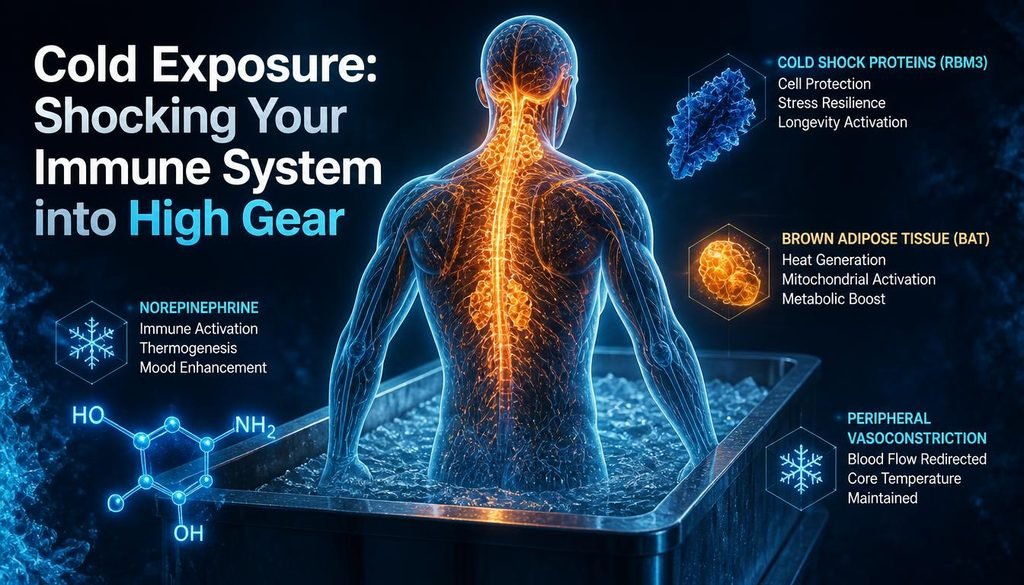
The modern wellness industry has transformed the ancient practice of freezing water immersion into a luxury status symbol, complete with $15,000 temperature-controlled tubs and influencer-driven hype. But beneath the commercial noise lies a profound, heavily validated biological mechanism. The fundamental premise of cold exposure is not about punishing your body or proving your mental toughness; it is about leveraging a precise, acute environmental stressor to force your neuroendocrine and immune systems to adapt, upgrade, and defend. When applied with clinical precision, this thermal shock acts as a master switch, upregulating cold shock proteins, mobilizing innate immune cells, and triggering the biogenesis of metabolically active brown fat.
As a physician focused on longevity and cellular resilience, I view thermal stress as one of the most potent, free, and accessible tools in the biohacking arsenal. However, the internet is flooded with dangerous advice—ranging from staying in ice baths for dangerously long durations to plunging immediately after heavy weightlifting, which actively destroys your muscle-building progress. In this comprehensive, 3,500-word clinical breakdown, we will dissect the exact molecular biology of the cold shock response, expose the landmark clinical trials validating its immune benefits, and outline the precise, evidence-based protocols required to harness this stressor without crossing the line into hypothermic danger or muscular atrophy.
The Evolutionary Biology of Hormetic Stress
To understand why freezing water heals the body, we must first understand the biological concept of hormesis. Hormesis is a phenomenon where a low-dose, acute exposure to a toxin or stressor that would be lethal at high doses actually triggers a massive, adaptive, protective response in the organism.
Throughout millions of years of human evolution, our ancestors were routinely subjected to severe thermal fluctuations. They did not have climate-controlled homes or insulated clothing. When they plunged into cold rivers to fish or forage, their bodies had to instantly mount a multi-system defense to prevent fatal hypothermia. This evolutionary pressure selected for a highly robust neuroendocrine cascade. Today, we live in a state of perpetual thermal comfort (72°F / 22°C year-round). This chronic thermal neutrality leads to physiological complacency. Our cellular defense mechanisms, our vascular elasticity, and our stress-response pathways atrophy from lack of use.
When evaluating cold exposure through the lens of hormesis, the cold is not the enemy; it is the signal. The sudden drop in skin temperature is detected by peripheral thermoreceptors, which send a massive, high-frequency electrical signal via the spinal cord to the hypothalamus. The hypothalamus instantly triggers the sympathetic nervous system, flooding the bloodstream with catecholamines. It is this exact chemical flood that initiates the systemic upgrades we associate with longevity and immune resilience.
The Immunological Shock: Rewiring Your Defenses
The most heavily marketed benefit of this practice is immune enhancement, but the mechanism is frequently misunderstood. It is not about “killing” pathogens with cold; it is about dramatically altering the distribution and readiness of your white blood cells.
1. The Catecholamine-Driven Leukocyte Mobilization
When you enter freezing water, your adrenal medulla releases a massive surge of norepinephrine and epinephrine. These catecholamines bind to beta-2 adrenergic receptors located on the surface of your immune cells, particularly natural killer (NK) cells, cytotoxic T-cells, and monocytes.
This binding event causes a rapid demargination of leukocytes. Normally, a large percentage of your immune cells are “marginated”—meaning they are stuck to the endothelial walls of your blood vessels or sequestered in the spleen and lymph nodes. The catecholamine surge physically detaches these cells, mobilizing them into the peripheral bloodstream. A landmark study published in the European Journal of Applied Physiology demonstrated that acute cold water immersion can increase circulating natural killer cell counts by up to 150%, alongside a significant spike in interleukin-6 (IL-6), which, in this acute context, acts as an anti-inflammatory and muscle-protective myokine rather than a chronic inflammatory marker.
2. The Buijze Trial: Real-World Sick Day Reduction
The most famous clinical validation of this immune mobilization comes from a massive randomized controlled trial led by Dr. Geert Buijze, published in PLOS One. The study followed over 3,000 healthy adults in the Netherlands. The intervention group was instructed to end their daily showers with 30 to 90 seconds of purely cold water for 30 consecutive days.
The results were striking: the cold shower group reported a 29% reduction in self-reported sick days from work compared to the control group. Interestingly, the duration of the cold shower (30 vs. 60 vs. 90 seconds) did not significantly alter the outcome, suggesting that the initial thermal shock—rather than prolonged freezing—is the primary trigger for the immunological cascade. However, it is vital to note that while the incidence of feeling ill dropped, the actual severity of the viral symptoms when they did get sick was not significantly altered. The cold trained their immune system to recognize and mount an early defense, preventing the pathogen from taking systemic hold.
3. Cold Shock Proteins (RBM3) and Neuroprotection
Beyond the immune system, the sudden drop in core temperature triggers the expression of Cold Shock Proteins (CSPs), most notably RBM3 (RNA-binding motif protein 3). RBM3 is a highly conserved protein that binds to cellular RNA, protecting it from degradation and promoting the translation of survival proteins during cellular stress.
Groundbreaking research from the UK Dementia Research Institute at Cambridge (led by Professor Giovanna Mallucci) demonstrated that RBM3 is profoundly neuroprotective. In murine models of neurodegeneration (mimicking Alzheimer’s and prion diseases), the induction of RBM3 via therapeutic hypothermia prevented the loss of synaptic connections and actually promoted the regeneration of damaged dendrites. While human trials are still ongoing, the implication is clear: the acute thermal stress of the plunge forces your brain to upregulate proteins that physically protect and repair your neural architecture. To further protect your neurological cleanup cycles, you must pair this stressor with optimized rest; read our guide on Why Your Sleep Architecture Matters More Than Hours in Bed.
Metabolic Alchemy: Brown Fat and Glucose Disposal
The metabolic implications of cold exposure extend far beyond the calories burned while shivering. The true metabolic magic lies in the activation and proliferation of Brown Adipose Tissue (BAT).
White Fat vs. Brown Fat
Adult humans primarily store energy in White Adipose Tissue (WAT), which consists of large, single lipid droplets and very few mitochondria. WAT is metabolically sluggish and, when accumulated viscerally, drives systemic inflammation and insulin resistance. To accurately track your dangerous visceral fat levels rather than relying on a flawed standard scale, utilize our Advanced BMI Calculator, which accounts for age, gender, and waist-to-height ratios.
Brown Adipose Tissue, conversely, is packed with iron-rich mitochondria and multiple small lipid droplets. Its primary evolutionary function is non-shivering thermogenesis. When the sympathetic nervous system releases norepinephrine, it binds to beta-3 adrenergic receptors on brown fat cells. This triggers the activation of Uncoupling Protein 1 (UCP1) in the inner mitochondrial membrane.
The UCP1 Proton Leak
Normally, your mitochondria use the electron transport chain to pump protons across a membrane, creating a gradient that spins ATP Synthase to produce ATP (cellular energy). UCP1 acts as a biological “short circuit.” It creates a pore in the membrane, allowing protons to leak back across without spinning the ATP turbine. The energy from this proton gradient is not captured as chemical energy (ATP); instead, it is instantly released as pure thermal heat.
When you engage in regular thermal stress, your body undergoes “browning” of white fat (creating beige adipocytes) and increases the density of your existing brown fat depots, primarily located around the clavicles, the neck, and the spine. Because BAT is a massive metabolic sink for glucose and triglycerides, individuals with high BAT activity exhibit profoundly higher insulin sensitivity and lower rates of metabolic syndrome. To ensure you are fueling this massive metabolic engine without overeating, track your baseline energy expenditure using our TDEE Calculator.
The Neurological Upgrade: Dopamine and Top-Down Control
Perhaps the most immediately noticeable benefit of the cold plunge is the profound shift in mood, focus, and mental drive. This is not a placebo effect; it is a massive, sustained alteration in your neurochemistry.
The 250% Dopamine Spike
A frequently cited study by Srámek et al. measured the hormonal responses of human subjects immersed in 57°F (14°C) water. The researchers found that plasma concentrations of norepinephrine increased by 530%, while dopamine levels increased by 250%.
To put this in perspective, a 250% increase in baseline dopamine is roughly equivalent to the dopaminergic spike achieved by highly addictive stimulants, but without the subsequent receptor downregulation and “crash.” Furthermore, because the cold stressor is sustained, the dopamine release is slow and prolonged, elevating your baseline mood, motivation, and focus for several hours after you exit the water. This makes it an unparalleled, non-pharmacological tool for combating the mid-day lethargy and brain fog associated with modern sedentary lifestyles.
Forging Mental Resilience (Top-Down Control)
Beyond neurochemistry, the practice acts as a neurological training ground for the prefrontal cortex. When you step into freezing water, your amygdala (the brain’s panic and fear center) fires aggressively, screaming at you to get out. Your heart rate spikes, and you involuntarily hyperventilate.
To stay in the water, you must use your prefrontal cortex (the logical, executive control center) to consciously override the amygdala’s panic signals. You force your breathing to slow down. You suppress the urge to flee. By repeatedly subjecting yourself to this controlled panic and successfully overriding it, you physically strengthen the neural pathways of “top-down control.” This resilience translates directly to your daily life; when you face a high-stress email, a financial setback, or a chaotic environment, your brain is neurologically primed to remain calm and analytical rather than reactive. For more on manually regulating this nervous system response, read The Vagus Nerve Reset: How to Calm Your Gut Through Your Nervous System.
The Clinical Protocol: The Søberg Principle and the 11-Minute Rule
A common mistake in cold exposure protocols is the “more is better” fallacy. Biohackers frequently sit in 35°F water for 30 minutes, shivering violently, believing they are maximizing their benefits. In reality, they are risking hypothermia, triggering a massive, chronic cortisol response, and suppressing their thyroid function.
To optimize this practice, we must look to the research of Dr. Susanna Søberg, a leading Danish scientist in the field of thermal metabolism. Her research established two critical rules for maximizing brown fat activation and metabolic benefits while minimizing risk.
1. The 11-Minute Weekly Threshold
Dr. Søberg’s data demonstrates that you do not need to freeze every single day for long durations to achieve maximum metabolic and immunological adaptation. The optimal “dose” is a total of 11 minutes per week, broken down into 2 to 4 sessions.
For example, doing three 4-minute plunges per week is vastly superior to doing one 20-minute plunge. The goal is to trigger the catecholamine spike and the UCP1 activation, then exit the water and allow the body to recover and adapt.
2. The Søberg Principle: Always End on Cold
The most critical error people make is following a cold plunge with a hot sauna or a hot shower to “warm up.” This completely blunts the metabolic benefit.
When you exit the cold water, your core temperature is slightly lowered, and your brown fat is actively burning glucose and lipids to generate heat (non-shivering thermogenesis). If you immediately jump into a sauna, you provide the body with external heat, shutting off the brown fat activation and the metabolic afterburn.
The Protocol:
- Enter the cold water (ideally between 45°F and 55°F / 7°C – 12°C).
- Stay in for 2 to 4 minutes, focusing on long, controlled exhalations to calm the heart rate.
- Exit the water and allow your body to rewarm itself naturally in the ambient air.
- The shivering and the internal heat generation that occur after you get out are where the maximum metabolic and mitochondrial upgrades happen. Embrace the “afterdrop” (the continued drop in skin temperature as cold blood from the extremities returns to the core) and let your brown fat do the work.
Timing Your Protocol: The Sleep Architecture Trap
Timing your cold exposure is just as critical as the temperature of the water. Because the practice triggers a massive release of norepinephrine, epinephrine, and cortisol, it is a profound stimulant.
If you plunge in the evening or within 3 hours of your target bedtime, the circulating catecholamines will completely suppress your evening melatonin production and elevate your core body temperature. As we detailed in our guide on sleep cycles, a drop in core body temperature is a strict biological requirement for entering deep, slow-wave sleep. An evening plunge will destroy your sleep architecture, leading to next-day fatigue and impaired cognitive function.
The Fix: Restrict your thermal stress to the morning or early afternoon. Use it to replace or delay your morning caffeine intake, leveraging the natural 250% dopamine spike to carry you through your most cognitively demanding work blocks.
The Hypertrophy Blunting Effect: When NOT to Plunge
While this practice is phenomenal for endurance athletes, metabolic health, and immune resilience, it can be highly detrimental if your primary goal is building skeletal muscle mass (hypertrophy).
When you engage in heavy resistance training, you create micro-tears in the muscle fibers. This mechanical damage triggers a localized, acute inflammatory response. This localized inflammation is the necessary signal that recruits satellite cells and activates the mTOR pathway to rebuild the muscle larger and stronger.
Landmark research published in the Journal of Physiology demonstrated that applying cold water immersion immediately after heavy resistance training drastically blunts this localized inflammatory signal. The cold constricts the local blood vessels, flushing out the very immune cells and growth factors required for muscle protein synthesis. Subjects who iced after lifting gained significantly less muscle mass and strength over a 12-week period compared to those who performed active recovery.
The Rule:
- For Muscle Building: Never plunge within 6 to 8 hours after a heavy hypertrophy or strength training session. If you must do both on the same day, plunge in the morning and lift in the evening.
- For Endurance / Zone 2 / Recovery: Plunging after endurance cardio or Zone 2 training is highly beneficial, as it aids in clearing metabolic waste and reducing delayed onset muscle soreness (DOMS) without blunting the mitochondrial biogenesis signal. Ensure you are eating enough to support your recovery by using our Protein Intake Calculator.
Contraindications and Safety Protocols
Contraindications for cold exposure are strict and must be respected. The sudden vasoconstriction and massive catecholamine surge place an immense, acute load on the cardiovascular system.
Who Should Avoid This Practice:
- Cardiovascular Disease: Individuals with a history of arrhythmias, coronary artery disease, or uncontrolled hypertension. The sudden spike in blood pressure and heart rate can trigger a cardiac event.
- Raynaud’s Phenomenon: A condition where the small blood vessels in the extremities spasm excessively in response to cold, cutting off blood supply and causing severe pain and tissue damage.
- Cold Agglutinin Disease: A rare autoimmune disorder where cold temperatures cause antibodies to bind to red blood cells, causing them to clump together and lyse (break apart).
- Pregnancy: The risk of altering core body temperature and inducing systemic stress is contraindicated.
The Danger of the “Afterdrop” and Hypothermia
When you are in cold water, your peripheral blood vessels constrict to shunt warm blood to your vital organs. Your skin and extremities become very cold, but your core remains relatively warm. When you exit the water, the peripheral vessels dilate, and the cold, stagnant blood from your arms and legs rushes back to your core. This causes your core temperature to continue dropping for 10 to 20 minutes after you get out—a phenomenon known as the afterdrop.
If you stay in the water too long, the afterdrop can push your core temperature into clinical hypothermia (< 95°F / 35°C), leading to confusion, loss of motor control, and cardiac arrhythmias. Never push past the point of severe shivering while in the water, and never plunge alone in natural, open bodies of water.
Synergistic Stacking: Amplifying the Cellular Signal
To maximize your biological return on investment, you can strategically stack this thermal stressor with other longevity protocols.
1. Cold + Intermittent Fasting (The AMPK Overdrive)
Fasting lowers blood glucose and depletes liver glycogen, activating the AMPK pathway. When you combine a fasted state with a cold plunge, the body is forced to rapidly mobilize stored white fat and activate brown fat to meet the massive thermal energy demand. This synergistic stack dramatically accelerates fat oxidation and insulin resensitization. Use our Intermittent Fasting Calculator to align your fasting window so that your plunge occurs at the very end of your fast, right before your first meal.
2. Cold + Heat (Contrast Therapy for Vascular Elasticity)
While you should not use heat immediately after a plunge if your goal is brown fat activation, doing contrast therapy (alternating between a sauna and a cold plunge) on a separate day is a phenomenal workout for your vascular system. The heat causes massive vasodilation, and the cold causes intense vasoconstriction. This “vascular gymnastics” improves endothelial function, reduces arterial stiffness, and heavily stimulates the release of dynorphins and heat shock proteins. For a complete breakdown of thermal extremes, read Cold Plunge vs Sauna: Which Actually Extends Lifespan?.
Summary Table: Modalities of Thermal Stress
Not all cold therapies are created equal. The physiological response depends heavily on the modality, the temperature, and the surface area of the body submerged.
| Modality | Typical Temperature | Primary Benefit | Drawbacks / Limitations |
|---|---|---|---|
| Cold Water Immersion (Tub) | 45°F – 55°F (7°C – 12°C) | Maximum catecholamine spike, full-body BAT activation, deep tissue cooling. | Requires specialized equipment; high risk of afterdrop if duration is too long. |
| Cold Shower | 50°F – 60°F (10°C – 15°C) | Accessible daily habit, mild immune mobilization (Buijze protocol), mental resilience. | Lower thermal shock; water runs off the body, reducing total thermal transfer. |
| Whole Body Cryotherapy (Air) | -160°F to -220°F (-100°C to -140°C) | Rapid skin cooling, high analgesic (pain-relieving) effect, minimal core temp drop. | Air is a poor thermal conductor; fails to trigger deep brown fat activation or the full vagal reflex. |
| Ice Packs / Local Icing | 32°F (0°C) | Localized pain relief, acute injury swelling reduction. | Blunts local muscle hypertrophy; zero systemic or immunological benefit. |
The Future of Thermal Medicine
The future of cold exposure research is moving beyond the biohacking community and into rigorous clinical therapeutics. Researchers are currently investigating targeted cooling of the brain (transnasal cooling) to halt neuronal death immediately following ischemic strokes and traumatic brain injuries. Furthermore, pharmaceutical companies are desperately trying to synthesize “cold-mimetic” drugs that can activate UCP1 and brown fat without the discomfort of freezing water, aiming to cure the global obesity and diabetes epidemics.
Until those pharmacological interventions are proven safe and viable, the ice bath and the cold shower remain the most potent, unpatentable, and effective tools we have. Ultimately, cold exposure is not a punishment; it is a profound biological privilege. It is a voluntary return to the environmental extremes that forged the human genome. By respecting the dosing protocols, avoiding the hypertrophy-blunting errors, and embracing the acute shock, you force your immune system, your mitochondria, and your nervous system to adapt to a higher standard of resilience. Step into the cold, control your breath, and let the biology do the rest.
Frequently Asked Questions (FAQ)
1. How does cold exposure boost the immune system?
The sudden thermal shock triggers a massive release of norepinephrine, which binds to beta-2 adrenergic receptors on immune cells. This causes a rapid mobilization of leukocytes (white blood cells), particularly natural killer cells and cytotoxic T-cells, moving them from the lymphoid organs into the peripheral bloodstream to patrol for pathogens.
2. What is the optimal weekly duration for cold plunging?
According to research by Dr. Susanna Søberg, the optimal dose for maximizing metabolic and brown fat benefits is approximately 11 minutes per week, divided into 2 to 4 separate sessions. Staying in the water longer than necessary does not increase benefits and significantly raises the risk of hypothermia and chronic cortisol elevation.
3. Should I take a hot shower immediately after a cold plunge?
No. If your goal is metabolic health and brown fat activation, you should allow your body to rewarm itself naturally in the ambient air. Jumping into a hot shower or sauna provides external heat, which shuts off the internal metabolic afterburn and the activation of Uncoupling Protein 1 (UCP1) in your brown adipose tissue.
4. Does cold water immersion ruin muscle growth?
Yes, if timed incorrectly. Applying cold water immersion immediately after heavy resistance training blunts the localized acute inflammatory response required to trigger muscle protein synthesis and the mTOR pathway. To protect hypertrophy, avoid plunging for at least 6 to 8 hours after a heavy lifting session.
5. How cold does the water need to be for health benefits?
The water does not need to be near freezing. Research indicates that the physiological benefits, including the catecholamine spike and brown fat activation, are triggered at temperatures that feel “uncomfortably cold” to the individual, typically between 45°F and 55°F (7°C to 12°C). The key is the psychological and physiological shock, not the absolute temperature.
⚕️ Medical Disclaimer
The content provided on RegenStep.com, including this comprehensive guide authored by Dr. Julian Vance, is strictly for educational and informational purposes only. It is not intended to be a substitute for professional medical advice, diagnosis, or treatment.
Intentional thermal stress carries significant physiological risks. Cold water immersion causes acute peripheral vasoconstriction and massive catecholamine release, which can trigger fatal cardiac arrhythmias, myocardial infarction, or cold-water shock responses in susceptible individuals. Never practice cold water immersion in open, natural bodies of water without direct supervision, and never push past the point of severe, uncontrollable shivering. Always consult with your cardiologist or a qualified healthcare provider before beginning any thermal stress protocol, particularly if you have a history of cardiovascular disease, hypertension, Raynaud’s phenomenon, or metabolic dysregulation.
How does cold exposure boost the immune system?
The sudden thermal shock triggers a massive release of norepinephrine, which binds to beta-2 adrenergic receptors on immune cells. This causes a rapid mobilization of leukocytes (white blood cells), particularly natural killer cells and cytotoxic T-cells, moving them from the lymphoid organs into the peripheral bloodstream to patrol for pathogens.
What is the optimal weekly duration for cold plunging?
According to research by Dr. Susanna Søberg, the optimal dose for maximizing metabolic and brown fat benefits is approximately 11 minutes per week, divided into 2 to 4 separate sessions. Staying in the water longer than necessary does not increase benefits and significantly raises the risk of hypothermia and chronic cortisol elevation.
Should I take a hot shower immediately after a cold plunge?
No. If your goal is metabolic health and brown fat activation, you should allow your body to rewarm itself naturally in the ambient air. Jumping into a hot shower or sauna provides external heat, which shuts off the internal metabolic afterburn and the activation of Uncoupling Protein 1 (UCP1) in your brown adipose tissue.
Does cold water immersion ruin muscle growth?
Yes, if timed incorrectly. Applying cold water immersion immediately after heavy resistance training blunts the localized acute inflammatory response required to trigger muscle protein synthesis and the mTOR pathway. To protect hypertrophy, avoid plunging for at least 6 to 8 hours after a heavy lifting session.
How cold does the water need to be for health benefits?
The water does not need to be near freezing. Research indicates that the physiological benefits, including the catecholamine spike and brown fat activation, are triggered at temperatures that feel “uncomfortably cold” to the individual, typically between 45°F and 55°F (7°C to 12°C). The key is the psychological and physiological shock, not the absolute temperature.
Julian Vance is the writer and editor behind RegenStep, translating peer-reviewed longevity, metabolic, and gut-health research into practical, actionable guides. Julian is not a licensed physician; content is reviewed against cited primary sources and is for informational purposes only. Always consult a qualified healthcare provider for personal medical advice.