
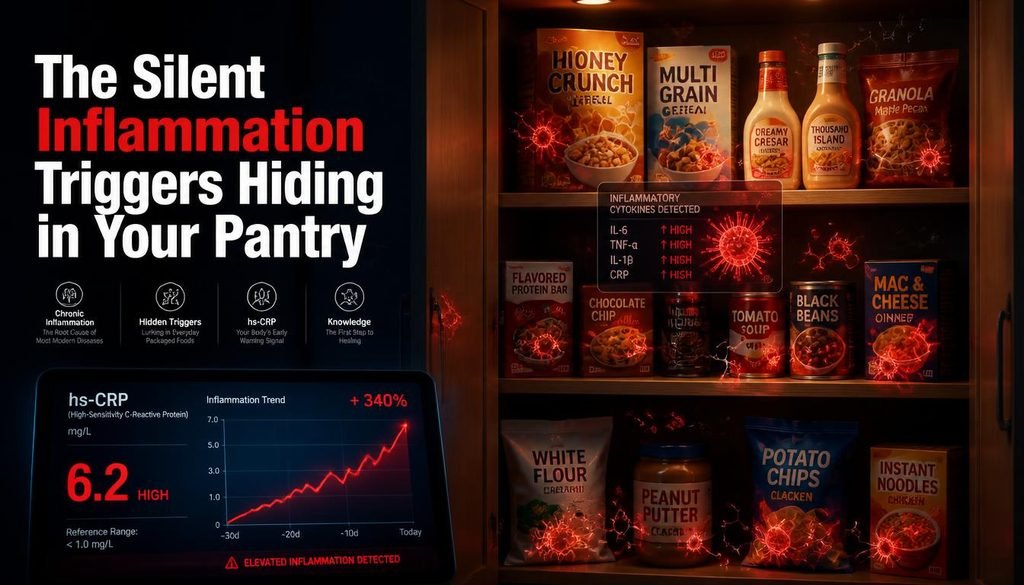
When you hear the word “inflammation,” you likely picture a sprained ankle swelling to twice its size, or a red, hot, throbbing cut on your finger. That is acute inflammation—a brilliant, temporary, life-saving immune response designed to heal damaged tissue and then shut off. But there is a second, far more dangerous type of inflammation that never swells, never turns red, and never hurts until it has already done years of silent damage. This is chronic, low-grade systemic inflammation, often called “inflammaging,” and it is the foundational driver of nearly every modern chronic disease, from insulin resistance and visceral fat accumulation to neurodegeneration and cardiovascular collapse. As a clinician focused on metabolic longevity, I see patients every week who exercise diligently and sleep reasonably, yet their bloodwork shows soaring inflammatory markers. The culprit is rarely a genetic curse; it is almost always a collection of inflammation triggers sitting on the shelves of their own kitchen.
Your pantry is the front line of your immune system. Every single day, you are either feeding the fire of systemic inflammation or pouring water on it. The modern food industry has engineered thousands of products to be hyper-palatable, shelf-stable, and cheap, but the biochemical cost of these engineering feats is paid by your gut lining, your microbiome, and your endothelial cells. In this comprehensive, 3,000-word clinical breakdown, we will expose the six most pervasive inflammation triggers hiding in your pantry, dissect the exact molecular pathways through which they damage your biology, and provide the precise elimination and replacement protocols required to extinguish the fire and restore your metabolic vitality.
The Biology of Silent Inflammation: Metabolic Endotoxemia
Before we dissect the specific foods, we must understand the mechanism. How does a bag of chips or a bottle of salad dressing translate into brain fog, joint pain, and arterial plaque? The answer lies in the intimate connection between your gut barrier and your immune system, a phenomenon known as metabolic endotoxemia.
Your large intestine is home to trillions of bacteria. The cell walls of these bacteria (particularly Gram-negative bacteria) are made of a toxic compound called lipopolysaccharide (LPS), also known as endotoxin. As long as your intestinal lining is intact and your mucus layer is thick, LPS stays safely inside the digestive tract and is excreted.
However, when your gut barrier is compromised—when the tight junctions between your enterocytes gape open—LPS leaks into your bloodstream. Your immune system recognizes LPS as a severe threat. It binds to Toll-Like Receptor 4 (TLR4) on your macrophages, triggering a massive release of pro-inflammatory cytokines like Interleukin-6 (IL-6), Tumor Necrosis Factor-alpha (TNF-alpha), and Interleukin-1 beta. This cytokine cascade forces your liver to produce C-Reactive Protein (CRP), the primary marker of systemic inflammation.
This is why your pantry matters so profoundly. Certain food compounds directly degrade the mucus layer, pry open the tight junctions, feed pathogenic bacteria, or directly activate the TLR4 receptors. Let us break down the six primary inflammation triggers responsible for this cascade.
Trigger #1: High-Fructose Corn Syrup and the AGE Cascade
The most pervasive inflammation triggers in the modern pantry are refined sugars, specifically high-fructose corn syrup (HFCS) and concentrated liquid fructose. While glucose can be metabolized by nearly every cell in your body, fructose is metabolized almost exclusively in the liver, and it does so through an unregulated pathway that bypasses the normal enzymatic “brakes.”
The Uric Acid and Lipogenesis Pathway
When your liver is flooded with fructose, it rapidly depletes its cellular ATP (energy) stores. This ATP depletion triggers a cascade that degrades adenosine into uric acid. As we detailed in our deep dive on High Uric Acid Isn’t Just Gout — It’s a Metabolic Warning Sign, intracellular uric acid is a potent driver of oxidative stress and endothelial dysfunction. It inhibits nitric oxide production, constricting your blood vessels and forcing your liver into de novo lipogenesis—the rapid creation of new visceral fat. This visceral fat is not inert storage; it is an active endocrine organ pumping out inflammatory adipokines.
Advanced Glycation End Products (AGEs)
Beyond fructose, all refined sugars contribute to the formation of Advanced Glycation End Products (AGEs). AGEs form when sugar molecules bind to proteins or fats without enzymatic control, creating stiff, cross-linked structures. When you consume high-AGE foods (or when your internal blood sugar is chronically high, creating endogenous AGEs), these compounds bind to RAGE receptors (Receptor for Advanced Glycation End products) on your immune cells, directly activating the NF-kB inflammatory pathway. This is why chronic sugar consumption visibly ages your skin (glycated collagen) and silently ages your arteries.
The Pantry Audit: Sugar hides under more than 60 different names on ingredient labels. Scan your pantry for dextrose, maltodextrin, cane juice crystals, rice syrup, agave nectar, and fruit juice concentrate. If a sugar derivative is in the top three ingredients, it is an inflammatory food, regardless of the marketing on the front of the box.
Trigger #2: Industrial Seed Oils and the Oxylipin Storm
Perhaps the most heavily debated and biologically significant inflammation triggers in the modern pantry are industrial seed oils—soybean, corn, cottonseed, sunflower, and safflower oils. These oils are the primary dietary source of linoleic acid (LA), an omega-6 polyunsaturated fatty acid.
The Biochemical Reality of Linoleic Acid
To be clear: linoleic acid is an essential fatty acid; your body requires a small amount of it. Historically, humans consumed roughly 1% to 2% of their calories from LA. Today, the average Western diet derives 15% to 25% of calories from it, primarily because seed oils are the cheapest fat available and are used in nearly every processed food, restaurant fryer, and bottled dressing.
The problem is twofold. First, LA is highly susceptible to oxidation. When exposed to heat, light, and oxygen (as in industrial processing and deep frying), LA oxidizes into toxic byproducts called oxylipins (such as 9-HODE and 13-HODE). These oxidized lipids are directly cytotoxic to the endothelial lining of your blood vessels and are a primary component of oxidized LDL, the particle that infiltrates the arterial wall and initiates atherosclerotic plaque.
Second, a portion of dietary LA is converted into arachidonic acid, which serves as the substrate for the COX and LOX enzymes to produce pro-inflammatory eicosanoids (prostaglandins and leukotrienes). When your dietary omega-6 to omega-3 ratio is skewed to 20:1 (instead of the evolutionary 2:1), your entire eicosanoid signaling system is biased toward inflammation, platelet aggregation, and vasoconstriction.
The Pantry Audit: Check the labels on your mayonnaise, salad dressings, peanut butter, granola, crackers, and chips. If “soybean oil,” “canola oil,” or “sunflower oil” is listed, you are consuming concentrated, oxidized linoleic acid. Replace these with stable fats: extra virgin olive oil, avocado oil, coconut oil, and grass-fed butter or ghee.
Trigger #3: Emulsifiers and the Destruction of the Mucus Layer
If you buy packaged bread, protein bars, ice cream, or shelf-stable sauces, you are consuming emulsifiers. These are detergent-like chemicals (such as polysorbate 80, carboxymethylcellulose (CMC), carrageenan, DATEM, and soy lecithin) added to prevent oil and water from separating and to give processed foods a creamy, uniform texture.
The Detergent Effect on Your Gut
Your intestinal wall is protected by a thick, gel-like layer of mucus (composed of MUC2 glycoproteins) that physically separates your enterocytes from the trillions of bacteria in your lumen. Landmark research published in the journal Nature demonstrated that common dietary emulsifiers act like dish soap on this mucus layer. They degrade its structure, thinning it dramatically and allowing gut bacteria to come into direct contact with the intestinal epithelium.
This direct bacterial contact triggers low-grade inflammation, alters the microbiome composition (dysbiosis), and promotes metabolic syndrome. Furthermore, carrageenan—a seaweed-derived thickener found in many “healthy” almond milks and organic broths—has been shown in cellular models to directly activate the NF-kB inflammatory pathway and induce intestinal ulceration.
For a deeper understanding of how these additives compromise your barrier, read our guide on The “Healthy” Foods Secretly Tearing Your Gut Lining.
The Pantry Audit: If a food contains an ingredient ending in “-ate” or “-ose” that you cannot pronounce (polysorbate 80, sucralose, carboxymethylcellulose), or if it contains carrageenan or “vegetable gums” in high concentrations, it belongs in the elimination phase of your protocol.
Trigger #4: Refined Wheat, Gliadin, and the Zonulin Pathway
The fourth major category of inflammation triggers is refined wheat products. This is not exclusively about Celiac disease; it is about a physiological mechanism that affects nearly everyone who consumes modern, highly refined wheat in large quantities.
The Zonulin Gatekeeper
Wheat contains a protein fraction called gliadin. When gliadin binds to the CXCR3 receptor on the surface of your intestinal cells, it triggers the release of zonulin, a protein that regulates the permeability of the tight junctions between your enterocytes. Zonulin is the biological “gatekeeper”; when it is released, the gates pry open.
While this mechanism evolved to allow nutrients to pass through, chronic, high-volume exposure to gliadin keeps the gates chronically ajar, contributing to intestinal permeability (leaky gut). Once the barrier is compromised, undigested food proteins and bacterial endotoxins enter circulation, driving the systemic cytokine cascade we discussed earlier. If you suffer from brain fog, joint stiffness, or autoimmune reactivity, refined wheat is often the primary dietary lever. Learn more about the symptoms in The “Leaky Gut” Symptom You’re Ignoring (And Why It’s Causing Your Brain Fog).
Additionally, wheat contains Wheat Germ Agglutinin (WGA), a lectin that binds to the glycoproteins on your enterocytes, disrupting their function and triggering localized immune responses. Modern dwarf wheat has been heavily hybridized to contain significantly higher concentrations of these immunogenic proteins than the ancient varieties our ancestors consumed.
The Pantry Audit: Eliminate refined white flour, commercial bread, pasta, and baked goods. If you tolerate gluten well, opt for properly fermented sourdough (the long fermentation process degrades much of the gliadin and phytic acid) or ancient, intact grains like einkorn, consumed in moderation.
Trigger #5: Processed Meats, Nitrates, and Oxidized Cholesterol
The fifth category of inflammation triggers involves the preservation of animal proteins. Deli meats, bacon, hot dogs, and sausages are cured with sodium nitrate and sodium nitrite to preserve color and prevent botulism.
Nitrosamines and COPs
When nitrates are exposed to high heat (like frying bacon) or the acidic environment of your stomach, they can convert into nitrosamines, which are potent carcinogens and direct irritants to the gastrointestinal mucosa. The World Health Organization classifies processed meats as Group 1 carcinogens, largely due to these compounds.
Furthermore, the cholesterol in processed and heavily cooked meats is highly susceptible to oxidation, forming Cholesterol Oxidation Products (COPs). COPs are far more atherogenic and inflammatory than native cholesterol; they directly activate macrophages, turning them into foam cells that seed arterial plaque.
The Pantry Audit: Replace processed deli meats and cured sausages with freshly cooked, minimally processed proteins: pasture-raised eggs, wild-caught salmon, grass-fed beef, and slow-cooked poultry. If you must buy deli meat, look for brands explicitly labeled “no nitrates or nitrites added” and “uncured,” though even these often use celery powder (a natural nitrate source), so consume them sparingly.
Trigger #6: The “Health Halo” Trap
The most insidious inflammation triggers are the ones marketed as health foods. The wellness industry has mastered the art of the “health halo,” slapping organic, gluten-free, and high-protein labels on products that are biochemically identical to candy.
The Granola and Flavored Yogurt Illusion
Consider a typical bag of “heart-healthy” granola. The first ingredient is usually oats (fine), but the second and third are cane sugar and soybean or sunflower oil, bound together with rice syrup. You are consuming a concentrated dose of AGEs and oxidized linoleic acid, disguised as a wholesome breakfast. Similarly, flavored yogurts often contain 20 to 25 grams of added sugar per serving—more than a candy bar—along with artificial colors and thickeners.
Protein bars are equally deceptive. To achieve a soft, shelf-stable texture, manufacturers load them with sugar alcohols (which ferment in the colon and cause bloating), emulsifiers (which strip the mucus layer), and inflammatory seed oils.
The Pantry Audit: Adopt the “single-ingredient” rule. The healthiest foods in your pantry do not have ingredient labels. An almond has one ingredient: almonds. A can of sardines has two: sardines and olive oil. If a product requires a paragraph of chemistry to explain what it is, it is a processed food, and it should be treated as an occasional indulgence, not a dietary staple.
The Pantry Purge Protocol: A 3-Phase Reset
To extinguish the fire of silent inflammation, you must execute a structured, three-phase protocol. This is not a permanent restriction; it is a 30-day biological reset designed to heal your gut lining, restore your microbiome, and lower your baseline cytokine load.
Phase 1: The Elimination (Days 1–14)
Remove all six trigger categories from your home. This is critical: do not rely on willpower; change your environment. If the granola is in the cupboard, you will eat it at 9 PM when your prefrontal cortex is fatigued.
- Action: Read every label. Discard or donate (unopened) items containing HFCS, industrial seed oils, emulsifiers, refined wheat, nitrates, and carrageenan.
Phase 2: The Anti-Inflammatory Restock (Days 15–30)
Replace the void with foods that actively resolve inflammation and rebuild the gut barrier.
- Omega-3s: Wild-caught salmon, sardines, and mackerel (EPA/DHA to counter the arachidonic acid cascade).
- Polyphenols: Extra virgin olive oil (oleocanthal, which inhibits COX enzymes similarly to ibuprofen), blueberries, dark leafy greens, and green tea (EGCG).
- Gut Builders: Bone broth (glycine and collagen to fuel enterocytes), fermented vegetables (if tolerated), and soluble fiber (to feed butyrate-producing bacteria).
- Action: Ensure you are hitting your daily protein targets to support tissue repair by using our Protein Intake Calculator, and structure your eating window to give your gut the Migrating Motor Complex time to clean itself using our Intermittent Fasting Calculator.
Phase 3: The Systematic Reintroduction (Day 31+)
After 30 days, your baseline inflammation should be significantly lower. Now, reintroduce one eliminated food category at a time, every 3 to 4 days, and track your biomarkers: morning joint stiffness, brain fog, digestive comfort, and skin clarity. This allows you to build a personalized, data-driven “avoid list” rather than adhering to a generic dogma.
💡 Action Step: Inflammation drives visceral fat retention, which in turn drives more inflammation—a vicious cycle. To accurately track your true body composition and visceral fat risk beyond a flawed standard scale, utilize our Advanced BMI Calculator and our Body Fat Calculator.
The Swap Matrix: Inflammatory vs. Anti-Inflammatory
To make your grocery shopping effortless, refer to this clinical swap matrix:
| Pantry Category | The Inflammatory Trigger | The Anti-Inflammatory Swap |
|---|---|---|
| Cooking Fats | Soybean, corn, sunflower, and canola oils. | Extra virgin olive oil, avocado oil, coconut oil, ghee. |
| Sweeteners | HFCS, cane sugar, agave, maltodextrin. | Raw honey (sparingly), monk fruit, stevia, whole berries. |
| Grains | Refined white flour, commercial bread, pasta. | Properly fermented sourdough, einkorn, quinoa, white rice. |
| Condiments | Store-bought mayo and creamy dressings (seed oils). | Homemade mayo (olive/avocado oil), olive oil + lemon, mustard. |
| Proteins | Bacon, deli meats, hot dogs (nitrates/COPs). | Fresh poultry, grass-fed beef, wild salmon, sardines, eggs. |
| Beverages | Fruit juice, sweetened teas, diet sodas. | Mineral water, green tea, black coffee, sparkling water. |
| Snacks | Granola bars, protein bars, crackers. | Macadamia nuts, almonds, dark chocolate (85%+), olives. |
| Milk Alternatives | Carrageenan-laden almond/oat milks. | Homemade nut milk, coconut milk (clean label), A2 dairy. |
How to Measure Your Progress: The Bloodwork That Matters
You cannot manage what you do not measure. After 60 to 90 days of executing the Pantry Purge Protocol, you must verify that your systemic inflammation is actually declining. Standard annual physicals rarely order the correct panels. Demand the following biomarkers from your physician:
- hs-CRP (High-Sensitivity C-Reactive Protein): The master marker of systemic inflammation. Standard medicine considers < 3.0 mg/L “normal,” but for optimal longevity and cardiovascular protection, target < 1.0 mg/L, ideally < 0.5 mg/L.
- Fasting Insulin: A leading indicator of metabolic inflammation and insulin resistance. Target 2 to 5 μIU/mL.
- Triglyceride-to-HDL Ratio: A highly accurate proxy for visceral fat and insulin resistance. Target a ratio of 1.0 or lower.
- Omega-3 Index: The percentage of EPA and DHA in your red blood cell membranes. Target > 8% for optimal anti-inflammatory eicosanoid production.
For a complete breakdown of the panels your doctor is likely missing, read Silent Inflammation Markers: The Blood Tests Your Doctor Isn’t Ordering. Furthermore, remember that lowering inflammation is only half the battle; you must also clear the visceral fat that is actively producing it. Learn the difference in Visceral Fat vs Subcutaneous Fat: Which One Is Actually Killing You?.
Final Thoughts
Silent inflammation is not a mysterious genetic curse; it is a predictable, biochemical response to a modern food environment that prioritizes shelf-life over cellular health. The six inflammation triggers we have dissected—refined sugars, industrial seed oils, emulsifiers, refined wheat, processed meats, and health-halo ultra-processed foods—are entirely avoidable.
Your pantry is your pharmacy. Every time you choose extra virgin olive oil over soybean oil, or a handful of macadamia nuts over a granola bar, you are downregulating the NF-kB pathway, protecting your endothelial lining, and feeding the beneficial bacteria that defend your gut barrier. Extinguish the fire at the source, and your joints, your brain, and your arteries will reward you with decades of vitality.
Frequently Asked Questions (FAQ)
1. What are the most common silent inflammation triggers in a pantry?
The most common inflammation triggers are high-fructose corn syrup and refined sugars (which drive AGE formation and uric acid), industrial seed oils (high in oxidized linoleic acid), chemical emulsifiers (which degrade the gut mucus layer), refined wheat (which triggers zonulin release), and processed meats containing nitrates and oxidized cholesterol.
2. How do emulsifiers cause gut inflammation?
Emulsifiers like polysorbate 80 and carboxymethylcellulose act like detergents on the protective mucus layer of your intestines. By thinning this layer, they allow gut bacteria to contact the intestinal wall directly, triggering low-grade inflammation, dysbiosis, and increased intestinal permeability (leaky gut).
3. Are seed oils really inflammatory?
Yes, when consumed in excess. Industrial seed oils are highly concentrated in linoleic acid (omega-6), which is prone to oxidation into toxic oxylipins and serves as a substrate for pro-inflammatory eicosanoids. The modern diet’s skewed omega-6 to omega-3 ratio (20:1) biases the entire immune system toward chronic inflammation.
4. How long does it take to reduce silent inflammation through diet?
While some subjective symptoms like bloating and brain fog can improve within 7 to 14 days, measurable reductions in systemic inflammatory markers like hs-CRP typically take 60 to 90 days of consistent dietary elimination, as the gut lining and red blood cell membranes require time to fully regenerate.
5. What is the best blood test to measure silent inflammation?
The high-sensitivity C-Reactive Protein (hs-CRP) test is the gold standard for measuring systemic inflammation. For optimal longevity and cardiovascular protection, target a level below 1.0 mg/L. It should be paired with fasting insulin and a triglyceride-to-HDL ratio to fully assess metabolic inflammation.
⚕️ Medical Disclaimer
The content provided on RegenStep.com, including this comprehensive guide authored by Dr. Julian Vance, is strictly for educational and informational purposes only. It is not intended to be a substitute for professional medical advice, diagnosis, or treatment.
Dietary elimination protocols should not be maintained long-term without professional supervision, as unnecessary restriction can lead to nutrient deficiencies and microbiome depletion. Always consult with your physician, a gastroenterologist, or a registered dietitian before making significant dietary changes, particularly if you have a diagnosed condition such as Celiac disease, Inflammatory Bowel Disease (IBD), diabetes, or a history of eating disorders.
What are the most common silent inflammation triggers in a pantry?
The most common inflammation triggers are high-fructose corn syrup and refined sugars (which drive AGE formation and uric acid), industrial seed oils (high in oxidized linoleic acid), chemical emulsifiers (which degrade the gut mucus layer), refined wheat (which triggers zonulin release), and processed meats containing nitrates and oxidized cholesterol.
How do emulsifiers cause gut inflammation?
Emulsifiers like polysorbate 80 and carboxymethylcellulose act like detergents on the protective mucus layer of your intestines. By thinning this layer, they allow gut bacteria to contact the intestinal wall directly, triggering low-grade inflammation, dysbiosis, and increased intestinal permeability (leaky gut).
Are seed oils really inflammatory?
Yes, when consumed in excess. Industrial seed oils are highly concentrated in linoleic acid (omega-6), which is prone to oxidation into toxic oxylipins and serves as a substrate for pro-inflammatory eicosanoids. The modern diet’s skewed omega-6 to omega-3 ratio (20:1) biases the entire immune system toward chronic inflammation.
How long does it take to reduce silent inflammation through diet?
While some subjective symptoms like bloating and brain fog can improve within 7 to 14 days, measurable reductions in systemic inflammatory markers like hs-CRP typically take 60 to 90 days of consistent dietary elimination, as the gut lining and red blood cell membranes require time to fully regenerate.
What is the best blood test to measure silent inflammation?
The high-sensitivity C-Reactive Protein (hs-CRP) test is the gold standard for measuring systemic inflammation. For optimal longevity and cardiovascular protection, target a level below 1.0 mg/L. It should be paired with fasting insulin and a triglyceride-to-HDL ratio to fully assess metabolic inflammation.

Julian Vance is the writer and editor behind RegenStep, translating peer-reviewed longevity, metabolic, and gut-health research into practical, actionable guides. Julian is not a licensed physician; content is reviewed against cited primary sources and is for informational purposes only. Always consult a qualified healthcare provider for personal medical advice.