
We have culturally normalized the post-meal collapse. You finish a meal, the parasympathetic nervous system engages, and you migrate to the couch, the desk, or the bed. We treat this lethargy as a biological inevitability, a natural consequence of digestion. But from a systems biology perspective, the modern post-meal ritual of sitting is a profound metabolic trap.
Every time you eat, particularly a meal containing carbohydrates, you subject your vascular system to a massive biochemical stress test. Glucose floods the bloodstream, the pancreas dumps insulin, and if you remain sedentary, that circulating sugar has nowhere to go but into your visceral fat stores or, worse, it lingers in the blood, glycating your proteins and damaging your endothelium.
The antidote to this daily metabolic trauma does not require a pharmaceutical prescription or an hour of grueling gym time. It requires a fundamental shift in behavioral timing. Walking after meals blood sugar management is one of the most potent, scientifically validated, and entirely free interventions in human longevity. By simply moving your body during the postprandial window, you fundamentally alter the biochemical destiny of the food you just ate. Let’s decode the biophysics of mechanical glucose disposal, compare it to pharmacological interventions, and map the exact timing required to flatten your glycemic curve and engineer elite metabolic flexibility.
Does Walking Lower Blood Sugar Immediately?
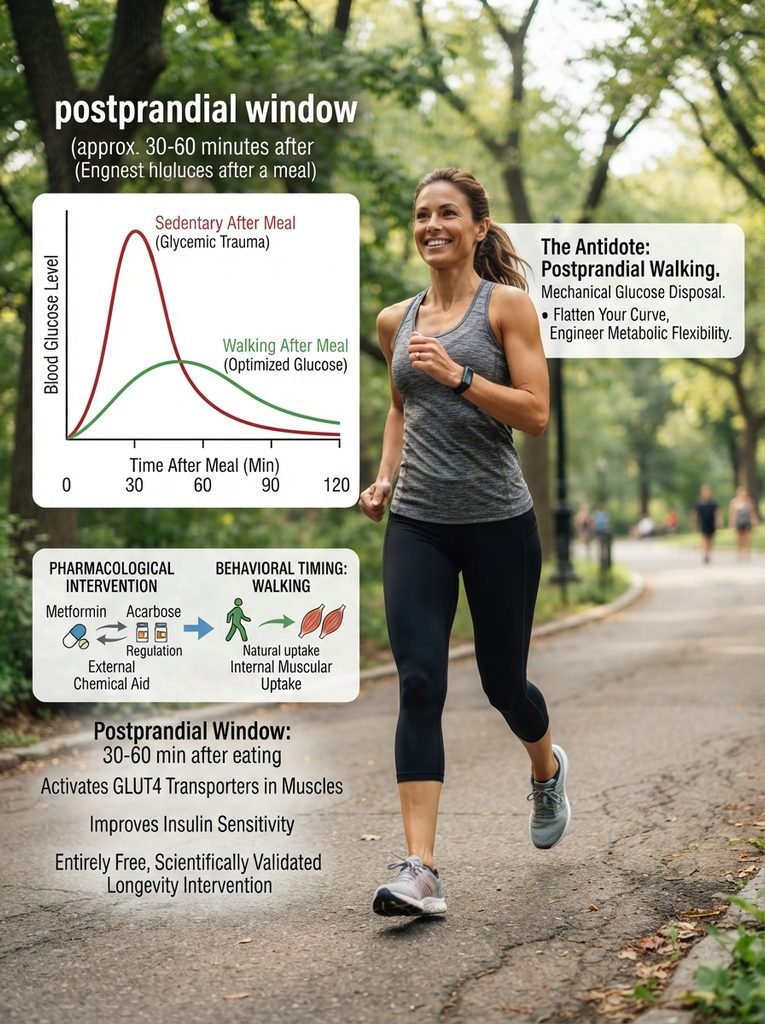
To understand the immediate impact of movement, we have to look at the cellular mechanics of glucose transport. In a resting state, your skeletal muscle cells are largely impermeable to glucose. To get sugar out of the blood and into the muscle, the pancreas must secrete insulin, which binds to receptors on the cell surface, triggering a complex signaling cascade that eventually pushes a transporter protein called GLUT4 to the cell membrane to act as a “door” for the glucose.
But when you walk, you bypass this entire insulin-dependent pathway.
The Mechanics of GLUT4 Translocation
Muscle contraction requires immediate energy. According to foundational metabolic research on skeletal muscle glucose uptake published by the National Institutes of Health (NIH), the mechanical stress and calcium release inside the contracting muscle fiber activate an enzyme called AMPK (AMP-activated protein kinase). AMPK physically forces the GLUT4 transporters to the cell surface independently of insulin.
This is a biological masterpiece. It means that even if you are insulin resistant, or if your pancreas is sluggish, the physical act of walking forces your muscles to act as a massive, immediate sponge for circulating blood sugar. You are not waiting for a hormonal signal; you are using mechanical leverage to physically pull glucose out of the bloodstream the moment you take a step. This is why the effect is immediate. Within minutes of initiating a post-meal walk, the rate of glucose clearance from the blood accelerates dramatically, blunting the peak of the postprandial spike. To track exactly how your unique biology responds to different meals and movements, review our deep dive on Glycemic Variability and the CGM Protocol.
10 Minute Walk After Meals vs Metformin
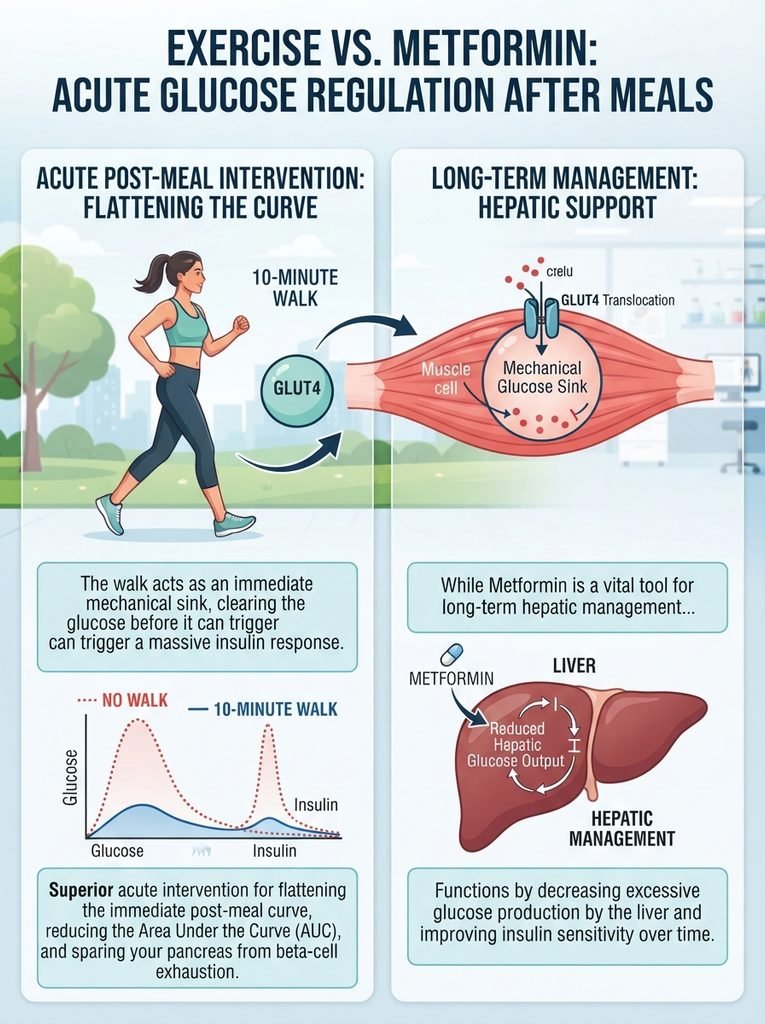
In the clinical management of metabolic dysfunction, Metformin is the undisputed first-line pharmaceutical defense. It is a marvel of modern pharmacology, working primarily by inhibiting Complex I of the mitochondrial electron transport chain in the liver, which activates AMPK and suppresses hepatic gluconeogenesis (the liver’s production of new glucose).
But how does a behavioral intervention stack up against a pharmaceutical one in the acute post-meal window? The comparison of a 10 minute walk after meals vs metformin reveals a stunning reality about the power of mechanical biology.
The Clinical Showdown
Metformin is exceptional at lowering fasting blood glucose by controlling the liver’s baseline output. However, its ability to blunt the acute, massive spike in blood sugar that occurs immediately after eating a high-carbohydrate meal is limited by its pharmacokinetics and its primary hepatic target.
Conversely, a 10-minute walk taken immediately after eating targets the peripheral skeletal muscle. Landmark clinical trials published in Diabetes Care compared acute postprandial walking to standard pharmacological interventions, demonstrating that a brief, 10-to-15-minute stroll immediately following a meal blunts the postprandial glucose excursion just as effectively, and sometimes more effectively, than rapid-acting oral agents in the acute window.
The walk acts as an immediate mechanical sink, clearing the glucose before it can trigger a massive insulin response. While Metformin is a vital tool for long-term hepatic management, the 10-minute walk is the superior acute intervention for flattening the immediate post-meal curve, reducing the area under the glucose curve (AUC), and sparing your pancreas from beta-cell exhaustion.
Does Walking Lower Blood Sugar After a Meal?
The short answer is yes, but the long answer requires a strict understanding of the postprandial timeline. Does walking lower blood sugar after a meal depends entirely on when you initiate the movement relative to the ingestion of the food.
Intercepting the Curve
When you consume carbohydrates, they are broken down in the gut and absorbed into the bloodstream. In a standard metabolic profile, blood glucose begins to rise within 15 minutes, peaks between 30 and 60 minutes, and returns to baseline around the 120-minute mark.
If you eat a meal and immediately sit down, the glucose peaks high and sharp. The pancreas panics, over-secretes insulin, and drives the sugar into fat cells, often overshooting and causing a reactive hypoglycemic crash (the “food coma”) 90 minutes later.
If you initiate a walk at the 15-to-20-minute mark—just as the glucose is beginning its steepest ascent—you intercept the curve. The mechanical GLUT4 translocation we discussed earlier acts as a pressure release valve. The glucose never reaches its pathological peak, the pancreas only needs to secrete a modest, physiological amount of insulin, and the subsequent crash is entirely avoided. You maintain a flat, stable energy profile for the rest of the afternoon.
Walking After Eating How Many Minutes
Biohackers and clinicians alike obsess over the exact dosing of this intervention. Walking after eating how many minutes is required to achieve the biological benefit without triggering a stress response? The data points to a highly specific, surprisingly low threshold.
The “Exercise Snack” Paradigm
You do not need to lace up your running shoes and commit to a 45-minute power walk. Pioneering metabolic biologists have investigated the concept of “exercise snacks”—micro-doses of movement interspersed throughout the day.
According to clinical data on intermittent walking published in Sports Medicine, breaking up prolonged sitting with just 2 to 5 minutes of light walking every 30 minutes significantly reduces postprandial glucose and insulin levels compared to continuous sitting.
However, for a dedicated, single post-meal session, the clinical sweet spot is 10 to 15 minutes.
- 2 to 5 minutes: Sufficient to slightly blunt the initial spike and prevent endothelial dysfunction if you are trapped at a desk.
- 10 to 15 minutes: The optimal duration to clear a significant portion of the circulating glucose load, maximize AMPK activation, and fully flatten the glycemic curve.
- 30+ minutes: Pushing past 20 minutes immediately after a meal transitions the activity from a digestive aid into a cardiovascular workout, which introduces the risk of gastrointestinal distress (more on this below).
Minimum Walking for Diabetes
For individuals navigating insulin resistance, prediabetes, or Type 2 Diabetes, the standard medical advice is to achieve 150 minutes of moderate-intensity exercise per week. But this weekly volume metric completely ignores the critical variable of timing. The minimum walking for diabetes management is not about total weekly volume; it is about strategic postprandial deployment.
The Rule of Three
A highly effective, clinically validated protocol for diabetic glycemic control is the “Rule of Three.” This involves walking for just 10 minutes immediately after breakfast, 10 minutes after lunch, and 10 minutes after dinner.
This yields only 30 minutes of total daily walking, but because it is perfectly timed to intercept the three largest glycemic loads of the day, its impact on HbA1c and daily glycemic variability is vastly superior to doing a single 30-minute walk in the morning and then sitting for the rest of the day. By repeatedly blunting the postprandial spikes, you reduce the total daily oxidative stress on your vascular system, protecting the delicate endothelial lining of your arteries from glycation damage. To ensure your baseline metabolic health is optimized to support this protocol, track your true visceral fat burden using our Advanced BMI Calculator.
Walking Immediately After Eating Weight Loss
The intersection of glycemic control and body composition is where this protocol truly shines. Walking immediately after eating weight loss efficacy is driven by the manipulation of insulin and lipid partitioning.
Insulin as the Storage Warden
Insulin is not just a glucose-clearing hormone; it is the master anti-lipolytic (fat-blocking) hormone. When insulin is high, fat burning is biochemically forbidden. If you eat a large meal and sit down, the resulting massive insulin spike locks your fat cells, halting lipolysis for hours while the body processes the incoming energy.
By taking a 10-minute walk immediately after eating, you clear the glucose mechanically. Because the glucose is cleared by the muscles, the pancreas does not need to secrete a massive spike of insulin. By keeping the insulin response low and flat, you minimize the “fat-storage” signal. Furthermore, the mechanical demand of the walk forces the body to oxidize the incoming nutrients for immediate fuel rather than packaging them into triglycerides for storage in visceral adipose tissue. To ensure your daily energy expenditure supports this lipid-partitioning shift, calculate your exact metabolic baseline with our TDEE Calculator.
How Long Should I Walk After Eating to Lose Weight
If your primary goal is shifting body composition rather than just managing acute blood sugar, the duration and intensity of the walk must be carefully calibrated. How long should I walk after eating to lose weight without triggering a counterproductive stress response?
The 15-Minute Lipolysis Window
For optimal fat loss, a 15-minute walk at a relaxed, conversational pace is the biological ceiling for the immediate post-meal window.
Here is the biochemical trap: if you attempt to turn this into a high-intensity, heart-pounding power walk, you activate the sympathetic nervous system (fight or flight). This triggers the release of cortisol and adrenaline, which diverts blood flow away from the gut and halts digestion. Furthermore, high-intensity exercise in a fed state can actually cause the liver to dump stored glycogen into the bloodstream to fuel the muscles, paradoxically raising your blood sugar during the walk.
Keep it to 15 minutes. Keep the pace slow. Allow the parasympathetic nervous system to remain dominant so digestion proceeds smoothly, while the gentle mechanical contraction of the calves and glutes quietly siphons the glucose out of the blood. Once the 15 minutes are up, you can return to your day, or, if you are utilizing a circadian fasting protocol, use our Intermittent Fasting Calculator to ensure your feeding windows are optimized for maximal lipid oxidation.
Side Effects of Walking After Dinner
While the benefits are profound, the execution is frequently botched, leading to a specific set of side effects of walking after dinner or after any large meal. These side effects are almost entirely driven by violating the laws of hemodynamics and autonomic nervous system balance.
The Splanchnic Blood Flow Competition
Digestion is a highly energy-expensive process that requires a massive diversion of cardiac output to the splanchnic region (the stomach, intestines, and liver). This is known as splanchnic hyperemia. According to hemodynamic models of postprandial blood flow distribution published in the Journal of Applied Physiology, the gut demands up to 30% of your total cardiac output after a heavy meal.
If you engage in a brisk, high-intensity walk immediately after eating, your skeletal muscles suddenly demand that same blood flow. The body is forced to choose between digesting the food and fueling the legs. The result is a bottleneck. The gut becomes ischemic (starved of oxygen), leading to severe cramping, bloating, delayed gastric emptying, and acid reflux.
The Vagal Brake and Intensity
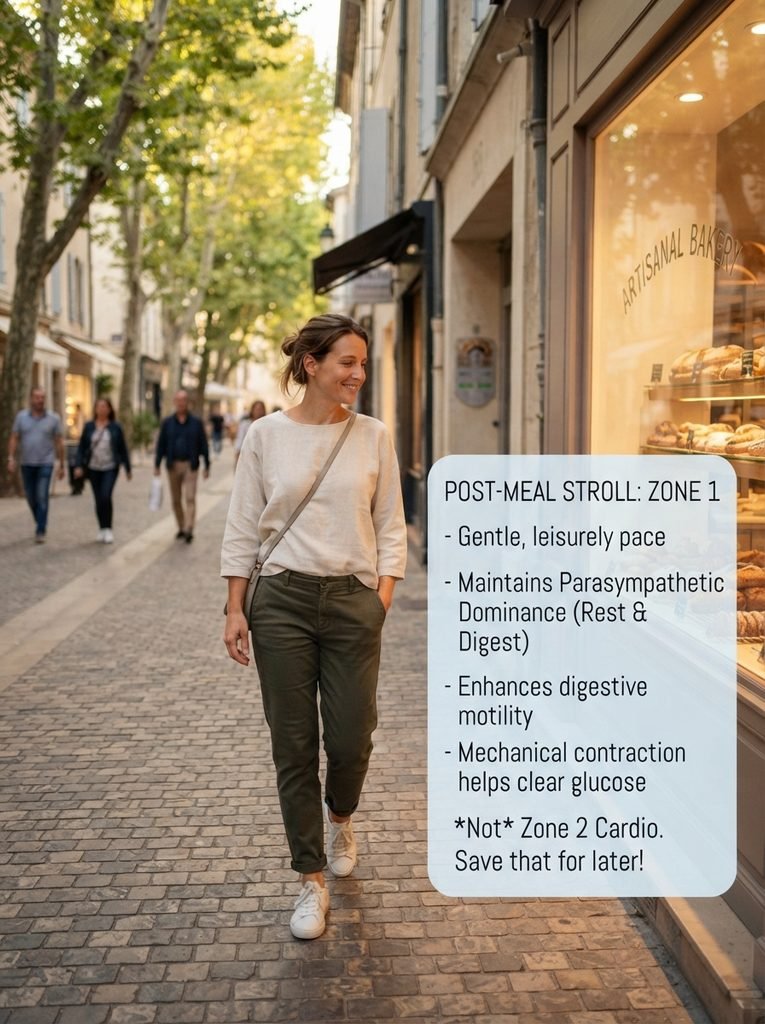
To avoid these side effects, the post-meal walk must be strictly “Zone 1″—a gentle, leisurely stroll. It should feel like you are window shopping, not trying to catch a bus. This low intensity keeps the vagus nerve engaged, maintaining parasympathetic dominance, which actually enhances digestive motility and enzyme secretion while still providing enough mechanical contraction to clear glucose. If you want to understand the profound difference between a post-meal stroll and true cardiovascular conditioning, read our masterclass on Zone 2 Cardio: The Mitochondrial Engine of a Longer Healthspan. Save the Zone 2 cardio for the fasted state or hours after the meal has fully digested.
Final Thoughts
The postprandial walk is not a “hack”; it is a return to our evolutionary baseline. Our ancestors did not hunt, gather, and consume a massive caloric load only to immediately recline on a sofa. They consumed food and immediately resumed the physical tasks of survival. Our modern environment has removed the mechanical requirement of living, leaving our vascular systems to drown in the biochemical aftermath of our meals.
By implementing a simple, 10-to-15-minute stroll after your largest meals, you fundamentally alter your metabolic destiny. You bypass the insulin-dependent bottlenecks, you flatten the glycemic curve, you protect your endothelium from glycation, and you shift your body from a state of fat storage to a state of metabolic flexibility. Stop treating the post-meal window as a time for rest. Treat it as the most critical, actionable 15 minutes of your biological day. Step outside, let the muscles do the work of the pancreas, and engineer a terrain defined by unyielding metabolic resilience.
Frequently Asked Questions (FAQ)
1. Does walking lower blood sugar immediately after a meal?
Yes. Muscle contraction during walking activates AMPK, which forces GLUT4 transporters to the cell surface independently of insulin. This allows your skeletal muscles to immediately pull glucose out of the bloodstream, blunting the post-meal spike within minutes of starting the walk.
2. How many minutes should I walk after eating to lower blood sugar?
When determining walking after eating how many minutes, the clinical sweet spot is a 10 to 15-minute walk initiated within 15 to 30 minutes after finishing your meal. This duration is long enough to clear a significant portion of the circulating glucose load without triggering the sympathetic stress response or gastrointestinal distress associated with longer, more intense workouts.
3. Is a 10-minute walk after meals as effective as metformin?
In the acute post-meal window, a 10 minute walk after meals vs metformin comparison shows that the walk can blunt the postprandial glucose spike just as effectively as certain rapid-acting oral medications. While metformin is highly effective for long-term fasting glucose control via the liver, the mechanical glucose disposal of a post-meal walk is superior for flattening the immediate glycemic curve.
4. What are the side effects of walking immediately after dinner?
The side effects of walking after dinner occur if the walk is too fast or intense, causing cramping, bloating, and acid reflux. This happens because intense exercise diverts necessary blood flow away from the digestive tract (splanchnic region) to the skeletal muscles. To avoid this, keep the post-meal walk at a very gentle, leisurely “strolling” pace to maintain parasympathetic digestion.
5. Does walking immediately after eating help with weight loss?
Yes. Walking immediately after eating weight loss efficacy is driven by insulin management. By clearing glucose mechanically, a post-meal walk prevents a massive spike in insulin. Since insulin is a fat-storage hormone that blocks lipolysis, keeping insulin levels low and flat allows the body to continue burning fat rather than immediately storing the incoming calories as visceral adipose tissue.
⚕️ Editorial & Medical Disclaimer
Julian Vance is not a licensed physician or medical professional. All content published on RegenStep.com is thoroughly reviewed against cited primary sources and peer-reviewed literature for educational and informational purposes only. It does not constitute medical advice, diagnosis, or treatment. Always consult a qualified healthcare provider or doctor regarding any personal health condition or medical decisions, particularly before altering your exercise routines, managing diabetes, or adjusting prescription medications like metformin or insulin.
#BloodSugar #MetabolicHealth #DailyHabits

Julian Vance is the writer and editor behind RegenStep, translating peer-reviewed longevity, metabolic, and gut-health research into practical, actionable guides. Julian is not a licensed physician; content is reviewed against cited primary sources and is for informational purposes only. Always consult a qualified healthcare provider for personal medical advice.