
We have culturally normalized cognitive decline. We treat brain fog, memory lapses, and the inability to sustain deep focus as inevitable taxes of aging or the unavoidable hangover of modern stress. We attempt to mask these symptoms with escalating doses of caffeine, synthetic stimulants, and sheer willpower. But from a systems biology perspective, brain fog is not a lack of stimulation; it is a profound structural and metabolic failure at the synaptic level. It is the physical manifestation of neuroinflammation, stalled myelination, and a catastrophic downregulation of the very proteins required to grow and maintain neural networks.

For decades, the dogma of neuroscience was that the adult brain was a static organ—that once you reached adulthood, your neural hardware was fixed, and the rest of your life was a slow, entropic decay. We now know this is biologically false. The adult brain retains the capacity for neurogenesis—the birth of new neurons—specifically within the dentate gyrus of the hippocampus, the brain’s master center for memory consolidation and spatial navigation. But this process does not happen by accident. It requires a highly specific biochemical trigger.
Enter Hericium erinaceus, commonly known as Lion’s Mane. This is not a generic adaptogen, and it is certainly not a culinary novelty. It is a highly specialized, neurotrophic fungal organism that contains unique secondary metabolites capable of crossing the blood-brain barrier and directly upregulating the synthesis of Nerve Growth Factor (NGF). As a strategist focused on regenerative biology, I view lion’s mane neurogenesis protocols not as a supplementary afterthought, but as a foundational structural intervention for the aging brain. Let’s decode the biophysics of this mushroom, dismantle the commercial extraction traps, and build the precise clinical protocol required to rebuild your cognitive architecture.
Lion’s Mane Benefits: The Biochemistry of Hericenones and Erinacines
To understand why this specific fungus is so highly prized in longevity medicine, we must look past the generic “mushroom” label and examine its unique phytochemical matrix. The vast majority of medicinal mushrooms (like Reishi or Chaga) exert their effects via large, complex polysaccharides (beta-glucans) that modulate the peripheral immune system in the gut. Lion’s Mane operates on an entirely different, highly localized neurological axis.
Its profound lion’s mane benefits are driven by two distinct classes of low-molecular-weight secondary metabolites: hericenones and erinacines.
The Fruiting Body vs. The Mycelium
The physical structure of the mushroom dictates its chemical output.
- Hericenones are isolated exclusively from the fruiting body (the visible, spore-bearing, lion-like cascade of the mushroom). These compounds are highly effective at stimulating the production of NGF in the peripheral nervous system and possess potent anti-inflammatory properties.
- Erinacines, conversely, are diterpenoids synthesized exclusively by the mycelium (the vast, microscopic root network that grows through the substrate). Pioneering phytochemical research published in the Journal of Agricultural and Food Chemistry demonstrated that erinacines are low-molecular-weight diterpenoids that easily cross the blood-brain barrier. Once inside the central nervous system, they act as a direct transcriptional trigger for neurogenesis.
If a commercial supplement only utilizes the fruiting body, you are missing the primary drivers of central neurogenesis. If it only utilizes the mycelium, you are missing the peripheral and immunomodulating hericenones. A clinical-grade protocol requires both.
Lion’s Mane Effects: Neurogenesis, Myelination, and the Gut-Brain Axis
When erinacines cross the blood-brain barrier, they do not act as neurotransmitters themselves. Instead, they act as epigenetic signaling molecules. The primary lion’s mane effects are mediated through the upregulation of Nerve Growth Factor (NGF) and Brain-Derived Neurotrophic Factor (BDNF).
The NGF Synthesis Cascade
NGF is a large protein that cannot cross the blood-brain barrier, which is why injecting or ingesting synthetic NGF is biologically futile. You must force the brain to synthesize it endogenously. According to clinical neuropharmacology data on fungal metabolites, erinacines upregulate the transcription of Nerve Growth Factor in the hippocampus and the locus coeruleus.
Once synthesized, NGF binds to the TrkA (Tropomyosin receptor kinase A) receptors on the surface of neurons. This binding initiates a signaling cascade that forces the neuron to sprout new dendrites, extend its axons, and forge new synaptic connections. This is the literal, physical mechanism of learning, memory encoding, and cognitive resilience.
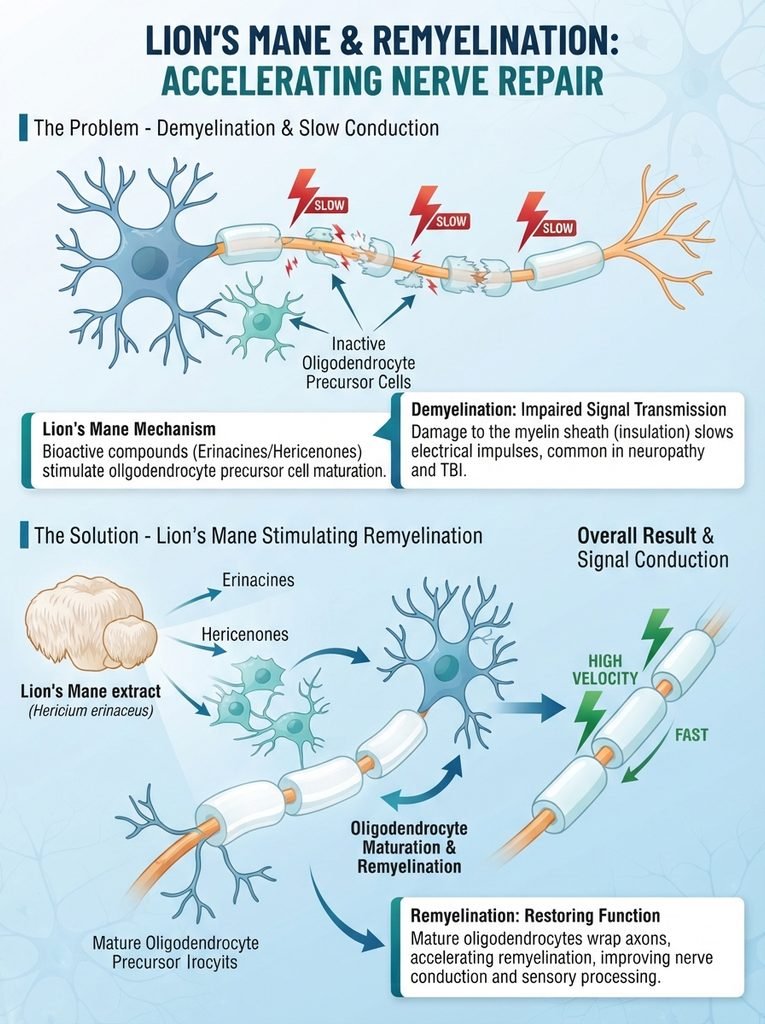
Oligodendrocyte Stimulation and Myelin Repair
Neurogenesis is only half the equation; the new neurons must be insulated to transmit electrical signals at high velocities. This insulation is provided by the myelin sheath, which is synthesized by glial cells called oligodendrocytes. Research indicates that Lion’s Mane extracts actively stimulate oligodendrocyte maturation, accelerating the remyelination of damaged neural pathways. This is why patients with peripheral neuropathy or traumatic brain injury often report profound improvements in nerve conduction and sensory processing when utilizing high-dose protocols.
The Gut-Brain Axis and Microbiome Modulation
While the erinacines target the brain directly, the large, indigestible beta-glucans in the mushroom act as a potent prebiotic in the colon. By feeding keystone, butyrate-producing bacteria like Faecalibacterium prausnitzii, Lion’s Mane strengthens the intestinal barrier and reduces systemic neuroinflammation. Because the gut and brain are physically tethered via the vagus nerve, resolving gut inflammation directly lowers the neuro-inflammatory burden, lifting the “fog” that plagues modern cognition. To ensure your autonomic nervous system is successfully transmitting these gut-brain signals, review our protocol on Autonomic Health and HRV Tracking.
Lion’s Mane Benefits for Male: Hormonal, Cognitive, and Metabolic Intersections
While the fundamental mechanisms of neurogenesis apply universally, male physiology introduces specific metabolic and stress-driven vulnerabilities that this mushroom is perfectly positioned to address. The lion’s mane benefits for male populations extend deeply into the intersection of cognitive endurance, metabolic health, and neuro-inflammation.
Shielding the Brain from Metabolic Endotoxemia
Men statistically carry higher burdens of visceral adiposity (fat stored around the internal organs) than women. Visceral fat is not inert storage; it is a highly active endocrine gland that continuously pumps out inflammatory cytokines like IL-6 and TNF-alpha. According to endocrine research on metabolic neuroinflammation, systemic metabolic syndrome attenuates neuroinflammation driven by systemic metabolic syndrome, effectively starving the hippocampus of the metabolic flexibility it needs to generate new neurons.
By acting as a potent systemic anti-inflammatory and improving insulin sensitivity, Lion’s Mane clears the inflammatory “smog” that chokes neurogenesis. To ensure your visceral fat burden isn’t silently sabotaging your cognitive protocols, track your true metabolic risk using our Advanced BMI Calculator and our Body Fat Calculator.
Cognitive Endurance Under High Allostatic Load
Men in high-performance environments frequently operate under chronic sympathetic nervous system dominance (chronic stress). This chronic “fight or flight” state bathes the brain in cortisol, which is highly neurotoxic to the hippocampus and actively suppresses BDNF. Lion’s Mane modulates the HPA (Hypothalamic-Pituitary-Adrenal) axis, blunting the cortisol response to acute stressors and protecting the hippocampal neurons from glucocorticoid-induced apoptosis. The result is not a “jittery” stimulated focus, but a calm, sustained cognitive endurance that allows for hours of deep, uninterrupted work.
Lion’s Mane Benefits for Female: Hormonal Fluctuations and Neuroprotection
The female brain is profoundly influenced by the cyclical fluctuations of estrogen and progesterone. Understanding the lion’s mane benefits for female physiology requires looking at the neuroprotective role of these hormones and what happens when they decline.
Bridging the Perimenopausal Neurological Gap
Estrogen is highly neuroprotective; it directly upregulates BDNF, promotes synaptic plasticity, and shields neurons from oxidative stress. As women enter perimenopause and menopause, the drastic drop in estrogen leaves the brain highly vulnerable to neuroinflammation, cognitive fatigue, and mood instability.
Because Lion’s Mane independently upregulates NGF and BDNF via the TrkA receptor pathway, it acts as a vital, non-hormonal bridge during this transition. It provides the neurotrophic support that the declining ovaries are no longer supplying, helping to stabilize mood, preserve working memory, and maintain cognitive velocity during a period of intense endocrine upheaval.
Mood Stabilization and the Monoamine Pathway
Beyond structural neurogenesis, Lion’s Mane has been shown to modulate the monoamine neurotransmitter systems (serotonin and dopamine). By reducing neuroinflammation in the brainstem and enhancing the health of the serotonergic neurons, it provides a profound, stabilizing effect on mood, making it a highly effective adjunct for women navigating hormonal anxiety or postpartum cognitive shifts. To ensure your sleep architecture is optimized to support this nightly neurological repair, read our masterclass on Sleep Architecture: Why the Stages Matter More Than the Hours.
Lions Mane Hair: The DHT, NGF, and Follicular Cycling Connection
If you spend time in biohacking forums, you will inevitably encounter the panicked search intent surrounding lions mane hair. A vocal subset of users claims that taking Lion’s Mane triggered severe hair shedding, drawing parallels to the sexual and dermatological side effects of pharmaceutical 5-alpha reductase (5-AR) inhibitors like Finasteride.
Let’s dismantle this biological misconception and look at the actual dermatological science.
The 5-AR Inhibition Myth
The fear stems from the hypothesis that Lion’s Mane inhibits 5-AR, the enzyme that converts testosterone into DHT (dihydrotestosterone). While DHT is the primary driver of androgenetic alopecia (male and female pattern baldness), it is also required for systemic vitality. If a supplement artificially crashes your DHT, it can cause brain fog, libido loss, and paradoxical hair shedding.
However, comprehensive phytochemical analyses of Hericium erinaceus show no significant 5-AR inhibitory activity. The anecdotal reports of hair loss and low libido are almost entirely attributed to the substrate the mushroom was grown on (more on this in the side effects section), or a nocebo effect driven by internet echo chambers.
The NGF and Hair Follicle Stem Cell Niche
In reality, Lion’s Mane is highly beneficial for hair growth. Hair follicles are innervated by a dense network of sensory nerves. According to dermatological research on neurotrophins and hair cycling, Nerve Growth Factor (NGF) is a mandatory signaling molecule that activates the hair follicle stem cell niche, forcing the follicle out of the resting (telogen) phase and into the active growth (anagen) phase. By systemically upregulating NGF, Lion’s Mane creates a highly favorable, neurotrophic environment for robust, dense hair growth.
Lion’s Mane Supplement Side Effects and Benefits and Side Effects
When evaluating the lion’s mane benefits and side effects, it is vital to separate the pharmacological reality of the mushroom from the toxicological reality of cheap, poorly manufactured supplements. The true lion’s mane supplement side effects are rarely caused by the fungus itself; they are caused by the industrial shortcuts taken to mass-produce it.
The Grain-Based Mycelium Trap
The most common side effect reported by users is severe gastrointestinal distress, brain fog, and lethargy. This is almost exclusively caused by supplements that utilize “mycelium on grain” (often listed as mycelial biomass).
Because growing pure, liquid-cultured mycelium is expensive and time-consuming, commercial farms grow the mycelium on blocks of brown rice or oats. When they harvest, they do not separate the fungus from the grain; they grind the entire block into a powder. According to independent analyses of commercial mushroom supplements, grain-based mycelial biomass is frequently contaminated with residual starches and fungal metabolites that trigger severe blood sugar spikes, gut fermentation, and systemic inflammation. You are not experiencing a side effect of Lion’s Mane; you are experiencing a side effect of rancid, fermented rice.
The Histamine and Beta-Glucan Friction
The second most common side effect is mild skin itching or gastrointestinal bloating.
- The Itch: NGF is heavily involved in the sensitization of sensory neurons. In highly sensitive individuals, a sudden, massive spike in NGF can temporarily lower the firing threshold of peripheral sensory nerves, manifesting as a mild, transient itching sensation on the skin.
- The Bloat: The large beta-glucan molecules are highly fermentable. If your gut microbiome is dysbiotic, or if you introduce a massive dose too quickly, the bacteria will rapidly ferment the fiber, producing gas and bloating.
To mitigate this, always start with a micro-dose and titrate upward, and ensure you are utilizing a high-quality extract rather than raw, unextracted mushroom powder.
How Much Lions Mane is Too Much: Dosing and the Extraction Matrix
In pharmacology, the dose dictates the poison. In mycology, the extraction method dictates the bioavailability. Understanding how much lions mane is too much requires a strict adherence to clinical dosing thresholds and dual-extraction protocols.
The Dual-Extraction Mandate
You cannot simply eat raw Lion’s Mane powder and expect neurological benefits. The fungal cell wall is made of chitin, a tough, indigestible polymer that locks the active compounds inside. Furthermore, the active compounds have different solubilities:
- Hericenones and Beta-Glucans are water-soluble. They require a hot water extraction to break the chitin and pull them into the solution.
- Erinacines and Sterols are alcohol-soluble. They require an ethanol extraction to be bioavailable.
If a brand only uses a hot water extract, you are missing the brain-penetrating erinacines. If they only use an alcohol extract, you are missing the immune-modulating beta-glucans. You must demand a Dual-Extracted product that explicitly lists both the water and alcohol extraction ratios on the label.
The Clinical Dosing Matrix
- The Maintenance Dose (500 mg to 1,000 mg of dual-extract daily): Ideal for healthy adults looking to maintain cognitive clarity, support mild neurogenesis, and modulate the gut-brain axis.
- The Therapeutic Dose (2,000 mg to 3,000 mg of dual-extract daily): The target for individuals actively recovering from traumatic brain injury, severe burnout, peripheral neuropathy, or age-related cognitive decline.
When is it Too Much?
Exceeding 3,000 mg to 5,000 mg of a high-quality dual extract daily pushes you into the realm of diminishing returns and potential adverse effects. Over-amping the NGF pathway can lead to sensory hyper-excitability (tingling, itching, or mild nerve pain) and disrupt the delicate balance of the monoamine neurotransmitters, leading to irritability or sleep fragmentation.
💡 Action Step: Neurogenesis and myelin synthesis are highly energy- and resource-expensive processes. Your brain requires massive amounts of structural amino acids, healthy lipids, and cellular hydration to physically build new neural tissue. Calculate your exact daily structural requirements with our Protein Intake Calculator and ensure your biological solvent is fully primed by calculating your baseline needs with our Water Intake Calculator. Furthermore, ensure you are fueling this upgraded metabolic engine by calculating your exact daily energy expenditure with our TDEE Calculator.
Final Thoughts
The pursuit of cognitive longevity is not about finding a synthetic stimulant to force your exhausted neurons to fire faster. It is about providing the exact biochemical substrates required to rebuild the physical architecture of your brain. Lion’s mane neurogenesis represents a profound shift from masking cognitive fatigue to actively engineering neural resilience.
By utilizing the unique erinacines and hericenones found in this remarkable fungus, you can bypass the blood-brain barrier, upregulate the synthesis of Nerve Growth Factor, and force your hippocampus to forge new, resilient synaptic connections. But biology demands precision. You must ruthlessly vet your sources, demand dual-extracted, grain-free formulations, and respect the hormetic dosing thresholds. Stop treating your brain like a machine that just needs more fuel. Start treating it like a living, plastic network that requires the right biological information to grow, adapt, and thrive.
Frequently Asked Questions (FAQ)
1. How does Lion’s Mane promote neurogenesis?
Lion’s mane neurogenesis is driven by unique compounds called erinacines (found in the mycelium) and hericenones (found in the fruiting body). Erinacines are small enough to cross the blood-brain barrier, where they directly upregulate the transcription of Nerve Growth Factor (NGF) in the hippocampus, stimulating the growth of new neurons and the repair of myelin sheaths.
2. What are the side effects of Lion’s Mane supplements?
True lion’s mane supplement side effects are rare, but can include mild skin itching (due to NGF sensitizing peripheral sensory nerves) or gastrointestinal bloating (from the fermentation of beta-glucans). However, severe brain fog, lethargy, and GI distress are usually caused by cheap, grain-based mycelial biomass that is contaminated with residual starches and fungal metabolites.
3. Does Lion’s Mane cause hair loss?
No. The myth surrounding lions mane hair loss stems from a false comparison to pharmaceutical 5-AR inhibitors (like Finasteride). Lion’s Mane does not significantly inhibit 5-AR or crash DHT levels. In fact, by upregulating Nerve Growth Factor (NGF), it stimulates the hair follicle stem cell niche, which promotes the transition of hair follicles into the active growth (anagen) phase.
4. How much Lion’s Mane is too much?
When asking how much lions mane is too much, understand that for a high-quality, dual-extracted supplement, a daily dose of 500 mg to 3,000 mg is considered safe and clinically effective. Exceeding 3,000 mg to 5,000 mg daily can lead to diminishing returns and sensory hyper-excitability (tingling, itching, or mild nerve pain) due to the over-stimulation of Nerve Growth Factor in peripheral sensory neurons.
5. What are the specific benefits of Lion’s Mane for women?
The lion’s mane benefits for female physiology are profound, particularly during perimenopause and menopause. The natural drop in estrogen leads to a decline in neuroprotective BDNF. Lion’s Mane independently upregulates NGF and BDNF via the TrkA receptor pathway, acting as a non-hormonal bridge to stabilize mood, preserve working memory, and protect against neuroinflammation during hormonal transitions.
⚕️ Editorial & Medical Disclaimer
Julian Vance is not a licensed physician or medical professional. All content published on RegenStep.com is thoroughly reviewed against cited primary sources and peer-reviewed literature for educational and informational purposes only. It does not constitute medical advice, diagnosis, or treatment. Always consult a qualified healthcare provider or doctor regarding any personal health condition or medical decisions, particularly before initiating new botanical or fungal protocols, altering your diet, or if you are taking prescription medications that affect the central nervous system.
#LionsMane #BrainHealth #MushroomExtracts

Julian Vance is the writer and editor behind RegenStep, translating peer-reviewed longevity, metabolic, and gut-health research into practical, actionable guides. Julian is not a licensed physician; content is reviewed against cited primary sources and is for informational purposes only. Always consult a qualified healthcare provider for personal medical advice.