
We have all heard the standard, exhausting narrative around weight loss: “It’s just calories in versus calories out. You just need more willpower.” But if you have ever hit a brutal weight‑loss plateau where your body aggressively fights back with relentless hunger and a sluggish metabolism, you know that willpower is a terrible match for biochemistry.
When your biology doesn’t want you to lose weight, it will win every single time.
Let me introduce you to Patricia, a 58‑year‑old retired teacher. “I cut my calories to 1,200 a day, walked five miles daily, and the scale didn’t budge for six months,” she told me. “My doctor said I must be cheating. I wasn’t.”
Patricia had all the classic signs of leptin resistance: constant food noise, intense sugar cravings, feeling cold and tired, and a metabolism that refused to wake up. Her leptin levels were high (her fat cells were screaming), but her brain couldn’t hear the signal. She wasn’t lazy or weak—her hormones were blocking her.
We shifted her strategy from calorie restriction to hormonal repair: she cut out hidden fructose, started a 14:10 intermittent fasting schedule, and ate a protein‑rich breakfast. Within three months, her cravings vanished, her energy returned, and she lost 14 pounds without lowering her calories further. “I stopped fighting my body,” she says, “and started listening to it.”
Patricia’s story illustrates a critical truth: At the center of this biological tug‑of‑war is a condition known as leptin resistance. It is a silent hormonal breakdown that tricks your brain into thinking you are literally starving to death, even if you have plenty of stored energy.
Here is the cellular science behind why leptin resistance ruins weight loss efforts, and how to reset your hormonal thermostat.
External Link: Landmark endocrinology research established leptin as a key regulator of energy balance. Read more here.
The Master Satiety Switch: How Leptin Should Work
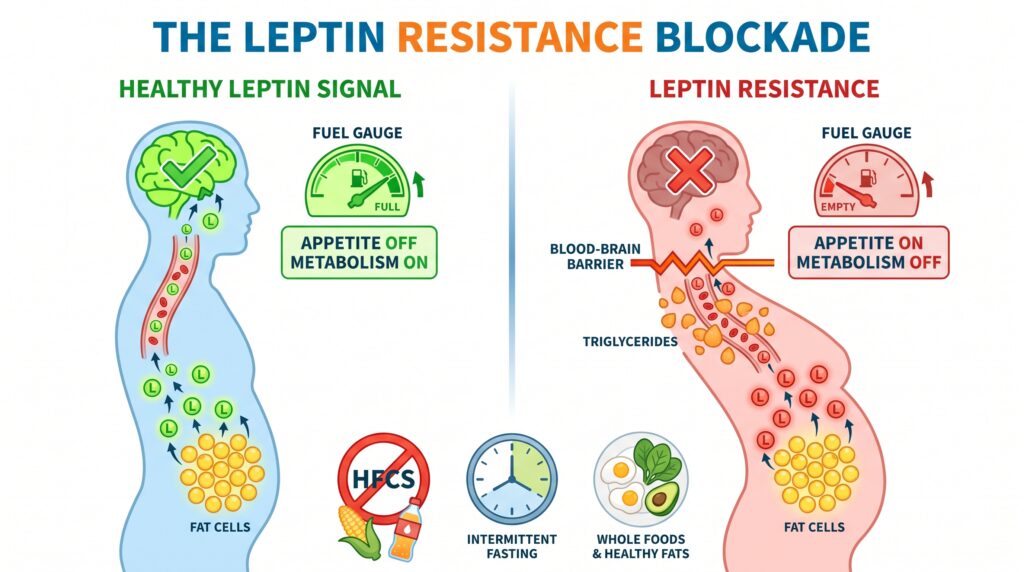
Leptin is a hormone manufactured and secreted directly by your adipose tissue (fat cells). Think of it as your body’s internal fuel gauge. Its primary job is to communicate directly with an area of your brain called the hypothalamus to regulate long‑term energy balance.
In a healthy metabolic system, the feedback loop is flawless:
- You eat, and excess energy is stored in fat cells.
- The fat cells secrete leptin into the bloodstream.
- Leptin crosses the blood‑brain barrier and binds to receptors in the hypothalamus.
- The brain realizes, “We have plenty of fuel.” It safely dampens your appetite and revs up your thyroid and metabolic rate to burn off excess energy.
Internal Link: This metabolic feedback loop is central to metabolic flexibility. Read Metabolic Flexibility: How to Train Your Body to Switch Between Carbs and Fat.
The Hormonal Broken Phone: What Is Leptin Resistance?
If you carry excess body fat, you mathematically possess incredibly high levels of circulating leptin. Chronically elevated hormones, however, cause the body’s receptors to lose their sensitivity. Just as chronic high blood sugar causes insulin resistance, a continuous flood of leptin causes the brain’s receptors to burn out and desensitize.
Because leptin and insulin resistance usually travel together, the dietary fixes overlap almost entirely — the insulin resistance diet guide covers the food pattern that lowers both signals.
When you develop leptin resistance, your fat cells are screaming at the top of their lungs, but the hypothalamus cannot hear a thing.
Because the brain perceives a complete absence of the leptin signal, it draws a terrifying logical conclusion: it assumes you are starving. To save your life from this perceived famine, the hypothalamus triggers an immediate emergency response:
- Upregulates Hunger: It floods your system with intense, intrusive cravings (especially for high‑calorie, quick‑energy carbohydrates) to force you to eat.
- Downregulates Metabolism: It slows down non‑essential energy expenditures, leaving you feeling chronically fatigued, cold, and lethargic.
You are trapped in a cruel biological paradox: your body is physically holding onto abundance, but your brain is trapped on a simulated desert island.
Internal Link: Chronic inflammation is a key driver of receptor desensitization. See Inflammaging: How Chronic Low‑Grade Inflammation Drives Disease.
What Actually Drives the Blockade?
Leptin resistance isn’t caused by a lack of discipline; it is driven by specific metabolic insults that block the hormone from doing its job.
1. Elevated Triglycerides and the Blood‑Brain Barrier
To signal the brain, leptin must physically cross the blood‑brain barrier (BBB). Landmark endocrinology research shows that elevated triglycerides (circulating blood fats, heavily driven by high‑fructose and ultra‑processed diets) actively bind to the blood‑brain barrier and physically block leptin from crossing. The leptin is trapped in the bloodstream, unable to reach the hypothalamus.
2. Chronic Hypothalamic Inflammation
A processed, nutrient‑poor diet triggers low‑grade, localized inflammation inside the hypothalamus itself. This structural inflammation alters the physical shape of leptin receptors, making it structurally impossible for the hormone to lock into place and deliver its message.
3. Hyperinsulinemia (High Insulin)
Insulin and leptin share highly integrated signaling pathways in the brain. When you have chronic insulin resistance due to poor blood sugar management, the persistent flood of insulin actively interferes with leptin signaling, essentially shouting over the satiety signal.
Internal Link: Managing insulin is also key for natural GLP‑1. Read Natural GLP‑1: How to Boost Ozempic‑Like Effects with Food.
The Reset Protocol: Sensitizing the Brain (What Patricia Did)
You cannot starve your way out of leptin resistance. In fact, aggressive calorie restriction causes circulating leptin to plummet even further, signaling the brain to double down on starvation mode. To fix the issue, you must lower inflammation and clear the highway to the brain.
1. Crush High Triglycerides
The fastest way to clear the blood‑brain barrier so leptin can reach the hypothalamus is to rapidly lower your circulating triglycerides. This requires drastically cutting out refined carbohydrates, industrial seed oils, and specifically high‑fructose corn syrup, which is metabolized directly by the liver into triglycerides.
Patricia replaced sugary snacks with whole fruit (in moderation) and eliminated all processed foods. Within weeks, her triglyceride levels dropped by 30%.
2. Leverage a 12‑to‑16‑Hour Fasting Window
Intermittent fasting is incredibly effective for leptin sensitization. Giving your body a prolonged break from incoming nutrients allows both insulin and leptin levels to drop safely down to baseline. This temporary dip gives your overloaded brain receptors a much‑needed break, allowing them to restore their sensitivity over time.
Patricia started with a 14:10 schedule (fasting from 8 PM to 10 AM). After a month, she extended to 16:8 on most days.
Internal Link: Fasting also triggers autophagy. See Autophagy Activation: How Fasting Triggers Cellular Cleanup.
3. Prioritize Protein and Fiber in the Morning
A high‑protein, high‑fiber breakfast stabilizes postprandial glucose and suppresses ghrelin (the short‑term hunger hormone) without causing a massive insulin spike. This provides a steady, clean stream of amino acids and micronutrients that support thyroid and metabolic function without crowding out leptin pathways.
Patricia swapped her morning cereal for three scrambled eggs with spinach and half an avocado.
Internal Link: Metabolic health is your shield against many chronic conditions. Read Metabolic Health Is Your Ultimate Shield Against Infections.
Quick Reference: The Satiety Spectrum
| Feature | Leptin Sensitive (Healthy) | Leptin Resistant (Blocked) |
|---|---|---|
| Circulating Leptin Levels | Normal / Balanced | Dangerously High |
| Hypothalamus Perception | Sees abundance; metabolic rate optimized | Sees starvation; activates emergency survival protocols |
| Appetite & Cravings | Naturally switches off after eating nutrient‑dense food | Constant, low‑grade food noise and intense sugar cravings |
| Blood‑Brain Barrier Status | Clear; leptin moves freely into the CNS | Blocked by elevated triglycerides and systemic inflammation |
| Energy Levels | High; body easily burns stored fat for daily activities | Low; body hoards fat and creates lethargy to save energy |
True, sustainable body composition management is never a battle against your scale—it is an alignment of your hormones. By focusing on lowering triglycerides, managing post‑meal glucose spikes, and reducing systemic inflammation, you can clear the hormonal blockade, quiet the constant food noise, and allow your brain to accurately see the fuel it already has.
Patricia now maintains her weight without obsessing over every calorie. “The food noise in my head is gone,” she says. “I eat when I’m hungry, I stop when I’m full. I never thought that was possible for me.”
FAQ: Leptin Resistance
Q: Can I have leptin resistance even if I’m not obese?
A: Yes. Leptin resistance is closely tied to body fat percentage and diet quality, but it can occur in normal‑weight individuals who consume a high‑sugar, high‑processed‑food diet. Elevated triglycerides and chronic hypothalamic inflammation can drive resistance even before obesity develops.
Q: How do I know if I have leptin resistance?
A: Common signs include: constant hunger or “food noise,” intense sugar cravings, difficulty losing weight despite calorie restriction, feeling cold or fatigued frequently, and a history of yo‑yo dieting. A blood test can measure fasting leptin levels (high levels suggest resistance), but there is no single definitive diagnostic test.
Q: Does exercise help reverse leptin resistance?
A: Yes. Regular exercise, especially Zone 2 cardio and resistance training, improves insulin sensitivity, lowers triglycerides, and reduces systemic inflammation—all of which help clear the blood‑brain barrier and restore leptin signaling.
Q: What foods worsen leptin resistance?
A: Foods that spike triglycerides and inflammation: high‑fructose corn syrup, refined sugar, industrial seed oils (soybean, corn, canola), ultra‑processed snacks, and sugary beverages. Focus on whole foods: lean protein, leafy greens, healthy fats (olive oil, avocado, nuts), and low‑glycemic fruits (berries).
Q: How long does it take to restore leptin sensitivity?
A: Most people notice reduced cravings and improved energy within 4–6 weeks of consistent dietary and lifestyle changes (lowering triglycerides, intermittent fasting, protein/fiber breakfast). Full metabolic adaptation can take 3–6 months, depending on the severity of resistance.
Q: Can intermittent fasting alone fix leptin resistance?
A: Intermittent fasting is a powerful tool, but it works best as part of a comprehensive protocol that also reduces triglycerides (dietary changes) and lowers inflammation (exercise, sleep). Fasting allows leptin and insulin levels to drop, giving receptors a break, but without addressing the underlying triggers (diet quality, triglycerides), the effects may be limited.
how to reverse leptin resistance
leptin and triglycerides
hormonal weight loss plateau
reset leptin receptors naturally
metabolic health and fasting
leptin resistance weight loss
intermittent fasting leptin
The Hormonal Broken Phone: What Is Leptin Resistance?
If you carry excess body fat, you mathematically possess incredibly high levels of circulating leptin. Chronically elevated hormones, however, cause the body’s receptors to lose their sensitivity. Just as chronic high blood sugar causes insulin resistance, a continuous flood of leptin causes the brain’s receptors to burn out and desensitize. Because leptin and insulin resistance usually travel together, the dietary fixes overlap almost entirely — the insulin resistance diet guide covers the food pattern that lowers both signals. When you develop leptin resistance, your fat cells are screaming at the top of their lungs, but the hypothalamus cannot hear a thing. Because the brain perceives a complete absence of the leptin signal, it draws a terrifying logical conclusion: it assumes you are starving. To save your life from this perceived famine, the hypothalamus triggers an immediate emergency response: You are trapped in a cruel biological paradox: your body is physically holding onto abundance, but your brain is trapped on a simulated desert island.
What Actually Drives the Blockade?
Leptin resistance isn’t caused by a lack of discipline; it is driven by specific metabolic insults that block the hormone from doing its job.

Julian Vance is the writer and editor behind RegenStep, translating peer-reviewed longevity, metabolic, and gut-health research into practical, actionable guides. Julian is not a licensed physician; content is reviewed against cited primary sources and is for informational purposes only. Always consult a qualified healthcare provider for personal medical advice.
I admire how this blog promotes kindness and compassion towards ourselves and others We could all use a little more of that in our lives
Your writing is so inspiring and motivating I always leave your blog feeling more determined and resilient