
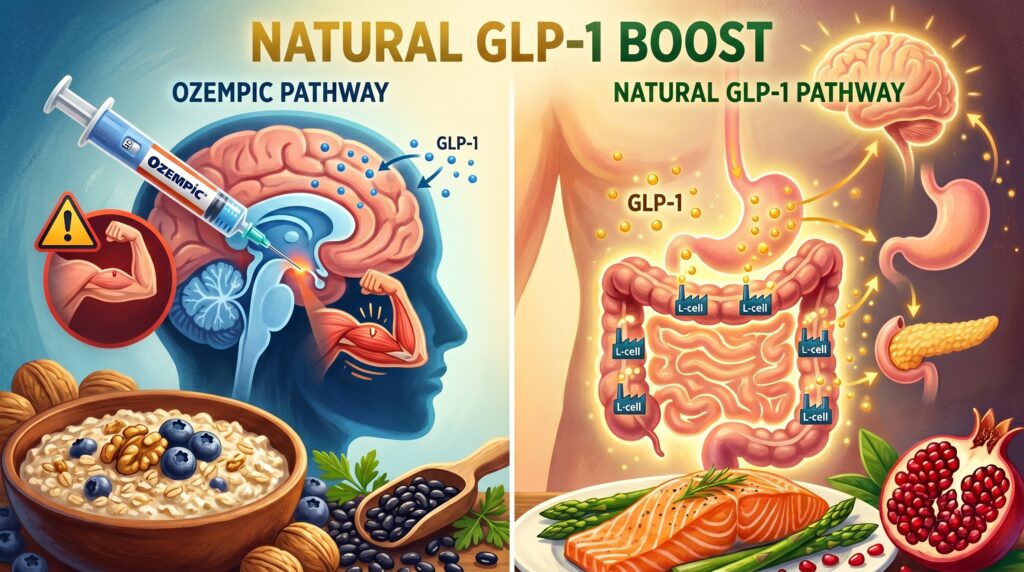
If you’ve turned on a television, opened a magazine, or simply chatted with a neighbor over the past year, you’ve heard about medications like Ozempic and Wegovy. These drugs seem like magic, melting away pounds by simply turning off the desire to eat. My good friend Sarah, who just turned 64, called me last week asking if she should ask her doctor for a prescription. She told me, “I just want that ‘food noise’ in my head to finally go away so I can enjoy my retirement without constantly thinking about my next meal.”
Her question is incredibly common, and completely understandable. The results we see on the news are dramatic. But what almost nobody is talking about is that you don’t necessarily need a weekly injection to experience the benefits of the hormone these drugs mimic. Your body already makes it.
Before we dive into the natural solutions, let’s look at how the medical versions actually work. These medications are simply synthetic versions of a hormone called GLP-1 (Glucagon-like peptide-1) . The main difference is they stay in your system much longer than the natural version your body produces.
But here is the catch, especially for those of us over 60: we can’t afford the side effects of rapid, chemically-induced weight loss. When you lose weight that quickly on a synthetic drug, you aren’t just losing fat. You are losing a significant amount of muscle mass. For a 30-year-old, losing muscle is a setback. For someone in their 60s or 70s, losing muscle is a direct threat to your independence. Sarcopenia (age-related muscle loss) is already working against us, and compounding it with a drug that makes you eat so little that your muscles waste away can lead to frailty, falls, and a loss of the very vitality you were hoping to gain.
So, how do we get the appetite-suppressing, blood-sugar-balancing benefits of GLP-1 without the severe muscle loss and the hefty pharmacy bill? We stimulate our body’s own production factory.
External Link: Research shows that dietary fermentable fibers significantly increase natural GLP-1 production. Read the study summary here.
The Gut’s Secret GLP-1 Factory
To understand how to boost your natural GLP-1, you need to know where it comes from. Deep inside your lower intestine are specialized cells called L-cells. Think of these L-cells as tiny hormone factories that line your gut. When the right kind of food passes by them, they sound the alarm, releasing GLP-1 into your bloodstream.
Once released, this natural GLP-1 does three remarkable things:
- It tells your brain you are full.
- It slows down your stomach.
- It talks to your pancreas to release insulin.
The problem for many of us is that our modern, highly processed American diet gets absorbed entirely in the upper part of the digestive tract. The factories sit idle.
Internal Link: For more on gut health and metabolism, see The Modern Blue Zones Blueprint .
The Power of Fermentable Fiber
If you want to wake up those L-cells, you have to feed them. And their absolute favorite food is fermentable fiber.
Unlike simple carbohydrates that dissolve quickly, fermentable fibers survive the journey through your stomach and upper intestine. When they finally arrive in the lower gut, your gut microbiome feasts on them. As these bacteria digest the fiber, they produce byproducts called Short-Chain Fatty Acids (SCFAs) , specifically one called butyrate. These SCFAs are the chemical keys that unlock the L-cells, causing a massive release of natural GLP-1.
I saw this transformation firsthand with a client named Robert. At 68, Robert struggled with evening cravings. After dinner, he’d find himself endlessly grazing in the pantry. We didn’t restrict his calories; instead, we added a massive dose of fermentable fiber to his afternoon routine in the form of a black bean and corn salad. Within a week, the evening cravings vanished.
To get this effect, focus on:
- Legumes: Lentils, chickpeas, black beans, and pinto beans.
- Beta-Glucan: Found heavily in oats and barley.
- Prebiotic Vegetables: Asparagus, Jerusalem artichokes, garlic, onions, and leeks.
The Akkermansia Connection
If we’re talking about the microbiome and GLP-1, we have to talk about a specific, incredibly powerful strain of bacteria called Akkermansia muciniphila.
Studies have shown that people with higher levels of Akkermansia naturally produce significantly more GLP-1 and have better insulin sensitivity. As we age, Akkermansia levels often drop. You can’t easily get it from a standard probiotic pill. Instead, you have to feed the Akkermansia you already have.
The same fiber-first pattern that feeds those bacteria also lowers your overall insulin load. Our insulin resistance diet guide turns it into a concrete week of meals.
How do you feed it? Polyphenols – the dark, rich pigments found in certain plants: pomegranates, dark berries, green tea, and pecans or walnuts.
Adding a handful of walnuts and some pomegranate seeds to your morning steel-cut oats is perhaps the most powerful, natural, GLP-1-boosting breakfast you can eat.
Internal Link: For a deeper dive into Akkermansia and natural GLP-1, read Pomegranate & Cranberries: Boost Akkermansia for Natural GLP-1 .
Protein Pacing for Satiety
While fiber and polyphenols work through the microbiome, protein triggers GLP-1 through a completely different, direct mechanism. As we get into our 60s, our bodies become less efficient at utilizing protein. This is a condition known as anabolic resistance.
To overcome this and keep your GLP-1 levels steady, you need to practice protein pacing. Aim for roughly 25 to 30 grams of high-quality protein at every single meal.
If you swap out a carb-heavy breakfast for three scrambled eggs (which provide the amino acids to trigger GLP-1) and a side of black beans (fermentable fiber), you have essentially created a natural, long-lasting appetite suppressant.
Internal Link: Maintaining muscle mass is critical for healthy aging. See Immunosenescence: How to Reverse the Aging of Your Immune System.
The Omega-3 Amplifier
There is one more crucial nutrient for natural GLP-1 production: Omega-3 fatty acids. Found primarily in cold-water fish like wild-caught salmon, sardines, and mackerel.
When you consume Omega-3s, they interact with a specific receptor in your gut called TGR5, causing a direct release of GLP-1. Furthermore, Omega-3s powerfully reduce systemic inflammation (often called “inflammaging” ), ensuring that your L-cells remain healthy and responsive.
I highly recommend eating fatty fish at least twice a week. If you can’t stomach fish, a high-quality, third-party-tested Omega-3 supplement is a worthwhile addition.
Internal Link: Chronic inflammation damages the gut lining. Learn more in Inflammaging: How Chronic Low-Grade Inflammation Is Secretly Driving Modern Diseases.
Bringing It All Together
The pharmaceutical industry has created a brilliant, highly effective tool for weight loss. For some people with severe metabolic disease, these medications are life-saving. But for the vast majority of us who simply want to lose a few pounds, quiet the food noise, and improve our metabolic health, bypassing our natural biology with a synthetic injection carries too many risks—particularly the risk of losing the muscle mass that keeps us active, strong, and independent.
You have the machinery to produce this miraculous hormone right now, sitting dormant in your digestive tract. You just have to give it the right fuel.
Start small. Tomorrow morning, swap your normal breakfast for a bowl of steel-cut oats topped with walnuts and berries. Add a half-cup of lentils to your soup at lunch. Make sure you have a solid piece of protein on your plate at dinner.
Give your body the raw materials it needs, and it will reward you by turning down the hunger dial, balancing your blood sugar, and helping you reclaim your health, naturally.
FAQ
Q: Can I get off my current GLP-1 medication by using these dietary strategies?
A: You should never stop or alter your prescribed medications without consulting your primary care physician. However, many doctors are actively looking for “off-ramp” strategies for their patients due to the cost and side effects of these drugs. Adopting a high-fiber, high-protein diet is the foundation of maintaining weight loss if you and your doctor decide to transition off the medication.
Q: How long does it take to feel the effects of boosting natural GLP-1?
A: Unlike an injection that works immediately, repairing your microbiome and stimulating your L-cells takes a little time. Most people notice a significant reduction in cravings and an increase in fullness between meals within 7 to 10 days of consistently increasing their fermentable fiber and protein intake.
Q: Will natural GLP-1 cause me to lose as much weight as Ozempic?
A: No, and that is actually a good thing for older adults. The medications flood your system with synthetic hormones 24/7, leading to rapid, extreme weight loss that often includes dangerous amounts of muscle. Natural dietary stimulation provides a gentle, sustainable suppression of appetite, leading to slow, steady fat loss while preserving your precious muscle mass.
Q: I get terrible gas when I eat beans. How can I get fermentable fiber?
A: Your gut is like a muscle; if you haven’t used it, it gets weak. The bacteria that digest beans are likely depleted in your gut. Start with a tiny amount—just a tablespoon of beans or lentils a day—and drink plenty of water. As the right bacteria multiply, your ability to digest them without gas will improve dramatically.
- natural GLP-1 boost
- Ozempic alternative diet
- fermentable fiber for weight loss
- Akkermansia muciniphila and GLP-1
- L-cells short-chain fatty acids
- protein pacing sarcopenia
- butyrate gut hormone
- how to increase GLP-1 naturally after 60
- best foods to suppress appetite without drugs
- steel cut oats and GLP-1
- legumes for gut hormone release

Julian Vance is the writer and editor behind RegenStep, translating peer-reviewed longevity, metabolic, and gut-health research into practical, actionable guides. Julian is not a licensed physician; content is reviewed against cited primary sources and is for informational purposes only. Always consult a qualified healthcare provider for personal medical advice.