
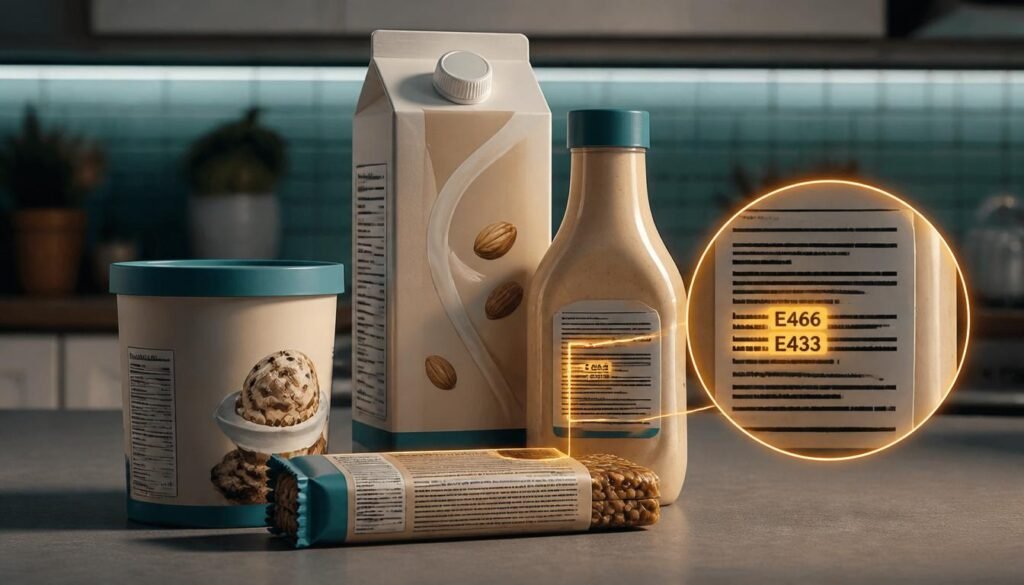
Let me tell you about David, a 44-year-old with early rheumatoid symptoms who had done everything “right.” He’d gone strictly gluten-free eighteen months earlier and felt marginally better—but his flares kept coming. “I don’t understand it,” he said. “I read every label for gluten.” And that was exactly the problem: he was reading labels for the wrong ingredient. His “healthy” gluten-free bread, his protein bars, his dairy-free ice cream, his salad dressings—nearly all of them contained a class of additive he’d never thought to look for, one with a growing body of research tying it to the exact kind of gut inflammation that feeds autoimmune disease.
Here is the short answer: the autoimmune trigger hiding in your kitchen isn’t gluten—it’s dietary emulsifiers, synthetic food additives like carboxymethylcellulose (CMC / E466) and polysorbate-80 (P80 / E433) found in a huge share of processed foods. Research shows these compounds erode your gut’s protective mucus layer, disrupt your microbiome, and promote the low-grade intestinal inflammation and “leaky” barrier that underlie inflammatory and autoimmune conditions. They’re in foods marketed as healthy. And almost nobody is looking for them.
Emulsifiers push an already-aging immune system toward misfiring. Start with how immunosenescence works.
Gluten Is Real—But It’s Not the Whole Story
Let’s be fair to gluten. For people with celiac disease, gluten is a genuine, well-established autoimmune trigger, and for some with non-celiac gluten sensitivity it causes real symptoms. Cutting it can be genuinely necessary. But gluten has absorbed nearly all of our attention—so much that we’ve stopped asking what else in ultra-processed food might be driving immune dysfunction. And ironically, when people go gluten-free by switching to packaged gluten-free products, they often increase their intake of the additives we’re about to discuss, because emulsifiers are heavily used to fix the texture of gluten-free baking. David got healthier gluten-wise and sicker additive-wise at the same time.
Meet the Hidden Trigger: Dietary Emulsifiers
Emulsifiers are additives that keep oil and water from separating—they give processed foods their smooth, stable, creamy texture and long shelf life. The two most studied synthetic culprits are carboxymethylcellulose (CMC, listed as E466) and polysorbate-80 (P80, listed as E433). A related additive, carrageenan (E407), raises similar concerns. These aren’t obscure—they’re among the most common additives in the modern food supply.
The foundational research came from the labs of Benoit Chassaing and Andrew Gewirtz, whose landmark 2015 work in Nature showed that feeding mice these two emulsifiers altered their gut bacteria and produced low-grade inflammation, metabolic syndrome, and—in susceptible animals—colitis. That opened a decade of research that has largely confirmed and extended the concern.
How Emulsifiers Attack Your Gut
The mechanism is disturbingly elegant. Your gut lining is protected by a thick mucus layer—a demilitarized zone that normally keeps your trillions of gut bacteria at a safe distance from the delicate cells of your intestinal wall. Emulsifiers, being detergent-like by nature, appear to thin and erode that mucus barrier.
Once the mucus is compromised, several things cascade:
- Bacteria move in. Microbes that should be held back can now reach and irritate the gut wall directly—a setup for inflammation.
- The microbiome shifts. Studies show emulsifiers detrimentally alter gut microbiota composition and function, including depleting beneficial, anti-inflammatory, mucus-loving bacteria like Akkermansia, while increasing the microbiome’s pro-inflammatory potential.
- The barrier fails. The result is increased intestinal permeability—the “leaky gut” state where bacterial toxins slip into circulation and switch on the immune system. (For the full mechanism, see our guide to intestinal permeability.)
- Inflammation takes hold. In a 2021 study using mice colonized with human IBD microbiota, CMC drove aggressive colitis and increased inflammatory cytokine gene expression—evidence that these additives don’t just correlate with inflammation, they can provoke it.
The Autoimmune Connection (An Honest Framing)
Here’s the through-line to autoimmunity, stated carefully. Autoimmune disease develops when a genetically susceptible immune system, exposed to environmental triggers, begins attacking the body’s own tissues. A compromised, inflamed, leaky gut is increasingly viewed as one of those environmental accelerants—a source of chronic immune activation and molecular chaos that can help tip a susceptible person over the edge. Emulsifiers, by degrading the gut barrier and inflaming the microbiome, plausibly contribute to that environment.
But you deserve precision, not hype. Most of the strongest data comes from animal and laboratory models. Human evidence is real but still emerging: a controlled feeding study found the emulsifier CMC altered the gut microbiome and metabolome in healthy people, and a 2025 randomized controlled trial testing an emulsifier-free diet and specific emulsifiers found measurable effects on the microbiome and cardiometabolic markers. What we can honestly say is this: emulsifiers are credibly implicated in promoting intestinal inflammation and barrier dysfunction, which are part of the soil in which autoimmune and inflammatory disease grows. We cannot yet say they single-handedly “cause” autoimmune disease in humans. Both halves of that sentence matter.
Where Emulsifiers Are Hiding
This is the part that surprises people. Emulsifiers are especially common in foods marketed as healthy or “free-from”:
- Ice cream and frozen desserts (including many dairy-free versions)
- Plant-based milks (oat, almond, soy) — check for lecithins, gellan gum, carrageenan
- Salad dressings, sauces, and mayonnaise
- Packaged and gluten-free breads and baked goods
- Protein bars and meal-replacement shakes
- Coffee creamers (dairy and non-dairy)
- Processed cheese, whipped toppings, and many “low-fat” products
How to spot them on a label: look for carboxymethylcellulose or cellulose gum (E466), polysorbate-80 (E433), carrageenan (E407), and mono- and diglycerides. In Europe, the E-numbers make them easy to catch; elsewhere you’ll need to read the full ingredient name.
🔥 Inflammation Isn’t Only About What You Eat
Food additives are one source of inflammation—but your own body composition is another. Visceral fat isn’t inert storage; it’s an active endocrine organ that pumps out inflammatory signals like IL-6 and TNF-α, adding to your total inflammatory load. Knowing where you stand is a smart first step in reducing inflammation naturally.
Building an Emulsifier-Aware Kitchen
The fix is refreshingly simple and requires no special protocol—just a shift toward real food:
- Cook from whole ingredients. Whole foods don’t need emulsifiers because they aren’t engineered products. This one habit removes the vast majority of your exposure.
- Make your own dressings and sauces. Olive oil, vinegar, lemon, mustard, and herbs make excellent emulsifier-free dressings in seconds.
- Read labels on “healthy” foods too. Don’t assume plant-based, gluten-free, or low-fat means additive-free—it’s often the opposite.
- Choose simpler plant milks. Some brands now offer versions with just the base ingredient, water, and salt.
- Feed your mucus layer. Fiber-rich whole plants nourish the bacteria that maintain a healthy gut barrier—the exact defense emulsifiers erode. See The Dysbiosis Blueprint for how to rebuild it.
Other Kitchen Triggers Worth Knowing
Emulsifiers are the headline, but a few other additives share the concern. Carrageenan (E407) has its own literature linking it to intestinal inflammation. Very high dietary salt has been shown to promote inflammatory immune cells (Th17), of interest in autoimmune research. And some artificial sweeteners can disturb the gut microbiome. The common thread is clear: it’s the ultra-processed, additive-heavy food matrix—not one villain—that tends to inflame. Explore more strategies in our Disease Defense library.
When To See a Doctor
If you have symptoms of an autoimmune or inflammatory condition—persistent joint pain, unexplained fatigue, chronic digestive problems, skin changes, or recurring flares—see a physician for proper evaluation. Diet is a powerful lever, but autoimmune conditions require medical diagnosis and management. Removing emulsifiers is a reasonable, low-risk step, but it is a complement to—never a replacement for—proper care.
The Bottom Line
We’ve spent a decade fixated on gluten while a class of common additives quietly reshaped our guts. Dietary emulsifiers like CMC and polysorbate-80 erode the protective mucus layer, disrupt the microbiome, and promote the leaky, inflamed gut that helps drive autoimmune and inflammatory disease. The human evidence is still maturing, so hold the certainty loosely—but the biological case is strong and the fix costs you nothing but a label check. David’s flares finally settled when he stopped hunting only for gluten and started eating food that didn’t come with an ingredient list he needed a chemistry degree to read. Sometimes the most important dietary change isn’t cutting one famous ingredient—it’s noticing the ones you were never told to watch.
Frequently Asked Questions
What food additive is linked to autoimmune inflammation?
Dietary emulsifiers—especially carboxymethylcellulose (CMC / E466) and polysorbate-80 (P80 / E433)—are the additives most closely linked in research to intestinal inflammation. Studies show they erode the gut’s mucus layer, disrupt the microbiome, and promote the barrier dysfunction and low-grade inflammation associated with inflammatory and autoimmune conditions.
What are dietary emulsifiers and where are they found?
Emulsifiers are additives that keep oil and water blended, giving processed foods a smooth texture and long shelf life. They’re common in ice cream, plant-based milks, salad dressings, sauces, packaged and gluten-free breads, protein bars, and coffee creamers. On labels, look for carboxymethylcellulose or cellulose gum (E466), polysorbate-80 (E433), and carrageenan (E407).
Do emulsifiers cause autoimmune disease?
The honest answer is that they are implicated but not proven to be a sole cause in humans. Strong animal and laboratory evidence shows emulsifiers promote gut inflammation and barrier dysfunction, and emerging human trials show effects on the microbiome. This creates an inflammatory environment that can contribute to autoimmune conditions in susceptible people, but emulsifiers are one factor among many, not a single proven cause.
How do I avoid emulsifiers in my diet?
Cook from whole ingredients, which naturally contain no emulsifiers; make your own dressings and sauces; and read labels even on foods marketed as healthy, gluten-free, or plant-based, since these often contain emulsifiers. Watch specifically for E466, E433, E407, and mono- and diglycerides.
Is gluten the only dietary autoimmune trigger?
No. Gluten is a genuine trigger for people with celiac disease, but it’s far from the only dietary factor. Emulsifiers, carrageenan, very high salt intake, and some artificial sweeteners are all under investigation for their effects on gut inflammation and immune function. The broader issue is often the ultra-processed, additive-heavy diet as a whole.
Can removing emulsifiers reduce inflammation?
Emerging human research, including trials using emulsifier-free diets, suggests removing them can beneficially affect the gut microbiome and some markers of health. While more human data is needed, cutting emulsifiers by eating whole foods is a low-risk step that also reduces overall ultra-processed food intake, which independently supports lower inflammation.
autoimmune conditions
Akkermansia
autoimmune diet
inflammation causes
autoimmune diet
inflammation causes
food sensitivities
autoimmune conditions
What food additive is linked to autoimmune inflammation?
Dietary emulsifiers—especially carboxymethylcellulose (CMC / E466) and polysorbate-80 (P80 / E433)—are the additives most closely linked in research to intestinal inflammation. Studies show they erode the gut’s mucus layer, disrupt the microbiome, and promote the barrier dysfunction and low-grade inflammation associated with inflammatory and autoimmune conditions.
What are dietary emulsifiers and where are they found?
Emulsifiers are additives that keep oil and water blended, giving processed foods a smooth texture and long shelf life. They’re common in ice cream, plant-based milks, salad dressings, sauces, packaged and gluten-free breads, protein bars, and coffee creamers. On labels, look for carboxymethylcellulose or cellulose gum (E466), polysorbate-80 (E433), and carrageenan (E407).
Do emulsifiers cause autoimmune disease?
The honest answer is that they are implicated but not proven to be a sole cause in humans. Strong animal and laboratory evidence shows emulsifiers promote gut inflammation and barrier dysfunction, and emerging human trials show effects on the microbiome. This creates an inflammatory environment that can contribute to autoimmune conditions in susceptible people, but emulsifiers are one factor among many, not a single proven cause.
How do I avoid emulsifiers in my diet?
Cook from whole ingredients, which naturally contain no emulsifiers; make your own dressings and sauces; and read labels even on foods marketed as healthy, gluten-free, or plant-based, since these often contain emulsifiers. Watch specifically for E466, E433, E407, and mono- and diglycerides.
Is gluten the only dietary autoimmune trigger?
No. Gluten is a genuine trigger for people with celiac disease, but it’s far from the only dietary factor. Emulsifiers, carrageenan, very high salt intake, and some artificial sweeteners are all under investigation for their effects on gut inflammation and immune function. The broader issue is often the ultra-processed, additive-heavy diet as a whole.
Can removing emulsifiers reduce inflammation?
Emerging human research, including trials using emulsifier-free diets, suggests removing them can beneficially affect the gut microbiome and some markers of health. While more human data is needed, cutting emulsifiers by eating whole foods is a low-risk step that also reduces overall ultra-processed food intake, which independently supports lower inflammation. autoimmune conditions Akkermansia autoimmune diet inflammation causes autoimmune diet inflammation causes food sensitivities autoimmune conditions

Julian Vance is the writer and editor behind RegenStep, translating peer-reviewed longevity, metabolic, and gut-health research into practical, actionable guides. Julian is not a licensed physician; content is reviewed against cited primary sources and is for informational purposes only. Always consult a qualified healthcare provider for personal medical advice.