
If you have been diagnosed with Irritable Bowel Syndrome (IBS), or if you suffer from severe, unpredictable bloating that makes you look six months pregnant by the end of the day, you are likely battling Small Intestinal Bacterial Overgrowth. Landmark gastroenterology research reveals that up to 78% of patients diagnosed with IBS actually test positive for SIBO. This condition occurs when the complex, highly regulated microbial ecosystem of the large intestine migrates upward into the small intestine, where it ferments dietary carbohydrates prematurely, producing massive volumes of hydrogen and methane gas.
As a physician focused on gastrointestinal resilience and metabolic longevity, I see patients who have endured endless rounds of broad-spectrum pharmaceutical antibiotics like Rifaximin (Xifaxan), only to experience a temporary remission followed by a devastating relapse. The fundamental error in modern SIBO management is treating the overgrowth as an infection to be eradicated, rather than a mechanical and neurological failure to be repaired. A true SIBO natural treatment protocol does not merely kill the bugs; it rebuilds the intestinal barrier, restores the Migrating Motor Complex (MMC), and permanently alters the biological terrain so the overgrowth cannot return. In this comprehensive, 3,500-word clinical masterclass, we will dissect the biochemical differences between hydrogen and methane overgrowth, establish the exact, peer-reviewed herbal dosages required for eradication, and outline the critical prokinetic phase required to cure SIBO permanently.
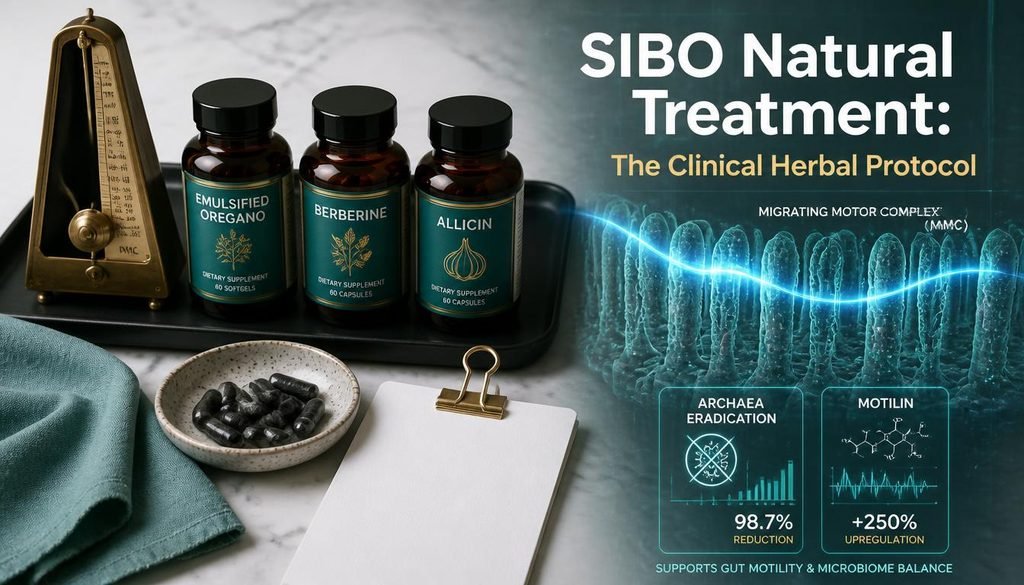
How to Cure SIBO Permanently: Addressing the Root Mechanical Failure
To understand how to cure SIBO permanently, we must abandon the “kill” mentality and focus on the anatomical and neurological reasons the bacteria migrated in the first place. The small intestine is supposed to be a relatively sterile environment, housing fewer than 10^4 bacteria per milliliter of fluid, compared to the 10^11 bacteria per milliliter found in the colon. This sterility is maintained by three primary physiological defenses. When these fail, SIBO develops.
1. The Migrating Motor Complex (MMC)
The MMC is an electromechanical wave of peristalsis that sweeps through the small intestine every 90 to 120 minutes only in the fasted state. It acts as the gut’s internal housekeeping crew, physically pushing residual food, dead cells, and bacteria out of the small intestine and through the ileocecal valve into the large intestine.
- The Failure: The MMC is highly fragile. It is instantly paralyzed by the cephalic phase of digestion (even the thought of food), snacking, and acute gastroenteritis (food poisoning). Autoantibodies generated against the cytolethal distending toxin (CdtB) of foodborne pathogens can cross-react with vinculin, a protein essential for MMC function, leading to post-infectious IBS and chronic SIBO.
2. The Ileocecal Valve (ICV)
The ICV is a one-way sphincter muscle separating the small and large intestines. It prevents the highly concentrated, anaerobic bacteria of the colon from refluxing backward into the small intestine.
- The Failure: Chronic constipation, pelvic floor dysfunction, or physical adhesions from prior abdominal surgeries (like appendectomies or C-sections) can cause the ICV to remain open or become mechanically distorted, allowing colonic bacteria to continuously seed the small bowel.
3. Gastric Acid and Pancreatic Enzymes
Stomach acid (HCl) acts as the primary chemical sterilizer of ingested food and water. Pancreatic enzymes and bile acids further break down macronutrients and exert direct antimicrobial effects in the duodenum.
- The Failure: Chronic stress, aging, and the prolonged use of Proton Pump Inhibitors (PPIs) induce hypochlorhydria (low stomach acid). Without this acidic barrier, ingested microbes survive the transit and colonize the upper GI tract.
To achieve a permanent cure, your SIBO natural treatment must include targeted prokinetics to restore the MMC, structural support for the ICV, and the gradual restoration of gastric acidity. Eradication without motility repair guarantees a relapse.
SIBO Natural Treatment: The 3-Phase Clinical Framework
A rigorous SIBO natural treatment is not a single supplement; it is a phased, multi-modal clinical intervention designed to dismantle biofilms, eradicate the overgrowth, and rebuild the mucosal firewall.
Phase 1: Preparation and Biofilm Disruption (Days 1–14)
Pathogenic bacteria and archaea protect themselves by secreting a sticky, extracellular polymeric substance (EPS) known as a biofilm. This shield makes them up to 1,000 times more resistant to both pharmaceutical antibiotics and herbal antimicrobials.
- The Protocol: Before introducing the primary antimicrobials, you must deploy biofilm disruptors. Agents like N-acetylcysteine (NAC), systemic enzymes (serrapeptidase, nattokinase), and bismuth thiolate dissolve the EPS matrix, exposing the vulnerable microbes.
- Dietary Shift: Simultaneously, transition to a Low-FODMAP or Specific Carbohydrate Diet (SCD) to starve the overgrowth of its preferred fermentable substrates, reducing acute gas production and bloating while preparing the terrain. For a comprehensive guide to identifying and removing dietary triggers, read our Elimination Diet Guide: The Clinical Protocol to Heal Your Gut.
Phase 2: The Eradication Phase (Days 15–60)
This is the core antimicrobial phase. Depending on your breath test results, you will deploy specific botanical medicines tailored to your exact gas profile (Hydrogen vs. Methane). We will detail the exact compounds and dosages in the following sections. This phase typically lasts 4 to 6 weeks, as herbals require a longer exposure time than pharmaceutical antibiotics to achieve complete eradication.
Phase 3: Prokinetics, Motility, and Mucosal Repair (Days 61–180+)
Once the overgrowth is eradicated, the small intestine is left inflamed, hyper-permeable, and neurologically stunned.
- The Protocol: You must immediately initiate a natural or pharmaceutical prokinetic (like Ginger root extract, Artichoke leaf, or low-dose erythromycin) taken strictly on an empty stomach before bed to stimulate the nocturnal MMC. Simultaneously, deploy mucosal healers like Zinc Carnosine, L-Glutamine, and Tributyrin to seal the tight junctions. For the exact compounds required to seal a compromised barrier, read Leaky Gut Supplements: The Clinical Protocol to Seal Your Intestinal Barrier.
Methane SIBO Herbal Treatment: Targeting the Archaea
In modern gastroenterology, the term “Methane SIBO” is being rapidly replaced by IMO (Intestinal Methanogen Overgrowth). This distinction is critical because methane is not produced by bacteria; it is produced by single-celled organisms called archaea, specifically Methanobrevibacter smithii. Furthermore, unlike bacteria which are confined to the small intestine in SIBO, methanogens can overgrow in both the small and large intestines.
The Pathophysiology of Methane
Methanogens do not ferment carbohydrates themselves. Instead, they act as scavengers, consuming the hydrogen gas produced by fermenting bacteria and combining it with carbon dioxide to create methane gas (CH4).
- The Clinical Presentation: Methane gas acts as a localized paralytic to the enteric nervous system. It drastically slows gastrointestinal transit time, making IMO the primary driver of IBS-C (Constipation-predominant IBS). Patients with methane overgrowth suffer from severe, stubborn constipation, hard stools, and profound abdominal distension.
The Treatment Challenge
Methanogens are highly resilient. Standard pharmaceutical antibiotics like Rifaximin are largely ineffective against them when used in isolation, which is why gastroenterologists often have to combine Rifaximin with Neomycin or Metronidazole—a combination that carries severe risks of tendon damage and systemic microbiome destruction. A targeted methane SIBO herbal treatment is often vastly superior, utilizing specific botanicals that disrupt the unique cellular membranes of archaea.
SIBO Herbal Treatment Dosage: The Johns Hopkins Protocol
The legitimacy of herbal medicine for SIBO was solidified by a landmark 2014 study conducted at Johns Hopkins University (Chedid et al.). The researchers compared standard pharmaceutical Rifaximin against a specific protocol of herbal antimicrobials. The results were staggering: the herbal therapy was equally as effective as Rifaximin in achieving SIBO eradication, with a significantly lower side-effect profile.
However, clinical efficacy relies entirely on precise, therapeutic dosing. Sub-clinical doses will merely irritate the microbes, driving them deeper into biofilms. Below are the exact SIBO herbal treatment dosage guidelines utilized in functional gastroenterology.
1. Emulsified Oregano Oil (Carvacrol >70%)
- Mechanism: Carvacrol disrupts the lipid bilayer of bacterial cell membranes, causing intracellular leakage and death.
- Clinical Dosage: 150 mg to 200 mg of emulsified (ADP – Aromatic Delivery Platform) oregano oil, taken twice daily with food.
- Crucial Note: Do not use liquid essential oil of oregano; it will burn the esophageal and gastric mucosa and fail to reach the small intestine. The emulsified, sustained-release tablet form is mandatory.
2. Berberine (Hydrastis canadensis or Coptis chinensis)
- Mechanism: Berberine inhibits bacterial DNA synthesis and disrupts the formation of biofilms. It is highly effective against Gram-negative, hydrogen-producing bacteria.
- Clinical Dosage: 500 mg of standardized berberine extract, taken three times daily, 20 minutes before meals.
3. Neem (Azadirachta indica)
- Mechanism: Neem leaf extract exhibits broad-spectrum antibacterial and anti-archaeal properties, specifically disrupting the quorum sensing (chemical communication) of pathogenic microbes.
- Clinical Dosage: 300 mg to 500 mg of standardized neem leaf extract, taken twice daily.
4. Allicin (Stabilized Garlic Extract)
- Mechanism: Allicin is the primary sulfur compound in fresh garlic. It is one of the only natural compounds proven to inhibit the methanogenesis pathway in archaea.
- Clinical Dosage: 1,800 mg to 5,400 mg of stabilized allicin extract (not standard garlic oil or aged garlic extract, which lack allicin), divided into two or three doses daily.
💡 Action Step: SIBO and IMO cause severe malabsorption of macronutrients and fat-soluble vitamins, often leading to unintended muscle loss and metabolic slowing. To ensure you are maintaining your lean mass and metabolic rate during the eradication phase, track your true body composition using our Advanced BMI Calculator and our Body Fat Calculator. Use our Protein Intake Calculator to ensure you are consuming highly bioavailable, easily digestible proteins (like hydrolyzed whey or bone broth) that do not feed the bacterial overgrowth.
SIBO Herbal Treatment Side Effects: Managing the Herxheimer Reaction
When patients initiate a rigorous SIBO herbal treatment, they frequently experience a paradoxical worsening of symptoms during the first 7 to 14 days. This is not an allergic reaction to the herbs; it is a Herxheimer reaction (endotoxin die-off).
The Biochemistry of Die-Off
As the potent herbal antimicrobials lyse (burst) the cell walls of millions of Gram-negative bacteria and archaea, they release massive quantities of Lipopolysaccharides (LPS) and endotoxins into the gut lumen. These toxins cross the hyper-permeable intestinal barrier and enter the portal circulation, overwhelming the liver’s Phase 1 and Phase 2 detoxification pathways.
Common Herxheimer Symptoms:
- Severe exacerbation of bloating and abdominal pain.
- Profound fatigue, brain fog, and lethargy.
- Flu-like symptoms, low-grade fever, and joint aches.
- Dermatological flare-ups (acne, eczema, rashes).
- Mood disturbances, irritability, and anxiety (driven by the gut-brain axis neuroinflammation).
The Clinical Management Protocol
You must not abandon the protocol during a die-off reaction, but you must actively support the body’s drainage pathways to clear the toxic load.
- Intestinal Binders: Introduce a binder like Activated Charcoal (500mg) or Zeolite (Clinoptilolite) 2 hours away from your antimicrobials and food. The binder acts as a molecular sponge, trapping the LPS in the gut lumen and excreting it in the stool, preventing systemic recirculation.
- Hepatic Support: Upregulate the liver’s glutathione production using GlyNAC (Glycine and N-Acetyl Cysteine) and liposomal glutathione to accelerate the conjugation and clearance of endotoxins.
- Hydration and Motility: Drink a minimum of 3 liters of mineralized water daily. Ensure you are having at least one bowel movement daily; if the die-off toxins sit in a constipated colon, they will be aggressively reabsorbed.
- Pacing: If the Herxheimer reaction is intolerable, reduce the antimicrobial dose by 50% for three days, utilize aggressive binder therapy, and then slowly titrate back up to the full clinical dose.
Hydrogen Dominant SIBO Herbal Treatment: The Diarrhea Phenotype
While methane drives constipation, hydrogen dominant SIBO is the primary driver of IBS-D (Diarrhea-predominant IBS). Hydrogen gas is produced directly by fermenting bacteria (such as E. coli, Klebsiella, and Aeromonas) when they encounter unabsorbed carbohydrates in the small intestine.
The Clinical Presentation
Hydrogen gas accelerates gastrointestinal transit time, drawing water into the bowel and resulting in urgent, explosive diarrhea, severe borborygmus (stomach rumbling), and rapid post-prandial bloating. Patients with hydrogen SIBO frequently suffer from systemic histamine intolerance, as many hydrogen-producing bacteria also secrete histamine and inhibit the DAO enzyme required to clear it.
The Herbal Protocol for Hydrogen
The hydrogen dominant SIBO herbal treatment relies heavily on broad-spectrum botanical bactericides and mucosal soothers.
- Primary Agents: Emulsified Oregano Oil (ADP) and Berberine are the gold standards for hydrogen eradication. They are typically stacked together for 4 to 6 weeks to prevent bacterial resistance.
- Secondary Agents: Artemisia annua (Sweet Wormwood) and Uva Ursi (Bearberry) are frequently utilized for stubborn, biofilm-protected Gram-negative infections.
- Mucosal Defense: Because hydrogen SIBO is heavily correlated with severe intestinal permeability and rapid transit, the inclusion of Slippery Elm and Marshmallow Root is critical to coat and soothe the inflamed brush border.
Best Herbal Antimicrobials for Methane SIBO: The Archaeal Killers
Eradicating methanogens requires a highly specific biochemical approach, as their cell walls lack the peptidoglycan found in bacteria, rendering many standard antibacterials useless. When formulating the best herbal antimicrobials for methane SIBO, functional gastroenterologists rely on a specific triad of compounds.
1. Stabilized Allicin (The Methane Assassin)
As mentioned, allicin is the undisputed king of methane eradication. It specifically inhibits the enzymes methanogens use to produce methane gas. However, allicin is highly unstable. Crushing a garlic clove yields allicin, but it degrades within minutes. You must utilize a patented, stabilized allicin extract (such as Allimax) to ensure the compound survives stomach acid and reaches the small intestine intact.
2. Neem (Azadirachta indica)
Neem is traditionally used in Ayurvedic medicine for severe dysbiosis. Modern research confirms its efficacy against archaea and its ability to disrupt the thick, stubborn biofilms that methanogens use to adhere to the intestinal mucosa. Neem is almost always stacked with Allicin for IMO.
3. Atrantil (The Methane Sink)
Atrantil is a patented, clinically studied botanical blend developed by a Mayo Clinic gastroenterologist specifically for methane-dominant bloating. It contains three ingredients:
- Quebracho Colorado: A flavonoid-rich extract that sinks hydrogen gas, depriving the methanogens of their primary fuel source.
- Conker Tree (Horse Chestnut): Contains saponins that physically disrupt the lipid membranes of archaea.
- Peppermint Oil: Acts as a localized antispasmodic, relaxing the enteric nervous system and relieving the painful cramping associated with methane-induced constipation.
The “Methane Eradication” Stack Matrix
| Compound | Target Organism | Mechanism of Action | Clinical Dosage |
|---|---|---|---|
| Stabilized Allicin | Methanogens (Archaea) | Inhibits methanogenesis enzymes. | 1,800mg – 5,400mg daily (divided). |
| Neem Leaf Extract | Archaea & Biofilms | Disrupts quorum sensing; breaks EPS matrix. | 300mg – 500mg twice daily. |
| Atrantil | Methane Gas & Archaea | Sinks hydrogen; lyses archaeal membranes. | 2 capsules, three times daily. |
| Emulsified Oregano | Hydrogen-producing Bacteria | Starves methanogens of their hydrogen fuel. | 150mg twice daily (used as an adjunct). |
Oregano Oil for SIBO: The Delivery System is Everything
The internet is saturated with advice to take oregano oil for SIBO, leading many patients to purchase liquid essential oil dropper bottles from health food stores. This is a profound clinical error that can cause severe harm.
The Danger of Liquid Essential Oils
Pure essential oil of oregano is highly caustic. If taken orally in liquid form, it will aggressively burn the mucosal lining of the esophagus and the stomach. It triggers severe gastritis, acid reflux, and nausea. More importantly, because it is absorbed rapidly in the upper stomach, it never reaches the jejunum and ileum where the SIBO overgrowth actually resides.
The ADP (Aromatic Delivery Platform) Solution
To utilize oregano oil for SIBO effectively, you must use a specialized, sustained-release tablet formulation known as ADP. In this process, the carvacrol is emulsified with a lipid carrier and compressed into a micro-tablet.
- The Pharmacokinetics: The ADP tablet survives the harsh, acidic environment of the stomach. As it enters the alkaline environment of the small intestine, it slowly dissolves over a 2-hour period, releasing a continuous, therapeutic micro-dose of carvacrol directly onto the bacterial overgrowth.
- The Clinical Efficacy: Studies utilizing ADP oregano oil show massive reductions in pathogenic bacterial loads without the gastrointestinal irritation associated with liquid oils. Always verify that your supplement label explicitly states “emulsified,” “sustained-release,” or “ADP.”
The Third Phenotype: Hydrogen Sulfide (H2S) SIBO
While hydrogen and methane account for the vast majority of cases, modern 3-gas breath testing has identified a third, highly destructive phenotype: Hydrogen Sulfide SIBO.
Hydrogen sulfide is produced by specific sulfate-reducing bacteria (like Desulfovibrio).
- The Presentation: Patients experience diarrhea, severe visceral hypersensitivity, and stool that smells distinctly like rotten eggs.
- The Danger: Unlike hydrogen and methane, H2S is highly toxic to the colonic epithelium. In excess, it inhibits cytochrome c oxidase in the mitochondria of the gut lining, effectively suffocating the cells and driving severe ulcerations and inflammatory bowel disease (IBD).
- The Treatment: H2S SIBO requires a strict low-sulfur diet (removing garlic, onions, cruciferous vegetables, and eggs) alongside targeted antimicrobials like high-dose Bismuth (which binds to H2S gas) and specific strains of Lactobacillus plantarum.
Troubleshooting: When the Herbal Protocol Fails
If you have executed a rigorous 6-week SIBO natural treatment and your symptoms remain unchanged, you must investigate the following clinical roadblocks:
- Untreated Anatomical Issues: If you have severe abdominal adhesions from prior surgeries, the physical strictures will create “pockets” where bacteria hide, completely shielded from the herbal antimicrobials. Visceral manipulation therapy by a specialized physical therapist is required to break these adhesions.
- Exocrine Pancreatic Insufficiency (EPI): If your pancreas is not producing adequate digestive enzymes, large macromolecules will reach the small intestine, continuously feeding the overgrowth despite your dietary restrictions. A trial of full-spectrum, high-dose digestive enzymes with meals is mandatory.
- Hidden Hypochlorhydria: If your stomach acid is low, you are continuously swallowing live bacteria that survive the gastric passage. The careful, supervised titration of Betaine HCl with meals is required to restore the acidic sterilization barrier.
- Parasitic Co-Infections: Blastocystis hominis, Giardia, and Cryptosporidium frequently co-occur with SIBO and are entirely unaffected by standard SIBO herbals. A comprehensive GI-MAP stool PCR test is required to rule out eukaryotic pathogens.
💡 Action Step: To ensure your gut gets the physical rest required to activate the MMC and sweep away dead bacteria during the eradication phase, you must stop grazing. Use our Intermittent Fasting Calculator to design a strict 14-to-16-hour fasting window. Furthermore, ensure your baseline metabolic health is optimized by calculating your exact energy needs with our TDEE Calculator.
Final Thoughts
Eradicating Small Intestinal Bacterial Overgrowth and Intestinal Methanogen Overgrowth is one of the most complex, frustrating, and rewarding endeavors in functional gastroenterology. A successful SIBO natural treatment requires immense discipline: the precision to dose herbals correctly, the resilience to push through the Herxheimer die-off, and the patience to commit to months of prokinetic and mucosal repair.
Stop viewing your gut as a battlefield to be carpet-bombed with pharmaceutical antibiotics. Start viewing it as a complex, neurologically wired ecosystem that requires mechanical sweeping, chemical sterilization, and targeted botanical management. By deploying emulsified oregano, stabilized allicin, and rigorous MMC support, you can systematically dismantle the overgrowth, seal the barrier, and finally reclaim the quiet, efficient digestion that is your biological birthright.
Frequently Asked Questions (FAQ)
1. What is the best SIBO natural treatment protocol?
The most effective SIBO natural treatment involves a 3-phase protocol: 1) Biofilm disruption using NAC and systemic enzymes. 2) A 4-to-6-week eradication phase using clinically dosed herbal antimicrobials (like emulsified oregano, berberine, and allicin) tailored to your specific gas profile. 3) Long-term prokinetic support to restore the Migrating Motor Complex (MMC) and prevent relapse.
2. How do you treat Methane SIBO (IMO) naturally?
Methane SIBO (now called Intestinal Methanogen Overgrowth) is caused by archaea, not bacteria, and requires specific herbals. The gold standard methane SIBO herbal treatment is a combination of stabilized Allicin (garlic extract), Neem leaf extract, and Atrantil. Standard antibacterials like Rifaximin or oregano oil are largely ineffective against methanogens when used in isolation.
3. What is the correct SIBO herbal treatment dosage?
Clinical efficacy requires therapeutic dosing. Standard SIBO herbal treatment dosage guidelines include: Emulsified Oregano Oil (150-200mg twice daily), Berberine (500mg three times daily), Neem (300-500mg twice daily), and Stabilized Allicin (1,800-5,400mg daily, divided). Sub-clinical doses will fail to eradicate the overgrowth and may promote microbial resistance.
4. How do you cure SIBO permanently and prevent relapse?
To understand how to cure SIBO permanently, you must address the root mechanical cause, which is usually a dysfunctional Migrating Motor Complex (MMC). After the eradication phase, you must take a natural prokinetic (like ginger and artichoke extract) on an empty stomach before bed, stop snacking between meals to allow the MMC to sweep the gut, and restore adequate stomach acid (HCl) levels.
5. Is liquid oregano oil effective for SIBO?
No. Liquid essential oil of oregano is highly caustic, will burn the esophageal and gastric mucosa, and is absorbed too high in the digestive tract to reach the small intestine where the SIBO resides. To effectively use oregano oil for SIBO, you must use an emulsified, sustained-release tablet form (often labeled ADP) that survives stomach acid and releases the carvacrol slowly in the small bowel.
⚕️ Medical Disclaimer
The content provided on RegenStep.com, including this comprehensive guide authored by Dr. Julian Vance, is strictly for educational and informational purposes only. It is not intended to be a substitute for professional medical advice, diagnosis, or treatment.
SIBO and IMO are complex gastrointestinal conditions that require formal diagnosis via lactulose or glucose breath testing. The herbal antimicrobials discussed in this article are potent biological agents that can interact with prescription medications, alter liver enzyme function, and cause severe Herxheimer (die-off) reactions. High-dose allicin and berberine can lower blood glucose and blood pressure. Always consult with your gastroenterologist, a functional medicine physician, or a qualified healthcare provider before initiating any antimicrobial, prokinetic, or biofilm-disrupting protocol, particularly if you are pregnant, nursing, or taking immunosuppressive or metabolic medications.

Julian Vance is the writer and editor behind RegenStep, translating peer-reviewed longevity, metabolic, and gut-health research into practical, actionable guides. Julian is not a licensed physician; content is reviewed against cited primary sources and is for informational purposes only. Always consult a qualified healthcare provider for personal medical advice.