
Biology is governed by a ruthless, binary imperative: you are either building, or you are cleaning. You cannot do both simultaneously. At the absolute apex of this biological seesaw sits a massive, highly conserved protein kinase known as the Mechanistic Target of Rapamycin (mTOR). When mTOR is active, your cells are in an anabolic state—synthesizing proteins, dividing, and building tissue. When mTOR is inhibited, the cell shifts into a catabolic state, halting division and initiating autophagy, the profound cellular cleanup process that clears out toxic, senescent debris.
For the last decade, the longevity community has treated mTOR inhibition as the holy grail of life extension. The logic seems sound: if constant cellular growth drives aging and cancer, then hitting the brakes should extend healthspan. But as a strategist focused on systems biology, I see a massive, dangerous blind spot in how this pathway is being manipulated. Chronic, unyielding mTOR inhibition does not make you immortal; it makes you frail. It suppresses your immune system, halts muscle protein synthesis, and accelerates sarcopenia.
True biological mastery is not about permanently shutting down mTOR. It is about mastering the oscillation. It is about knowing exactly when to pulse the pathway to build metabolic armor, and when to inhibit it to trigger deep cellular rejuvenation. Furthermore, while biohackers use this pathway to extend life, oncologists use it to halt malignancies. Let’s dismantle the dogma, map the precise pharmacology of rapalogs, and decode the clinical reality of mTOR inhibition across both longevity and oncology.
mTOR Inhibition: The Architecture of the Complex
To understand how to manipulate the pathway, you must understand that mTOR is not a single entity. It exists in two distinct, functionally antagonistic protein complexes: mTORC1 and mTORC2.
mTORC1 is the nutrient sensor. It is activated by amino acids (specifically leucine), insulin, and cellular energy (ATP). It is the primary driver of protein synthesis, lipid generation, and the suppression of autophagy. When longevity researchers talk about “inhibiting mTOR,” they are almost exclusively talking about inhibiting mTORC1.
mTORC2, on the other hand, is largely insensitive to nutrients and rapamycin. It is activated by growth factors and is responsible for organizing the actin cytoskeleton and activating AKT, a critical survival kinase. If you accidentally inhibit mTORC2, you induce severe insulin resistance and trigger apoptosis (cell death). Therefore, the goal of any longevity or therapeutic protocol is the highly selective, targeted inhibition of mTORC1, while leaving mTORC2 completely intact.
mTOR inhibitors examples
The pharmacological manipulation of this pathway began not in a modern lab, but in the soil of Easter Island (Rapa Nui). Researchers discovered a macrolide compound produced by the bacterium Streptomyces hygroscopicus that possessed potent antifungal and immunosuppressive properties. They named it rapamycin.
Today, the mTOR inhibitors examples used in both clinical medicine and off-label longevity protocols are collectively known as “rapalogs” (rapamycin analogs).
1. Rapamycin (Sirolimus)
Rapamycin is the undisputed king of this pathway. It does not bind to mTOR directly. Instead, it enters the cell and binds to a small immunophilin protein called FKBP12. This newly formed Rapamycin-FKBP12 complex then physically docks onto the FRB domain of the mTOR protein, specifically allosterically inhibiting the mTORC1 complex. Because of its long half-life (roughly 60 hours in humans), it is the primary compound utilized in weekly, pulsed longevity protocols.
2. Everolimus (Afinitor)
Everolimus is a derivative of rapamycin with a slightly altered chemical structure that gives it a shorter half-life and higher oral bioavailability. It is heavily utilized in oncology and organ transplantation. Because it clears the system faster, it is sometimes preferred in clinical settings where rapid titration of the drug is required, though it carries a higher risk of chronic side effects if used daily.
3. Temsirolimus (Torisel)
Unlike rapamycin and everolimus, which are oral medications, temsirolimus is administered intravenously. It is primarily indicated for advanced renal cell carcinoma. It is a highly potent, direct inhibitor used when immediate, systemic suppression of the mTOR pathway is required in an acute oncological setting.
4. ATP-Competitive Inhibitors (The Next Generation)
While rapalogs only allosterically inhibit mTORC1, a new class of “TORKinibs” (TOR kinase inhibitors) binds directly to the ATP-binding pocket of the mTOR kinase domain. These inhibit both mTORC1 and mTORC2. While highly effective in laboratory settings for halting tumor growth, their systemic toxicity and induction of severe insulin resistance currently keep them out of the longevity space.
Mtor inhibitors natural
You do not need a prescription to modulate this pathway. The human body evolved to oscillate between mTOR activation and inhibition based on environmental scarcity. Mtor inhibitors natural interventions rely on the principle of hormesis—using acute physiological stress to trigger the inhibition of mTORC1 and the subsequent activation of AMPK (the cellular energy sensor).
1. Fasting and Caloric Restriction
The most potent natural mTOR inhibitor is the absence of nutrients. When you fast, intracellular AMP levels rise, activating AMPK. AMPK directly phosphorylates TSC2 and Raptor, effectively shutting down the mTORC1 complex and initiating autophagy. To systematically integrate this into your lifestyle without triggering chronic cortisol elevation, use our Intermittent Fasting Calculator to design a circadian-aligned fasting window that safely suppresses mTORC1 while preserving lean mass. For a deep dive into the cellular cleanup this triggers, read our protocol on Autophagy: The Free Anti-Aging Switch Inside Your Cells.
2. Botanical and Polyphenol Modulators
Several plant-derived compounds act as mild, natural rapalogs by interacting with upstream or downstream nodes of the pathway:
- EGCG (Epigallocatechin gallate): The primary catechin in green tea has been shown to inhibit the PI3K/AKT/mTOR pathway, mimicking the effects of caloric restriction.
- Curcumin: The active polyphenol in turmeric downregulates mTOR signaling while simultaneously inhibiting the NF-kB inflammatory pathway.
- Berberine: Often called “natural metformin,” berberine activates AMPK, which subsequently inhibits mTORC1.
- Fisetin and Quercetin: These flavonoids act as senolytics, but they also modulate the PI3K/AKT axis, helping to clear senescent cells that are driven by hyperactive mTOR signaling.
3. Zone 2 Cardio and Mechanical Stress
While heavy resistance training activates mTOR (which is necessary for muscle growth), sustained Zone 2 cardiovascular training creates a localized energy deficit in Type I muscle fibers. This metabolic stress activates AMPK, inhibiting mTOR locally and triggering mitochondrial biogenesis. To ensure you are balancing the anabolic demands of lifting with the catabolic cleanup of cardio, calculate your exact energy expenditure with our TDEE Calculator.
Are mtor inhibitors chemotherapy
This is one of the most common points of confusion for patients navigating a cancer diagnosis. Are mtor inhibitors chemotherapy? The strict clinical answer is no. They are classified as targeted therapy or cytostatic agents, which is a fundamentally different biological mechanism than traditional cytotoxic chemotherapy.
Cytotoxic vs. Cytostatic
Traditional chemotherapy (like cisplatin or doxorubicin) is cytotoxic. It acts as a cellular carpet-bomb, indiscriminately damaging the DNA of any cell that is rapidly dividing. It kills cancer cells, but it also kills hair follicles, gut lining, and bone marrow, leading to the classic, devastating side effects of chemo.
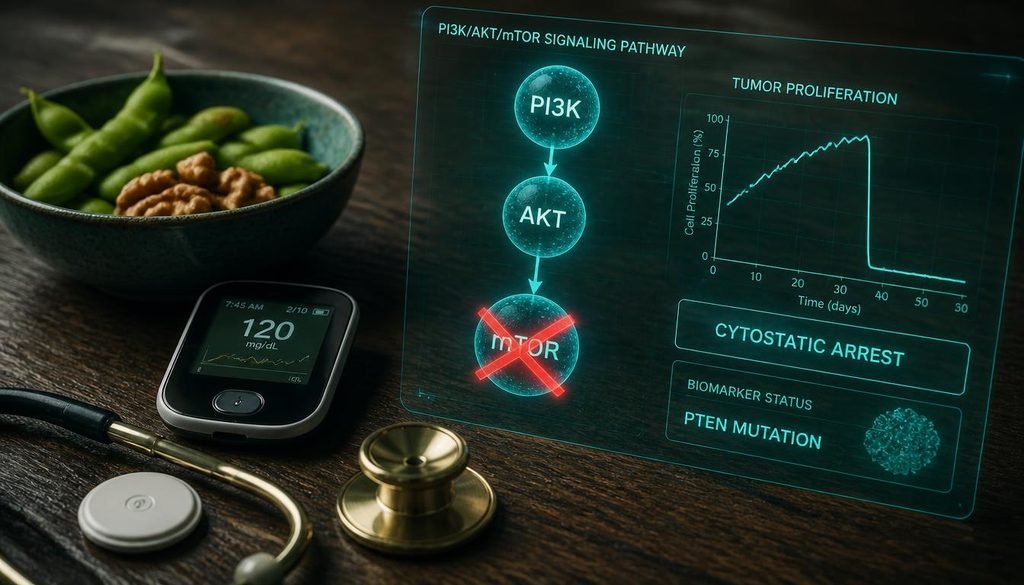
mTOR inhibitors are cytostatic. They do not directly poison the cell or shred its DNA. Instead, they cut off the cell’s supply lines. Cancer cells rely on hyperactive mTOR signaling to continuously synthesize the proteins and lipids required for rapid, unchecked division. By inhibiting mTORC1, rapalogs essentially starve the tumor of the anabolic signals it needs to grow. The cancer cells are not immediately killed; they are arrested in the G1 phase of the cell cycle. They stop dividing, and eventually, they undergo apoptosis or are cleared by the immune system.
Because they are targeted, mTOR inhibitors generally spare the rapidly dividing healthy cells of the gut and hair, though they carry their own unique side-effect profiles, primarily immunosuppression and metabolic dysregulation.
Mtor inhibitors review
If you spend any time in advanced biohacking circles, you will encounter the mtor inhibitors review debate regarding the off-label use of weekly, pulsed rapamycin for human longevity. The data is tantalizing, but the clinical reality requires extreme nuance.
The Murine Data vs. Human Reality
In laboratory models, inhibiting mTORC1 with rapamycin consistently extends the lifespan of yeast, worms, flies, and mice. In the landmark Interventions Testing Program (ITP) murine studies, rapamycin extended the lifespan of genetically heterogeneous mice by up to 30%, even when initiated late in life.
However, mice are not humans. The translation of this data to humans is currently being explored in trials like the PEARL trial (Participatory Evaluation of Aging with Rapamycin for Longevity). The early data suggests that weekly, pulsed dosing (e.g., 5mg to 10mg once a week) selectively inhibits mTORC1 while allowing mTORC2 to recover during the off-days, thereby avoiding the severe insulin resistance seen in daily dosing.
The Side Effect Profile
Even with pulsed dosing, mTOR inhibition is not free. The most common side effects include:
- Aphthous Ulcers (Mouth Sores): The oral mucosa turns over rapidly. Inhibiting mTOR impairs this rapid cellular turnover, leading to painful, cold-sore-like lesions in the mouth.
- Hyperlipidemia: mTOR regulates lipid metabolism. Inhibition frequently causes a significant spike in LDL cholesterol and triglycerides.
- Immunosuppression: mTOR is required for T-cell proliferation. While mild inhibition might clear senescent immune cells, excessive inhibition leaves the host vulnerable to acute viral and bacterial infections.
- Impaired Wound Healing: Because mTOR drives the angiogenesis and protein synthesis required to close a wound, patients on rapalogs must halt the medication prior to any surgical procedures.
💡 Action Step: If you are utilizing natural or pharmaceutical mTOR inhibitors, you must aggressively defend your lean muscle mass. Chronic mTOR inhibition drives sarcopenia. You must pulse mTOR via heavy resistance training and adequate leucine intake to preserve your metabolic armor. Calculate your exact daily amino acid requirements with our Protein Intake Calculator and track your true body composition using our Advanced BMI Calculator to ensure you are not losing vital skeletal muscle.
mTOR inhibitor metformin
The internet is flooded with conflicting information regarding the relationship between the mTOR inhibitor metformin. Let’s clear up the biochemistry once and for all: Metformin is not a direct mTOR inhibitor.
Metformin is a biguanide that primarily works by inhibiting Complex I of the mitochondrial electron transport chain. This mild mitochondrial stress causes a drop in cellular ATP and a rise in AMP. The rise in AMP activates the AMPK pathway.
As we established earlier, AMPK is the master energy sensor that upstream inhibits mTORC1. Therefore, metformin indirectly suppresses mTOR by activating its biological antagonist (AMPK).
The Synergistic Stack
In the longevity space, metformin and rapamycin are often viewed as complementary tools rather than redundant ones. Metformin improves insulin sensitivity, clears circulating glucose, and activates AMPK. Rapamycin directly allosterically inhibits mTORC1.
The upcoming TAME (Targeting Aging with Metformin) trial is attempting to prove that metformin can delay the onset of age-related chronic diseases in humans. While it is a much safer, milder, and more broadly applicable drug than rapamycin, it does not induce the profound, deep autophagic flux that direct mTORC1 inhibition provides. They are different tools for different biological jobs.
Mtor inhibitors indications
Moving away from longevity and into strict clinical pathology, the FDA-approved mtor inhibitors indications are highly specific, primarily targeting conditions driven by unchecked cellular proliferation or immune hyper-reactivity.
- Organ Transplantation: Rapamycin (sirolimus) was originally approved as an immunosuppressant to prevent the rejection of kidney transplants. By inhibiting mTOR, it prevents the clonal expansion of T-cells that would otherwise attack the foreign organ.
- Advanced Renal Cell Carcinoma (RCC): Kidney cancers are highly vascular and heavily dependent on the PI3K/AKT/mTOR pathway for angiogenesis. Everolimus and temsirolimus are standard-of-care targeted therapies for advanced RCC that has failed initial tyrosine kinase inhibitor therapy.
- Hormone Receptor-Positive Breast Cancer: In postmenopausal women with advanced HR+/HER2- breast cancer, everolimus is combined with endocrine therapy (like exemestane) to overcome resistance to hormonal blockade.
- Neuroendocrine Tumors (NETs): Everolimus is indicated for the treatment of progressive, well-differentiated, non-functional neuroendocrine tumors of gastrointestinal or lung origin.
Mtor inhibitor angiomyolipoma
One of the most profound and visually dramatic clinical applications of this pharmacology is the use of an mtor inhibitor angiomyolipoma protocol. This specific indication highlights exactly what happens when the mTOR pathway is genetically broken.
The Tuberous Sclerosis Connection
Tuberous Sclerosis Complex (TSC) is a rare genetic disorder caused by mutations in either the TSC1 or TSC2 genes. Under normal conditions, the TSC1/TSC2 protein complex acts as the primary “brakes” on the mTOR pathway. When these genes are mutated, the brakes are cut. mTORC1 runs completely unchecked, 24 hours a day.
This unchecked cellular growth leads to the formation of benign tumors (hamartomas) in multiple organs, most notably the brain, heart, and kidneys. In the kidneys, these tumors are called angiomyolipomas—highly vascular, fat-and-muscle-rich tumors that can grow massive, bleed catastrophically, and destroy renal function.
The Pharmacological Rescue
Before the discovery of rapalogs, the only treatment for large renal angiomyolipomas was surgical resection or embolization, often resulting in the loss of the kidney. When researchers realized that TSC was fundamentally a disease of mTOR hyperactivation, they deployed rapamycin and everolimus.
The clinical results were astonishing. According to data from the National Cancer Institute (NCI), mTOR inhibitors rapidly and significantly shrink renal angiomyolipomas. The tumors literally melt away as the pharmacological agent replaces the missing genetic brakes, halting cellular proliferation and inducing apoptosis in the tumor cells. It remains one of the most elegant examples of targeted molecular therapy in modern medicine.
Mtor inhibitor endometrial cancer
The final frontier of this pathway in oncology is the use of an mtor inhibitor endometrial cancer protocol. Endometrial cancer (cancer of the uterine lining) is heavily driven by metabolic syndrome, obesity, and estrogen dominance, all of which hyperactivate the PI3K/AKT/mTOR axis.
The PTEN Mutation
In up to 80% of endometrioid endometrial carcinomas, there is a loss-of-function mutation in the PTEN gene. PTEN is a tumor suppressor that normally degrades PIP3, effectively shutting off the PI3K signal. When PTEN is lost, the PI3K/AKT/mTOR pathway is locked in the “on” position, driving relentless cellular proliferation in the endometrium.
Overcoming Endocrine Resistance
For advanced or recurrent endometrial cancer, the first line of defense is often endocrine therapy (like letrozole or tamoxifen) to starve the tumor of estrogen. However, tumors frequently develop resistance to this therapy by upregulating the mTOR pathway as an alternative survival signal.
Clinical trials have demonstrated that combining an mTOR inhibitor (like everolimus) with an aromatase inhibitor (like letrozole) effectively blocks both escape routes. The letrozole cuts off the estrogen supply, while the everolimus shuts down the mTOR survival pathway. This combination has shown significant efficacy in prolonging progression-free survival in patients with advanced, recurrent endometrial cancer, proving that dual-pathway blockade is often required to outmaneuver the adaptability of malignant cells.
Final Thoughts
mTOR inhibition is not a magic bullet for immortality; it is a profound biological lever. When pulled correctly, it initiates the deep cellular cleanup required to extend healthspan and halt the proliferation of malignant cells. When pulled chronically and blindly, it accelerates frailty, suppresses immunity, and degrades the very muscle mass that keeps you metabolically alive.
Whether you are utilizing natural polyphenols, circadian fasting, and Zone 2 cardio to gently modulate the pathway, or you are navigating the clinical realities of rapalogs for targeted oncology, the rule remains the same: biology demands oscillation. You must build, and you must clean. Master the timing of the mTOR seesaw, respect the profound power of the anabolic and catabolic cycles, and engineer a biological terrain capable of withstanding the entropy of time.
Frequently Asked Questions (FAQ)
1. What are the most common mTOR inhibitors?
The most common mTOR inhibitors examples, known as rapalogs, include Rapamycin (Sirolimus), Everolimus, and Temsirolimus. These compounds bind to the FKBP12 protein and allosterically inhibit the mTORC1 complex, halting cellular growth and initiating autophagy.
2. Are mTOR inhibitors considered chemotherapy?
No. When asking are mtor inhibitors chemotherapy, the answer is that they are classified as targeted therapy or cytostatic agents, not traditional cytotoxic chemotherapy. Instead of indiscriminately killing rapidly dividing cells and damaging DNA, they cut off the anabolic signaling pathways cancer cells need to grow, effectively arresting them in the cell cycle.
3. Is metformin a direct mTOR inhibitor?
No. The relationship between the mTOR inhibitor metformin is indirect. Metformin works by inhibiting mitochondrial Complex I, which activates the AMPK pathway. AMPK then acts upstream to indirectly inhibit the mTORC1 complex. They are complementary mechanisms often discussed together in longevity research.
4. How do mTOR inhibitors treat angiomyolipomas in Tuberous Sclerosis?
Tuberous Sclerosis is caused by mutations in the TSC1 or TSC2 genes, which normally act as brakes on the mTOR pathway. Without these brakes, mTOR runs unchecked, causing benign kidney tumors. An mtor inhibitor angiomyolipoma protocol utilizes drugs like rapamycin to replace the missing genetic brakes, causing the tumors to shrink significantly.
5. What are natural ways to inhibit the mTOR pathway?
The most potent mtor inhibitors natural intervention is fasting, which activates AMPK and suppresses mTORC1. Additionally, botanical compounds like EGCG (green tea), curcumin (turmeric), berberine, and fisetin have been shown to mildly modulate and inhibit the PI3K/AKT/mTOR signaling pathway.
⚕️ Editorial & Medical Disclaimer
Julian Vance is not a licensed physician or medical professional. All content published on RegenStep.com is thoroughly reviewed against cited primary sources and peer-reviewed literature for educational and informational purposes only. It does not constitute medical advice, diagnosis, or treatment. Always consult a qualified healthcare provider or doctor regarding any personal health condition or medical decisions, particularly before initiating off-label rapamycin protocols, altering prescription medications, or if you are undergoing active oncological treatment.

Julian Vance is the writer and editor behind RegenStep, translating peer-reviewed longevity, metabolic, and gut-health research into practical, actionable guides. Julian is not a licensed physician; content is reviewed against cited primary sources and is for informational purposes only. Always consult a qualified healthcare provider for personal medical advice.