
Muscle behaves as an endocrine organ, which is why it ranks so high in our evidence-based longevity framework.
Medical Disclaimer: This article is for educational purposes only and is not medical advice. Before starting a new exercise program—especially if you’re older or have a medical condition—get clearance from your physician. This information is meant to complement, not replace, professional care.
Let me tell you about George, a 70-year-old who came in focused on one thing: he didn’t want to end up frail. But as we talked, it became clear he thought of his muscles the way most people do—as engines for lifting and walking, and not much more. When I told him his muscle was actually a hormone-producing organ talking to his brain, his blood sugar, and his immune system, he was stunned. “You mean losing muscle isn’t just about getting weaker?” Exactly. That’s the part almost nobody tells you about sarcopenia—and it changes everything about why you should care.
Short answer: Skeletal muscle is your body’s largest organ and a genuine endocrine organ—it releases hormone-like molecules called myokines that regulate your metabolism, brain, immune system, and bones. So sarcopenia (age-related muscle loss) doesn’t just make you weaker; it removes a vital organ system, accelerating problems like insulin resistance, cognitive decline, and chronic inflammation across your whole body.
Muscle Isn’t Just for Moving—It’s an Organ
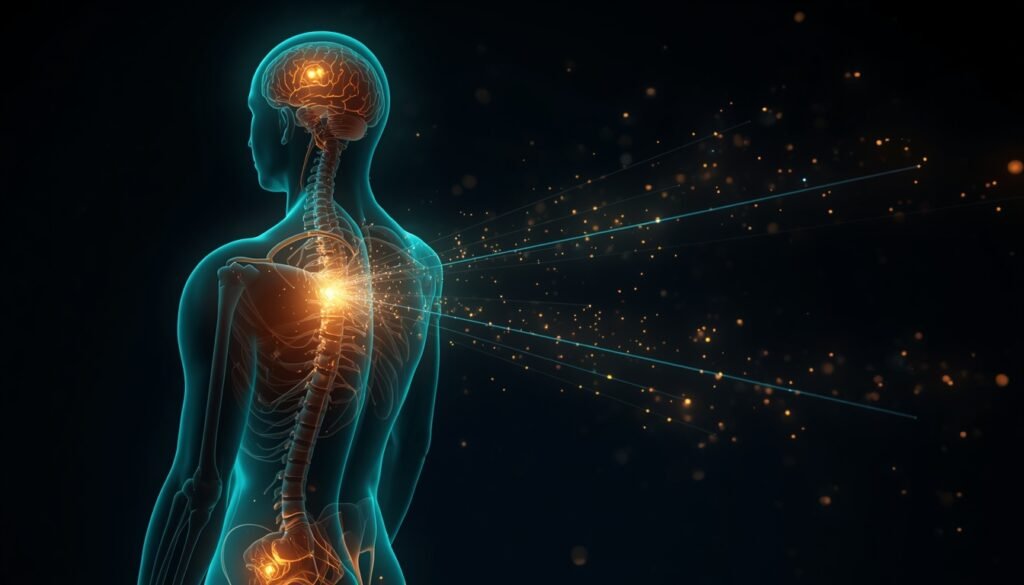
👤 Human Evidence. Here’s a fact that reframes everything: your skeletal muscle makes up roughly 40% of your body weight and holds 50–75% of all the protein in your body—making it the largest organ you have. And in the last two decades, science has established that it’s not a passive one. Muscle is an active endocrine organ, constantly sensing and signaling. When you lose it, you’re not just losing horsepower—you’re shutting down a major hormone-producing system.
Meet Your Myokines: The Hormones Your Muscles Make
Every time your muscles contract, they release myokines—bioactive molecules that travel through your bloodstream and give instructions to organs far from the muscle itself. Key players include:
- Irisin — improves metabolism, browns fat, and crosses the blood-brain barrier to boost brain health.
- IL-6 (exercise-induced) — in the acute, muscle-derived form, it’s anti-inflammatory and improves glucose metabolism.
- BDNF — brain-derived neurotrophic factor, essential for learning, memory, and mood.
- FGF21 & SPARC — regulate metabolism, insulin sensitivity, and tissue health.
- Myostatin — a brake on muscle growth (one you want to keep in check).
These myokines signal to your liver, fat, pancreas, bone, heart, and brain. In a real sense, moving your muscles is how you dose your body with its own medicine.
Why Sarcopenia Ages Your Whole Body
Once you see muscle as an organ, the consequences of losing it snap into focus. Here’s what’s at stake across your body:
| System | What Healthy Muscle Does | What Sarcopenia Risks |
|---|---|---|
| Metabolism | Acts as the main “sink” that pulls glucose out of your blood. | Insulin resistance, higher risk of type 2 diabetes. |
| Brain | Sends irisin and boosts BDNF, supporting memory and mood. | Cognitive decline and low mood are linked to muscle loss. |
| Immune system | Releases anti-inflammatory signals that restrain chronic inflammation. | More inflammaging—the chronic inflammation of aging. |
| Bone | Cross-talks with bone to maintain density and strength. | Weaker bones, higher fracture and fall risk. |
| Longevity | Preserves physical function and independence. | Higher frailty and mortality risk. |
The muscle-brain link is especially striking: irisin released during exercise crosses into the brain and triggers a neuroprotective program, raising BDNF in the hippocampus—which helps explain why staying strong protects the mind, not just the body.
The Vicious Cycle—and How to Break It
🔬 Animal & 👤 Human Evidence. Here’s the trap: inactivity reduces the release of these protective myokines, which worsens muscle loss, which further reduces activity, which deepens metabolic and cognitive decline. Sarcopenia feeds on stillness. The flip side is genuinely hopeful—because the switch that turns your muscle-pharmacy back on is simply using your muscles. Contraction is the trigger. Movement is the prescription.
🔥 Muscle Is Your Metabolic Engine—See How Big Yours Is
More muscle means a higher daily calorie burn and better glucose handling. Your total daily energy expenditure (TDEE) reflects that engine. Knowing your number helps you fuel muscle preservation instead of muscle loss.
The Good News: Muscle Is a Pharmacy You Activate by Moving
You don’t need a drug to restore this organ—you need to work it. Resistance training is the single most powerful trigger for myokine release and muscle preservation, and its benefits ripple out to every system in the table above. A brief overview:
- Lift 2–3 times per week with progressive resistance—this is the master lever.
- Eat enough protein to give your muscle the raw material it needs (see how much protein you need after 50).
- Keep moving all day to keep those protective signals flowing.
For the complete, step-by-step protocol to stop and reverse muscle loss—including how to screen yourself and structure your training—see our full guide: Sarcopenia: How to Stop Age-Related Muscle Loss. And track your progress alongside another key marker, grip strength.
When To See a Doctor
See a physician if you notice significant weakness, frequent falls, difficulty with daily tasks, or unexplained muscle loss—these warrant evaluation and can signal underlying conditions. If you have diabetes, heart disease, or other chronic illness, work with your doctor to build a safe, effective exercise plan. The whole-body benefits of muscle are best claimed with professional guidance.
The Bottom Line
Sarcopenia is far more than getting weaker—it’s the quiet loss of your largest organ and one of your most important hormone factories. When muscle declines, its protective myokine signals fade too, and the effects show up in your metabolism, your brain, your immune system, and your bones. That sounds daunting, but it’s actually empowering: the same organ that fails from neglect roars back to life with use. George didn’t just start lifting to avoid frailty. He started because he finally understood he was strengthening his whole body from the inside out—one contraction at a time.
Frequently Asked Questions
Is muscle really an organ?
Yes. Skeletal muscle is the body’s largest organ, making up about 40% of body weight and holding most of the body’s protein. Beyond movement, it functions as an endocrine organ, releasing hormone-like molecules called myokines that regulate metabolism, the brain, the immune system, and bone.
What are myokines?
Myokines are bioactive molecules that muscles release during contraction. Examples include irisin, IL-6, BDNF, FGF21, and SPARC. They travel through the bloodstream and signal to distant organs, mediating many of the whole-body benefits of exercise, from improved insulin sensitivity to better brain health.
How does losing muscle affect the rest of the body?
Muscle loss reduces glucose disposal (raising diabetes risk), lowers protective anti-inflammatory and brain-supporting myokines, weakens bone through reduced muscle-bone crosstalk, and increases frailty and mortality risk. In short, sarcopenia accelerates aging across multiple organ systems, not just strength.
Does muscle loss affect the brain?
Research links sarcopenia to cognitive decline. One mechanism is the muscle-brain axis: exercise-induced irisin crosses the blood-brain barrier and boosts BDNF in the hippocampus, supporting memory, mood, and neuroprotection. Losing muscle reduces these protective signals.
Why does muscle help prevent diabetes?
Skeletal muscle is the primary site where insulin drives glucose out of the blood and into storage. More healthy muscle means a bigger “sink” for blood sugar, improving insulin sensitivity. Muscle loss shrinks this capacity, contributing to insulin resistance and type 2 diabetes risk.
Can you reverse the whole-body effects of sarcopenia?
You can substantially improve them. Resistance training reactivates myokine release and rebuilds muscle at any age, restoring many metabolic, cognitive, and functional benefits. For the full step-by-step protocol, see our dedicated guide on stopping age-related muscle loss.
References
- Muscle Mechanics in Metabolic Health and Longevity: Myokines and Training Adaptations. Immuno (MDPI), 2025. mdpi.com/2673-6411/5/4/37
- Skeletal Muscle as an Auto-, Para- and Endocrine Organ: The Role of Myokines. PMC. pmc.ncbi.nlm.nih.gov/articles/PMC12849793
- Muscle in Endocrinology: Myokine Secretion and Endocrine-Metabolic Diseases. J Clin Med (MDPI), 2025. mdpi.com/2077-0383/14/13/4490
- Multiple Roles in Neuroprotection for the Exercise-Derived Myokine Irisin. PMC. ncbi.nlm.nih.gov/pmc/articles/PMC8086837
Related Reading
- how TRF2 controls the muscle stem cells behind sarcopenia
- how to stop, and even reverse, age-related muscle loss
Is muscle really an organ?
Yes. Skeletal muscle is the body’s largest organ, making up about 40% of body weight and holding most of the body’s protein. Beyond movement, it functions as an endocrine organ, releasing hormone-like molecules called myokines that regulate metabolism, the brain, the immune system, and bone.
What are myokines?
Myokines are bioactive molecules that muscles release during contraction. Examples include irisin, IL-6, BDNF, FGF21, and SPARC. They travel through the bloodstream and signal to distant organs, mediating many of the whole-body benefits of exercise, from improved insulin sensitivity to better brain health.
How does losing muscle affect the rest of the body?
Muscle loss reduces glucose disposal (raising diabetes risk), lowers protective anti-inflammatory and brain-supporting myokines, weakens bone through reduced muscle-bone crosstalk, and increases frailty and mortality risk. In short, sarcopenia accelerates aging across multiple organ systems, not just strength.
Does muscle loss affect the brain?
Research links sarcopenia to cognitive decline. One mechanism is the muscle-brain axis: exercise-induced irisin crosses the blood-brain barrier and boosts BDNF in the hippocampus, supporting memory, mood, and neuroprotection. Losing muscle reduces these protective signals.
Why does muscle help prevent diabetes?
Skeletal muscle is the primary site where insulin drives glucose out of the blood and into storage. More healthy muscle means a bigger “sink” for blood sugar, improving insulin sensitivity. Muscle loss shrinks this capacity, contributing to insulin resistance and type 2 diabetes risk.
Can you reverse the whole-body effects of sarcopenia?
You can substantially improve them. Resistance training reactivates myokine release and rebuilds muscle at any age, restoring many metabolic, cognitive, and functional benefits. For the full step-by-step protocol, see our dedicated guide on stopping age-related muscle loss.

Julian Vance is the writer and editor behind RegenStep, translating peer-reviewed longevity, metabolic, and gut-health research into practical, actionable guides. Julian is not a licensed physician; content is reviewed against cited primary sources and is for informational purposes only. Always consult a qualified healthcare provider for personal medical advice.