
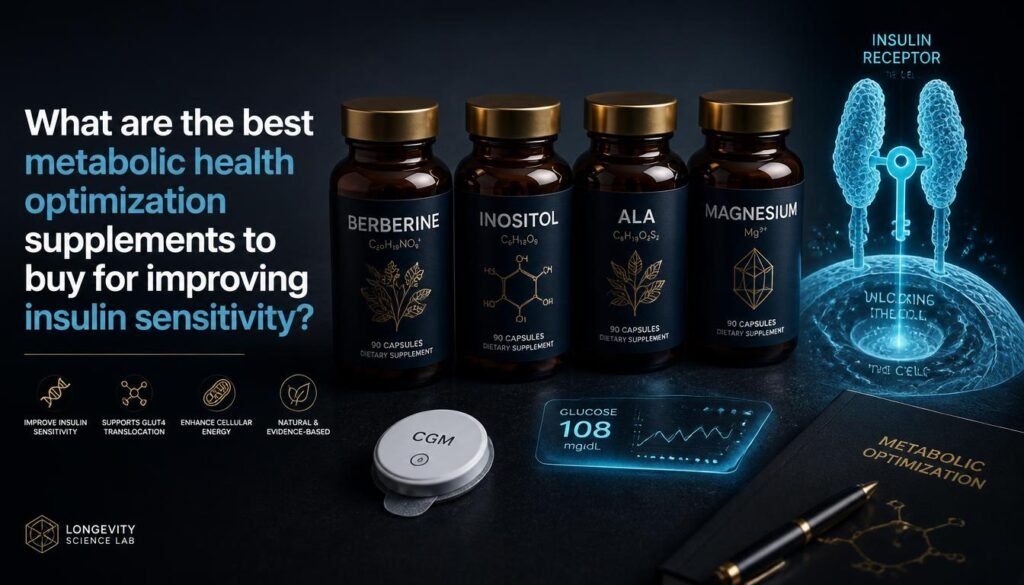
When patients ask me for the most effective metabolic health optimization supplements to reverse insulin resistance, I always start by explaining the lock-and-key mechanism of human metabolism. Insulin is the key that unlocks your cells to let blood glucose inside for energy. But in a state of metabolic dysfunction, the cellular “locks” become rusted shut by chronic inflammation and intracellular lipids. Your pancreas pumps out more and more insulin to force the doors open, leading to hyperinsulinemia, visceral fat accumulation, and eventual type 2 diabetes. To reverse this, you do not just need to lower blood sugar; you need to resensitize the cellular receptors.
The short answer for those looking for a quick clinical summary: The most evidence-backed compounds for improving insulin sensitivity are Berberine (an AMPK activator), Myo-Inositol (an insulin second-messenger), Alpha-Lipoic Acid (a mitochondrial antioxidant that promotes GLUT4 translocation), and Magnesium Glycinate (a vital cofactor for insulin receptor phosphorylation). When paired with targeted lifestyle interventions, these four compounds form the foundation of any serious protocol to restore metabolic flexibility.
As a physician focused on longevity and cellular aging, I see the damage that standard “blood sugar support” blends do. They are often under-dosed and rely on outdated science. In this comprehensive guide, we will break down the exact biochemistry of the top four metabolic health optimization supplements, the precise dosages required for clinical efficacy, and how to stack them safely to reclaim your metabolic health.
The Mechanics of Insulin Resistance: Why Your Cells Go “Deaf”
Before investing in metabolic health optimization supplements, you must understand why your cells become insulin resistant in the first place. The primary driver is not simply eating too much sugar; it is the accumulation of intramyocellular lipids—microscopic droplets of fat inside your muscle and liver cells.
When fat builds up inside the muscle cell, it triggers a cascade of inflammatory kinases (like JNK and IKK-beta) that physically block the insulin receptor substrate (IRS-1). Even if insulin is present in the bloodstream, the signal cannot reach the nucleus of the cell. The cell essentially goes “deaf” to insulin. To fix this, we must clear the intracellular fat, reduce the oxidative stress in the mitochondria, and upregulate the AMPK pathway—the master metabolic switch that tells your body to burn stored fat and sensitize receptors.
The Top 4 Metabolic Health Optimization Supplements for Insulin Sensitivity
If you are building a targeted protocol, these four compounds have the most robust human clinical data supporting their ability to resensitize insulin receptors and lower fasting insulin levels.
1. Berberine: The Natural AMPK Activator
Berberine is a bioactive compound extracted from several plants, including goldenseal and barberry. In functional and longevity medicine, it is frequently compared to the pharmaceutical drug Metformin. According to multiple meta-analyses published in the Journal of Clinical Endocrinology & Metabolism, Berberine is highly effective at lowering HbA1c and fasting glucose, but it does so through a slightly different, multi-targeted mechanism.
- The Biochemical Mechanism: Berberine directly activates AMPK (AMP-activated protein kinase). When AMPK is triggered, it inhibits gluconeogenesis (the liver creating new glucose) and forces your muscle cells to pull glucose out of the bloodstream independent of insulin. Furthermore, Berberine modulates the gut microbiome, increasing the production of short-chain fatty acids (SCFAs) that reduce systemic inflammation.
- The Protocol: 500 mg, taken 2 to 3 times daily, strictly with or immediately before meals containing carbohydrates.
- Clinical Warning: Berberine is a potent antimicrobial. Taking it continuously for more than 8 to 12 weeks can disrupt your gut microbiome. I recommend cycling it: 8 weeks on, 4 weeks off.
2. Myo-Inositol & D-Chiro-Inositol: The Second Messengers
Inositol is often mistakenly categorized as a B-vitamin, but it is actually a type of sugar alcohol that your body uses as a structural component of cell membranes. More importantly, it acts as a “second messenger” for insulin. When insulin binds to the outside of a cell, inositol is responsible for carrying that signal to the inside of the cell.
- The Biochemical Mechanism: Research shows that individuals with severe insulin resistance and PCOS (Polycystic Ovary Syndrome) have a defect in the conversion of Myo-Inositol to D-Chiro-Inositol. Supplementing with a specific physiological ratio restores the signaling cascade, allowing the cell to “hear” the insulin again.
- The Protocol: 4,000 mg of Myo-Inositol combined with 100 mg of D-Chiro-Inositol (a 40:1 ratio) taken daily. This specific ratio is critical; taking high doses of D-Chiro-Inositol alone can actually paradoxically worsen insulin signaling in the ovaries and muscles.
- Best For: Women with PCOS, individuals with sugar cravings, and those suffering from metabolic syndrome.
3. Alpha-Lipoic Acid (ALA): The Mitochondrial Defender
Alpha-Lipoic Acid is a unique fatty acid that is both water- and fat-soluble, allowing it to work in every cell and tissue in the body. It is heavily researched in Europe for the treatment of diabetic neuropathy (nerve damage caused by high blood sugar).
- The Biochemical Mechanism: ALA is a potent antioxidant that recycles other antioxidants like Vitamin C, Vitamin E, and Glutathione. For insulin sensitivity, ALA promotes the translocation of GLUT4 receptors to the cell surface. GLUT4 is the “doorway” that allows glucose to enter the muscle cell. By increasing the number of doors on the surface of the cell, ALA makes it significantly easier for your body to clear glucose from the bloodstream.
- The Protocol: 300 mg to 600 mg of the R-Alpha-Lipoic Acid (R-ALA) form. The “R” form is the naturally occurring, biologically active isomer. Avoid the cheaper, synthetic “S-ALA” blends. Take it on an empty stomach, 30 minutes before a meal.
4. Magnesium Glycinate: The Forgotten Cofactor
Over 50% of the Western population is deficient in magnesium, and the rate is even higher in those with insulin resistance. When blood sugar is high, the kidneys excrete excess glucose into the urine, and magnesium is dragged out with it, creating a vicious cycle of deficiency and worsening insulin resistance.
- The Biochemical Mechanism: The insulin receptor on the surface of your cell requires a process called autophosphorylation to activate. This process is entirely dependent on intracellular magnesium. If you are deficient, the receptor physically cannot turn on, no matter how much insulin is present.
- The Protocol: 200 mg to 400 mg of elemental Magnesium Glycinate taken 60 minutes before bed. Avoid Magnesium Oxide, which has an absorption rate of less than 5%.
💡 Action Step: Supplements are multipliers, not magic pills. To ensure your baseline energy expenditure is dialed in, use our TDEE Calculator to find your exact daily caloric needs. Then, use our Intermittent Fasting Calculator to design an eating window that naturally lowers your baseline insulin, allowing these supplements to work more effectively.
Synergistic Stacking: How to Combine Them Safely
When combining metabolic health optimization supplements, timing is just as important as the dosage. Taking them all at once can lead to gastrointestinal distress or hypoglycemia (low blood sugar) if you are already on glucose-lowering medications.
Here is the optimal daily schedule for maximum bioavailability and receptor sensitization:
| Time of Day | Supplement | Dosage | Purpose & Mechanism |
|---|---|---|---|
| Morning (Fasted) | R-Alpha-Lipoic Acid (R-ALA) | 300 – 600 mg | Absorbs best without food; primes GLUT4 receptors for the day. |
| Breakfast (With Food) | Berberine | 500 mg | Blunts the glucose spike from the meal; activates AMPK. |
| Lunch or Dinner | Myo/D-Chiro Inositol (40:1) | 4,000 mg / 100 mg | Restores second-messenger signaling; reduces evening sugar cravings. |
| Dinner (With Food) | Berberine | 500 mg | Blunts the evening glucose spike; prevents overnight hyperglycemia. |
| Before Bed (Fasted) | Magnesium Glycinate | 200 – 400 mg | Down-regulates the nervous system; provides cofactor for overnight cellular repair. |
What These Supplements Cannot Fix (The Lifestyle Foundation)
No list of metabolic health optimization supplements can outwork a diet high in ultra-processed foods and liquid fructose. As we discussed in our deep dive on High Uric Acid Isn’t Just Gout — It’s a Metabolic Warning Sign, fructose bypasses the body’s normal metabolic brakes and drives rapid intracellular fat accumulation in the liver. If you are consuming high-fructose corn syrup or agave nectar daily, you are actively fighting the biochemical mechanisms of Berberine and Inositol.
Furthermore, you must clear the intramyocellular lipids (the fat inside your muscle cells) that are blocking your insulin receptors. The most potent way to do this is through Zone 2 cardiovascular training and heavy resistance training. Muscle is the largest metabolic sink in the human body; the more muscle you build, the more insulin sensitive you become. Ensure you are eating enough amino acids to support this tissue by using our Protein Intake Calculator.
Finally, you must address visceral fat. This is the hard, inflammatory fat that wraps around your liver and pancreas, pumping out cytokines that directly induce insulin resistance. Learn how to identify and target it in our guide: Visceral Fat vs Subcutaneous Fat: Which One Is Actually Killing You?.
Blood Markers to Track Your Progress
Before buying metabolic health optimization supplements, you must establish your baseline. Do not rely solely on a standard fasting glucose test, which is a lagging indicator. By the time your fasting glucose rises, you have likely been insulin resistant for a decade. Demand these three tests from your physician:
- Fasting Insulin: This is the leading indicator. Optimal longevity levels are between 2 and 5 μIU/mL. If your fasting insulin is above 8 μIU/mL, your pancreas is already overworking to keep your blood sugar normal.
- HOMA-IR (Homeostatic Model Assessment for Insulin Resistance): This is a calculated score based on your fasting glucose and fasting insulin. A score below 1.0 indicates high insulin sensitivity. A score above 2.0 indicates significant insulin resistance.
- HbA1c: This measures your 3-month average blood sugar. For longevity and optimal metabolic health, target an HbA1c between 4.8% and 5.2%.
Retest these markers after 90 days of implementing your supplement stack and lifestyle interventions to objectively measure your cellular resensitization.
Final Thoughts
Ultimately, the best metabolic health optimization supplements are those that address the root causes of cellular deafness: AMPK downregulation, second-messenger failure, oxidative stress, and cofactor deficiency. By strategically utilizing Berberine, the 40:1 Inositol ratio, R-Alpha-Lipoic Acid, and Magnesium Glycinate, you provide your cells with the exact biochemical tools they need to unlock their receptors and clear glucose efficiently.
However, remember that metabolic flexibility is earned, not just swallowed in a capsule. Use these compounds to bridge the gap while you build muscle, manage your stress, and eliminate liquid fructose from your diet. Reclaim your insulin sensitivity, protect your endothelial lining, and secure your healthspan for the decades to come.
FAQ – Text Version
1. What are the best metabolic health optimization supplements for insulin resistance?
The most effective metabolic health optimization supplements for insulin resistance include Berberine (to activate the AMPK pathway), a 40:1 ratio of Myo-Inositol to D-Chiro-Inositol (to restore insulin second-messengers), R-Alpha-Lipoic Acid (to promote GLUT4 receptor translocation), and Magnesium Glycinate (to act as a cofactor for insulin receptor phosphorylation).
2. Can metabolic health optimization supplements replace diabetes medication?
No. While supplements like Berberine have mechanisms similar to pharmaceutical drugs like Metformin, they should never be used as a direct replacement without medical supervision. If you are taking insulin or glucose-lowering medications, adding these supplements can cause dangerous hypoglycemia (low blood sugar). Always consult your prescribing physician before altering your treatment plan.
3. How long does it take for supplements to improve insulin sensitivity?
When combined with dietary changes and exercise, most individuals see measurable improvements in fasting insulin and HOMA-IR scores within 8 to 12 weeks of consistent supplementation. However, reversing deep intracellular insulin resistance and clearing visceral fat can take 6 to 12 months of sustained lifestyle intervention.
4. Is Berberine safe to take long-term?
Berberine is generally safe for short to medium-term use, but it possesses potent antimicrobial properties that can alter the gut microbiome if taken continuously for many months. Most longevity clinicians recommend cycling Berberine (e.g., 8 weeks on, 4 weeks off) to maintain microbial diversity while preserving its metabolic benefits.
5. What is the best blood test to check for insulin resistance?
The Fasting Insulin test is the best leading indicator of insulin resistance. While standard panels only check Fasting Glucose (which remains normal for years while the pancreas overworks), a Fasting Insulin test reveals if your body is producing excess insulin to maintain that normal glucose level. Optimal longevity levels are between 2 and 5 μIU/mL.
⚕️ Medical Disclaimer
The content provided on RegenStep.com, including this guide authored by Dr. Julian Vance, is strictly for educational and informational purposes only. It is not intended to be a substitute for professional medical advice, diagnosis, or treatment.
Compounds that improve insulin sensitivity, such as Berberine and Alpha-Lipoic Acid, can significantly lower blood glucose levels. If you are currently taking prescription medications for diabetes (such as Metformin, GLP-1 agonists, or exogenous insulin), combining them with these supplements can cause severe hypoglycemia. Never stop or alter your prescribed medications without direct supervision from your endocrinologist or primary care physician.
What are the best metabolic health optimization supplements for insulin resistance?
The most effective metabolic health optimization supplements for insulin resistance include Berberine (to activate the AMPK pathway), a 40:1 ratio of Myo-Inositol to D-Chiro-Inositol (to restore insulin second-messengers), R-Alpha-Lipoic Acid (to promote GLUT4 receptor translocation), and Magnesium Glycinate (to act as a cofactor for insulin receptor phosphorylation).
Can metabolic health optimization supplements replace diabetes medication?
No. While supplements like Berberine have mechanisms similar to pharmaceutical drugs like Metformin, they should never be used as a direct replacement without medical supervision. If you are taking insulin or glucose-lowering medications, adding these supplements can cause dangerous hypoglycemia (low blood sugar). Always consult your prescribing physician before altering your treatment plan.
How long does it take for supplements to improve insulin sensitivity?
When combined with dietary changes and exercise, most individuals see measurable improvements in fasting insulin and HOMA-IR scores within 8 to 12 weeks of consistent supplementation. However, reversing deep intracellular insulin resistance and clearing visceral fat can take 6 to 12 months of sustained lifestyle intervention.
Is Berberine safe to take long-term?
Berberine is generally safe for short to medium-term use, but it possesses potent antimicrobial properties that can alter the gut microbiome if taken continuously for many months. Most longevity clinicians recommend cycling Berberine (e.g., 8 weeks on, 4 weeks off) to maintain microbial diversity while preserving its metabolic benefits.
What is the best blood test to check for insulin resistance?
The Fasting Insulin test is the best leading indicator of insulin resistance. While standard panels only check Fasting Glucose (which remains normal for years while the pancreas overworks), a Fasting Insulin test reveals if your body is producing excess insulin to maintain that normal glucose level. Optimal longevity levels are between 2 and 5 μIU/mL.

Julian Vance is the writer and editor behind RegenStep, translating peer-reviewed longevity, metabolic, and gut-health research into practical, actionable guides. Julian is not a licensed physician; content is reviewed against cited primary sources and is for informational purposes only. Always consult a qualified healthcare provider for personal medical advice.