
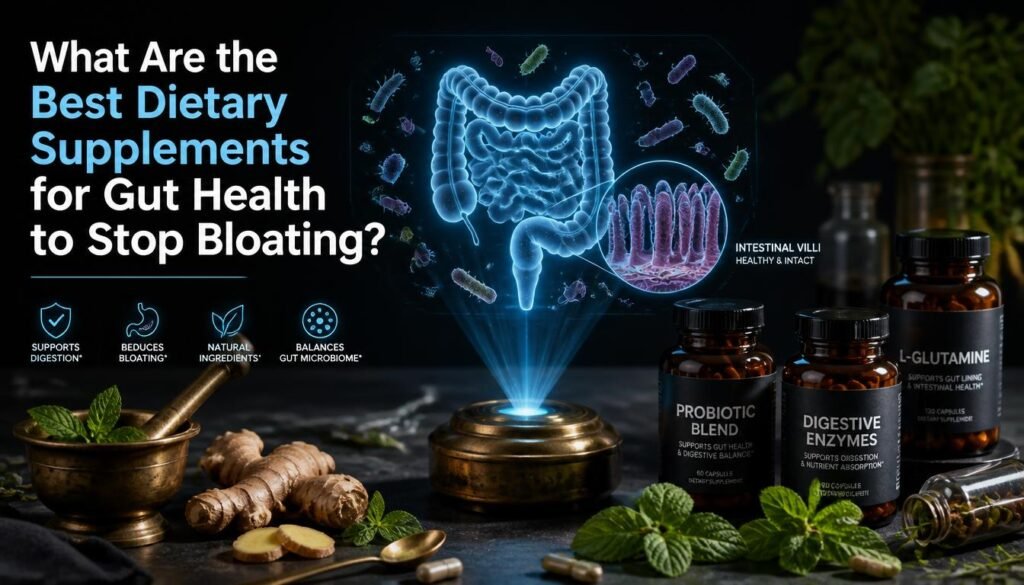
If you are constantly battling post-meal bloating, unpredictable bowel movements, and chronic digestive fatigue, you have likely found yourself endlessly searching for the right dietary supplements for gut health. The wellness industry is flooded with generic probiotics and “detox” teas that promise immediate relief but rarely address the underlying biochemical dysfunction. As a clinician focused on the gut-brain axis and metabolic longevity, I can tell you that treating bloating requires precision, not guesswork. Taking the wrong compound at the wrong time can actually exacerbate your symptoms and feed pathogenic bacterial overgrowths.
To truly resolve digestive distress, we must look beyond the symptom of bloating and identify the mechanical and chemical failures in your gastrointestinal tract. Whether your distress is driven by low stomach acid, a compromised mucosal lining, or Small Intestinal Bacterial Overgrowth (SIBO), the strategic use of targeted dietary supplements for gut health can help restore the intricate ecosystem of your microbiome. In this comprehensive clinical guide, I will break down the exact mechanisms of digestive distress and outline the evidence-based protocols required to heal your gut lining, optimize enzymatic breakdown, and finally eliminate chronic bloating.
The Root Causes of Bloating: Why Your Digestion is Failing
Before investing in dietary supplements for gut health, you must understand why you are bloating in the first place. Bloating is not a disease; it is a mechanical and chemical signal that your digestive cascade is breaking down at one of four critical checkpoints.
1. Hypochlorhydria (Low Stomach Acid)
Contrary to popular belief, most bloating and acid reflux is not caused by too much stomach acid, but by too little. Hydrochloric acid (HCl) is required to break down proteins and trigger the release of bile and pancreatic enzymes. When stomach acid is low, food sits in the stomach and ferments, producing gas that pushes upward, causing reflux and upper abdominal bloating.
2. Enzyme Insufficiency
If your pancreas is not producing adequate lipase, protease, and amylase, macronutrients pass undigested into the lower bowel. Here, opportunistic bacteria ferment these undigested food particles, producing massive amounts of hydrogen and methane gas.
3. Intestinal Permeability (“Leaky Gut”)
The tight junctions of your intestinal lining act as a selective barrier. When these junctions degrade due to chronic stress, alcohol, or glyphosate exposure, undigested food proteins and bacterial endotoxins (LPS) enter the bloodstream. This triggers localized and systemic inflammation, leading to water retention and severe lower GI bloating. Read our deep dive into The “Leaky Gut” Symptom You’re Ignoring (And Why It’s Causing Your Brain Fog) to understand this mechanism.
4. Small Intestinal Bacterial Overgrowth (SIBO)
The vast majority of your microbiome should reside in the large intestine. When bacteria migrate upward into the small intestine, they prematurely ferment carbohydrates before you can absorb them. This is the hidden driver behind up to 78% of Irritable Bowel Syndrome (IBS) cases. If you have SIBO, taking standard prebiotics will act like throwing gasoline on a fire. Learn how to identify this in our guide: SIBO: The Hidden Gut Infection Behind 78% of IBS Cases.
The Top 5 Dietary Supplements for Gut Health (Evidence-Based)
When formulating a clinical protocol, the most effective dietary supplements for gut health are those that restore physiological function rather than merely masking symptoms. Here are the top five compounds I utilize in practice.
1. Full-Spectrum Digestive Enzymes
If your food is not broken down in the upper GI tract, it becomes fuel for pathogenic bacteria in the lower GI tract. A high-quality, full-spectrum digestive enzyme blend provides the exogenous catalytic power your pancreas may be lacking.
- The Protocol: Look for a blend that includes Protease (for proteins), Lipase (for fats), Amylase (for carbohydrates), and crucially, Alpha-Galactosidase (the enzyme that breaks down complex carbs in beans and cruciferous vegetables) and DPP-IV (which helps break down trace gluten and casein).
- Timing: Take 1 capsule immediately before your first bite of a complex meal.
2. Betaine HCl with Pepsin
For patients with low stomach acid, restoring the acidic pH of the stomach is life-changing. Pepsin is the proteolytic enzyme that requires a highly acidic environment to activate.
- The Protocol: Start with one capsule of Betaine HCl (around 600mg) in the middle of a protein-heavy meal. If you feel no warming sensation, you likely need more. Clinical Warning: Do not use Betaine HCl if you have a history of gastric ulcers or are taking NSAIDs/corticosteroids, as it can damage an already compromised mucosal lining.
3. L-Glutamine (The Mucosal Builder)
L-Glutamine is the primary fuel source for enterocytes—the cells that line your intestines. According to research published in the Journal of Clinical Gastroenterology, high-dose L-Glutamine supplementation significantly reduces intestinal permeability and tightens the mucosal barrier, effectively sealing a leaky gut.
- The Protocol: 5 to 10 grams of pure L-Glutamine powder mixed in water, taken on an empty stomach twice daily.
4. Specific Strain Probiotics (and Why to Avoid Generic Blends)
The biggest mistake people make when buying dietary supplements for gut health is purchasing a generic, 50-billion CFU Lactobacillus blend. If you have SIBO or severe dysbiosis, adding more lactic acid-producing bacteria can worsen brain fog and bloating. Instead, we use targeted, spore-based or yeast-based organisms.
- Saccharomyces boulardii: A beneficial yeast that acts as a “placeholder,” crowding out pathogenic bacteria and Candida without colonizing the small intestine.
- Bifidobacterium infantis 35624: A heavily researched strain proven to reduce inflammatory cytokines and IBS-related bloating.
5. Natural Prokinetics (Ginger and Artichoke Extract)
The Migrating Motor Complex (MMC) is an electromechanical wave that sweeps residual food and bacteria out of the small intestine and into the colon between meals. If the MMC is impaired (often due to food poisoning or chronic stress), bacteria pool in the small intestine, causing SIBO. High-dose ginger root and artichoke leaf extract act as natural prokinetics, stimulating the MMC to keep the digestive tract moving.
💡 Action Step: To give your Migrating Motor Complex (MMC) the time it needs to sweep your small intestine clean, you must stop grazing. Use our Intermittent Fasting Calculator to design a 14-to-16-hour fasting window that allows your gut’s natural cleansing waves to occur without interruption.
What to Avoid: Supplements That Can Make Bloating Worse
Not all dietary supplements for gut health are created equal, and some actively harm a compromised digestive tract. If you are suffering from severe bloating, avoid the following until your gut is stabilized:
- Prebiotics (FOS, GOS, and Inulin): Prebiotics are fibers meant to feed good bacteria. However, if you have bacterial overgrowth in your small intestine, these fibers will be rapidly fermented by the wrong bacteria, producing explosive amounts of hydrogen gas and severe pain.
- Generic Lactobacillus Blends: As mentioned, adding high doses of Lactobacillus to an environment already suffering from D-Lactic acidosis (common in brain fog and SIBO) will worsen neurological and digestive symptoms.
- Magnesium Oxide / Citrate (in high doses): While used for constipation, high doses of these osmotic laxatives can draw too much water into the bowel, causing cramping, urgency, and disruption of the mucosal barrier.
If your microbiome has been damaged by pharmaceuticals, repairing it requires a delicate touch. Read our analysis on Why Antibiotics Destroy Your Microbiome for Years, Not Weeks to understand how to rebuild safely.
The 4-Phase Gut Healing Protocol (The 4 R’s)
In functional medicine, we do not just throw supplements at a symptom. We follow a structured, sequential framework known as the “4 R’s” to restore gastrointestinal homeostasis. Integrating dietary supplements for gut health into this framework ensures long-term resolution rather than temporary relief.
| Phase | Goal | Action & Targeted Supplements |
|---|---|---|
| 1. Remove | Eliminate pathogens, inflammatory foods, and stressors. | Remove gluten, seed oils, and liquid fructose. Use targeted antimicrobials (like Oregano Oil) if SIBO/Candida is present. |
| 2. Replace | Restore missing digestive secretions. | Introduce Betaine HCl and Full-Spectrum Digestive Enzymes to ensure complete macronutrient breakdown. |
| 3. Reinoculate | Introduce beneficial microbes to restore diversity. | Use Saccharomyces boulardii and targeted soil-based organisms. Introduce prebiotic fibers only after bloating has resolved. |
| 4. Repair | Heal the intestinal mucosal lining and tight junctions. | High-dose L-Glutamine, Zinc Carnosine, and Omega-3 fatty acids to reduce mucosal inflammation and seal the gut barrier. |
Summary Table: The Bloating Relief Quick-Reference Guide
To help you build your personalized protocol, refer to this clinical breakdown of dosages and timing:
| Supplement | Primary Target | Optimal Daily Dosage | Timing |
|---|---|---|---|
| Digestive Enzymes | Macronutrient breakdown, preventing fermentation. | 1-2 Capsules | Immediately before meals. |
| Betaine HCl + Pepsin | Stomach acid restoration, protein digestion. | 600mg – 1500mg | Middle of protein-heavy meals. |
| L-Glutamine Powder | Enterocyte fuel, leaky gut repair. | 5g – 10g | Empty stomach, morning & night. |
| Ginger / Artichoke | Prokinetic, MMC stimulation, SIBO prevention. | 200mg Ginger / 100mg Artichoke | Immediately before bed (fasted). |
| S. Boulardii | Pathogen crowding, diarrhea relief. | 5 Billion CFU | Between meals, away from antimicrobials. |
The Gut-Brain Connection: Managing the Vagus Nerve
You cannot supplement your way out of a chronically stressed nervous system. The gut and the brain are physically connected via the vagus nerve. If you are in a state of “fight or flight” (sympathetic dominance), your body literally shuts down blood flow to the digestive tract, halting enzyme production and paralyzing the Migrating Motor Complex.
Before you take your dietary supplements for gut health, you must shift into a “rest and digest” (parasympathetic) state. I require my patients to take three deep, diaphragmatic breaths before every meal to stimulate the vagus nerve. For a complete guide on nervous system regulation, read The Vagus Nerve Reset: How to Calm Your Gut Through Your Nervous System. Furthermore, the state of your microbiome directly dictates your neurotransmitter production; learn more in The Gut-Brain-Skin Axis: How Microbiome Diversity Dictates Your Mood.
Final Thoughts
Resolving chronic bloating and digestive fatigue is one of the highest-yield investments you can make for your overall longevity and daily vitality. However, blindly taking dietary supplements for gut health without understanding your unique biochemical environment is a recipe for frustration. By identifying whether your distress stems from low stomach acid, enzymatic insufficiency, or bacterial overgrowth, you can deploy targeted compounds like Betaine HCl, L-Glutamine, and natural prokinetics with surgical precision.
Heal your mucosal lining, respect your fasting windows to allow the MMC to sweep your intestines clean, and watch as your digestion transforms from a source of daily anxiety into a foundation of boundless metabolic energy.
Frequently Asked Questions (FAQ)
1. What are the best dietary supplements for gut health and bloating?
The most effective dietary supplements for gut health to treat bloating include full-spectrum digestive enzymes (to break down macronutrients), Betaine HCl (to restore stomach acid), L-Glutamine (to repair the intestinal lining), and natural prokinetics like ginger and artichoke extract (to stimulate the Migrating Motor Complex and prevent bacterial overgrowth).
2. Can probiotics make bloating worse?
Yes. If you suffer from Small Intestinal Bacterial Overgrowth (SIBO), taking generic Lactobacillus probiotics or prebiotic fibers (like inulin and FOS) can feed the overgrown bacteria in your small intestine, leading to rapid fermentation, severe gas, and worsened bloating.
3. How does L-Glutamine help heal a leaky gut?
L-Glutamine is the primary fuel source for enterocytes, the cells that line your intestines. High-dose supplementation provides the cellular energy required to regenerate the mucosal lining and tighten the cellular junctions, effectively sealing a leaky gut and reducing systemic inflammation.
4. Should I take digestive enzymes with every meal?
Digestive enzymes are most beneficial when taken immediately before complex, heavy meals containing proteins, fats, and complex carbohydrates. They are generally unnecessary for simple snacks or easily digestible foods like fruits and bone broth.
5. What is the Migrating Motor Complex (MMC) and how do I support it?
The MMC is an electromechanical wave that sweeps residual food and bacteria out of the small intestine between meals. It only activates in a fasted state. You can support it by practicing intermittent fasting (avoiding snacking between meals) and taking natural prokinetics like ginger root extract before bed.
⚕️ Medical Disclaimer
The content provided on RegenStep.com, including this guide authored by Dr. Julian Vance, is strictly for educational and informational purposes only. It is not intended to be a substitute for professional medical advice, diagnosis, or treatment.
Compounds like Betaine HCl and high-dose L-Glutamine can interact with underlying gastrointestinal conditions, such as gastric ulcers or severe hepatic encephalopathy. Always consult with your gastroenterologist or a qualified healthcare provider before beginning any new supplementation protocol, particularly if you are experiencing chronic abdominal pain, unexplained weight loss, or gastrointestinal bleeding.
What are the best dietary supplements for gut health and bloating?
The most effective dietary supplements for gut health to treat bloating include full-spectrum digestive enzymes (to break down macronutrients), Betaine HCl (to restore stomach acid), L-Glutamine (to repair the intestinal lining), and natural prokinetics like ginger and artichoke extract (to stimulate the Migrating Motor Complex and prevent bacterial overgrowth).
Can probiotics make bloating worse?
Yes. If you suffer from Small Intestinal Bacterial Overgrowth (SIBO), taking generic Lactobacillus probiotics or prebiotic fibers (like inulin and FOS) can feed the overgrown bacteria in your small intestine, leading to rapid fermentation, severe gas, and worsened bloating.
How does L-Glutamine help heal a leaky gut?
L-Glutamine is the primary fuel source for enterocytes, the cells that line your intestines. High-dose supplementation provides the cellular energy required to regenerate the mucosal lining and tighten the cellular junctions, effectively sealing a leaky gut and reducing systemic inflammation.
Should I take digestive enzymes with every meal?
Digestive enzymes are most beneficial when taken immediately before complex, heavy meals containing proteins, fats, and complex carbohydrates. They are generally unnecessary for simple snacks or easily digestible foods like fruits and bone broth.
What is the Migrating Motor Complex (MMC) and how do I support it?
The MMC is an electromechanical wave that sweeps residual food and bacteria out of the small intestine between meals. It only activates in a fasted state. You can support it by practicing intermittent fasting (avoiding snacking between meals) and taking natural prokinetics like ginger root extract before bed.

Julian Vance is the writer and editor behind RegenStep, translating peer-reviewed longevity, metabolic, and gut-health research into practical, actionable guides. Julian is not a licensed physician; content is reviewed against cited primary sources and is for informational purposes only. Always consult a qualified healthcare provider for personal medical advice.