
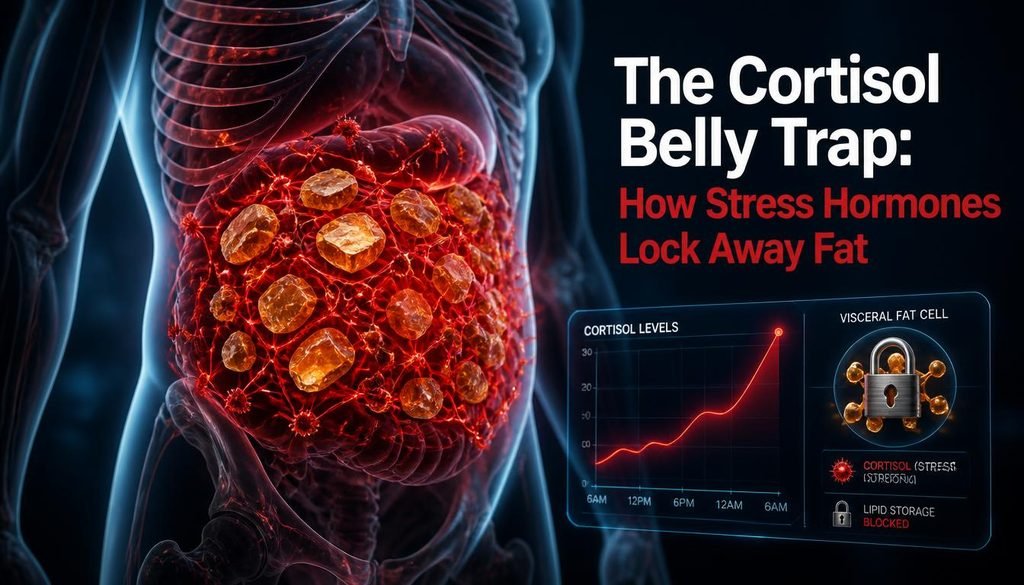
You are eating in a caloric deficit. You are tracking your macros. You are spending hours on the treadmill or doing high-intensity interval training (HIIT) until you are drenched in sweat. Yet, when you look in the mirror, the stubborn ring of fat around your midsection refuses to budge. In fact, it might even feel harder and more protruding than before. If this scenario sounds painfully familiar, you have fallen into one of the most pervasive and misunderstood traps in modern metabolic medicine: the cortisol belly fat trap.
As a clinician focused on longevity and endocrinology, I see this exact phenotype every single day. Patients come to me exhausted, frustrated, and convinced that their metabolism is permanently broken or that they lack the willpower to push through the plateau. I have to look them in the eye and tell them the truth: their metabolism is not broken; it is functioning exactly as it was evolutionarily designed to. They are not failing their diet; their diet and exercise regimen are actively triggering a biochemical survival response that locks away visceral fat and breaks down lean muscle.
To understand why this happens, we must abandon the outdated “calories in, calories out” dogma and dive deep into the neuroendocrine system. In this comprehensive, 3,000-word clinical breakdown, we will dissect the exact molecular mechanisms of the cortisol belly fat trap, expose why chronic cardio and severe dieting make it worse, and outline the precise 4-pillar protocol required to down-regulate your HPA-axis, unlock your fat stores, and reclaim your metabolic flexibility.
The Evolutionary Mismatch: Sabertooth Tigers vs. Spreadsheets
To understand the biochemistry of cortisol belly fat, we must first respect the evolutionary purpose of cortisol. Cortisol is not inherently a “bad” hormone; it is a vital, life-saving glucocorticoid produced by the adrenal glands. In our ancestral environment, cortisol was released in acute, massive spikes in response to immediate physical threats—a predator, a rival tribe, or a sudden environmental disaster.
When the hypothalamus perceives a physical threat, it triggers the HPA-axis (Hypothalamic-Pituitary-Adrenal axis). The pituitary gland releases ACTH (adrenocorticotropic hormone), which signals the adrenal glands to flood the bloodstream with cortisol and adrenaline. This cascade triggers immediate physiological shifts:
- Glycogenolysis: The liver dumps stored glucose into the bloodstream to fuel the brain and muscles.
- Vasodilation: Blood vessels dilate to pump oxygen to the extremities.
- Analgesia: Pain perception is temporarily blunted.
You then physically fight or run for your life. The physical exertion burns off the mobilized glucose, the threat passes, and the parasympathetic nervous system (the “rest and digest” state) engages, shutting off cortisol production.
The Modern Biological Trap
Today, you are not running from predators. Your HPA-axis is being triggered by chronic, unresolvable psychological stressors: an angry email from your boss, financial anxiety, traffic gridlock, and the relentless blue-light stimulation of the 24-hour news cycle.
Your brain cannot distinguish between a physical threat to your life and a psychological threat to your ego or financial security. It dumps glucose into your bloodstream to prepare you to run. But you don’t run. You sit at your desk. Because the glucose is not burned off by physical exertion, your pancreas must secrete insulin to clear it from the blood. And here is the fatal intersection: the simultaneous presence of high cortisol and high insulin is the primary biochemical trigger for visceral fat storage.
You are trapped in a state of chronic, low-grade fight-or-flight, and your body is responding by storing energy in the most metabolically active, easily accessible depot possible: your belly.
The Biochemistry of the Lockdown: Why the Belly?
Why does cortisol specifically target the abdomen? Why doesn’t it store fat in your arms, your calves, or your face? The answer lies in the microscopic anatomy of your adipocytes (fat cells) and a highly specific enzymatic pathway.
1. The Glucocorticoid Receptor Density
Not all fat is created equal. Subcutaneous fat (the soft, pinchable fat just under the skin) and visceral fat (the hard, inflammatory fat that wraps around your liver, pancreas, and intestines) have vastly different receptor profiles. Visceral adipocytes possess up to four times more glucocorticoid receptors than subcutaneous fat. This means your belly fat is literally a biological sponge for cortisol. When circulating cortisol levels are chronically elevated, visceral fat cells act as a magnet, pulling in triglycerides from the bloodstream and locking them away.
2. The 11-Beta-HSD1 Enzyme Amplifier
The plot thickens with an enzyme called 11-beta-hydroxysteroid dehydrogenase type 1 (11β-HSD1). This enzyme is highly concentrated in visceral fat tissue and the liver. Its primary function is to convert inactive cortisone back into active cortisol locally within the tissue.
This means that even if your systemic, blood-level cortisol is only mildly elevated, the 11β-HSD1 enzyme inside your belly fat is acting as a localized amplifier, creating a massive, concentrated micro-environment of active cortisol right where you don’t want it. This local amplification drives severe insulin resistance specifically in the liver and abdominal cavity, creating a vicious cycle where the belly fat itself generates the stress hormones required to sustain its own growth.
3. The LPL vs. HSL Tug-of-War
To burn fat, your body must activate an enzyme called Hormone-Sensitive Lipase (HSL), which unlocks the fat cell and releases triglycerides into the blood to be burned for energy. To store fat, your body activates Lipoprotein Lipase (LPL), which pulls triglycerides from the blood and shoves them into the fat cell.
Cortisol is a master manipulator of this tug-of-war. In the presence of high insulin (which is almost always the case in modern, stressed individuals eating a standard diet), cortisol aggressively upregulates LPL in the abdominal region while simultaneously downregulating HSL. It literally locks the doors of the fat cell from the inside and opens the windows to let more fat in. This is why you can starve yourself and still retain a hard, protruding midsection. Your endocrine system has chemically forbidden the release of stored abdominal energy.
💡 Action Step: Standard scales and generic BMI charts are entirely blind to this visceral fat accumulation. You could be at a “normal” weight while suffering from severe cortisol-driven visceral adiposity. To accurately assess your true body composition and metabolic risk, you must use our Advanced BMI Calculator, which accounts for age, gender, and waist-to-height ratios to expose the hidden dangers of central adiposity.
The Vicious Cycle: How Dieting and Cardio Make It Worse
The most tragic aspect of the cortisol belly fat trap is that the standard advice given to fix it actually guarantees its persistence. When patients notice their midsection expanding, they instinctively do two things: they slash their calories, and they increase their cardiovascular output. From an endocrine perspective, this is a catastrophic error.
The Famine Response (Caloric Restriction)
When you impose a severe, chronic caloric deficit (e.g., eating 1,200 calories a day for months), your body does not perceive it as a “diet.” It perceives it as an environmental famine. In an ancestral environment, famine was a profound survival threat. To keep you alive, the HPA-axis ramps up cortisol production to mobilize stored glucose and preserve brain function.
Furthermore, chronic caloric restriction downregulates the production of T3 (the active form of thyroid hormone) and leptin (the satiety hormone). Your basal metabolic rate plummets to conserve energy, and your body becomes hyper-efficient at storing every available calorie as visceral fat, guarded by high cortisol, in preparation for the “winter” that never ends.
The Cardio Trap (Chronic HIIT and Steady-State)
Exercise is a hormetic stressor—a short, acute stress that triggers adaptation. However, chronic, excessive cardiovascular training (like daily 60-minute runs or back-to-back HIIT classes) is perceived by the body as physical trauma and fleeing from a persistent predator.
Prolonged, high-intensity cardio dramatically elevates cortisol. If you are already psychologically stressed, under-slept, and under-fed, adding chronic cardio pushes your HPA-axis into overdrive. You are burning muscle tissue (gluconeogenesis) to feed the cortisol demand, slowing your metabolism, and signaling your body to hold onto visceral fat for dear life. To understand how to train without spiking your stress hormones, you must prioritize muscle preservation; use our Protein Intake Calculator to ensure you are feeding your metabolic armor, and our TDEE Calculator to ensure you are not eating in a dangerous, starvation-level deficit.
5 Clinical Signs You Are in the Cortisol Trap
How do you know if your stubborn midsection is driven by a caloric surplus or an endocrine lockdown? Look for these five clinical signs of HPA-axis dysregulation:
- The 3 AM Awakening: You fall asleep fine, but you jolt awake between 2:00 AM and 4:00 AM with a racing mind or a pounding heart. This is a classic sign of nocturnal hypoglycemia triggered by a premature cortisol spike. (Read our deep dive: Stop Waking Up at 3 AM: The Cortisol-Melatonin See-Saw Explained).
- The Afternoon Crash and Evening Surge: You are exhausted and brain-fogged at 2:00 PM, requiring caffeine to function, but you experience a “second wind” of wired, anxious energy at 10:00 PM when you try to sleep. This indicates an inverted cortisol curve.
- Cold Extremities: Chronic stress shunts blood flow away from the periphery (hands, feet, skin) and toward the core and major organs to prepare for physical combat. If your hands and feet are constantly cold, your sympathetic nervous system is stuck in the “on” position.
- Loss of Libido and Hormonal Downregulation: The body uses the same precursor molecules (pregnenolone) to make cortisol and sex hormones (testosterone, estrogen, DHEA). Under chronic stress, the body “steals” these precursors to make cortisol, leading to a crashed libido, erectile dysfunction, or irregular menstrual cycles.
- The “Hard” Belly: Unlike subcutaneous fat, which is soft and jiggly, visceral fat pushes against the abdominal wall from the inside, making the stomach feel hard, tight, and protruding, even if your arms and legs are relatively thin. For a detailed breakdown of this tissue, read Visceral Fat vs Subcutaneous Fat: Which One Is Actually Killing You?.
The 4-Pillar Cortisol Reset Protocol
To unlock cortisol belly fat, you must stop treating your body like a mathematics equation and start treating it like a biological ecosystem. You must send a profound, sustained signal of safety to your hypothalamus. This requires a multi-system approach.
Pillar 1: Circadian Anchoring and Light Hygiene
Your HPA-axis is governed by your circadian rhythm. Cortisol should peak sharply in the morning (the Cortisol Awakening Response, or CAR) to give you energy, and taper off to near-zero by 10:00 PM to allow melatonin to rise. Artificial light and erratic sleep schedules destroy this curve.
- The Protocol: Within 30 minutes of waking, step outside and get 10 to 15 minutes of direct sunlight in your eyes. This anchors your circadian clock and sets a timer for melatonin release 14 hours later. After sunset, block blue light by using amber glasses or switching your devices to red-light modes. Blue light after dark artificially spikes cortisol and destroys your sleep architecture.
Pillar 2: Exercise Periodization (Zone 2 and Heavy Lifting)
You must abandon chronic, exhausting cardio and transition to training that builds metabolic capacity without triggering a systemic stress response.
- Zone 2 Cardio: 3 to 4 days a week of low-intensity, steady-state cardio (where you can comfortably hold a conversation). Zone 2 builds mitochondrial density and clears circulating cortisol without adding systemic fatigue.
- Heavy Resistance Training: 2 to 3 days a week of heavy, low-volume lifting. Building skeletal muscle increases the number of insulin receptors in your body, acting as a massive sink for blood glucose and reducing the insulin-cortisol cross-talk that drives belly fat.
- Avoid: Daily HIIT or chronic endurance running until your HPA-axis is healed and your sleep is optimized.
Pillar 3: Blood Sugar Buffering and Nutrient Timing
Every time your blood sugar crashes, your adrenal glands must release cortisol and adrenaline to save your life by mobilizing stored glucose. If you eat a diet high in refined carbohydrates, or if you practice extreme fasting while highly stressed, you are riding a cortisol rollercoaster all day.
- The Protocol: Never eat “naked” carbohydrates. Always pair carbs with protein, fiber, and healthy fats to blunt the glucose spike and the subsequent reactive crash.
- Fasting Warning: If you are highly stressed, sleeping poorly, and holding onto cortisol belly fat, do not engage in aggressive intermittent fasting (like OMAD or 20:4). Prolonged fasting in a stressed state is perceived as starvation, spiking cortisol further. Stick to a gentle 12-to-14-hour overnight fast until your nervous system is regulated. Use our Intermittent Fasting Calculator to find a safe, non-stressful window.
Pillar 4: Targeted Supplementation and Nervous System Reset
You cannot out-supplement a high-stress lifestyle, but specific compounds can chemically buffer the HPA-axis and lower the inflammatory cascade.
- Phosphatidylserine (PS): A phospholipid that has been clinically shown to blunt the ACTH and cortisol response to physical and mental stress. Taking 300-600mg of PS in the evening can help lower nocturnal cortisol, preventing the 3 AM awakening.
- Ashwagandha (KSM-66): A heavily researched adaptogen that modulates the HPA-axis and reduces perceived stress scores. (Note: Cycle this supplement; do not take it continuously for more than 8 weeks to avoid emotional blunting).
- Magnesium Glycinate: Stress rapidly depletes intracellular magnesium, and magnesium deficiency amplifies the stress response. 400mg before bed acts as a natural calcium-channel blocker, relaxing the nervous system.
- The Physiological Sigh: To manually stimulate the vagus nerve and shift out of fight-or-flight in real-time, use the physiological sigh: two quick inhales through the nose, followed by one long, extended exhale through the mouth. Repeat 3 to 5 times. Learn more about nervous system regulation in The Vagus Nerve Reset: How to Calm Your Gut Through Your Nervous System.
Summary Table: The Trap vs. The Reset
To visualize the paradigm shift required to lose cortisol belly fat, compare the standard approach with the longevity protocol:
| Metric | The Standard “Diet” Approach (The Trap) | The Longevity Protocol (The Reset) |
|---|---|---|
| Caloric Intake | Severe, chronic restriction (starvation signal). | Mild deficit or maintenance; high protein to preserve muscle. |
| Exercise | Daily HIIT, chronic steady-state cardio (cortisol spike). | Zone 2 cardio (mitochondrial health) + Heavy lifting (insulin sensitivity). |
| Fasting | Aggressive OMAD or 20:4 while stressed (famine signal). | Gentle 12-14 hour circadian fast; prioritizing sleep over fasting. |
| Carbohydrates | Naked carbs causing spikes/crashes (insulin/cortisol rollercoaster). | Carbs paired with protein/fat; saved for the evening to aid sleep. |
| Nervous System | Ignored; relying on willpower and caffeine. | Actively managed via morning sunlight, vagal toning, and adaptogens. |
How to Measure Your Progress: The DUTCH Test
Standard morning blood tests for cortisol are nearly useless for diagnosing the cortisol belly fat trap. A single blood draw only captures a single second in time, and the stress of the needle itself can artificially spike the result.
To truly map your HPA-axis, functional medicine practitioners use the DUTCH Test (Dried Urine Test for Comprehensive Hormones) or a 4-point salivary cortisol test. These tests measure your cortisol output at four distinct intervals throughout the day (morning, noon, evening, and night). This reveals your curve.
You are looking for a high morning peak and a steep decline into the evening. If your test shows a flat line all day, or a massive spike at 10:00 PM, you have confirmed HPA-axis dysregulation. Retest after 90 days of the 4-Pillar Protocol to objectively verify that your endocrine system is healing.
Final Thoughts
The cortisol belly fat trap is a profound biological safeguard. Your body is holding onto visceral fat because it genuinely believes you are in danger, starving, and under constant physical attack. You cannot punish your body into releasing this fat through starvation and exhaustion; you must coax it into releasing it through safety, nourishment, and circadian alignment.
Stop viewing your midsection as a failure of willpower. Start viewing it as a dashboard indicator of your nervous system’s health. Down-regulate your stress, build your metabolic armor in the weight room, anchor your sleep to the rising and setting of the sun, and watch as the biochemical lockdown finally breaks. Your metabolism is waiting for the signal that it is safe to let go. Give it that signal, and the results will follow.
Frequently Asked Questions (FAQ)
1. Why does cortisol cause belly fat specifically?
Visceral fat cells in the abdomen possess up to four times more glucocorticoid receptors than subcutaneous fat. Furthermore, belly fat contains high levels of the enzyme 11-beta-HSD1, which converts inactive cortisone back into active cortisol locally, creating a micro-environment that aggressively promotes fat storage and insulin resistance.
2. Can chronic cardio and dieting make cortisol belly fat worse?
Yes. Severe caloric restriction and excessive high-intensity cardio are perceived by the body as physical trauma and famine. This triggers the HPA-axis to release even more cortisol to mobilize glucose, which, in the presence of insulin, drives further visceral fat storage and the breakdown of lean muscle tissue.
3. What are the signs of HPA-axis dysregulation and high cortisol?
Common clinical signs include waking up between 2 and 4 AM with a racing heart, severe afternoon energy crashes followed by a “wired” feeling at night, cold hands and feet, loss of libido, and a hard, protruding midsection despite relatively thin arms and legs.
4. Should I do intermittent fasting if I have cortisol belly fat?
If you are highly stressed, sleeping poorly, and holding onto cortisol belly fat, aggressive intermittent fasting (like OMAD or 20:4) can act as a starvation stressor, spiking cortisol further. It is better to stick to a gentle 12-to-14-hour overnight circadian fast until your nervous system and HPA-axis are regulated.
5. What supplements help lower cortisol and unlock belly fat?
Phosphatidylserine (taken in the evening) has been clinically shown to blunt the ACTH and cortisol stress response. Ashwagandha (KSM-66) helps modulate the HPA-axis, and Magnesium Glycinate acts as a natural nervous system relaxant. These should be paired with morning sunlight exposure and vagal breathing exercises.
⚕️ Medical Disclaimer
The content provided on RegenStep.com, including this comprehensive guide authored by Dr. Julian Vance, is strictly for educational and informational purposes only. It is not intended to be a substitute for professional medical advice, diagnosis, or treatment.
Endocrine dysregulation and HPA-axis dysfunction can mimic or mask serious medical conditions, including thyroid disorders, adrenal insufficiency (Addison’s disease), and cardiovascular disease. Adaptogenic herbs and cortisol-modulating supplements can interact with psychiatric medications, blood pressure drugs, and immunosuppressants. Always consult with your endocrinologist or a qualified healthcare provider before altering your diet, exercise, or supplementation protocols, particularly if you have a history of metabolic or hormonal disorders.
The Biochemistry of the Lockdown: Why the Belly?
Why does cortisol specifically target the abdomen? Why doesn’t it store fat in your arms, your calves, or your face? The answer lies in the microscopic anatomy of your adipocytes (fat cells) and a highly specific enzymatic pathway.
Why does cortisol cause belly fat specifically?
Visceral fat cells in the abdomen possess up to four times more glucocorticoid receptors than subcutaneous fat. Furthermore, belly fat contains high levels of the enzyme 11-beta-HSD1, which converts inactive cortisone back into active cortisol locally, creating a micro-environment that aggressively promotes fat storage and insulin resistance.
Can chronic cardio and dieting make cortisol belly fat worse?
Yes. Severe caloric restriction and excessive high-intensity cardio are perceived by the body as physical trauma and famine. This triggers the HPA-axis to release even more cortisol to mobilize glucose, which, in the presence of insulin, drives further visceral fat storage and the breakdown of lean muscle tissue.
What are the signs of HPA-axis dysregulation and high cortisol?
Common clinical signs include waking up between 2 and 4 AM with a racing heart, severe afternoon energy crashes followed by a “wired” feeling at night, cold hands and feet, loss of libido, and a hard, protruding midsection despite relatively thin arms and legs.
Should I do intermittent fasting if I have cortisol belly fat?
If you are highly stressed, sleeping poorly, and holding onto cortisol belly fat, aggressive intermittent fasting (like OMAD or 20:4) can act as a starvation stressor, spiking cortisol further. It is better to stick to a gentle 12-to-14-hour overnight circadian fast until your nervous system and HPA-axis are regulated.
What supplements help lower cortisol and unlock belly fat?
Phosphatidylserine (taken in the evening) has been clinically shown to blunt the ACTH and cortisol stress response. Ashwagandha (KSM-66) helps modulate the HPA-axis, and Magnesium Glycinate acts as a natural nervous system relaxant. These should be paired with morning sunlight exposure and vagal breathing exercises.

Julian Vance is the writer and editor behind RegenStep, translating peer-reviewed longevity, metabolic, and gut-health research into practical, actionable guides. Julian is not a licensed physician; content is reviewed against cited primary sources and is for informational purposes only. Always consult a qualified healthcare provider for personal medical advice.