
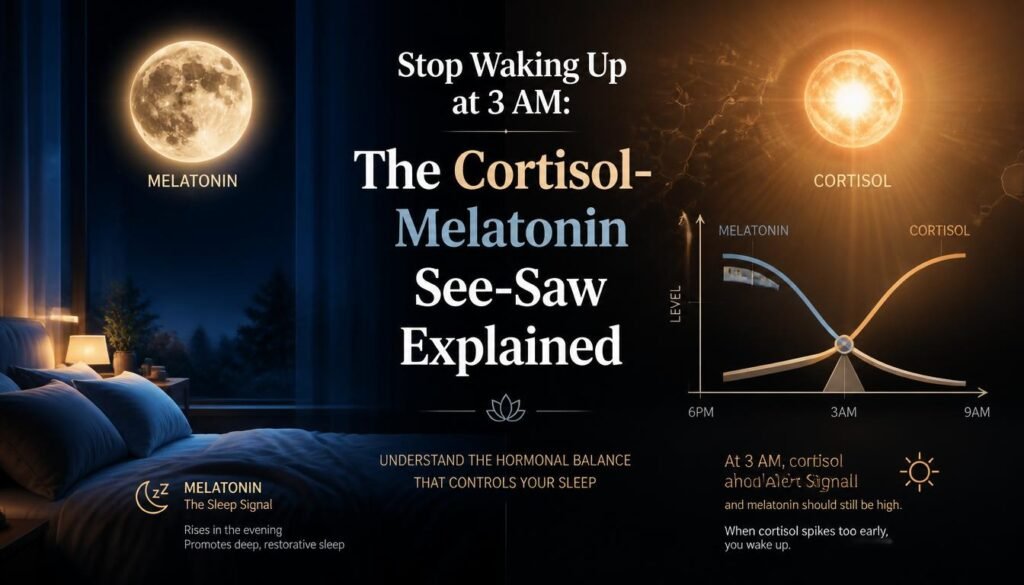
If you are consistently waking up at 3 AM and staring at the ceiling with a racing mind or a pounding heart, you are experiencing a classic circadian disruption. This specific middle-of-the-night insomnia is rarely random. It is the direct result of a disrupted cortisol-melatonin see-saw, where a premature, inappropriate spike in the stress hormone cortisol suppresses your sleep-promoting melatonin. Understanding the precise physiological mechanisms behind waking up at 3 AM is the first step toward reclaiming your sleep architecture and, by extension, your long-term health.
As a clinician focused on longevity and metabolic health, I see this pattern daily. Patients often assume this is just a normal part of aging or an unavoidable consequence of a busy life. It is neither. It is a measurable biological signal that your hypothalamic-pituitary-adrenal (HPA) axis and your metabolic processes are misaligned. Let us break down the exact science of why this happens and the actionable, evidence-based protocols to fix it.
Night waking is a signal worth investigating rather than medicating. See where sleep sits among the six levers of healthspan.
The Biology Behind Waking Up at 3 AM
To understand why you are jolted awake in the dead of night, you must first understand the normal hormonal dance of your circadian rhythm.
In a healthy, optimized system, melatonin secretion begins around 9:00 PM, peaks around 2:00 AM, and gradually tapers off as dawn approaches. Concurrently, cortisol follows an inverse pattern. It should be at its lowest point around midnight, allowing for deep, restorative slow-wave sleep. Beginning around 3:00 AM to 4:00 AM, cortisol naturally begins a slow, gradual rise to prepare your body for awakening (known as the Cortisol Awakening Response, or CAR).
The phenomenon of waking up at 3 AM occurs when this natural, gradual rise happens prematurely and aggressively. Instead of a gentle slope, your body experiences a sharp cortisol spike. Because cortisol and melatonin are functionally antagonistic, this sudden surge of alertness hormones immediately halts melatonin production. You are essentially chemically yanked out of deep sleep into a state of hyperarousal.
When patients report waking up at 3 AM, the first thing I evaluate is not their bedtime routine, but their metabolic and nervous system state in the hours leading up to sleep. The triggers are almost always physiological, not psychological.
4 Hidden Triggers Disrupting Your Sleep Cycle
1. Nocturnal Hypoglycemia (The Blood Sugar Crash)
Your brain requires a steady supply of glucose to function, even during sleep. If your blood sugar drops too low in the middle of the night (nocturnal hypoglycemia), your brain perceives this as a life-threatening emergency. To rescue you, the HPA axis releases a massive surge of cortisol and adrenaline. These counter-regulatory hormones trigger the liver to release stored glucose (glycogen) into the bloodstream. You survive the crash, but the adrenaline spike wakes you up instantly, often with a racing heart and a feeling of anxiety.
2. Late-Night Eating and Digestive Stress
Late-night eating is a primary culprit for waking up at 3 AM. When you consume calories within three hours of bedtime, your body prioritizes digestion over cellular repair and sleep. The thermic effect of food raises your core body temperature, which directly conflicts with the drop in core temperature required to maintain deep sleep. Furthermore, late meals can cause blood sugar fluctuations that trigger the exact cortisol rescue response mentioned above.
💡 Action Step: Align your eating window with your circadian rhythm. Use our Intermittent Fasting Calculator to determine the optimal fasting window for your metabolic profile, ensuring your last meal is finished at least 3–4 hours before bed.
3. Chronic Stress and HPA Axis Dysregulation
If you are waking up at 3 AM with a mind full of tomorrow’s to-do list, your HPA axis is likely overactive. Chronic psychological stress keeps baseline cortisol elevated throughout the day. When the natural nighttime dip occurs, it does not dip low enough. The slightest metabolic shift or external noise is enough to push the already-elevated cortisol over the threshold, shattering your sleep. For more on how this hormone impacts your physical health, read our deep dive into Cortisol Belly Fat: Why Stress Hormones Stop You From Losing Weight.
4. Blue Light and Melatonin Suppression
Exposure to artificial blue light from screens after sunset delays the onset of melatonin secretion. If your melatonin baseline is artificially suppressed, the relative impact of a normal early-morning cortisol rise feels much more jarring, pulling you out of a lighter sleep stage prematurely.
How to Fix the Cortisol-Melatonin See-Saw
Fixing the habit of waking up at 3 AM requires a multi-system approach that addresses blood sugar, nervous system regulation, and hormonal timing. Implement these four protocols consistently for 14 days to observe a measurable shift.
1. Anchor Your Circadian Rhythm with Morning Light
The regulation of your 3:00 AM cortisol levels actually begins at 7:00 AM. Viewing bright, natural sunlight within 30 minutes of waking sends a powerful signal to the suprachiasmatic nucleus (SCN) in your brain. This sets a precise 14-to-16-hour timer for melatonin release later that night. A well-anchored morning rhythm prevents the premature, chaotic cortisol spikes that cause middle-of-the-night awakenings.
2. The 3-Hour Food Curfew and the “Bedtime Snack” Hack
Establish a strict rule: no calories within three hours of bedtime. However, if you are prone to nocturnal hypoglycemia, a strategic, tiny bedtime snack can prevent the 3 AM crash. The goal is to provide a slow, steady drip of glucose without spiking insulin.
- Recommended: 1 tablespoon of raw almond butter or a small handful of macadamia nuts.
- Avoid: Carbohydrates, fruit, or sugar, which will cause a reactive blood sugar crash a few hours later.
3. Strategic Supplementation for Sleep Architecture
While fixing the root cause is paramount, specific, evidence-based compounds can help buffer the cortisol response and support melatonin production.
| Supplement | Mechanism of Action | Recommended Dosage & Timing |
|---|---|---|
| Magnesium Glycinate | Activates the parasympathetic nervous system and supports GABA production, quieting neural excitability. | 200–400 mg, 60 minutes before bed. |
| Phosphatidylserine | Clinically shown to blunt excessive cortisol secretion, particularly useful for stress-induced awakenings. | 100–300 mg, with dinner or 1 hour before bed. |
| L-Theanine | Promotes alpha brain wave activity, inducing a state of relaxed alertness without sedation, countering adrenaline. | 100–200 mg, 30 minutes before bed. |
Note: Always consult your healthcare provider before starting new supplements, especially if you are on medication.
4. Nervous System Down-Regulation
If you wake up at 3 AM, do not look at the clock, and do not pick up your phone. The blue light and the psychological stress of calculating how much sleep you are losing will only amplify the cortisol spike. Instead, practice a physiological sigh (two quick inhales through the nose, one long exhale through the mouth) or engage in a brief vagus nerve stimulation exercise. Learn more about this in our guide: The Vagus Nerve Reset: How to Calm Your Gut Through Your Nervous System.

When to Suspect a Deeper Issue
Many assume waking up at 3 AM is purely stress-related, but it is critical to rule out underlying physiological pathologies. If you implement the protocols above for a month and see no improvement, consider the following:
- Sleep Apnea: Micro-arousals caused by brief pauses in breathing can manifest as waking up at a specific time. Read more in our analysis of Sleep Apnea and Aging: The Silent Longevity Killer.
- Histamine Intolerance: Histamine levels naturally peak in the early morning hours. If you have a compromised ability to break down histamine (due to DAO enzyme deficiency), this natural peak can cause sudden awakenings with a racing heart or itching.
- Thyroid Dysregulation: Both hyperthyroidism and early-stage Hashimoto’s can disrupt the HPA axis and alter core body temperature regulation at night.
A comprehensive blood panel (including fasting glucose, HbA1c, morning cortisol, DHEA-S, and a full thyroid panel) is the logical next step if behavioral interventions fail.
The Cortisol-Melatonin See-Saw: Normal vs. Disrupted
To visualize the difference between optimized sleep and 3 AM insomnia, refer to the table below:
| Metric | Optimized Circadian Rhythm | Disrupted (3 AM Wake-Up) |
|---|---|---|
| 9:00 PM – 12:00 AM | Melatonin rises steadily; Cortisol drops to baseline. | Melatonin delayed by blue light; Cortisol remains elevated from late eating/stress. |
| 12:00 AM – 3:00 AM | Deep, slow-wave sleep. Lowest core body temperature. | Restless sleep, frequent micro-arousals, elevated core temperature. |
| 3:00 AM – 4:00 AM | Cortisol begins a gradual, gentle rise. Melatonin slowly tapers. | Cortisol spikes aggressively (due to blood sugar crash or stress). Melatonin is abruptly suppressed. |
| Result | You sleep through the night or wake naturally at dawn feeling refreshed. | You jolt awake with a racing mind, heart palpitations, or anxiety, unable to return to sleep. |
Final Thoughts
Reclaiming your sleep is one of the highest-yield longevity investments you can make. Waking up at 3 AM is not a life sentence; it is a feedback mechanism. Your body is communicating that your metabolic timing, stress load, or light exposure is out of sync. By respecting the 3-hour food curfew, anchoring your morning light, and strategically supporting your nervous system, you can rebalance the cortisol-melatonin see-saw and restore the deep, continuous sleep your body needs to repair and thrive.
Frequently Asked Questions
1. Why do I keep waking up at 3 AM every night?
Waking up at 3 AM is typically caused by a premature spike in cortisol that suppresses melatonin. This is often triggered by nocturnal hypoglycemia (a blood sugar crash), late-night eating, chronic stress, or HPA axis dysregulation. It is your body’s way of signaling that your metabolic timing or nervous system is out of sync.
2. What exactly is the cortisol-melatonin see-saw?
The cortisol-melatonin see-saw refers to the inverse relationship between these two hormones. For optimal sleep, melatonin should be high while cortisol is low at night. If cortisol spikes prematurely (due to stress or a blood sugar crash), it forces melatonin levels down, jolting you awake from deep sleep into a state of alertness.
3. What should I eat before bed to stop waking up at 3 AM?
If you are prone to blood sugar crashes, a small, fat- and protein-rich snack 30 minutes before bed can help. Excellent options include a tablespoon of raw almond butter, a small handful of macadamia nuts, or a few slices of turkey. Avoid carbohydrates and sugars entirely, as they will cause a reactive blood sugar crash a few hours later, triggering the very cortisol spike you are trying to prevent.
4. Can magnesium really help with middle-of-the-night awakenings?
Yes, absolutely. Magnesium glycinate, in particular, is highly effective for this issue. It supports GABA production (a calming neurotransmitter) and activates the parasympathetic nervous system, which helps quiet neural excitability and maintain deeper sleep architecture throughout the night. A dose of 200–400 mg taken 60 minutes before bed is typically recommended.
5. How long does it take to fix the habit of waking up at 3 AM?
With consistent implementation of the protocols outlined in this article (the 3-hour food curfew, morning sunlight anchoring, strategic supplementation, and nervous system down-regulation), most people see a measurable improvement within 10 to 14 days. However, if your HPA axis has been dysregulated for years due to chronic stress, it may take 4 to 6 weeks of consistent effort to fully rebalance your cortisol-melatonin rhythm. If no improvement occurs after one month, consider consulting a healthcare provider to rule out underlying conditions like sleep apnea or thyroid dysfunction.
Disclaimer: The content provided on RegenStep.com, including this article by Dr. Julian Vance, is for educational and informational purposes only. It does not constitute medical advice, diagnosis, or treatment. Always seek the advice of your physician or a qualified healthcare provider regarding any medical condition or before starting new supplements.
Why do I keep waking up at 3 AM every night?
Waking up at 3 AM is typically caused by a premature spike in cortisol that suppresses melatonin. This is often triggered by nocturnal hypoglycemia (a blood sugar crash), late-night eating, chronic stress, or HPA axis dysregulation. It is your body’s way of signaling that your metabolic timing or nervous system is out of sync.
What exactly is the cortisol-melatonin see-saw?
The cortisol-melatonin see-saw refers to the inverse relationship between these two hormones. For optimal sleep, melatonin should be high while cortisol is low at night. If cortisol spikes prematurely (due to stress or a blood sugar crash), it forces melatonin levels down, jolting you awake from deep sleep into a state of alertness.
What should I eat before bed to stop waking up at 3 AM?
If you are prone to blood sugar crashes, a small, fat- and protein-rich snack 30 minutes before bed can help. Excellent options include a tablespoon of raw almond butter, a small handful of macadamia nuts, or a few slices of turkey. Avoid carbohydrates and sugars entirely, as they will cause a reactive blood sugar crash a few hours later, triggering the very cortisol spike you are trying to prevent.
Can magnesium really help with middle-of-the-night awakenings?
Yes, absolutely. Magnesium glycinate, in particular, is highly effective for this issue. It supports GABA production (a calming neurotransmitter) and activates the parasympathetic nervous system, which helps quiet neural excitability and maintain deeper sleep architecture throughout the night. A dose of 200–400 mg taken 60 minutes before bed is typically recommended.
How long does it take to fix the habit of waking up at 3 AM?
With consistent implementation of the protocols outlined in this article (the 3-hour food curfew, morning sunlight anchoring, strategic supplementation, and nervous system down-regulation), most people see a measurable improvement within 10 to 14 days. However, if your HPA axis has been dysregulated for years due to chronic stress, it may take 4 to 6 weeks of consistent effort to fully rebalance your cortisol-melatonin rhythm. If no improvement occurs after one month, consider consulting a healthcare provider to rule out underlying conditions like sleep apnea or thyroid dysfunction. Disclaimer: The content provided on RegenStep.com, including this article by Dr. Julian Vance, is for educational and informational purposes only. It does not constitute medical advice, diagnosis, or treatment. Always seek the advice of your physician or a qualified healthcare provider regarding any medical condition or before starting new supplements.

Julian Vance is the writer and editor behind RegenStep, translating peer-reviewed longevity, metabolic, and gut-health research into practical, actionable guides. Julian is not a licensed physician; content is reviewed against cited primary sources and is for informational purposes only. Always consult a qualified healthcare provider for personal medical advice.