
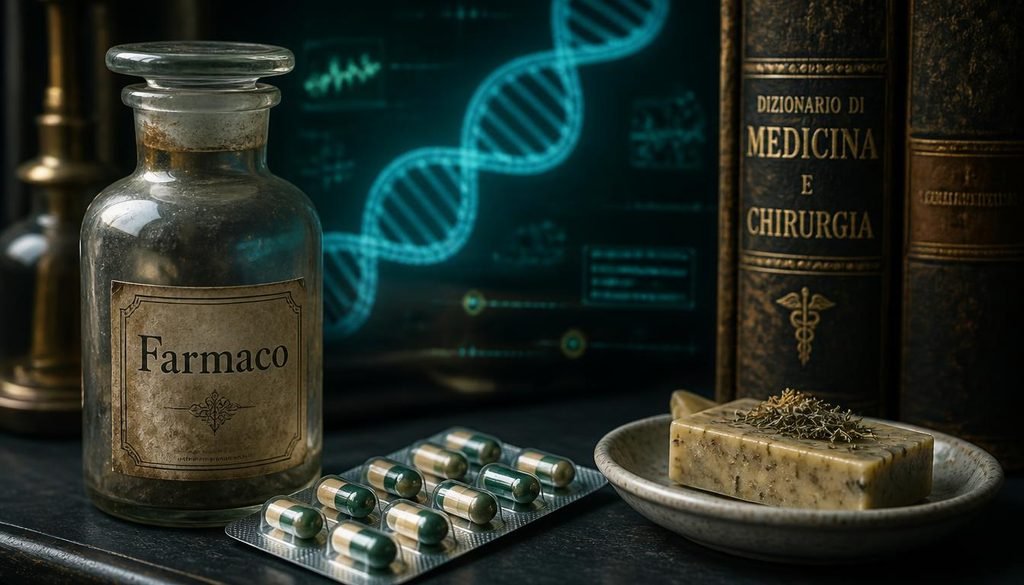
The intersection of language, commerce, and clinical science has shaped how humanity approaches healing. Few terms illustrate this evolution as clearly as farmaco. Spanning across languages, corporate histories, and dermatological practices, the term represents a bridge between ancient botanical remedies and modern, targeted molecular therapies. Whether you are researching historical medical literature, investigating the impact of legacy antibacterial cleansers on the skin microbiome, or studying global drug regulations, understanding the full scope of this term provides a fascinating window into the world of medicine.
In this comprehensive guide, we will decode the linguistic roots of the word, explore the corporate entities that bore its name, and critically examine how legacy “farmaco” skin products have influenced modern dermatological science.
Farmaco in English: The Etymology of Healing
To understand the global pharmaceutical landscape, we must first look at linguistics. Farmaco in English translates directly to “drug,” “medicine,” or “pharmaceutical.”
The word is deeply rooted in the Romance languages—it is the standard term for medication in Italian, Spanish, and Portuguese. However, its origins trace back much further to the ancient Greek word pharmakon (φάρμακον), which carried a dual meaning: it could signify a healing remedy, a poison, or a magical charm. This duality remains the foundational philosophy of modern toxicology and pharmacology: the dose makes the poison.
When English-speaking medical professionals or researchers encounter the term farmaco, it is usually in the context of international medical literature, European pharmaceutical packaging, or historical texts. In English medical terminology, we retain the Greek root in the prefix pharmaco- (as seen in pharmacology, pharmacokinetics, and pharmacogenomics), while using the Latin-derived “drug” or “medicine” for everyday clinical practice.
The Farmaco Company: Legacy and Corporate Evolution
The commercialization of medicine in the 20th century led to the formation of numerous international entities bearing the name. The Farmaco company identifier has been used by various joint ventures, regional distributors, and manufacturing entities across the globe.
Historically, “The Farmaco Company” was documented in international trade and economic reports as a notable joint venture (such as the U.S.-Romanian partnerships in the late 1990s and early 2000s) aimed at modernizing regional pharmaceutical supply chains and medical distribution networks.
Furthermore, in Latin American markets, the name has been associated with consumer health divisions producing over-the-counter (OTC) remedies, antiseptics, and dermatological cleansers. Today, while the global pharmaceutical industry has largely consolidated under massive multinational conglomerates (like Pfizer, Novartis, and Roche), the legacy of regional Farmaco entities remains a vital part of the history of decentralized, localized drug manufacturing and distribution.
Farmaco Soap: Antibacterial Cleansers and the Skin Microbiome
Perhaps the most famous consumer-facing use of the term in the Americas was Farmaco soap. Brands like Farmaco Sarnol and Farmaco Deep Cleaning were heavily marketed in the late 20th century as potent antiseptic and antibacterial bar soaps designed to treat acne, oily skin, and minor dermatological infections.
The Historical Appeal of Antiseptic Soaps
In an era before the widespread understanding of the skin microbiome, the medical and consumer consensus was simple: bacteria on the skin caused acne and infection, therefore, harsh antibacterial soaps were the solution. Farmaco soap utilized strong surfactants and antiseptic agents to strip the skin of oils and eradicate surface microbes, providing users with a “squeaky clean” feeling that was culturally equated with hygiene and health.
The Modern Dermatological Reality: The Microbiome Crisis
Today, clinical dermatology and longevity science view legacy antibacterial soaps through a vastly different lens. The human skin is not a sterile surface; it is a complex, living ecosystem home to trillions of microorganisms (the skin microbiome) that protect against pathogens, regulate inflammation, and maintain the skin’s acidic pH (the acid mantle).
Harsh antiseptic soaps like the legacy Farmaco soap formulations do not discriminate between pathogenic bacteria and beneficial commensal strains (like Staphylococcus epidermidis). By indiscriminately wiping out the microbiome and stripping the skin of its natural sebum, these soaps:
- Destroy the Acid Mantle: Raising the skin’s pH, which accelerates transepidermal water loss (TEWL) and premature dermal aging.
- Trigger Rebound Seborrhea: Stripping the skin of oil signals the sebaceous glands to overproduce sebum, often worsening the very acne the soap was meant to treat.
- Promote Antibiotic Resistance: The historical overuse of topical antibacterial agents (like triclosan, though not always present in Farmaco, was common in the category) contributed to the global crisis of antimicrobial resistance.
The Modern Protocol: Today, longevity-focused dermatologists recommend abandoning harsh, high-pH antibacterial bar soaps in favor of gentle, microbiome-friendly, syndet (synthetic detergent) cleansers that clean the skin without disrupting the delicate ecological balance of the epidermal barrier.
Farmaco Abbreviation: Navigating Medical Literature
For medical researchers, pharmacologists, and biochemists, the term is frequently encountered in academic citations. Il Farmaco was a highly respected, peer-reviewed scientific journal published in Italy, dedicated to medicinal chemistry and pharmaceutical sciences.
When citing research from this publication in academic papers, the standard farmaco abbreviation used in indexing databases (like PubMed, Scopus, and the ISSN portal) is:
- Farmaco Sci (for Il Farmaco; Edizione Scientifica)
- Farmaco Ed. Sc.
- Farmaco (Pavia)
In 2004, the journal was renamed and restructured to align with broader international publishing standards, eventually evolving into the European Journal of Medicinal Chemistry. However, thousands of foundational papers regarding drug synthesis, molecular docking, and early pharmacokinetics remain archived under the Il Farmaco abbreviation, making it a critical search term for historical medical literature.
Farmaco UK: The European Regulatory Landscape
When discussing Farmaco UK, the conversation shifts from linguistics to the rigorous regulatory frameworks that govern how medicines (farmaci) are approved, distributed, and monitored in the United Kingdom and the broader European market.
In the UK, the pharmaceutical landscape is governed by the MHRA (Medicines and Healthcare products Regulatory Agency). Whether a drug is synthesized domestically or imported from European partners (where it is labeled as a farmaco), it must pass stringent clinical trials evaluating its safety, efficacy, and quality.
The UK’s post-Brexit regulatory environment has required a massive restructuring of how international pharmaceutical supply chains operate. For international distributors and legacy companies operating under the Farmaco banner in European territories, navigating the divergence between the European Medicines Agency (EMA) and the UK’s MHRA is a complex logistical and legal challenge, ensuring that patients have uninterrupted access to vital therapeutics.
Pharmaco: The Prefix Powering Modern Drug Discovery
While farmaco is the noun used in Romance languages, Pharmaco serves as the foundational prefix in English scientific terminology, derived directly from the Greek pharmakon. This prefix is the bedrock of modern medical science, branching into highly specialized disciplines that dictate how we understand drug interactions in the human body:
- Pharmacokinetics (PK): What the body does to the drug. This involves the study of absorption, distribution, metabolism, and excretion (ADME). Understanding PK is vital for longevity protocols, as aging livers and kidneys metabolize drugs differently than younger organs.
- Pharmacodynamics (PD): What the drug does to the body. This studies the biochemical and physiologic effects of drugs and their mechanisms of action on cellular receptors.
- Pharmacogenomics: The cutting-edge frontier of personalized medicine. This field studies how an individual’s unique genetic makeup affects their response to drugs. By mapping the genome, clinicians can predict whether a patient will experience severe side effects or therapeutic failure from a specific farmaco.
- Pharmaco-Net and AI: In the modern era, platforms like Pharmaco-Net utilize artificial intelligence and deep learning to visualize protein-ligand interactions, drastically accelerating the timeline for discovering new senolytics (anti-aging drugs) and targeted therapeutics.
Final Thoughts
From its ancient Greek roots to its manifestation as legacy antibacterial soaps and international corporate entities, the concept of the farmaco represents humanity’s ongoing quest to manipulate biology for healing. While we have moved past the era of harsh, microbiome-destroying antiseptic cleansers, the rigorous science of pharmacology, pharmacokinetics, and global drug regulation continues to evolve.
Whether you are deciphering an old medical journal citing Il Farmaco, navigating the UK’s pharmaceutical supply chains, or simply choosing a modern, skin-barrier-friendly cleanser over a legacy antibacterial soap, understanding the history and science behind the word empowers you to make better, more informed clinical decisions.
Frequently Asked Questions (FAQ)
1. What does farmaco mean in English?
In English, the word farmaco translates directly to “drug,” “medicine,” or “pharmaceutical.” It is the standard term for medication in Italian, Spanish, and Portuguese, and originates from the ancient Greek word pharmakon, meaning remedy or poison.
2. Is Farmaco soap good for your skin?
Legacy antibacterial soaps like Farmaco soap (e.g., Sarnol) were historically used to treat acne and oily skin. However, modern dermatology advises against harsh antiseptic soaps because they strip the skin’s natural acid mantle and destroy the beneficial skin microbiome, which can lead to premature aging, dryness, and rebound oil production.
3. What is the academic abbreviation for the journal Il Farmaco?
The standard academic abbreviation for the historical Italian medicinal chemistry journal Il Farmaco (Edizione Scientifica) is Farmaco Sci or Farmaco Ed. Sc. in medical and scientific citation databases.
4. What does the prefix pharmaco- mean in medicine?
The prefix pharmaco- is derived from the Greek word for drug or medicine. It is used in English medical terminology to denote the study of drugs, as seen in pharmacology (the study of drug action), pharmacokinetics (how the body processes a drug), and pharmacogenomics (how genes affect drug response).
5. Who regulates pharmaceutical drugs in the UK?
In the United Kingdom, pharmaceutical drugs and medical devices are regulated by the MHRA (Medicines and Healthcare products Regulatory Agency). The MHRA ensures that all medicines, whether domestically produced or imported from international partners, meet strict standards for safety, quality, and efficacy.
⚕️ Medical Disclaimer
The content provided on RegenStep.com is strictly for educational and informational purposes only. It is not intended to be a substitute for professional medical advice, diagnosis, or treatment. The discussion of legacy antiseptic soaps and pharmaceutical history is for educational context. Always consult with a board-certified dermatologist or a qualified healthcare provider regarding skin care routines, the use of antibacterial agents, or any pharmacological treatments.

Julian Vance is the writer and editor behind RegenStep, translating peer-reviewed longevity, metabolic, and gut-health research into practical, actionable guides. Julian is not a licensed physician; content is reviewed against cited primary sources and is for informational purposes only. Always consult a qualified healthcare provider for personal medical advice.