
We need to reframe how we view antibiotics. They are undeniably one of the greatest triumphs of modern medicine, capable of pulling us back from the brink of fatal bacterial infections. But from an ecological perspective, a course of broad-spectrum antibiotics is the biological equivalent of a forest fire. It does not discriminate between the pathogenic invader and the trillions of commensal, symbiotic microbes that govern your immunity, synthesize your neurotransmitters, and maintain your intestinal barrier.
When the pharmaceutical dust settles, you are left with a scorched-earth internal terrain. The keystone species are decimated, the mucosal lining is compromised, and the vacant biological real estate is suddenly prime territory for opportunistic pathogens like Clostridioides difficile or Candida albicans. Attempting to rebuild microbiome after antibiotics by simply eating a cup of commercial yogurt or swallowing a generic, multi-strain probiotic is a profound clinical error. It is like throwing a handful of random seeds onto ash-covered soil and expecting a rainforest to grow.
True microbial restoration requires a phased, highly strategic approach. We must clear the dead biomass, repair the physical architecture of the gut lining, introduce pioneer species that can survive the harsh post-antibiotic environment, and systematically feed the keystone organisms that dictate your long-term metabolic health. Let’s dismantle the guesswork and build a rigorous, evidence-based protocol for total ecological recovery.
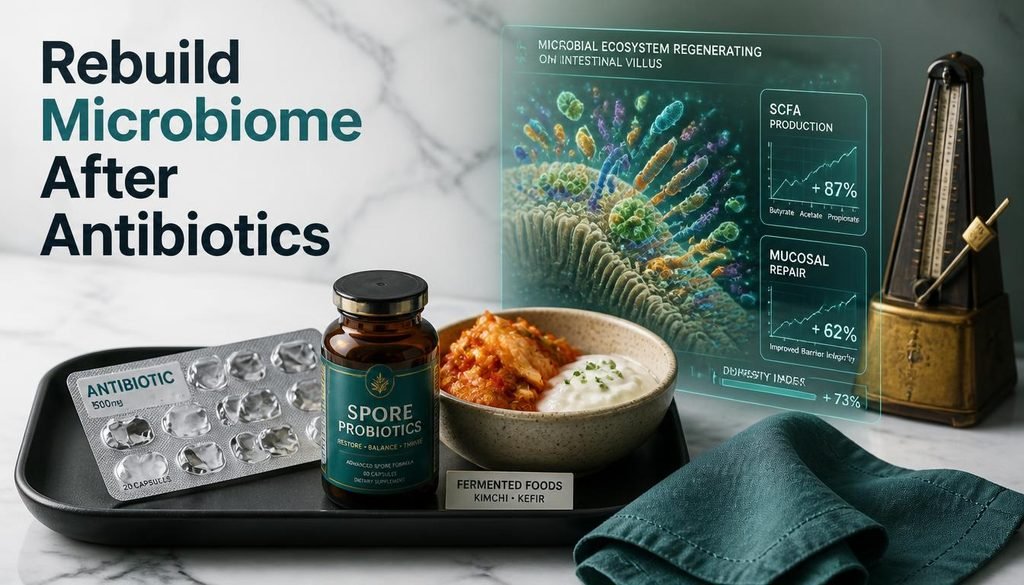
Worst Antibiotics for Gut Health: Understanding the Blast Radius
Not all antibiotics inflict the same level of ecological collateral damage. The severity of your dysbiosis depends heavily on the spectrum, the mechanism of action, and the duration of the drug you were prescribed. Understanding the worst antibiotics for gut health helps you gauge the depth of the restoration required.
1. Clindamycin: The Nuclear Option
In the realm of microbial ecology, Clindamycin is infamous. It is a lincosamide antibiotic that aggressively targets anaerobic bacteria. Unfortunately, the vast majority of your beneficial, short-chain fatty acid (SCFA)-producing microbes in the colon are strict anaerobes. Clindamycin wipes them out with ruthless efficiency, creating a massive ecological void. This specific drug is so strongly associated with the overgrowth of C. difficile that it carries a strict black-box warning. If you have taken Clindamycin, your restoration protocol must be aggressive and prolonged.
2. Fluoroquinolones (Ciprofloxacin, Levofloxacin)
Often prescribed for UTIs, respiratory infections, and prostatitis, fluoroquinolones are broad-spectrum DNA gyrase inhibitors. They severely depress the populations of Bifidobacterium and Bacteroides, two foundational genera responsible for maintaining the gut’s immune tolerance and mucosal integrity. Furthermore, fluoroquinolones are known to cause mitochondrial toxicity in human cells, meaning your gut lining cells (enterocytes) are simultaneously dealing with microbial death and cellular energy deficits.
3. Amoxicillin-Clavulanate (Augmentin)
While standard amoxicillin is relatively narrow-spectrum, the addition of clavulanic acid (to bypass bacterial resistance) turns it into a broad-spectrum wrecking ball. It drastically reduces microbial diversity and frequently triggers acute, osmotic diarrhea by destroying the bacteria responsible for fermenting complex carbohydrates.
How to Restore Gut Health After Amoxicillin
Because amoxicillin is the most frequently prescribed antibiotic in the Western world, it warrants a specific clinical focus. Amoxicillin primarily disrupts the upper gastrointestinal tract and the proximal colon, heavily suppressing Lactobacillus and Bifidobacterium species.
The Pathogenic Opportunity
When amoxicillin clears out these lactic-acid-producing bacteria, the local pH of the gut rises. A healthy gut is highly acidic (pH 5.5 to 6.5 in the colon), which inhibits the growth of Gram-negative pathogens. When the pH rises due to the loss of Lactobacilli, pathogens like E. coli and Klebsiella thrive.
To restore gut health after amoxicillin, your immediate priority is not just adding bacteria back, but re-acidifying the environment. This is achieved through the rapid introduction of targeted prebiotic fibers that your surviving microbes can ferment into lactic acid and butyric acid, alongside the introduction of acid-tolerant pioneer species like Lactobacillus rhamnosus GG and Saccharomyces boulardii.
Foods to Heal Gut After Antibiotics
You cannot supplement your way out of a poor post-antibiotic diet. The surviving microbes in your gut require specific, complex substrates to multiply and rebuild the ecosystem. However, the timing and selection of these foods to heal gut after antibiotics are critical; introduce them too fast, and you will trigger severe bloating and pain.
Phase 1: Mucosal Building Blocks (Days 1–14)
Immediately following a course of antibiotics, the mucosal lining is often thinned and hyper-permeable. Your primary dietary focus should be on providing the raw amino acids required to rebuild the tight junctions.
- Bone Broth and Collagen: Rich in glycine, proline, and glutamine. These amino acids are the primary fuel sources for enterocytes.
- Easy-to-Digest Proteins: Wild-caught fish, pasture-raised eggs, and slow-cooked meats.
- Avoid: Raw, rough vegetables, heavy seeds, and high-FODMAP fibers, which will physically irritate the compromised lining and feed residual opportunistic bacteria. Ensure you are hitting your daily tissue-repair targets by calculating your exact needs with our Protein Intake Calculator.
Phase 2: The Polyphenol and MAC Introduction (Days 15–30)
Once the acute inflammation subsides, you must feed the keystone species, particularly Akkermansia muciniphila and Faecalibacterium prausnitzii. These organisms thrive on Microbiota-Accessible Carbohydrates (MACs) and polyphenols.
- Polyphenol-Rich Foods: Pomegranate seeds, wild blueberries, green tea, and dark cacao. Polyphenols act as selective prebiotics; they inhibit pathogenic bacteria while specifically feeding beneficial Akkermansia.
- Cooked and Cooled Starches: Green-tipped bananas, cooked and cooled potatoes, and oats. These form resistant starch, which bypasses upper digestion and ferments in the colon to produce butyrate—the master anti-inflammatory short-chain fatty acid.
- Mucilaginous Fibers: Slippery elm, marshmallow root tea, and cooked okra. These coat and soothe the intestinal lining.
Phase 3: Fermented Inoculation (Day 30+)
Only after the gut lining is stabilized and the opportunistic pathogens are kept in check should you introduce live, fermented foods.
- Kefir, Kimchi, and Raw Sauerkraut: These provide a massive, diverse influx of wild microbial strains. Caution: If you experience brain fog, racing heart, or flushing after eating these, you may have developed histamine intolerance or Small Intestinal Bacterial Overgrowth (SIBO) as a result of the antibiotics. In that case, halt fermented foods and pivot to spore-based probiotics.
💡 Action Step: A compromised microbiome directly impairs your ability to extract energy from food and regulates your systemic inflammation, which can drive visceral fat retention. Track your true metabolic baseline and body composition using our Advanced BMI Calculator and our Body Fat Calculator to ensure your post-antibiotic dietary shifts are optimizing your metabolic health, not just your digestion.
Best Probiotic to Restore Gut Health After Antibiotics
The supplement aisle is lined with 50-billion CFU “broad spectrum” probiotics. Taking these immediately after a course of antibiotics is largely a waste of capital. Standard Lactobacillus and Bifidobacterium strains are fragile; they are easily destroyed by residual gastric acid and rarely colonize the lower bowel. Furthermore, introducing massive amounts of lactic-acid bacteria into an inflamed, dysbiotic gut can trigger D-lactic acidosis, leading to severe brain fog and fatigue.
When selecting the best probiotic to restore gut health after antibiotics, you must utilize organisms that are inherently resistant to the harsh post-antibiotic environment.
1. Saccharomyces Boulardii (The Untouchable Yeast)
S. boulardii is a beneficial, non-pathogenic yeast. Because it is a fungus, antibiotics cannot kill it. It is the ultimate pioneer species. It sweeps through the GI tract, binding to pathogenic bacteria like E. coli and Salmonella, and flushes them out in the stool. It also secretes proteases that break down C. difficile toxins and stimulates the production of Secretory IgA (sIgA), the immune system’s first line of defense in the gut mucosa. Take 5 to 10 billion CFU daily during and immediately after the antibiotic course.
2. Spore-Based (Soil-Based) Organisms
Strains like Bacillus coagulans, Bacillus subtilis, and Bacillus clausii are encased in a natural, seed-like endospore. This shell allows them to survive the extreme acidity of the stomach and the residual antibiotic environment of the small intestine. Once they reach the nutrient-rich environment of the colon, they germinate and begin producing localized antimicrobial peptides (bacteriocins) that suppress pathogens while crowding out space for your native flora to return.
3. Bifidobacterium infantis 35624
If you are introducing traditional lactic-acid bacteria, this specific, heavily researched strain is the exception. It has been clinically proven to reduce systemic inflammatory markers (CRP and cytokines) and does not overproduce D-lactate, making it highly tolerable for the post-antibiotic, sensitive gut.
How to Restore Skin Microbiome After Antibiotics
The obsession with the gut often overshadows the fact that your skin is a massive, highly active microbial ecosystem. Systemic antibiotics do not just circulate in your blood; they are excreted through your sweat and sebum, effectively sterilizing the dermal surface and destroying the acid mantle.
When the skin microbiome is wiped out, the commensal Staphylococcus epidermidis—which produces antimicrobial peptides that keep acne and infections at bay—is suppressed. This allows opportunistic, inflammatory strains like Staphylococcus aureus or Cutibacterium acnes to colonize the vacant hair follicles and sebaceous glands.
The Dermal Restoration Protocol
To restore skin microbiome after antibiotics, you must stop treating your skin like a sterile surface that needs to be “cleaned” and start treating it like a garden that needs to be cultivated.
- Ditch the Harsh Surfactants: Immediately stop using foaming cleansers containing Sodium Lauryl Sulfate (SLS) or harsh chemical exfoliants (AHAs/BHAs). These strip the residual lipid barrier and raise the skin’s pH, favoring pathogenic bacteria. Switch to a gentle, non-foaming, lipid-based cleanser.
- Topical Postbiotics and Prebiotics: Look for skincare formulations containing inulin, alpha-glucan oligosaccharides, or lactobacillus ferment lysate. These topical pre- and postbiotics feed the surviving S. epidermidis and help rapidly re-acidify the skin’s surface.
- Avoid Topical Antibiotics: Never follow a course of oral antibiotics with topical clindamycin or erythromycin unless strictly mandated by a dermatologist for severe, cystic acne. This double-strike guarantees long-term dermal dysbiosis and antimicrobial resistance.
- Sweat and Sebum: Engage in regular exercise and sauna therapy. Sweating naturally excretes dermcidin, a potent antimicrobial peptide produced by your sweat glands that helps selectively weed out pathogenic skin bacteria while sparing the commensals.
How to Restore Gut Health After Antibiotics Reddit: Diagnosing the Forum Failures
If you spend any time searching how to restore gut health after antibiotics reddit, you will find thousands of desperate posts from individuals who followed standard medical advice, only to end up with chronic bloating, new-onset IBS, and severe brain fog. As a strategist analyzing patient data, I can diagnose exactly why these well-intentioned protocols fail.
Failure 1: The “Just Eat Yogurt” Fallacy
The most common advice on forums is to eat commercial, flavored yogurt. This is a disaster. Commercial yogurt is heavily pasteurized (killing most live cultures), loaded with refined sugars (which feed the very pathogens you are trying to starve), and contains dairy proteins that can trigger immune responses in a hyper-permeable, post-antibiotic gut.
Failure 2: The Probiotic Brain Fog (D-Lactic Acidosis)
Many forum users report taking high-dose, multi-strain Lactobacillus probiotics and immediately developing severe brain fog, slurred speech, and fatigue. This is not a “healing crisis.” It is D-lactic acidosis. When the gut lining is leaky and the microbiome is imbalanced, certain Lactobacillus strains over-ferment carbohydrates and produce D-lactate. Unlike L-lactate (which your body produces during exercise and easily clears), D-lactate is poorly metabolized by the human liver. It crosses the blood-brain barrier and acts as a neurotoxin, causing temporary cognitive impairment. The fix: Stop the Lactobacillus, switch to S. boulardii and spore-based strains, and reduce carbohydrate intake.
Failure 3: Ignoring the Die-Off (Herxheimer) Reaction
When users finally introduce the right prebiotics and targeted probiotics, they often experience a massive flare-up of symptoms and abandon the protocol, assuming they are “allergic” to the supplement. In reality, they are experiencing a Herxheimer reaction. As the beneficial microbes reclaim territory, they kill off the opportunistic pathogens, which release endotoxins (LPS) into the gut lumen. If the liver and bowels are sluggish, these toxins recirculate, causing flu-like symptoms. The fix: Hydrate aggressively, use binders like activated charcoal away from food, and ensure daily bowel motility.
How Long to Heal Gut After Antibiotics Reddit vs. Clinical Reality
The timeline anxiety on health forums is palpable. Users constantly ask how long to heal gut after antibiotics reddit, hoping for a 30-day magic bullet. The internet is split between “it takes a week” and “my gut is permanently ruined.” Both extremes are biologically inaccurate.
To understand how long to restore gut health after antibiotics, we must separate symptomatic relief from ecological restoration.
The Clinical Timeline of Microbial Recovery
Phase 1: Acute Stabilization (Weeks 1 to 4)
- What is happening: The antibiotic is cleared from your system. The acute diarrhea subsides. You are focusing on mucosal repair (glycine, glutamine) and introducing pioneer species (S. boulardii).
- The Reality: Your microbial diversity is still in the basement. You are highly susceptible to dietary triggers. However, the acute inflammation is dropping, and the physical gut lining is sealing.
Phase 2: Functional Recovery and Diversity Expansion (Months 1 to 6)
- What is happening: You are successfully fermenting MACs and polyphenols. The populations of Bifidobacterium and Lactobacillus are rebounding. Short-chain fatty acid (butyrate) production is normalizing, which regulates your local immune system and lowers systemic inflammation.
- The Reality: You feel “normal” again. Digestion is predictable, energy is stable, and brain fog has lifted. Most people stop their protocols here, assuming they are fully healed.
Phase 3: Keystone Species and Deep Ecological Restoration (Months 6 to 24)
- What is happening: Landmark microbial ecology studies have shown that while the total number of bacteria recovers within months, the diversity and the return of highly sensitive, slow-growing keystone species (like Akkermansia muciniphila and Faecalibacterium prausnitzii) can take up to two years.
- The Reality: This is where long-term metabolic health, optimal body composition, and robust immunity are forged. To support this deep recovery, you must maintain a high-fiber, polyphenol-rich diet and avoid unnecessary pharmaceutical disruptions.
💡 Action Step: Deep ecological recovery requires systemic metabolic flexibility. If your baseline energy expenditure is mismatched with your intake, you will drive systemic inflammation that stalls microbial healing. Calculate your exact daily caloric needs with our TDEE Calculator. Furthermore, utilize our Intermittent Fasting Calculator to implement a gentle 14-hour daily fast. Fasting activates the Migrating Motor Complex (MMC), the electromechanical wave that physically sweeps dead bacterial biomass and residual endotoxins out of the small intestine, preventing SIBO during the recovery phase.
The Missing Link: Motility and the Vagus Nerve
The final, most overlooked piece of the post-antibiotic puzzle is gastrointestinal motility. You can introduce all the right bacteria and feed them the perfect fibers, but if your gut is paralyzed, the ecosystem will stagnate and rot.
Antibiotics, particularly macrolides (like azithromycin) and broad-spectrum penicillins, can disrupt the enteric nervous system. Furthermore, the physical stress of being sick, combined with the inflammatory cytokines released during dysbiosis, downregulates the vagus nerve. When vagal tone is low, gastric emptying slows, and the Migrating Motor Complex (MMC) fails to activate.
To ensure your newly introduced microbes are distributed evenly and that pathogenic die-off is efficiently cleared, you must manually stimulate the enteric nervous system:
- Diaphragmatic Breathing: 5 minutes of deep, slow belly breathing before every meal shifts the autonomic nervous system into the parasympathetic “rest and digest” state, optimizing enzyme secretion and peristalsis.
- Ginger and Artichoke Extract: Taken on an empty stomach before bed, these natural prokinetics stimulate the MMC, ensuring the small intestine is swept clean of bacterial overgrowth while you sleep.
- Vagal Toning: Humming, chanting, gargling water, and cold exposure (like ending your shower with 60 seconds of cold water) physically stimulate the vagus nerve, restoring the neural highway between your brain and your gut.
Final Thoughts
Rebuilding your internal ecosystem after a course of antibiotics is not a passive process. It is an active, strategic ecological restoration project. The pharmaceutical intervention may have been necessary to save your life, but it is your responsibility to rebuild the biological terrain that sustains it.
By respecting the blast radius of the specific drug you took, avoiding the trap of generic, high-CFU probiotics, strategically deploying Saccharomyces boulardii and spore-based organisms, and feeding the recovering ecosystem with targeted polyphenols and MACs, you can turn a biological disaster into an opportunity for profound regeneration. Stop treating your gut like a sterile tube and start treating it like the complex, dynamic superorganism it is. Nurture the soil, plant the right pioneer species, and your biological resilience will return stronger than before.
Frequently Asked Questions (FAQ)
1. What is the best probiotic to take after antibiotics?
The most effective probiotics post-antibiotics are Saccharomyces boulardii (a beneficial yeast that antibiotics cannot kill) and spore-based organisms like Bacillus coagulans. Standard Lactobacillus blends are often destroyed by residual gastric acid and can trigger D-lactic acidosis (brain fog) in a compromised gut.
2. How long does it take to rebuild the microbiome after antibiotics?
While acute symptoms like diarrhea usually resolve within 1 to 4 weeks, and functional digestion normalizes within 1 to 6 months, the deep ecological restoration of highly sensitive keystone species (like Akkermansia muciniphila) can take 6 to 24 months of consistent, high-fiber, polyphenol-rich dietary support.
3. What are the worst antibiotics for gut health?
Clindamycin is widely considered the most destructive to the gut microbiome due to its aggressive eradication of beneficial anaerobic bacteria, heavily increasing the risk of C. difficile. Broad-spectrum fluoroquinolones (like Ciprofloxacin) and Amoxicillin-Clavulanate (Augmentin) also cause severe collateral damage to microbial diversity.
4. Why do I have brain fog after taking probiotics post-antibiotics?
Brain fog after taking standard Lactobacillus probiotics is often caused by D-lactic acidosis. In a dysbiotic, leaky gut, these bacteria over-ferment carbohydrates and produce D-lactate, a neurotoxic compound that crosses the blood-brain barrier. Switching to yeast-based (S. boulardii) or spore-based probiotics usually resolves this.
5. How do I restore my skin microbiome after oral antibiotics?
Oral antibiotics are excreted through sweat and sebum, stripping the skin’s acid mantle. To restore the dermal microbiome, stop using harsh foaming surfactants (SLS), switch to gentle lipid-based cleansers, and use topical skincare containing prebiotics (like inulin) and postbiotics (like lactobacillus ferment) to feed commensal bacteria like S. epidermidis.
⚕️ Editorial & Medical Disclaimer
Julian Vance is not a licensed physician or medical professional. All content published on RegenStep.com is thoroughly reviewed against cited primary sources and peer-reviewed literature for educational and informational purposes only. It does not constitute medical advice, diagnosis, or treatment. Always consult a qualified healthcare provider or doctor regarding any personal health condition or medical decisions, particularly before altering your medication regimen or introducing new supplements following a pharmaceutical intervention.
Julian Vance is the writer and editor behind RegenStep, translating peer-reviewed longevity, metabolic, and gut-health research into practical, actionable guides. Julian is not a licensed physician; content is reviewed against cited primary sources and is for informational purposes only. Always consult a qualified healthcare provider for personal medical advice.