
The regenerative medicine market is currently a multi-billion-dollar frontier where Nobel Prize-winning science collides with aggressive, unregulated medical tourism. If you follow the longevity space, you have undoubtedly heard the promises: fly to a clinic in Panama or Mexico, receive a $50,000 intravenous infusion of mesenchymal stem cells, and watch your biological age rewind by a decade. But as a clinician focused on cellular aging and metabolic optimization, I must separate the profound molecular reality from the wellness industry fiction. Can stem cell therapy actually reverse your biological age, or is it an expensive biological dead end?
The short answer is that the science of cellular rejuvenation is the most exciting frontier in modern medicine, but the current commercial application of exogenous infusions is vastly misunderstood. True biological age reversal does not come from simply injecting foreign cells into an inflamed, aging body. It comes from resetting the epigenetic clock, clearing senescent “zombie” cells, and optimizing the biological “soil” so your endogenous regenerative capacity can thrive. In this comprehensive, 3,000-word clinical breakdown, we will dissect the exact mechanisms of stem cell exhaustion, expose the myth of the “paracrine bystander effect,” explore the cutting-edge science of Yamanaka factors, and provide the exact protocols required to mobilize your own regenerative biology without leaving your home.
Hallmark #7: Stem Cell Exhaustion and the Aging Niche
To understand how we might reverse aging, we must first understand why we age at the cellular level. In 2013, and updated in 2023, researchers López-Otín et al. published the definitive “Hallmarks of Aging” in the journal Cell. Hallmark #7 is Stem Cell Exhaustion.
Your body relies on adult stem cells—such as Hematopoietic Stem Cells (HSCs) in the bone marrow, satellite cells in muscle, and Mesenchymal Stem Cells (MSCs) in adipose and connective tissue—to replace damaged cells and maintain tissue homeostasis. When you are 20, these cells are highly active, possessing robust telomeres and pristine mitochondrial function. By the time you are 60, your stem cell pools have shrunk dramatically, and the remaining cells are sluggish, burdened by DNA damage, and trapped in a state of quiescence.
The Problem of the “Aging Niche”
Stem cells do not exist in a vacuum; they live in a microenvironment called the “niche.” This niche provides the chemical and structural signals that tell the stem cell whether to divide, differentiate, or remain dormant. As we age, our tissues accumulate senescent cells—zombie cells that no longer divide but secrete a toxic soup of inflammatory cytokines known as the SASP (Senescence-Associated Secretory Phenotype).
This chronic, low-grade inflammation (“inflammaging”) poisons the stem cell niche. If you take young, vibrant stem cells and inject them into the toxic, inflamed niche of a 65-year-old metabolically sick patient, the new cells will rapidly age, senesce, and die. This is the fundamental flaw in the current commercial stem cell therapy model. You cannot plant premium seeds in toxic soil and expect a harvest. Before any regenerative intervention, you must fix the soil by clearing visceral fat and lowering systemic inflammation. To assess your current metabolic “soil,” utilize our Advanced BMI Calculator, which goes beyond standard weight metrics to evaluate your true body composition and visceral fat risk.
The Paracrine Myth: How Exogenous Therapies Actually Work
When patients undergo commercial stem cell therapy, they are usually receiving an infusion of allogeneic (donor-derived) Mesenchymal Stem Cells (MSCs), often sourced from umbilical cord Wharton’s jelly. The marketing claims that these cells travel to your damaged knee or aging brain and “transform” into new cartilage or new neurons.
According to decades of tracking studies using isotopic labeling, this is biologically false. Less than 1% of intravenously infused stem cells ever engraft into the target tissue. The vast majority become trapped in the lungs (the “pulmonary first-pass effect”) and are cleared by the immune system within 24 to 48 hours.
So why do some patients report profound reductions in joint pain and systemic inflammation after these infusions? The answer lies in the Paracrine Effect, also known as the “bystander effect.”
The Exosome and Cytokine Cascade
The infused stem cells do not rebuild your tissue; they act as mobile pharmaceutical factories. Sensing the inflammatory environment of the host, the donor MSCs secrete massive amounts of extracellular vesicles (exosomes), microRNAs, and growth factors (like VEGF, TGF-beta, and HGF). These paracrine signals dock onto your own local, dormant stem cells and immune cells, instructing them to downregulate inflammation, promote angiogenesis (new blood vessel formation), and wake up from quiescence.
The donor cells die, but the chemical “software update” they delivered to your local tissue persists. This realization has shifted the cutting edge of regenerative medicine away from live cell infusions and toward Exosome Therapy—using the cell-free, nano-sized vesicles that carry the regenerative cargo without the risk of immune rejection, tumor formation, or the logistical nightmare of keeping cells alive during transport.
The Frontier of Reversing Biological Age: Yamanaka Factors and Epigenetic Reprogramming
If exogenous infusions only provide temporary paracrine relief, how do we actually reverse the biological age of a cell? The answer lies in epigenetics, specifically the discovery of the Yamanaka Factors.
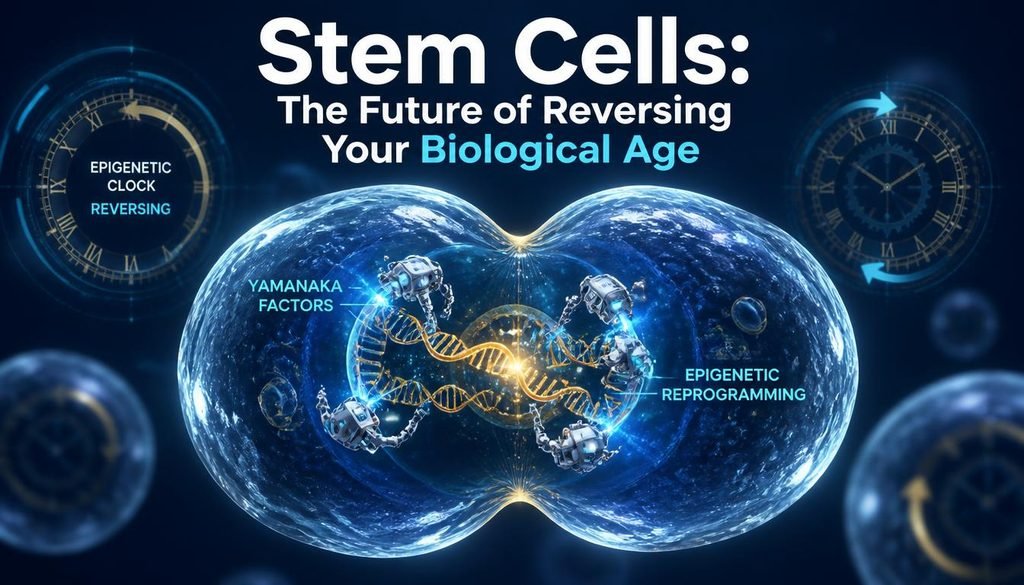
In 2006, Shinya Yamanaka won the Nobel Prize for discovering that introducing four specific transcription factors—Oct4, Sox2, Klf4, and c-Myc (collectively known as OSKM)—into an adult somatic cell could completely erase its epigenetic markers, reverting it all the way back to an embryonic, pluripotent state. This proved that aging is not a one-way street of physical wear-and-tear; it is an epigenetic software problem. The DNA sequence remains intact, but the “methylation tags” that tell the gene how to behave become corrupted over time.
The Danger of Total Reprogramming
The immediate problem with Yamanaka’s original discovery was that if you reprogram a cell completely back to an embryonic state inside a living organism, it loses its identity. A skin cell forgets it is a skin cell, and worse, it forms a teratoma—a highly aggressive, chaotic cancer. Total reprogramming in vivo was deemed biologically lethal.
Partial Cellular Reprogramming (The Sinclair Breakthrough)
The true breakthrough for reversing biological age occurred when researchers realized they did not need to reset the cell all the way to zero; they only needed to reset it partway. By transiently expressing the Yamanaka factors (usually leaving out the oncogene c-Myc, using only OSK) for a tightly controlled window of time, scientists could erase the age-related epigenetic noise without erasing the cell’s identity.
In 2020, Dr. David Sinclair’s lab at Harvard published a landmark paper in Nature demonstrating that partial reprogramming via OSK gene therapy successfully restored vision in old mice with glaucoma by regenerating the optic nerve. More importantly, in 2024, research funded by Altos Labs demonstrated that cyclic, partial epigenetic reprogramming in mice extended their lifespan and reversed the Horvath Epigenetic Clock by up to 50%.
This is the holy grail of longevity medicine. Stem cell therapy of the future will not involve injecting foreign cells; it will involve utilizing viral vectors or lipid nanoparticles to deliver transient Yamanaka factors to your own tissues, effectively hitting the “reset” button on your cellular software while keeping the hardware intact.
The Commercial Landscape: Scams, FDA Warnings, and Med-Spa Hype
Because true epigenetic reprogramming is still largely confined to animal models and early-stage human trials, a massive gray market has emerged to exploit the public’s desire for rejuvenation. As a physician, it is my duty to warn you about the predatory practices in the commercial stem cell therapy space.
The “Amniotic Fluid” Deception
Hundreds of wellness clinics across the United States offer “stem cell injections” for joint pain, claiming they are using live stem cells derived from amniotic fluid or umbilical cord blood. In a devastating investigative report, the FDA and independent researchers tested these commercial off-the-shelf vials. The result? Zero live stem cells.
The processing, freezing, and thawing protocols used by these commercial labs kill the delicate stem cells. What patients are actually paying $5,000 to $10,000 for is a vial of dead cellular debris, hyaluronic acid, and residual growth factors. While the hyaluronic acid might temporarily lubricate a knee joint, there is no regenerative cellular activity occurring.
The Danger of Unregulated Tourism
Clinics in jurisdictions with lax medical oversight often culture and expand stem cells in petri dishes before injecting them back into the patient. When stem cells are forced to divide rapidly in a plastic dish, they undergo “replicative senescence” and accumulate genetic mutations. Injecting cultured, potentially mutated cells intravenously carries a non-zero risk of triggering malignancies or severe immune cascades. True, FDA-compliant autologous therapies (like BMAC – Bone Marrow Aspirate Concentrate) do not culture the cells; they harvest, concentrate, and reinject them in the exact same surgical session to minimize manipulation.
Endogenous Mobilization: The Free Protocol to Rejuvenate Your Own Biology
You do not need to spend $50,000 in a foreign clinic to harness the power of regenerative biology. Your body possesses a profound, innate ability to mobilize its own endogenous stem cells if provided with the correct hormetic stressors. By leveraging evolutionary survival mechanisms, you can trigger massive stem cell proliferation and clear out senescent cells.
1. Prolonged Fasting and Immune System Rebooting
Research pioneered by Dr. Valter Longo at the University of Southern California has demonstrated that prolonged fasting (72 hours or more) triggers a profound regenerative cascade. During a prolonged fast, the body breaks down old, inefficient white blood cells to conserve energy. Upon refeeding, the body signals the Hematopoietic Stem Cells (HSCs) in the bone marrow to rapidly proliferate and generate a brand-new, highly efficient immune system. This effectively “reboots” the immune profile of an older adult to resemble that of a much younger individual.
You can achieve a milder version of this effect through rigorous time-restricted eating and Fasting Mimicking Diets (FMD). Use our Intermittent Fasting Calculator to structure a daily 16:8 or 18:6 window that lowers baseline insulin and triggers the AMPK pathway, preparing your biological soil for cellular cleanup. For a deeper understanding of how fasting clears cellular debris, read our guide: Autophagy: The Free Anti-Aging Switch Inside Your Cells.
2. Hyperbaric Oxygen Therapy (HBOT) and Telomere Extension
In 2020, a landmark clinical trial from Tel Aviv University shocked the longevity community. Researchers subjected healthy aging adults to 60 daily sessions of Hyperbaric Oxygen Therapy (breathing 100% oxygen at 2.0 ATA pressure). The specific protocol included “hypoxic dips” (briefly dropping the oxygen levels to trick the body into thinking it is at high altitude).
The results were unprecedented: the therapy increased telomere length in leukocytes by over 20% and decreased the accumulation of senescent T-cells by up to 37%. HBOT creates a massive gradient of oxygen that penetrates deep into hypoxic tissues, mobilizing endogenous stem cells from the bone marrow into the peripheral bloodstream to repair microvascular damage.
3. Zone 2 Cardio and Myokine Signaling
Skeletal muscle is the largest endocrine organ in the body. When you engage in sustained Zone 2 cardiovascular training, your contracting muscles secrete signaling proteins called myokines (such as IL-6 and Irisin). These myokines travel through the bloodstream and stimulate satellite cells (muscle stem cells) and promote neurogenesis in the hippocampus. To ensure you are fueling this vital tissue and preventing sarcopenia, track your daily amino acid requirements using our Protein Intake Calculator and your overall energy expenditure via our TDEE Calculator.
4. Sleep Architecture and the Melatonin Niche
Melatonin is not just a sleep hormone; it is a master regulator of the stem cell niche. High concentrations of melatonin in the bone marrow protect HSCs from oxidative stress and promote their quiescence and longevity. If your sleep architecture is fragmented by alcohol, late-night eating, or blue light exposure, your melatonin production plummets, and your stem cell niche degrades. Protecting your deep, slow-wave sleep is a non-negotiable requirement for endogenous regeneration. Learn how to optimize your cycles in Why Your Sleep Architecture Matters More Than Hours in Bed.
Summary Table: Comparing Regenerative Interventions
To navigate the complex landscape of cellular rejuvenation, refer to this clinical breakdown of current and emerging therapies:
| Intervention | Mechanism of Action | Efficacy & Status | Risks & Limitations |
|---|---|---|---|
| Autologous BMAC / Adipose | Harvesting, concentrating, and reinjecting your own local stem cells. | Moderate efficacy for localized orthopedic injuries. FDA-compliant if minimally manipulated. | Invasive; yields decline drastically with patient age; useless for systemic aging. |
| Allogeneic MSC Infusions | Intravenous donor cells providing paracrine (exosome) signaling. | High anti-inflammatory effect; temporary relief for autoimmune and joint issues. | High cost; cells do not engraft; risk of immune reaction; heavy regulatory scrutiny. |
| Exosome Therapy | Cell-free nano-vesicles carrying microRNAs and growth factors. | Emerging as the superior alternative to live cells; high tissue penetration; no rejection risk. | Lack of standardization; FDA currently cracking down on unapproved commercial exosome products. |
| Epigenetic Reprogramming | Transient expression of Yamanaka factors (OSK) to reset the methylation clock. | The ultimate future of reversing biological age; currently in animal models and early human trials. | High risk of teratoma formation if dosing is uncontrolled; decades away from commercial clinical use. |
| Endogenous Mobilization | Fasting, HBOT, and exercise to trigger native HSC and satellite cell proliferation. | Highly effective, free, and systemically rejuvenating; improves the “biological soil.” | Requires extreme discipline, physical effort, and access to specialized equipment (HBOT). |
How to Prepare Your “Biological Soil” Before Any Therapy
If you are determined to pursue a legitimate, clinical-grade stem cell therapy for a specific degenerative condition, you must optimize your metabolic environment first. Injecting regenerative cells into a body burdened by insulin resistance, high uric acid, and visceral fat is a waste of capital.
- Lower Fasting Insulin: High insulin levels promote cellular senescence and block autophagy. Target a fasting insulin below 5 μIU/mL.
- Clear Senescent Cells (Senolytics): Before introducing new cells, clear the zombie cells that will poison them. Compounds like Fisetin, Quercetin, and high-dose EGCG act as natural senolytics, inducing apoptosis in senescent cells.
- Optimize Body Composition: Adipose tissue is a source of MSCs, but “dirty” adipose tissue (fat engorged with inflammatory macrophages) yields highly dysfunctional, senescent stem cells. If a clinic is harvesting from your fat, ensure your metabolic health is pristine. Use our Body Fat Calculator to track your progress.
- Resolve Hidden Infections: Chronic, low-grade infections (like Epstein-Barr virus reactivation or untreated periodontal disease) keep the immune system in a state of chronic activation, exhausting your HSC pool. Address these with your physician before attempting regenerative protocols.
The Economics and Ethics of Rejuvenation
The democratization of regenerative medicine is the greatest ethical hurdle of the coming decade. Currently, accessing high-quality, legally compliant regenerative protocols requires immense wealth. A legitimate, IRB-approved clinical trial for partial reprogramming or a highly regulated autologous expansion protocol can cost upwards of $100,000 out-of-pocket, as insurance companies classify these interventions as “experimental” or “elective.”
This creates a dangerous bifurcation in human healthspan, where the ultra-wealthy can access cellular rejuvenation while the general public is preyed upon by strip-mall med-spas selling dead amniotic fluid. As clinicians and researchers, our goal must be to drive down the cost of these technologies through scalable delivery methods (like lipid nanoparticles) and to heavily educate the public on the power of endogenous mobilization. You do not need to be a billionaire to trigger hematopoietic stem cell proliferation; you only need the discipline to fast, the resilience to embrace cold and heat, and the consistency to move your body daily.
Final Thoughts: The Verdict on Cellular Rejuvenation
Is stem cell therapy the future of reversing biological age? Yes, but not in the way it is currently marketed. The era of blindly injecting uncharacterized cellular soups into joints and veins is coming to an end, rightfully suffocated by FDA oversight and a lack of long-term efficacy data.
The true future lies in precision epigenetic reprogramming, targeted exosome delivery, and the rigorous optimization of the host environment. Your biological age is not a fixed number etched into your DNA; it is a dynamic, malleable software program dictated by your lifestyle, your metabolic health, and your exposure to hormetic stressors. Stop looking for a $50,000 magic bullet in a foreign clinic. Start treating your daily habits as the most potent regenerative signals you possess. Cleanse your biological soil, mobilize your endogenous reserves, and prepare your body for the day when true epigenetic reprogramming finally reaches the clinical mainstream.
Frequently Asked Questions (FAQ)
1. Can stem cell therapy actually reverse biological age?
Current commercial infusions do not reverse biological age; they primarily provide temporary anti-inflammatory relief via the paracrine effect. However, emerging science involving Yamanaka factors (partial epigenetic reprogramming) has successfully reversed the biological age of cells in animal models, representing the true future of cellular rejuvenation.
2. Why do most commercial clinics use amniotic fluid?
Clinics use amniotic fluid or umbilical cord tissue because it is readily available and avoids the need to harvest from the patient. However, FDA testing has revealed that the processing and freezing of these commercial vials kill the cells. Patients are typically injected with dead cellular debris and growth factors, not live stem cells.
3. What is the paracrine effect in regenerative medicine?
The paracrine effect (or bystander effect) occurs when infused donor cells do not integrate into the host tissue, but instead secrete exosomes, microRNAs, and growth factors. These chemical signals modulate the host’s local immune system and wake up dormant endogenous cells to promote healing.
4. How can I naturally mobilize my own stem cells?
You can trigger massive endogenous stem cell proliferation through prolonged fasting (72+ hours), which reboots the hematopoietic immune system. Additionally, Hyperbaric Oxygen Therapy (HBOT), sustained Zone 2 cardiovascular exercise, and optimizing deep sleep architecture have been clinically proven to mobilize native cells from the bone marrow.
5. What are Yamanaka factors and how do they relate to aging?
Yamanaka factors (OSKM) are four transcription factors that can erase epigenetic markers on DNA, effectively resetting a cell’s biological age. While total reprogramming causes cancer, “partial reprogramming” (transient expression of these factors) is currently the most promising scientific avenue for safely reversing biological age in living tissues.
⚕️ Medical Disclaimer
The content provided on RegenStep.com, including this comprehensive guide authored by Dr. Julian Vance, is strictly for educational and informational purposes only. It is not intended to be a substitute for professional medical advice, diagnosis, or treatment.
Regenerative medicine, including exogenous infusions and experimental epigenetic therapies, carries significant risks, including immune rejection, infection, and tumorigenesis. The FDA has issued strict warnings regarding unapproved commercial clinics selling uncharacterized cellular products. Never pursue experimental or medical tourism therapies without consulting a board-certified specialist. Always seek the advice of your physician or a qualified healthcare provider regarding any medical condition or before undertaking prolonged fasting, HBOT, or intensive physical protocols.
Can stem cell therapy actually reverse biological age?
Current commercial infusions do not reverse biological age; they primarily provide temporary anti-inflammatory relief via the paracrine effect. However, emerging science involving Yamanaka factors (partial epigenetic reprogramming) has successfully reversed the biological age of cells in animal models, representing the true future of cellular rejuvenation.
Why do most commercial clinics use amniotic fluid?
Clinics use amniotic fluid or umbilical cord tissue because it is readily available and avoids the need to harvest from the patient. However, FDA testing has revealed that the processing and freezing of these commercial vials kill the cells. Patients are typically injected with dead cellular debris and growth factors, not live stem cells.
What is the paracrine effect in regenerative medicine?
The paracrine effect (or bystander effect) occurs when infused donor cells do not integrate into the host tissue, but instead secrete exosomes, microRNAs, and growth factors. These chemical signals modulate the host’s local immune system and wake up dormant endogenous cells to promote healing.
How can I naturally mobilize my own stem cells?
You can trigger massive endogenous stem cell proliferation through prolonged fasting (72+ hours), which reboots the hematopoietic immune system. Additionally, Hyperbaric Oxygen Therapy (HBOT), sustained Zone 2 cardiovascular exercise, and optimizing deep sleep architecture have been clinically proven to mobilize native cells from the bone marrow.
What are Yamanaka factors and how do they relate to aging?
Yamanaka factors (OSKM) are four transcription factors that can erase epigenetic markers on DNA, effectively resetting a cell’s biological age. While total reprogramming causes cancer, “partial reprogramming” (transient expression of these factors) is currently the most promising scientific avenue for safely reversing biological age in living tissues.

Julian Vance is the writer and editor behind RegenStep, translating peer-reviewed longevity, metabolic, and gut-health research into practical, actionable guides. Julian is not a licensed physician; content is reviewed against cited primary sources and is for informational purposes only. Always consult a qualified healthcare provider for personal medical advice.