
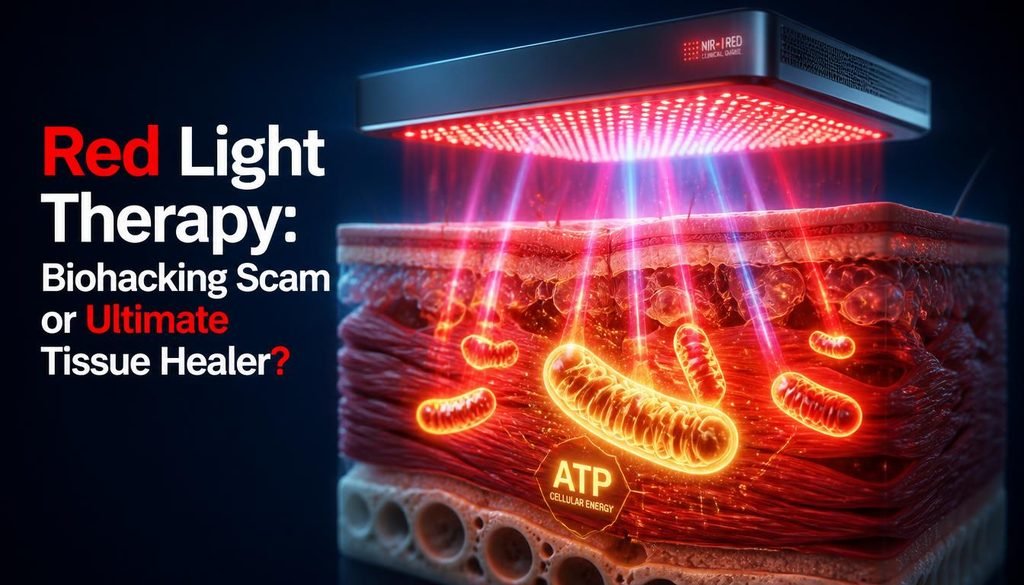
Walk into any high-end wellness clinic, scroll through the social media feeds of professional athletes, or browse the aisles of a biohacking conference, and you will inevitably encounter it: a glowing panel of red LEDs promising to erase wrinkles, heal torn tendons, and reverse brain aging. The wellness industry has aggressively marketed red light therapy as a panacea for everything from joint pain to cellulite. But as a clinician focused on regenerative medicine and cellular biology, I am inherently skeptical of any technology that claims to cure everything. Is this just another expensive biohacking scam designed to separate optimizers from their money, or is there legitimate, peer-reviewed science validating its use as an ultimate tissue healer?
The short answer is that the underlying science—known in the medical literature as Photobiomodulation (PBM)—is profoundly real, heavily validated by decades of clinical trials, and originally pioneered by NASA. However, the consumer application of this science is where the scam lies. The vast majority of commercial devices sold to consumers lack the necessary power density, wavelength accuracy, and optical engineering to deliver a therapeutic dose of photons to deep tissues.
In this comprehensive, 3,000-word clinical breakdown, we will dissect the exact quantum biology of how light interacts with human mitochondria, expose the mathematical reasons why most at-home devices fail, and provide the precise dosing protocols required to harness red light therapy for muscle recovery, neuroprotection, and systemic regeneration.
The Physics of Photobiomodulation: It Is Not “Heat”
The most common misconception about red light therapy is that it works by heating the tissue, similar to an infrared sauna. This is fundamentally incorrect. Infrared saunas use far-infrared light (wavelengths of 3,000 to 100,000 nanometers), which excites water molecules in your body to create systemic thermal stress and cardiovascular adaptation.
Photobiomodulation (PBM), on the other hand, utilizes specific bands of visible red light and near-infrared (NIR) light. This is a photochemical reaction, not a photothermal one. The light does not heat the tissue; it acts as a catalyst for cellular respiration. To understand why this matters, we must look at the specific wavelengths that penetrate human biology.
The Optical Window of Human Tissue
Human tissue is highly scattering and absorptive to most of the electromagnetic spectrum. Ultraviolet (UV) light damages DNA and burns the epidermis. Visible blue and green light are absorbed by melanin and hemoglobin, preventing deep penetration. Far-infrared is absorbed by water.
However, there is a specific “optical window” in the electromagnetic spectrum—roughly between 600 nanometers (nm) and 1100 nm—where light can bypass the skin’s superficial absorbers and penetrate deeply into muscles, joints, and even the brain. Within this window, two distinct bands are utilized in clinical red light therapy:
- Red Light (630 nm – 680 nm): This wavelength is highly absorbed by melanin and superficial capillary beds. It penetrates roughly 5 to 10 millimeters into the body. It is the gold standard for dermatological applications, wound healing, collagen synthesis, and treating superficial nerve pain.
- Near-Infrared Light (810 nm – 1064 nm): NIR is invisible to the human eye. Because it bypasses melanin and water absorption, it penetrates deeply—up to 30 to 50 millimeters (and sometimes deeper, depending on tissue density)—reaching muscles, tendons, ligaments, bone, and the cerebral cortex.
If a consumer device only offers “red light” without the near-infrared spectrum, it is biologically useless for joint pain, muscle recovery, or brain health.
The Biochemical Mechanism: Rescuing the Mitochondria
To understand how red light therapy heals tissue, we must zoom in to the subcellular level, specifically to Complex IV of the mitochondrial electron transport chain: an enzyme called Cytochrome C Oxidase (CCO).
The Nitric Oxide Blockade
Under conditions of cellular stress, hypoxia (low oxygen), or inflammation, a molecule called Nitric Oxide (NO) competitively binds to Cytochrome C Oxidase. When NO occupies this enzyme, it displaces oxygen. Because oxygen is the final electron acceptor required to produce ATP (cellular energy), mitochondrial ATP production grinds to a halt. The cell becomes energy-depleted, oxidative stress skyrockets, and the tissue enters a state of chronic inflammation and dysfunction. This is the biochemical hallmark of aging, chronic tendinopathy, and neurodegeneration.
The Photodissociation Effect
When photons of red or near-infrared light hit the tissue, they are absorbed by the copper centers of the Cytochrome C Oxidase enzyme. The energy from the photon breaks the bond between the enzyme and the Nitric Oxide. This process, called photodissociation, effectively “kicks” the NO off the enzyme.
Once the NO is removed, oxygen rushes back in. The mitochondrial electron transport chain resumes, and ATP production surges. Furthermore, the brief, localized release of Nitric Oxide into the bloodstream acts as a potent vasodilator, increasing microcirculation and angiogenesis (the formation of new blood vessels) in the damaged tissue.
The ROS Hormesis Cascade
The sudden influx of oxygen and the resumption of the electron transport chain cause a brief, micro-spike in Reactive Oxygen Species (ROS). In chronic, high doses, ROS cause cellular damage. But in this acute, localized micro-dose, the ROS act as a vital signaling molecule. This mild oxidative stress triggers a cascade of transcription factors—most notably NF-kB and Nrf2—which travel to the cell nucleus and upregulate the expression of antioxidant enzymes, anti-inflammatory cytokines, and tissue-repair proteins.
This is the exact mechanism by which red light therapy accelerates wound healing, reduces joint inflammation, and protects neurons from apoptosis (cell death).
Clinical Applications: What the Data Actually Supports
Stripping away the marketing hype, what does the peer-reviewed literature actually validate regarding red light therapy? The evidence is robust, but it is highly specific to the condition being treated.
1. Musculoskeletal Recovery and Hypertrophy
In sports medicine, PBM is heavily utilized to manage Delayed Onset Muscle Soreness (DOMS) and accelerate recovery from eccentric muscle damage. A comprehensive meta-analysis published in the European Journal of Applied Physiology demonstrated that applying near-infrared light to muscles immediately after intense exercise significantly reduces creatine kinase (a marker of muscle damage) and accelerates the clearance of lactate.
More fascinatingly, pre-conditioning muscles with red light therapy before a workout has been shown to increase the number of repetitions an athlete can perform and enhance long-term muscle hypertrophy. By priming the mitochondria before the mechanical stress of lifting, the muscle fibers experience less micro-tearing and adapt more efficiently.
2. Osteoarthritis and Tendinopathy
Chronic joint pain is often driven by a vicious cycle of cartilage degradation and synovial inflammation. NIR light (specifically in the 850 nm range) penetrates the joint capsule, reducing pro-inflammatory prostaglandins (like PGE2) and stimulating chondrocytes (cartilage cells) to produce extracellular matrix. While PBM will not “regrow” a completely worn-away meniscus, clinical trials show it is highly effective at reducing the pain and stiffness of osteoarthritis and accelerating the remodeling phase of tendon injuries like Achilles tendinopathy or tennis elbow.
3. Transcranial Photobiomodulation (tPBM) for Brain Health
Perhaps the most exciting frontier in longevity medicine is the use of NIR light to treat the brain. The skull and scalp scatter light heavily, but wavelengths between 810 nm and 1064 nm can penetrate the cranium and reach the cerebral cortex. Neurologists are currently investigating tPBM for Traumatic Brain Injury (TBI), post-concussion syndrome, and major depressive disorder. The mechanism relies on rescuing metabolically compromised neurons, reducing neuroinflammation (microglial activation), and increasing regional cerebral blood flow. Subjects in clinical trials frequently report acute improvements in executive function, working memory, and mood following a 10-to-20-minute transcranial PBM session.
4. Dermatological Rejuvenation and Collagen Synthesis
Red light (660 nm) is a proven stimulator of fibroblasts, the cells responsible for producing collagen and elastin in the dermis. Unlike UV light, which breaks down collagen via matrix metalloproteinases, red light upregulates procollagen synthesis. It is widely used in clinical settings to accelerate the healing of diabetic ulcers, reduce the erythema (redness) associated with rosacea and acne, and improve the appearance of fine lines.
5. Metabolic Effects and Adipocyte Modulation
There is emerging evidence that specific wavelengths of red light can create temporary, microscopic pores in the membranes of adipocytes (fat cells), a process known as photobiomodulation-induced lipolysis. This causes the fat cells to leak their triglyceride contents into the interstitial space, where they are processed by the lymphatic system. While this is not a substitute for a caloric deficit, it is utilized in body contouring. To accurately track changes in your body composition and visceral fat rather than relying on a flawed standard scale, utilize our Advanced BMI Calculator, which accounts for age, gender, and metabolic health metrics.
💡 Action Step: Tissue healing requires raw materials. If you are using red light therapy to recover from intense training or heal an injury, your body demands amino acids to rebuild the extracellular matrix. Use our Protein Intake Calculator to ensure you are consuming adequate protein to support the cellular repair that PBM initiates.
The “Scam” Element: Why Most Consumer Devices Fail
If the science is so robust, why do so many people buy an at-home red light therapy panel, use it for a month, and declare it a scam? The answer lies in a fundamental misunderstanding of optical physics and dosimetry. The wellness industry relies on consumers confusing wattage with irradiance.
Irradiance vs. Total Power
A cheap LED mask might boast “100 Watts of Power.” But total power is meaningless if the light is scattered in all directions. The clinical metric that matters is Irradiance (Power Density), measured in milliwatts per square centimeter (mW/cm²).
For a therapeutic effect, the light must hit your tissue with enough intensity to overcome the scattering effect of the skin. Clinical studies generally require an irradiance of at least 50 to 100 mW/cm² at the surface of the skin. Most cheap, flexible silicone masks or Amazon-grade panels deliver less than 10 mW/cm². They are essentially expensive mood lights.
The Inverse Square Law and Beam Angle
Light intensity drops off exponentially as you move away from the source, governed by the Inverse Square Law. Furthermore, cheap LEDs have a wide “beam angle” (e.g., 120 degrees), meaning the photons scatter outward into the room rather than traveling in a straight line into your muscle tissue.
High-end, clinical-grade red light therapy panels use secondary optical lenses over each LED chip to narrow the beam angle to roughly 30 or 60 degrees. This focuses the photons into a tight, penetrating beam. If you buy a device without these lenses, you must press the light directly against your bare skin to get any deep-tissue benefit, completely negating the convenience of a standing panel.
Flicker and EMF Pollution
Cheap power supplies drive LEDs using Pulse Width Modulation (PWM) at low frequencies, creating an invisible, high-speed strobe effect (flicker). While invisible to the naked eye, the human brain registers this flicker, which can trigger neurological stress, eye strain, and headaches—completely counteracting the neurological benefits of the therapy. Furthermore, poorly shielded drivers emit high levels of Electromagnetic Fields (EMFs). A high-quality PBM device must be “flicker-free” and emit near-zero EMF at a distance of 6 inches.
The Arndt-Schultz Law: The Danger of “More is Better”
The most critical concept in photobiomodulation—and the one most frequently violated by biohackers—is the Biphasic Dose Response, governed by the Arndt-Schultz Law.
In pharmacology, more of a drug usually yields a stronger effect, up to the point of toxicity. In light therapy, the dose-response curve is bell-shaped.
- Too little energy (Fluence): No biological effect.
- Optimal energy: Maximum cellular stimulation and tissue healing.
- Too much energy: The biological effect is completely inhibited, and tissue damage or cellular suppression can occur.
If 10 Joules of energy heals a tendon, blasting that same tendon with 100 Joules will not heal it ten times faster; it will likely suppress cellular activity and increase inflammation. This is why sitting in front of a massive, high-powered red light therapy panel for 45 minutes every single day is a biological error. You are likely overdosing your superficial tissues, blunting the hormetic signal, and wasting your time.
Calculating the Dose: Fluence (J/cm²)
The therapeutic dose is measured in Fluence (Joules per square centimeter).
- Superficial Skin Issues (Wounds, Acne, Collagen): 3 to 10 J/cm².
- Deep Tissue (Muscles, Joints, Tendons): 20 to 60 J/cm².
- Transcranial (Brain): 10 to 30 J/cm² (requires specific NIR wavelengths and careful timing).
To calculate your session time, you need to know the irradiance (mW/cm²) of your specific device at the distance you are sitting. Formula: Time (seconds) = (Target Fluence in J/cm² × 1000) / Irradiance in mW/cm². If your device delivers 100 mW/cm² at a 6-inch distance, and you want a 30 J/cm² dose for a deep muscle tear, you need to treat the area for exactly 300 seconds (5 minutes).
Synergistic Stacking: Combining PBM with Other Longevity Protocols
To maximize your biological return on investment, red light therapy should not exist in a vacuum. It can be strategically stacked with other longevity interventions to create synergistic effects.
1. PBM + Intermittent Fasting (Autophagy)
Fasting triggers AMPK and initiates autophagy, clearing out dead cellular material. Red light therapy stimulates mitochondrial biogenesis (the creation of new mitochondria). By combining a fasted state with a morning PBM session, you effectively clear out the old, dysfunctional cellular engines and simultaneously signal the body to build new, highly efficient ones. Use our Intermittent Fasting Calculator to align your feeding window with your light exposure.
2. PBM + Cold Exposure (Hormetic Stacking)
Cold plunges trigger the release of norepinephrine and cold-shock proteins, while reducing systemic inflammation. Red light therapy increases microcirculation and ATP production. Many elite athletes use cold therapy immediately after a game to blunt acute pain and inflammation, and red light therapy the following day to drive nutrient-rich blood flow into the damaged tissues to accelerate the remodeling phase.
3. PBM + Circadian Rhythm Anchoring
Viewing bright light in the morning sets your circadian clock. While sunlight is the ultimate anchor, a high-irradiance red light panel used first thing in the morning can provide a massive lux stimulus to the suprachiasmatic nucleus without the damaging UV radiation. Conversely, because red light lacks the blue wavelengths that suppress melatonin, using a low-dose red light panel in the evening is one of the few ways to illuminate a room without destroying your sleep architecture. For more on protecting your deep sleep cycles, read Why Your Sleep Architecture Matters More Than Hours in Bed.
Troubleshooting, Safety, and Contraindications
While red light therapy is exceptionally safe and non-ionizing (it does not damage DNA like UV or X-rays), it is a potent biological stimulus and carries specific contraindications.
1. Photosensitizing Medications
If you are taking medications that increase photosensitivity—such as isotretinoin (Accutane), certain tetracycline antibiotics, or lithium—using PBM can trigger severe skin reactions. You must consult your prescribing physician before use.
2. Active Malignancy (Cancer)
This is a subject of intense debate in the oncology community. Because PBM increases microcirculation, cellular ATP, and angiogenesis (new blood vessel formation), there is a theoretical risk that applying high-dose light directly over an active, untreated tumor could stimulate its growth. While some emerging studies are exploring PBM to protect healthy tissue during chemotherapy, the standard clinical consensus is to never apply red light therapy directly over a known, active malignancy unless directed by an oncologist.
3. The Thyroid Gland
The thyroid is highly vascular and sensitive to metabolic stimulation. While some practitioners use low-level laser therapy to treat hypothyroidism, high-dose, unmonitored NIR exposure over the anterior neck can potentially trigger autoimmune flares (like Hashimoto’s) or hyperthyroidism in susceptible individuals. It is generally recommended to shield the thyroid gland with a opaque cloth or neck cover when using high-powered全身 (full-body) panels.
4. Eye Safety and Goggles
Visible red light (660nm) is incredibly bright and will cause temporary glare and discomfort, but it is generally safe for the retina in short durations. However, Near-Infrared light (850nm+) is invisible. Your pupils will not constrict to protect your eyes, and the lens of the eye can focus the NIR energy directly onto the retina, potentially causing thermal damage or accelerating cataract formation over time. Always wear the blackout goggles provided with high-irradiance panels when treating the face or when the NIR diodes are active.
The Consumer Buying Guide: What to Look For
If you are going to invest in a device, do not compromise on the physics. Use this clinical checklist to evaluate any red light therapy brand:
| Feature | The Clinical Standard (What to Buy) | The “Scam” Standard (What to Avoid) |
|---|---|---|
| Wavelengths | Dual-chip: 660nm (Red) AND 850nm (NIR). | Single wavelength, or vague “infrared” claims without nm specs. |
| Irradiance | > 50 mW/cm² measured at 6 inches (via solar power meter). | Unverified claims, or measuring irradiance at 0 inches (touching the LED). |
| Beam Angle | Secondary optical lenses (30° to 60° beam angle). | Bare LEDs (120°+ beam angle) causing massive light scatter. |
| Flicker | Zero flicker (verified via slow-motion smartphone camera test). | High PWM flicker causing neurological stress. |
| EMF Emissions | Near-zero magnetic and electric fields at 6 inches. | High EMF radiation from cheap, unshielded power drivers. |
Final Thoughts: Scam or Healer?
So, is red light therapy a biohacking scam? The marketing surrounding it often is. The wellness industry has taken a profound, Nobel-adjacent biological mechanism and packaged it into underpowered, overpriced plastic gadgets that fail to deliver a therapeutic dose of photons to your cells. If you buy a cheap, flexible silicone mask and expect it to heal your torn rotator cuff, you will rightfully conclude it is a scam.
However, the underlying science of Photobiomodulation is an ultimate tissue healer. When applied with clinical precision—respecting the biphasic dose response, utilizing the correct wavelengths for the target tissue depth, and ensuring adequate irradiance—red light therapy is a non-invasive, highly effective tool for upregulating cellular energy, resolving chronic inflammation, and accelerating human recovery. Stop treating it like a magic wand, start treating it like a precise medical instrument, and your mitochondria will reward you with the vitality to match.
Frequently Asked Questions (FAQ)
1. Is red light therapy scientifically proven or a scam?
The underlying science, known as Photobiomodulation (PBM), is heavily validated by decades of clinical trials and was originally pioneered by NASA. However, many cheap consumer devices are a “scam” because they lack the necessary irradiance (power density) and optical lenses to deliver a therapeutic dose of photons to deep tissues.
2. What is the difference between red light and near-infrared (NIR) light?
Red light (630-680nm) penetrates superficially (5-10mm) and is ideal for skin health, collagen production, and wound healing. Near-infrared light (810-1064nm) is invisible and penetrates deeply (up to 50mm), making it necessary for healing muscles, joints, tendons, and for transcranial brain therapy.
3. How does red light therapy heal tissue at the cellular level?
Photons of red and NIR light are absorbed by Cytochrome C Oxidase, an enzyme in the mitochondria. This displaces nitric oxide, allowing oxygen to bind and rapidly increasing ATP (cellular energy) production. It also triggers a mild, beneficial oxidative stress that upregulates anti-inflammatory and tissue-repair genes.
4. Can you overdo red light therapy?
Yes. Red light therapy follows the Arndt-Schultz Law (a biphasic dose response). While an optimal dose stimulates cellular repair and reduces inflammation, an excessive dose (too many Joules of energy) will inhibit cellular activity and can actually suppress tissue healing. More time in front of the light does not equal better results.
5. Do I need to wear goggles during red light therapy?
Yes, especially when using Near-Infrared (NIR) light. While visible red light is just very bright, NIR light is invisible. Your pupils will not constrict to protect your eyes, and the lens of the eye can focus the NIR energy directly onto the retina, potentially causing thermal damage over time. Always use blackout goggles when NIR diodes are active.
⚕️ Medical Disclaimer
The content provided on RegenStep.com, including this comprehensive guide authored by Dr. Julian Vance, is strictly for educational and informational purposes only. It is not intended to be a substitute for professional medical advice, diagnosis, or treatment.
Photobiomodulation (red light therapy) is a potent biological stimulus. It should not be used over active malignancies, the thyroid gland, or during pregnancy without direct medical supervision. Individuals taking photosensitizing medications or those with a history of retinal disease must consult an ophthalmologist or primary care physician before utilizing high-irradiance light devices. Never disregard professional medical advice or delay in seeking it because of something you have read on this website.
Final Thoughts: Scam or Healer?
So, is red light therapy a biohacking scam? The marketing surrounding it often is. The wellness industry has taken a profound, Nobel-adjacent biological mechanism and packaged it into underpowered, overpriced plastic gadgets that fail to deliver a therapeutic dose of photons to your cells. If you buy a cheap, flexible silicone mask and expect it to heal your torn rotator cuff, you will rightfully conclude it is a scam. However, the underlying science of Photobiomodulation is an ultimate tissue healer. When applied with clinical precision—respecting the biphasic dose response, utilizing the correct wavelengths for the target tissue depth, and ensuring adequate irradiance—red light therapy is a non-invasive, highly effective tool for upregulating cellular energy, resolving chronic inflammation, and accelerating human recovery. Stop treating it like a magic wand, start treating it like a precise medical instrument, and your mitochondria will reward you with the vitality to match.
Is red light therapy scientifically proven or a scam?
The underlying science, known as Photobiomodulation (PBM), is heavily validated by decades of clinical trials and was originally pioneered by NASA. However, many cheap consumer devices are a “scam” because they lack the necessary irradiance (power density) and optical lenses to deliver a therapeutic dose of photons to deep tissues.
What is the difference between red light and near-infrared (NIR) light?
Red light (630-680nm) penetrates superficially (5-10mm) and is ideal for skin health, collagen production, and wound healing. Near-infrared light (810-1064nm) is invisible and penetrates deeply (up to 50mm), making it necessary for healing muscles, joints, tendons, and for transcranial brain therapy.
How does red light therapy heal tissue at the cellular level?
Photons of red and NIR light are absorbed by Cytochrome C Oxidase, an enzyme in the mitochondria. This displaces nitric oxide, allowing oxygen to bind and rapidly increasing ATP (cellular energy) production. It also triggers a mild, beneficial oxidative stress that upregulates anti-inflammatory and tissue-repair genes.
Can you overdo red light therapy?
Yes. Red light therapy follows the Arndt-Schultz Law (a biphasic dose response). While an optimal dose stimulates cellular repair and reduces inflammation, an excessive dose (too many Joules of energy) will inhibit cellular activity and can actually suppress tissue healing. More time in front of the light does not equal better results.
Do I need to wear goggles during red light therapy?
Yes, especially when using Near-Infrared (NIR) light. While visible red light is just very bright, NIR light is invisible. Your pupils will not constrict to protect your eyes, and the lens of the eye can focus the NIR energy directly onto the retina, potentially causing thermal damage over time. Always use blackout goggles when NIR diodes are active.

Julian Vance is the writer and editor behind RegenStep, translating peer-reviewed longevity, metabolic, and gut-health research into practical, actionable guides. Julian is not a licensed physician; content is reviewed against cited primary sources and is for informational purposes only. Always consult a qualified healthcare provider for personal medical advice.