
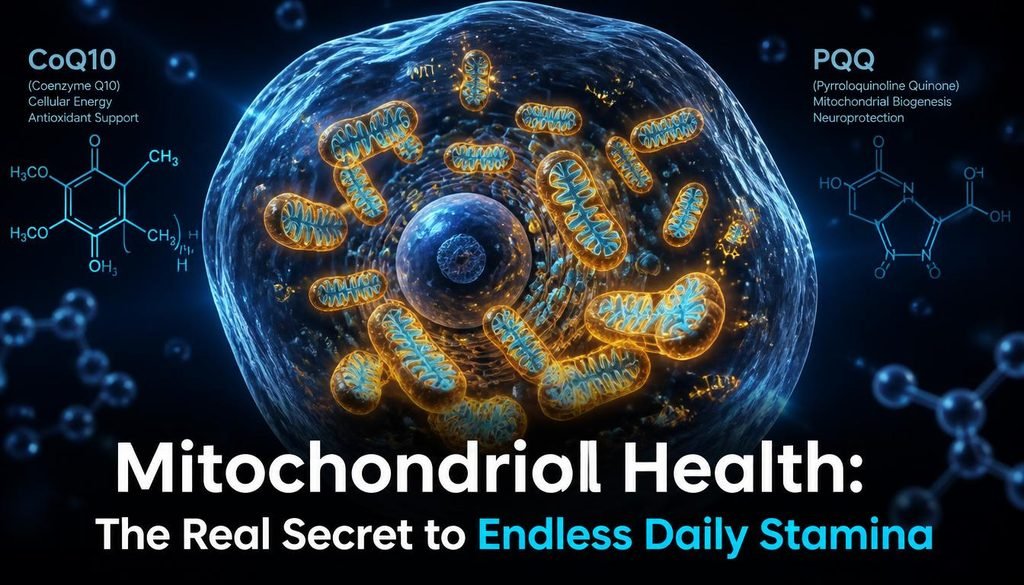
Most of the modern world is operating on borrowed energy. We rely on central nervous system stimulants—caffeine, pre-workouts, and sugar—to mask the underlying reality of our cellular exhaustion. We mistake a racing heart and a jittery mind for “energy,” entirely ignoring the fact that true, sustainable stamina does not come from a coffee bean; it comes from the microscopic power plants inside your cells. When we talk about mitochondrial health, we are talking about the absolute foundation of human vitality, cognitive endurance, and physical resilience.
As a clinician focused on metabolic optimization and longevity, I evaluate high-performers, athletes, and executives who hit a wall every day at 2:00 PM. They sleep eight hours, they drink their green smoothies, yet they suffer from brain fog, poor exercise recovery, and a pervasive sense of physical heaviness. The root cause is almost never a lack of willpower or a simple caloric deficit. It is a profound degradation of their cellular engines. Your mitochondria are not just passive batteries; they are dynamic, signaling organelles that dictate whether your body burns fat for fuel, whether your brain can sustain deep focus, and how rapidly you age.
In this comprehensive, 3,000-word clinical breakdown, we will dissect the exact biochemistry of ATP production, expose the four silent killers of your cellular engines, and outline the precise 5-pillar protocol required to trigger mitochondrial biogenesis. If you want to build endless daily stamina, you must stop stimulating your nervous system and start rebuilding your cellular infrastructure.
The Biology of ATP: Inside the Electron Transport Chain
To understand how to build stamina, you must understand how energy is actually manufactured. The foundation of mitochondrial health relies on the Electron Transport Chain (ETC), a series of four protein complexes (Complex I through IV) embedded in the inner mitochondrial membrane.
When you consume food, your body breaks it down into electrons (carried by NADH and FADH2). These electrons are passed down the ETC like a bucket brigade. As they move, they pump protons (H+) across the membrane, creating a massive electrochemical gradient. Finally, these protons rush back through a turbine-like enzyme called ATP Synthase (Complex V), which physically spins at thousands of RPMs to forge Adenosine Triphosphate (ATP)—the universal energy currency of life.
The ROS Leakage Problem
This process is incredibly efficient, but it is not perfect. When the ETC is damaged, sluggish, or overwhelmed by excess calories, electrons “leak” out of the chain and bind with oxygen, creating Reactive Oxygen Species (ROS), or free radicals.
In small, acute doses, ROS are vital signaling molecules that trigger adaptation (hormesis). But when your mitochondria are dysfunctional, this leakage becomes chronic. The excess ROS oxidize the mitochondrial membrane, damage the mitochondrial DNA (mtDNA), and force the organelle into a state of senescence. A senescent mitochondrion stops producing ATP but continues to pump out inflammatory cytokines, contributing to the systemic fatigue and “inflammaging” that plagues modern adults.
Furthermore, unlike the DNA in your cell’s nucleus, mtDNA lacks protective histone proteins and is located right next to the ETC where the ROS are generated. Because of this structural vulnerability, mitochondrial health is highly susceptible to mutation and degradation over time, making proactive maintenance a non-negotiable requirement for longevity.
The 4 Silent Killers of Cellular Energy
Before we can build new mitochondria, we must stop the daily assault on the ones we have. These four modern lifestyle factors are actively destroying your cellular stamina.
1. The Absence of Zone 2 Cardio (The Use-It-Or-Lose-It Principle)
Mitochondria operate on a strict biological mandate: use them or lose them. The modern lifestyle is profoundly sedentarian. When you do not demand sustained, aerobic energy output from your muscles, your body downregulates mitochondrial density to conserve resources. Furthermore, without regular aerobic conditioning, your mitochondria lose their ability to oxidize (burn) fat, forcing your body to rely entirely on glucose. This leads to rapid glycogen depletion, lactic acid buildup, and the classic “bonk” or afternoon crash.
2. Chronodisruption and the Melatonin Deficit
Most people view melatonin purely as a sleep hormone secreted by the pineal gland. This is a massive biological oversight. The vast majority of melatonin in your body is actually synthesized inside your mitochondria. Melatonin is the master antioxidant for mitochondrial health; it is specifically tasked with neutralizing the ROS generated by the Electron Transport Chain during the day.
When you expose your eyes to artificial blue light after sunset, or when you fail to view morning sunlight, you crush your circadian rhythm and halt melatonin production. Without intra-mitochondrial melatonin, your cellular engines are left defenseless against oxidative stress, leading to rapid structural degradation and next-day fatigue. For a deeper dive into protecting your cellular cleanup cycles, read our guide: Why Your Sleep Architecture Matters More Than Hours in Bed.
3. Toxic Load and Heavy Metal Accumulation
The ETC is highly sensitive to environmental toxins. Heavy metals (like mercury from dental amalgams or lead from old plumbing), mold mycotoxins, and endocrine-disrupting chemicals (like BPA and phthalates) physically bind to the sulfhydryl groups on mitochondrial enzymes, effectively “gumming up the gears” of the Electron Transport Chain. When the chain is blocked, ATP production halts, and ROS leakage skyrockets.
4. Pharmaceutical and Nutrient Depletion
The ETC requires specific nutritional cofactors to function. Coenzyme Q10 (CoQ10) is the essential “shuttle” that moves electrons between Complex I/II and Complex III. However, the most widely prescribed cholesterol medications in the world—statins—work by inhibiting the HMG-CoA reductase pathway. This is the exact same pathway your liver uses to synthesize CoQ10. By artificially depleting CoQ10, statins can severely impair mitochondrial health, which is why statin-induced myopathy (muscle pain and profound fatigue) is such a common clinical complaint.
The 5-Pillar Protocol for Endless Daily Stamina
To reverse this degradation and achieve endless stamina, you must trigger mitochondrial biogenesis—the creation of brand-new, highly efficient cellular engines. This process is governed by a master regulator gene called PGC-1α (Peroxisome proliferator-activated receptor gamma coactivator 1-alpha). Here is the exact clinical protocol to activate PGC-1α and rebuild your energy infrastructure.
Pillar 1: Zone 2 Cardio (The Ultimate Biogenesis Trigger)
If there is a “magic pill” for cellular stamina, it is Zone 2 cardiovascular training. Popularized in the longevity community by Dr. Iñigo San-Millán, Zone 2 is defined as steady-state exercise performed at an intensity where you can still comfortably hold a conversation, but it requires slight effort (roughly 60-70% of your maximum heart rate).
The Biochemical Mechanism: Zone 2 specifically targets Type I (slow-twitch) muscle fibers, which are packed with mitochondria. Training in this zone forces the mitochondria to become highly efficient at oxidizing fat and clearing lactate. Over time, the mechanical and metabolic stress of Zone 2 upregulates PGC-1α, signaling the cell to physically increase the size, number, and efficiency of the mitochondrial network.
The Protocol: Aim for 150 to 180 minutes per week (e.g., four 45-minute sessions) of Zone 2 cardio. This can be brisk walking on an incline, cycling, or rowing. If you are gasping for air or cannot speak in full sentences, you have crossed into Zone 3 or 4, shifting the fuel source away from fat and blunting the specific biogenesis signal. To ensure you are fueling this massive metabolic sink without gaining visceral fat, track your body composition using our Advanced BMI Calculator, which accounts for age, gender, and waist-to-height ratios.
Pillar 2: Mitophagy and Strategic Fasting
You cannot optimize mitochondrial health without clearing out the dead, ROS-leaking engines. This selective form of cellular cleanup is called mitophagy. When a mitochondrion becomes damaged, its membrane potential drops. The cell tags it with a protein called PINK1, which recruits Parkin to encapsulate the dead organelle in a lysosome and digest it, recycling its raw materials.
The Protocol: Mitophagy is heavily inhibited by the mTOR pathway (which is activated by constant eating and protein intake). To trigger it, you must activate the AMPK pathway through fasting. Use our Intermittent Fasting Calculator to design a daily 16:8 fasting window. Furthermore, prolonged fasting (24+ hours) or the use of specific polyphenols like Urolithin A (found in pomegranates) have been clinically shown to massively upregulate mitophagy. For a complete breakdown of the cellular cleanup process, read Autophagy: The Free Anti-Aging Switch Inside Your Cells.
Pillar 3: Hormetic Temperature Stress
Mitochondria respond profoundly to environmental temperature extremes by altering their structure and function.
- Cold Exposure: When you expose your body to cold, it activates Uncoupling Protein 1 (UCP1) in brown adipose tissue. UCP1 creates a “proton leak” in the mitochondrial membrane, intentionally wasting the electrochemical gradient to generate heat instead of ATP. This forced inefficiency triggers a massive compensatory biogenesis response, building a denser mitochondrial network.
- Heat Exposure (Sauna): Heat stress triggers the release of Heat Shock Proteins (HSPs), which act as molecular chaperones, repairing misfolded proteins inside the mitochondria and protecting the ETC from oxidative damage.
Pillar 4: Photobiomodulation (Red and Near-Infrared Light)
Photobiomodulation is a non-negotiable tool for mitochondrial health. As detailed in our deep dive Red Light Therapy: Biohacking Scam or Ultimate Tissue Healer?, specific wavelengths of red (660nm) and near-infrared (850nm) light penetrate the tissue and are absorbed by Cytochrome C Oxidase (Complex IV of the ETC). This photodissociation kicks inhibitory Nitric Oxide off the enzyme, allowing oxygen to rush back in, instantly restoring ATP production and reducing localized inflammation. Using a high-irradiance clinical light panel for 10 minutes a day is a direct, non-chemical intervention to rescue struggling cellular engines.
Pillar 5: The Mitochondrial Nutrient Stack
To build new engines and fuel the ETC, you must provide the exact biochemical raw materials. Standard multivitamins do not contain the therapeutic doses required for cellular rejuvenation.
| Compound | Mechanism of Action | Optimal Clinical Dosage |
|---|---|---|
| CoQ10 (Ubiquinol) | The essential electron shuttle between Complex I/II and III. The Ubiquinol form is pre-reduced and highly bioavailable. | 100mg – 200mg daily (take with fat). |
| PQQ (Pyrroloquinoline Quinone) | A novel compound that directly stimulates the PGC-1α pathway, triggering the growth of brand new mitochondria (biogenesis). | 10mg – 20mg daily. |
| Acetyl-L-Carnitine (ALCAR) | Acts as the “shuttle” that transports long-chain fatty acids across the mitochondrial membrane to be burned for ATP. Crosses the blood-brain barrier. | 500mg – 1,000mg daily (take fasted). |
| Alpha-Lipoic Acid (R-ALA) | A potent antioxidant that regenerates CoQ10 and Vitamin E inside the mitochondrial matrix. The “R” form is the biologically active isomer. | 300mg – 600mg daily. |
| Magnesium (Glycinate/Malate) | Every molecule of ATP must bind to a magnesium ion (Mg-ATP) to become biologically active. Without it, cellular energy stalls. | 300mg – 400mg daily. |
💡 Action Step: Building new mitochondria requires structural proteins and amino acids. If you are engaging in Zone 2 training and heavy resistance, you must supply the raw materials. Use our Protein Intake Calculator to ensure you are consuming adequate daily protein, and our TDEE Calculator to ensure you are eating enough to support cellular growth without spiking visceral fat.
Troubleshooting: The “Mitochondrial Detox” Crash
When patients begin aggressively repairing their mitochondrial health, they frequently report a paradoxical symptom: they feel more fatigued for the first 7 to 14 days. This is a well-documented phenomenon in functional medicine, often referred to as a “healing crisis” or a mitophagic die-off.
When you initiate fasting, Zone 2 cardio, and targeted supplementation, your body begins rapidly clearing out senescent, damaged mitochondria via mitophagy. As these dead organelles are broken down by lysosomes, they release their accumulated toxic payload—oxidized lipids, heavy metals, and trapped inflammatory cytokines—into the bloodstream to be processed by the liver and excreted.
This transient spike in circulating toxins can cause temporary brain fog, mild headaches, and physical lethargy. Furthermore, as your mitochondria become more efficient at burning fat, your body dumps intracellular water and electrolytes. If you do not aggressively replenish sodium, potassium, and magnesium during this transition, you will experience severe fatigue.
The Fix: Do not abandon the protocol. Hydrate aggressively with mineralized water, utilize binders (like activated charcoal or zeolite) if detox symptoms are severe, and ensure you are getting 8 hours of high-quality sleep to allow the glymphatic system to clear the neurological waste. The fatigue will break, usually around day 14, revealing a profound, stable baseline of endless stamina.
Measuring Your Cellular Fitness: Beyond the Scale
You cannot manage what you do not measure. While subjective energy levels are a good indicator, true longevity medicine requires objective data to verify that your interventions are actually improving your cellular engines.
1. VO2 Max and Lactate Threshold
VO2 Max is the ultimate measure of your mitochondrial ceiling—the maximum amount of oxygen your body can transport and utilize during intense exercise. It is one of the strongest predictors of all-cause mortality. However, your Lactate Threshold (the point at which your mitochondria can no longer clear lactate as fast as it is produced) is a better measure of your daily, functional stamina. A comprehensive metabolic cart test at a sports science clinic will give you these exact numbers.
2. Heart Rate Variability (HRV)
HRV measures the micro-variations in time between your heartbeats, reflecting the balance between your sympathetic (fight-or-flight) and parasympathetic (rest-and-digest) nervous systems. A high, stable HRV indicates that your mitochondria are efficiently producing ATP and recovering from stress. A plummeting HRV is an early warning sign of mitochondrial overload and impending burnout.
3. Visceral Fat and Metabolic Flexibility
Visceral fat is not just inert storage; it is an active endocrine organ that secretes adipokines that directly poison mitochondrial health, inducing systemic insulin resistance and blocking fatty acid oxidation. You must track your central adiposity. Standard scales fail to capture this. Utilize our Body Fat Calculator and our Advanced BMI Calculator to ensure your visceral fat levels remain in the optimal, non-inflammatory zone.
Zone 2 vs. HIIT: Impact on Cellular Engines
Many biohackers mistakenly believe that High-Intensity Interval Training (HIIT) is superior for stamina because it burns more calories in less time. While HIIT has a place in a periodized training program, relying on it exclusively is a catastrophic error for your cellular engines.
| Training Modality | Primary Fuel Source | Impact on Mitochondria | Risk of HPA-Axis Overload |
|---|---|---|---|
| Zone 2 Cardio | Primarily Fat (Lipid Oxidation). | Massively increases mitochondrial density and efficiency in Type I fibers. | Very Low. Promotes parasympathetic recovery. |
| HIIT / CrossFit | Primarily Glycogen (Carbohydrates). | Increases mitochondrial power output, but does little for baseline density. | Very High. Spikes cortisol; requires long recovery. |
| Heavy Resistance | Intramuscular ATP / Creatine. | Builds the metabolic “sink” (muscle mass) that demands mitochondrial output. | Moderate. Requires adequate protein and sleep to recover. |
To build endless stamina, 80% of your cardiovascular training should be Zone 2, building the massive aerobic base and mitochondrial density. The remaining 20% can be HIIT or heavy lifting to build peak power and structural integrity.
Final Thoughts
Reclaiming your mitochondrial health is not about finding a better stimulant, a stronger pre-workout, or a more restrictive diet. It is about returning to the fundamental biological inputs that your cellular engines require to thrive: sustained aerobic demand, circadian light alignment, targeted nutritional cofactors, and strategic cellular cleanup.
When your mitochondria are dense, efficient, and free of oxidative debris, your body seamlessly transitions between burning glucose and burning fat. The 2:00 PM brain fog vanishes. Your exercise recovery accelerates. Your biological age slows down. Stop borrowing energy from your nervous system, start investing in your cellular infrastructure, and experience the profound, quiet power of true, endless stamina.
Frequently Asked Questions (FAQ)
1. What is the fastest way to improve mitochondrial health?
The fastest and most scientifically validated way to improve mitochondrial health is through consistent Zone 2 cardiovascular training (150+ minutes per week). This specific intensity upregulates the PGC-1α pathway, forcing the body to increase the size, number, and fat-burning efficiency of the mitochondria in slow-twitch muscle fibers.
2. Why is Zone 2 cardio critical for mitochondrial health?
Zone 2 cardio specifically targets Type I muscle fibers and forces the mitochondria to oxidize fat and clear lactate. Unlike high-intensity interval training (HIIT), which relies on glycogen and spikes cortisol, Zone 2 builds the foundational density and efficiency of the mitochondrial network without overtaxing the central nervous system.
3. What supplements actually build new mitochondria?
PQQ (Pyrroloquinoline Quinone) is one of the few compounds clinically shown to stimulate mitochondrial biogenesis (the creation of brand-new mitochondria). Additionally, CoQ10 (Ubiquinol), Acetyl-L-Carnitine, and Alpha-Lipoic Acid provide the essential raw materials required for the Electron Transport Chain to produce ATP efficiently.
4. How does fasting affect mitochondrial health?
Fasting activates the AMPK pathway and triggers mitophagy, a process where the cell identifies damaged, ROS-leaking mitochondria, encapsulates them in a lysosome, and recycles them. This cellular cleanup is essential for maintaining a young, efficient mitochondrial pool and preventing chronic fatigue.
5. Why do I feel tired when I start trying to fix my mitochondria?
When you begin repairing your cellular engines through fasting, Zone 2 cardio, and targeted supplements, your body rapidly clears out senescent (dead) mitochondria. As they break down, they release stored oxidative waste and toxins into the bloodstream, which can cause temporary fatigue and brain fog for 7 to 14 days before energy levels dramatically improve.
⚕️ Medical Disclaimer
The content provided on RegenStep.com, including this comprehensive guide authored by Dr. Julian Vance, is strictly for educational and informational purposes only. It is not intended to be a substitute for professional medical advice, diagnosis, or treatment.
Protocols involving intense cardiovascular training, prolonged fasting, and high-dose supplementation carry inherent risks and may not be suitable for individuals with underlying cardiovascular conditions, severe metabolic dysregulation, or a history of eating disorders. Compounds like CoQ10 and Alpha-Lipoic Acid can interact with blood thinners and blood sugar-lowering medications. Always consult with your physician or a qualified healthcare provider before beginning any new exercise, fasting, or supplementation protocol.
What is the fastest way to improve mitochondrial health?
The fastest and most scientifically validated way to improve mitochondrial health is through consistent Zone 2 cardiovascular training (150+ minutes per week). This specific intensity upregulates the PGC-1α pathway, forcing the body to increase the size, number, and fat-burning efficiency of the mitochondria in slow-twitch muscle fibers.
Why is Zone 2 cardio critical for mitochondrial health?
Zone 2 cardio specifically targets Type I muscle fibers and forces the mitochondria to oxidize fat and clear lactate. Unlike high-intensity interval training (HIIT), which relies on glycogen and spikes cortisol, Zone 2 builds the foundational density and efficiency of the mitochondrial network without overtaxing the central nervous system.
What supplements actually build new mitochondria?
PQQ (Pyrroloquinoline Quinone) is one of the few compounds clinically shown to stimulate mitochondrial biogenesis (the creation of brand-new mitochondria). Additionally, CoQ10 (Ubiquinol), Acetyl-L-Carnitine, and Alpha-Lipoic Acid provide the essential raw materials required for the Electron Transport Chain to produce ATP efficiently.
How does fasting affect mitochondrial health?
Fasting activates the AMPK pathway and triggers mitophagy, a process where the cell identifies damaged, ROS-leaking mitochondria, encapsulates them in a lysosome, and recycles them. This cellular cleanup is essential for maintaining a young, efficient mitochondrial pool and preventing chronic fatigue.
Why do I feel tired when I start trying to fix my mitochondria?
When you begin repairing your cellular engines through fasting, Zone 2 cardio, and targeted supplements, your body rapidly clears out senescent (dead) mitochondria. As they break down, they release stored oxidative waste and toxins into the bloodstream, which can cause temporary fatigue and brain fog for 7 to 14 days before energy levels dramatically improve.

Julian Vance is the writer and editor behind RegenStep, translating peer-reviewed longevity, metabolic, and gut-health research into practical, actionable guides. Julian is not a licensed physician; content is reviewed against cited primary sources and is for informational purposes only. Always consult a qualified healthcare provider for personal medical advice.