
For the better part of fifty years, the medical establishment has treated the human cardiovascular system like a simple plumbing problem. The prevailing dogma was elegantly simple, yet biologically incomplete: if the pipes are clogged with cholesterol, you get a heart attack; therefore, we must aggressively lower the cholesterol. This “lipid-centric” paradigm has driven billions of dollars in pharmaceutical interventions and undoubtedly saved lives in acute, high-risk populations. But as a strategist focused on longevity and systems biology, I look at the staggering number of individuals who suffer catastrophic cardiovascular events despite having “perfect” standard lipid panels, and I know the plumbing metaphor is fundamentally flawed.
Your arteries are not inert, passive pipes made of copper or PVC. The endothelium—the single layer of cells lining your entire vascular network—is a highly active, dynamic endocrine organ. It dictates vascular tone, coagulation, and localized inflammation. True cardiovascular risk is not merely a question of how many lipoprotein particles are circulating in your blood; it is a complex interplay of endothelial shear stress, glycemic toxicity, oxidative burden, and plaque vulnerability.
We are going to dismantle the outdated metrics of the past and look strictly at the molecular reality of vascular aging. We will map the exact biochemical drivers of atherogenesis, decode the global statistical shifts that should terrify the modern biohacker, and outline the precise, multi-modal protocols required to engineer an impenetrable, resilient arterial network.
Heart Disease Statistics Worldwide: The Accelerating Epidemic
To understand the magnitude of the threat, we have to look at the macro-level data. The heart disease statistics worldwide paint a grim picture of a biological system failing to adapt to the modern environment. Cardiovascular disease (CVD) remains the undisputed leading cause of death globally, claiming roughly 18 to 20 million lives every single year. That is approximately one-third of all global deaths.
But the raw mortality numbers only tell half the story. The truly alarming trend hidden within the epidemiological data is the demographic shift. Historically, myocardial infarctions and strokes were considered diseases of the elderly—inevitable consequences of decades of wear and tear. Today, pioneering vascular biologists are documenting a massive, unprecedented acceleration of premature coronary artery disease in adults between the ages of 35 and 54.
Why is this happening? The human genome has not changed in the last forty years, but our metabolic environment has been radically transformed. The global explosion of ultra-processed foods, chronic circadian disruption, sedentary behavior, and ubiquitous environmental toxins has created a perfect storm for early-onset endothelial dysfunction. We are no longer just dying of cardiovascular disease; we are developing the foundational lesions of atherosclerosis in our twenties and thirties, setting the stage for catastrophic events in our prime.
5 Risk Factors for Heart Disease: The Biochemical Core
If you ask a layperson to name the 5 risk factors for heart disease, they will likely recite the middle-school health class checklist: high cholesterol, smoking, high blood pressure, obesity, and lack of exercise. While these are valid clinical observations, they are merely the downstream symptoms of a deeper cellular pathology. To engineer longevity, we must redefine these five factors through the lens of molecular biology.
1. Atherogenic Lipoprotein Burden (ApoB)
It is not just “high cholesterol” that drives plaque; it is the total number of apolipoprotein B (ApoB) particles. Every atherogenic particle—LDL, VLDL, IDL, and Lp(a)—contains exactly one ApoB molecule. When the concentration of these particles is high, they penetrate the endothelial lining, become oxidized, and trigger the plaque cascade. ApoB is the true measure of the “bullets” circulating in your bloodstream.
2. Endothelial Shear Stress and Dysfunction
The endothelium produces nitric oxide (NO), a potent vasodilator that keeps arteries flexible and prevents platelet aggregation. Chronic high blood pressure, turbulent blood flow, and hyperglycemia physically damage the endothelial cells, downregulating NO production. A dysfunctional endothelium becomes “sticky,” allowing circulating ApoB particles and inflammatory immune cells to easily adhere and penetrate the subendothelial space.
3. Glycotoxicity and Hyperinsulinemia
Chronically elevated blood glucose and insulin are profoundly toxic to the vascular system. Glucose molecules haphazardly bind to proteins in the bloodstream, forming Advanced Glycation End-products (AGEs). These AGEs cross-link with collagen in the arterial walls, stripping the arteries of their elasticity and turning them into stiff, brittle pipes. Furthermore, high insulin levels directly stimulate the proliferation of vascular smooth muscle cells, thickening the arterial wall and narrowing the lumen.
4. Systemic Inflammation (The Catalyst)
Lipoproteins may be the fuel, but inflammation is the spark. When systemic inflammatory markers like high-sensitivity C-Reactive Protein (hs-CRP) and Interleukin-6 (IL-6) are elevated, the immune system aggressively attacks the oxidized lipoproteins trapped in the arterial wall. This creates a volatile, necrotic core inside the plaque, making it highly susceptible to rupture.
5. Oxidative Stress and Mitochondrial Decay
Reactive oxygen species (ROS) generated by dysfunctional mitochondria and environmental toxins directly oxidize the LDL particles once they enter the arterial wall. Native LDL is largely ignored by the immune system; it is only oxidized LDL (oxLDL) that is recognized as a foreign threat, triggering the macrophages to gorge themselves and become “foam cells,” the foundational building blocks of the atherosclerotic plaque.
List of Cardiovascular Diseases: Beyond the Heart Attack
When we discuss vascular health, the conversation almost exclusively revolves around myocardial infarctions. But the vascular network spans over 60,000 miles throughout the body. A comprehensive list of cardiovascular diseases must account for the systemic nature of the pathology. If you have plaque in your coronary arteries, you almost certainly have it elsewhere.
- Coronary Artery Disease (CAD): The narrowing or blockage of the arteries supplying the heart muscle, leading to angina or myocardial infarction.
- Cerebrovascular Disease: Pathology of the blood vessels supplying the brain, manifesting as transient ischemic attacks (TIAs), ischemic strokes, or vascular dementia.
- Peripheral Arterial Disease (PAD): Atherosclerosis in the extremities, most commonly the legs, leading to claudication (pain with walking), non-healing ulcers, and in severe cases, amputation.
- Aortic Aneurysm and Dissection: Degeneration of the structural integrity of the aorta, leading to dangerous ballooning or catastrophic tearing of the vessel wall.
- Microvascular Disease: Often called “syndrome X” or microvascular angina, this involves the dysfunction of the tiny, microscopic arterioles that supply the heart and brain, which do not show up on standard angiograms but cause profound ischemia and cognitive decline.
- Renovascular Disease: Narrowing of the renal arteries, which starves the kidneys of oxygen and triggers a vicious, secondary cascade of severe, treatment-resistant hypertension.
4 Types of Heart Disease: The Structural and Electrical Failures
Zooming in specifically on the heart itself, clinical cardiology categorizes the pathology into four primary buckets. Understanding the 4 types of heart disease is critical because the longevity interventions for one type may vastly differ from another.
1. Coronary Artery Disease (Ischemic Heart Disease)
This is the classic “plumbing” issue. Atherosclerotic plaque builds up in the epicardial coronary arteries, restricting blood flow to the myocardium. When a vulnerable plaque ruptures, a thrombus (clot) forms, completely occluding the vessel and causing tissue death (infarction).
2. Heart Failure (The Pump Failure)
Heart failure occurs when the heart cannot pump enough blood to meet the body’s metabolic demands. It is broadly divided into two phenotypes:
- HFrEF (Reduced Ejection Fraction): The heart muscle is weak, dilated, and cannot contract forcefully. Often the result of a massive prior heart attack or viral myocarditis.
- HFpEF (Preserved Ejection Fraction): The heart muscle contracts normally but is incredibly stiff and thick (hypertrophic), refusing to relax and fill with blood. This is heavily driven by chronic hypertension, obesity, and metabolic syndrome, and it is rapidly becoming the dominant form of heart failure in the aging population.
3. Arrhythmogenic Disease (The Electrical Failure)
The heart’s electrical conduction system degrades due to fibrosis, ischemia, or autonomic nervous system imbalance. Atrial Fibrillation (AFib) is the most common and dangerous longevity threat, as the chaotic quivering of the atria allows blood to pool and clot, frequently leading to devastating embolic strokes.
4. Valvular and Structural Disease
This involves the mechanical failure of the heart’s valves (aortic stenosis, mitral regurgitation) or structural defects (hypertrophic cardiomyopathy). While some valvular issues are congenital, others, like calcific aortic stenosis, are driven by the exact same inflammatory and lipid-driven mechanisms as coronary atherosclerosis.
What are 10 Risk Factors for Heart Disease: The Comprehensive Matrix
To build a robust defense, you must know your enemy. When clinicians assess what are 10 risk factors for heart disease, they look at a matrix of immutable genetics and acquired metabolic dysfunctions.
- Age and Biological Sex: Advancing age is the strongest independent risk factor. Men are generally at higher risk earlier in life, while women’s risk accelerates sharply post-menopause due to the loss of estrogen’s vascular protection.
- Genetic Predisposition and Family History: A first-degree relative with premature CAD drastically increases your baseline risk, often mediated by inherited lipid disorders or structural vulnerabilities.
- Elevated Lipoprotein(a) [Lp(a)]: A highly atherogenic, genetically determined lipoprotein particle that carries oxidized lipids and promotes thrombosis. It is entirely resistant to diet and standard statin therapy.
- Hypertension (High Blood Pressure): The mechanical battering ram that damages the endothelial lining, creating the micro-tears where plaque initiates.
- Insulin Resistance and Type 2 Diabetes: The ultimate accelerant of vascular aging, driving glycation, oxidative stress, and severe dyslipidemia (high triglycerides, low HDL, small dense LDL).
- Atherogenic Dyslipidemia: High ApoB, elevated triglycerides, and a preponderance of small, dense LDL particles that easily penetrate the arterial wall.
- Visceral Adiposity: Not just “being overweight,” but carrying toxic, inflammatory fat around the internal organs. Visceral fat acts as an endocrine gland, pumping out cytokines that directly degrade the endothelium. Track your true metabolic risk using our Advanced BMI Calculator and our Body Fat Calculator to ensure central adiposity isn’t silently driving your vascular aging.
- Obstructive Sleep Apnea (OSA): Repeated nocturnal hypoxia (oxygen drops) triggers massive sympathetic nervous system surges, nocturnal hypertension, and severe systemic oxidative stress.
- Chronic Kidney Disease (CKD): The kidneys and the vascular system are inextricably linked. Declining renal function leads to the accumulation of uremic toxins and abnormal calcium-phosphate metabolism, driving rapid arterial calcification.
- Psychosocial Stress and Autonomic Dysfunction: Chronic psychological stress keeps the sympathetic nervous system locked in the “on” position, elevating cortisol, adrenaline, and inflammatory cytokines, while suppressing the vagal tone required for vascular repair.
💡 Action Step: You cannot out-supplement a sluggish metabolic baseline. Insulin resistance and visceral fat are the primary drivers of endothelial dysfunction. Calculate your exact daily energy expenditure with our TDEE Calculator to ensure you are maintaining a healthy metabolic floor, and use our Protein Intake Calculator to preserve the lean muscle mass that acts as your primary glucose sink.
Modifiable Risk Factors for Cardiovascular Disease: The Longevity Levers
This is where the paradigm shifts from fatalism to empowerment. While you cannot change your age or your inherited Lp(a) levels, the vast majority of your vascular destiny is dictated by the modifiable risk factors for cardiovascular disease. These are the biological levers you can pull every single day to alter your gene expression and remodel your vascular tissue.
1. Nutritional Architecture and Glycemic Control
The modern diet is a masterclass in vascular destruction. To modify your risk, you must ruthlessly eliminate the drivers of endothelial damage: ultra-processed seed oils (which oxidize rapidly and drive systemic inflammation), refined carbohydrates (which drive glycation and hyperinsulinemia), and industrial trans-fats. Instead, pivot to a nutritional architecture rich in polyphenols, Omega-3 fatty acids, and soluble fiber. The Mediterranean-style template, heavy in extra virgin olive oil (rich in oleocanthal and polyphenols), wild-caught SMASH fish (Sardines, Mackerel, Anchovies, Salmon), and dark leafy greens, provides the exact biochemical substrates required to upregulate endothelial nitric oxide synthase (eNOS) and suppress NF-kB inflammatory pathways.
2. Hemodynamic Stress and Zone 2 Cardio
Your endothelium requires mechanical shear stress to stay healthy, but it must be the right kind of stress. Sustained, low-intensity Zone 2 cardiovascular training creates a laminar (smooth) shear stress against the arterial walls. This specific mechanical signal upregulates the production of nitric oxide and KLF2, a transcription factor that profoundly suppresses vascular inflammation and prevents the adhesion of monocytes to the endothelium. Conversely, chronic, unmanaged high blood pressure creates turbulent shear stress, which tears the endothelium and promotes plaque formation. Modifying your risk requires keeping resting blood pressure strictly below 120/80 mmHg through a combination of aerobic conditioning, sauna therapy, and targeted electrolyte management.
3. Circadian Alignment and Sleep Architecture
Sleep is not a passive state; it is the primary window for vascular repair. During deep, slow-wave sleep, your blood pressure naturally dips (nocturnal dipping), and your parasympathetic nervous system dominates, allowing the endothelium to heal. Chronic sleep deprivation, or sleep fragmented by alcohol and blue light, prevents this nocturnal dip, keeping the vascular system under 24/7 sympathetic assault. Prioritizing 8 hours of high-quality sleep in a cool, dark room is a non-negotiable cardiovascular intervention. Utilize our Intermittent Fasting Calculator to align your feeding windows with your circadian rhythm, ensuring you aren’t digesting heavy meals during the critical nocturnal repair phase.
4. Autonomic Regulation and Stress Resilience
Chronic psychological stress is an independent, highly potent driver of myocardial infarction. It activates the amygdala, which signals the bone marrow to ramp up the production of inflammatory white blood cells (leukopoiesis), directly accelerating atherosclerosis. Modifying this risk requires daily practices that stimulate the vagus nerve and build top-down cortical control over the stress response. Breathwork, cold exposure, and mindfulness practices are not just “wellness” tools; they are vital hemodynamic interventions.
Cardiovascular Disease Statistics: The “Residual Risk” Problem
To truly grasp the urgency of this protocol, we must look at the modern cardiovascular disease statistics through the lens of “residual risk.”
Over the last three decades, the widespread use of statins, blood pressure medications, and acute interventions (stents and bypasses) has drastically reduced the mortality rate of cardiovascular disease in the acute setting. If you are having a heart attack today, your chances of surviving the hospital are higher than ever.
However, the incidence of the disease—the actual development of the pathology—has not declined at the same rate. More terrifyingly, massive clinical trials have revealed a profound “residual risk.” Even when patients are aggressively treated with statins to crush their LDL cholesterol to near-zero levels, a massive percentage of them still suffer fatal cardiovascular events.
Why? Because the standard medical model largely ignores the other two pillars of the atherogenic triad: inflammation and thrombosis. If a patient has low LDL but high hs-CRP (inflammation) and high Lp(a) (thrombosis), their plaques remain highly volatile and prone to rupture. The statistics clearly show that we cannot medicate our way out of this crisis with a single pill. True risk reduction requires a multi-modal approach that addresses the inflammatory and thrombotic pathways just as aggressively as the lipid pathways.
Cardiovascular Disease Treatment: Beyond the Stent and the Statin
When a patient is diagnosed with advanced pathology, the standard cardiovascular disease treatment protocol relies heavily on pharmaceuticals and mechanical interventions. Statins to lower ApoB, ACE inhibitors to reduce blood pressure, antiplatelets to prevent clotting, and percutaneous coronary interventions (PCI/stents) to physically prop open blocked arteries.
These tools are miraculous in an acute crisis. If an artery is 99% occluded and you are experiencing unstable angina, you need a stent. But as a longevity strategist, I view these interventions as downstream damage control. The goal of regenerative biology is to prevent the plaque from forming in the first place, or, if it is already there, to stabilize it so it never ruptures.
The Paradigm of Plaque Stabilization vs. Regression
The mainstream obsession is with “reversing” or “shrinking” plaque. The biological reality is that heavily calcified, mature plaques are essentially vascular scars; they are very difficult to shrink. But you don’t necessarily need to shrink them to save your life. You need to stabilize them.
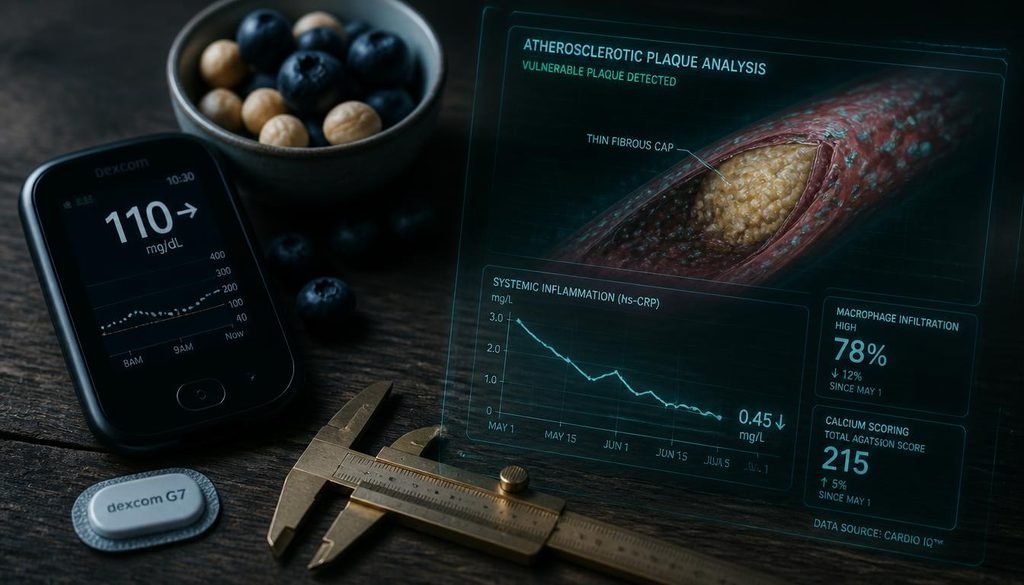
A vulnerable plaque has a massive, necrotic lipid core and a very thin fibrous cap. It is a volcano waiting to erupt. A stable plaque has a thick, fibrous, collagen-rich cap and a heavily calcified core. It may narrow the artery slightly, but it will not rupture and cause a heart attack.
The Longevity Treatment Protocol for Plaque Stabilization:
- Aggressive ApoB Reduction: Whether through high-intensity statins, PCSK9 inhibitors, or strict dietary and botanical interventions (like high-dose soluble fiber, plant sterols, and bergamot extract), you must stop the influx of new atherogenic particles into the arterial wall.
- Inflammation Quenching: High-dose, high-EPA Omega-3 fatty acids (2 to 4 grams of EPA daily) and targeted polyphenols (like curcumin and EGCG) actively suppress the macrophage activity inside the plaque, halting the expansion of the necrotic core.
- Matrix Metalloproteinase (MMP) Inhibition: The enzymes that chew through the fibrous cap and cause plaque rupture are called MMPs. Compounds like GlyNAC (Glycine and N-Acetyl Cysteine) boost intracellular glutathione, reducing the oxidative stress that triggers MMP activation, thereby thickening and stabilizing the fibrous cap.
- Vitamin K2 (MK-7) and D3: While Vitamin D aids in calcium absorption, Vitamin K2 activates Matrix Gla Protein (MGP), which actively sweeps calcium out of the soft tissue and arterial walls and directs it into the bone matrix. This prevents the dangerous, brittle micro-calcifications that make plaques prone to fissuring.
Advanced Diagnostics: Seeing the Invisible
You cannot rely on a standard lipid panel to dictate your treatment. To truly assess your risk and tailor your protocol, you must demand advanced imaging and biomarker testing:
- Coronary Artery Calcium (CAC) Scan: A low-dose CT scan that quantifies the physical burden of calcified plaque in your coronary arteries. A score of zero is the goal; a score >100 demands aggressive intervention.
- Carotid Intima-Media Thickness (CIMT): An ultrasound that measures the physical thickness of the arterial wall in your neck, providing a real-time look at early-stage, non-calcified atherosclerosis.
- Advanced Lipidomics: Measuring ApoB, Lp(a), and oxidized LDL to understand the exact quality and quantity of the atherogenic particles in your blood.
Final Thoughts
The narrative of cardiovascular disease is shifting from an inevitable consequence of aging to a highly modifiable, preventable failure of the biological terrain. True cardiovascular risk is not a single number on a lab sheet; it is the cumulative sum of your endothelial health, your metabolic flexibility, your inflammatory burden, and your autonomic resilience.
By moving beyond the archaic plumbing metaphor and treating your vascular system as a dynamic, living endocrine organ, you take total control of your hemodynamic destiny. You leverage the mechanical shear stress of Zone 2 cardio to upregulate nitric oxide, you utilize targeted polyphenols and Omega-3s to quench the inflammatory fire inside the plaque, and you align your circadian rhythms to allow for deep, nocturnal vascular repair. Stop waiting for a crisis to dictate your treatment. Engineer the resilient artery today, and your biology will carry you through the decades with unyielding vitality.
Frequently Asked Questions (FAQ)
1. What is the true cardiovascular risk beyond standard cholesterol?
True cardiovascular risk extends far beyond standard LDL cholesterol. It is determined by the total number of atherogenic particles (ApoB), the presence of endothelial dysfunction, systemic inflammation (hs-CRP), glycemic toxicity (insulin resistance), and genetically driven factors like Lipoprotein(a), which dictate plaque vulnerability and rupture risk.
2. What are the 5 core biochemical risk factors for heart disease?
The 5 core biochemical 5 risk factors for heart disease are: 1) Atherogenic lipoprotein burden (high ApoB), 2) Endothelial dysfunction and reduced nitric oxide, 3) Glycotoxicity and hyperinsulinemia, 4) Chronic systemic inflammation, and 5) Oxidative stress that oxidizes LDL particles within the arterial wall.
3. Can you reverse or stabilize cardiovascular disease naturally?
While heavily calcified plaques are difficult to shrink completely, you can absolutely stabilize them and halt disease progression. This requires aggressively lowering ApoB, quenching systemic inflammation with high-EPA Omega-3s and polyphenols, optimizing blood pressure, and utilizing compounds like Vitamin K2 to direct calcium away from the arterial walls.
4. What are the most important modifiable risk factors for cardiovascular disease?
The most critical modifiable risk factors for cardiovascular disease include eliminating visceral adiposity through caloric management, reversing insulin resistance via dietary changes and Zone 2 cardio, treating obstructive sleep apnea, managing chronic psychological stress to lower sympathetic tone, and strictly avoiding tobacco and ultra-processed seed oils.
5. Why do people with normal cholesterol still get heart attacks?
Standard lipid panels only measure the concentration of cholesterol, not the number of atherogenic particles (ApoB) or the inflammatory state of the artery. A person with “normal” LDL can still suffer a heart attack if they have high systemic inflammation, elevated Lp(a), insulin resistance, or vulnerable, thin-capped plaques that are prone to rupture.
⚕️ Editorial & Medical Disclaimer
Julian Vance is not a licensed physician or medical professional. All content published on RegenStep.com is thoroughly reviewed against cited primary sources and peer-reviewed literature for educational and informational purposes only. It does not constitute medical advice, diagnosis, or treatment. Always consult a qualified healthcare provider or doctor regarding any personal health condition or medical decisions, particularly before initiating advanced cardiovascular diagnostics, altering prescription medications, or undertaking rigorous exercise and dietary protocols.

Julian Vance is the writer and editor behind RegenStep, translating peer-reviewed longevity, metabolic, and gut-health research into practical, actionable guides. Julian is not a licensed physician; content is reviewed against cited primary sources and is for informational purposes only. Always consult a qualified healthcare provider for personal medical advice.