
Entropy is the ultimate enemy of biology. Every second of every day, the trillions of proteins that build your cells, catalyze your metabolism, and fire your neurons are under relentless assault. Oxidative stress, environmental toxins, UV radiation, and the simple, unavoidable friction of time cause these delicate, three-dimensional molecular machines to lose their shape. When a protein unfolds, it becomes toxic. It clumps together, forming the microscopic aggregates that drive neurodegeneration, cellular senescence, and biological aging.
Your body is not defenseless against this entropy. Deep within your genetic code lies a 3-billion-year-old rescue network, a highly sophisticated cadre of molecular chaperones designed to patrol the intracellular environment, identify damaged proteins, and physically force them back into their correct, functional shapes. These are Heat Shock Proteins (HSPs).
Despite the name, these proteins are not merely a response to thermal damage. They are the master guardians of proteostasis (protein homeostasis). As a strategist focused on regenerative biology, I view the targeted upregulation of HSPs as one of the most potent, non-pharmacological levers we have to extend human healthspan. By strategically exposing the body to acute, controlled thermal stress, we can trick our cells into activating this ancient survival network, effectively bulletproofing our proteome against the ravages of time. Let’s map the molecular reality of this system and engineer the precise protocols required to harness it.
Heat shock proteins function
To understand the profound impact of these molecules, we must look at the heat shock proteins function at the nanoscale. Proteins are essentially long chains of amino acids that must fold into highly specific, intricate 3D origami structures to function. The “active” sites of these proteins are often buried deep within their folds, while the exterior is coated in water-soluble (hydrophilic) amino acids.
When a cell experiences stress—be it heat, toxins, or heavy metal exposure—these delicate folds unravel. The hydrophobic (water-repelling) amino acids that were safely hidden inside the protein are suddenly exposed to the watery environment of the cell. Because oil and water don’t mix, these exposed hydrophobic regions desperately stick to one another, causing the misfolded proteins to clump into toxic, insoluble aggregates.
The Molecular Chaperones
This is where HSPs intervene. They function as molecular chaperones. When an HSP detects an exposed hydrophobic region on a damaged protein, it immediately binds to it, acting as a physical shield. This prevents the damaged protein from aggregating with its neighbors.
Once the protein is safely sequestered, the HSP utilizes cellular energy (ATP) to physically unfold the damaged protein and give it a second chance to refold into its correct, functional shape. If the damage is too severe and the protein cannot be salvaged, the HSP gracefully hands the protein off to the ubiquitin-proteasome system, tagging it for destruction and recycling.
According to foundational research on cellular aging published by the National Institute on Aging (NIH), the decline of this chaperone network is a primary hallmark of aging. When HSP activity drops, misfolded proteins accumulate, leading directly to the pathology of Alzheimer’s (amyloid-beta and tau tangles) and Parkinson’s disease (alpha-synuclein aggregates).
Heat shock proteins in plants
It might seem counterintutive to look to botany when engineering human longevity, but understanding heat shock proteins in plants unlocks one of the most fascinating concepts in regenerative biology: xenohormesis.
Plants are sessile organisms. When a plant is subjected to extreme heat, drought, or UV radiation, it cannot run away or seek shade. It must endure the stress and adapt at the cellular level. To survive, plants massively upregulate their own HSP networks and produce a secondary wave of defensive phytochemicals (polyphenols, flavonoids, and terpenes).
The Xenohormetic Transfer
When we consume these stressed plants—whether it’s the resveratrol in the skin of drought-stressed grapes, the sulforaphane in mechanically stressed broccoli sprouts, or the potent adaptogens in medicinal mushrooms—we are not just consuming antioxidants. We are consuming the chemical “warning signals” of the plant.
When these botanical stress molecules enter the human gut, our cells recognize them as mild environmental threats. This triggers a localized, low-grade stress response in our own tissues, tricking our biology into upregulating our own Heat Shock Proteins and endogenous antioxidant enzymes (like glutathione). By consuming plants that have survived thermal and environmental stress, we borrow their resilience, effectively transferring their hormetic survival mechanisms into our own proteome.
Heat shock proteins sauna
This brings us to the most powerful, actionable tool in the biohacker’s arsenal: the heat shock proteins sauna protocol. You cannot rely on diet alone to achieve the systemic, whole-body upregulation of HSPs required to defend against neurodegeneration and cardiovascular decline. You must subject the human organism to acute, controlled thermal stress.
The Finnish Cohort Data
The most compelling data on thermal conditioning comes from landmark epidemiological cohorts in Finland, tracking thousands of men and women over several decades. The data is unequivocal: individuals who utilized a traditional sauna 4 to 7 times per week experienced a 40% reduction in all-cause mortality, a 50% reduction in cardiovascular disease mortality, and a staggering 66% reduction in the risk of developing Alzheimer’s disease and dementia compared to those who used the sauna only once a week.
The American Heart Association (AHA) has increasingly recognized the profound hemodynamic benefits of passive heat therapy, noting that the acute cardiovascular strain of a sauna session mimics the physiological demands of moderate-to-vigorous cardiovascular exercise.
The Mechanism of Thermal Hormesis
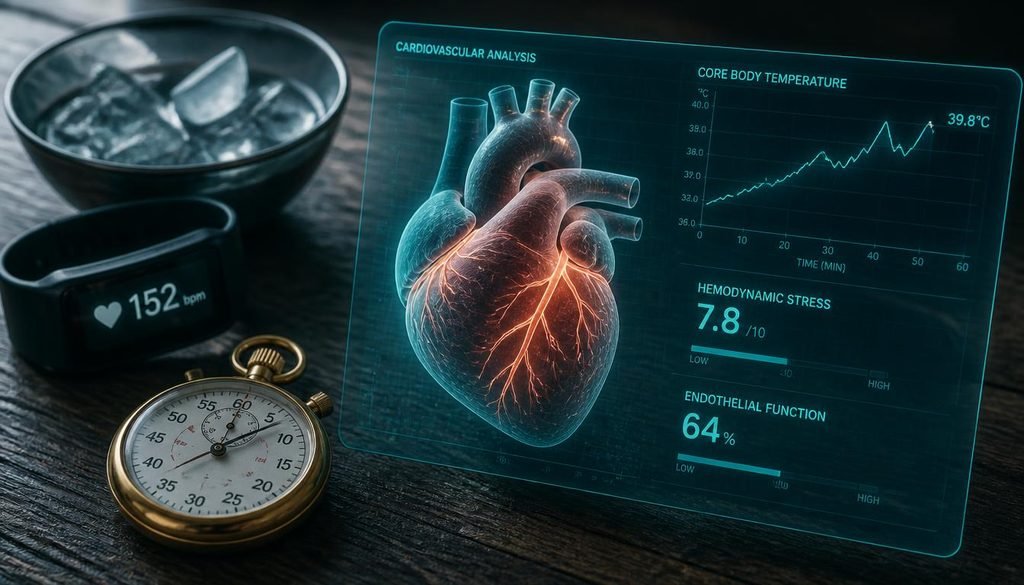
When you sit in a sauna, your core body temperature rises. Your heart rate spikes to 120-150 BPM, and your blood vessels dilate to shunt blood to the skin for cooling. This massive hemodynamic and thermal stress causes a slight, temporary accumulation of misfolded proteins in your cells.
This micro-damage is the exact signal required to trigger the Heat Shock Factor 1 (HSF1) transcription factor. HSF1 trimerizes, enters the nucleus, and binds to the Heat Shock Element (HSE) on your DNA, initiating the massive transcription of HSP70, HSP90, and HSP27. When you step out of the sauna and cool down, this newly synthesized army of chaperones sweeps through your body, repairing not just the heat-damaged proteins, but all the accumulated, misfolded proteins that have been degrading your cellular function over the preceding weeks.
💡 Action Step: Sauna therapy induces profound fluid and electrolyte loss through sweat. If you enter a sauna in a state of hypohydration, the cardiovascular strain becomes dangerous rather than hormetic. Calculate your exact baseline hydration requirements with our Water Intake Calculator and ensure you are consuming mineralized water before, during, and after your thermal sessions.
Heat shock proteins examples
The HSP family is categorized by their molecular weight, measured in kilodaltons (kDa). To engineer your longevity protocol, you need to understand the specific roles of the primary heat shock proteins examples.
1. HSP70: The Workhorse
HSP70 is the most heavily studied and universally conserved chaperone. It is the first responder to nascent, newly synthesized protein chains, ensuring they fold correctly before they can aggregate. It is also the primary refolder of proteins damaged by heat and oxidative stress. High intracellular levels of HSP70 are heavily correlated with extended lifespan in multiple animal models.
2. HSP90: The Stabilizer
HSP90 is highly specialized. It doesn’t deal with general cellular debris; instead, it acts as the dedicated chaperone for “client proteins”—specifically, the signaling proteins, steroid hormone receptors, and kinases that drive cellular communication. HSP90 ensures that these critical signaling molecules remain in a “loaded,” ready-to-fire state.
3. Small Heat Shock Proteins (sHSPs / HSP27)
These are the rapid-response units. Unlike HSP70 and HSP90, small HSPs do not require ATP to function. They act as immediate “sponges,” binding to unfolding proteins the millisecond stress is detected, holding them in a stable state until the heavier, ATP-dependent HSP70 machinery arrives to refold them. HSP27 is particularly critical in protecting the actin cytoskeleton of your cells and preventing the aggregation of neurotoxic proteins in the brain.
4. HSP110: The Nucleotide Exchange Factor
HSP110 acts as a co-chaperone. It works in tandem with HSP70, accelerating the release of ADP so that HSP70 can bind to fresh ATP and continue its mechanical refolding cycle. Without HSP110, the HSP70 machinery grinds to a halt.
Heat shock proteins in humans
The systemic translation of heat shock proteins in humans extends far beyond the cellular level; it dictates the resilience of your entire physiological architecture.
Neuroprotection and Cognitive Resilience
The brain is highly susceptible to oxidative stress and protein misfolding. The blood-brain barrier makes it difficult for exogenous antioxidants to reach neural tissue, making the brain entirely reliant on its endogenous HSP network. Upregulating HSP70 and HSP27 via thermal stress has been shown to inhibit the formation of amyloid-beta plaques and tau tangles, the physical hallmarks of Alzheimer’s disease. Furthermore, HSPs protect the dopaminergic neurons in the substantia nigra, offering a protective shield against Parkinson’s pathology.
Muscle Hypertrophy and Sarcopenia Defense
When you engage in heavy resistance training, you create micro-tears in the muscle fascia. The subsequent repair process relies heavily on HSPs to manage the influx of new proteins and clear the damaged actin and myosin filaments. As we age, the blunting of the HSP response is a primary driver of sarcopenia (age-related muscle loss). Regular thermal conditioning keeps the chaperone network primed, ensuring that the mechanical signal of lifting weights translates into actual tissue remodeling rather than chronic inflammation.
Endothelial and Cardiovascular Health
The sheer shear-stress of the blood pumping through your vessels during a sauna session forces the endothelium to upregulate HSPs. These chaperones protect the endothelial nitric oxide synthase (eNOS) enzyme from oxidative degradation. By preserving eNOS, HSPs ensure continuous, robust production of nitric oxide, keeping the arteries flexible, reducing systemic blood pressure, and preventing the initiation of atherosclerotic plaques.
💡 Action Step: The HSP response is highly energy-expensive. Refolding a single misfolded protein requires hundreds of molecules of ATP. If your baseline metabolic health is compromised by visceral adiposity, your cells will lack the energetic currency to run the chaperone network. Track your true metabolic risk using our Advanced BMI Calculator and calculate your daily energy expenditure with our TDEE Calculator to ensure you are fueling your cellular repair mechanisms.
Heat shock proteins in bacteria
To truly appreciate the elegance of this system, we must look at its origins. Heat shock proteins in bacteria reveal that this is not a novel human adaptation; it is the foundational survival mechanism of all life on Earth.
The Extremophile Blueprint
Consider the thermophilic bacteria living in the boiling, acidic hydrothermal vents of the deep ocean, or the cyanobacteria enduring the blistering UV radiation of the primordial Earth. These organisms survive in environments that would instantly denature the proteins of a human cell. They do this by possessing hyper-efficient, highly specialized HSP networks (like the GroEL/GroES chaperonin complex).
When human cells experience a fever (an evolutionary adaptation designed to cook out pathogens), our HSPs protect our native proteins from the heat, while the invading bacteria—whose HSP thresholds are often lower or overwhelmed by the rapid temperature shift—suffer catastrophic protein denaturation and die. The conservation of the HSP sequence from E. coli to Homo sapiens is a testament to the fact that proteostasis is the absolute prerequisite for life.
Heat shock proteins cancer
In longevity medicine, we must always respect the double-edged sword of biological pathways. Nowhere is this more evident than in the relationship between heat shock proteins cancer biology.
The Dark Side of HSP90
While HSPs protect healthy cells from aging and neurodegeneration, cancer cells actively hijack this network to survive. Tumors are chaotic, hypoxic, highly acidic environments. The rapid, uncontrolled division of cancer cells generates massive amounts of mutated, misfolded proteins. By all biological logic, a cancer cell should collapse under its own proteotoxic weight and undergo apoptosis (programmed cell death).
It doesn’t, because cancer cells massively upregulate HSP90 and HSP70. The tumor hijacks the chaperone network to artificially stabilize its mutated, oncogenic signaling proteins (like p53 mutants, HER2, and BRAF). The cancer cell becomes “addicted” to HSP90.
The Oncological Paradox
This creates a profound clinical nuance. For a healthy individual, upregulating HSPs via sauna use, exercise, and botanical xenohormesis is a powerful cancer prevention tool, as it ensures healthy cells maintain genomic stability and undergo proper apoptosis when damaged.
However, if an individual already has an active, growing malignancy, aggressively stimulating the HSP network could theoretically provide the tumor with the chaperone machinery it needs to stabilize its oncogenic proteins and resist chemotherapy. This is why oncologists are currently developing highly targeted HSP90 inhibitors as cancer therapeutics—drugs designed to strip the tumor of its chaperone shield, forcing the cancer cell’s mutated proteins to collapse and trigger cell death.
Clinical Rule: Thermal hormesis and HSP upregulation are for prevention and healthspan extension in healthy individuals. If you have an active malignancy, you must consult your oncologist before engaging in intense thermal therapy.
Heat shock proteins temperature
To trigger this biological cascade, you cannot simply sit in a warm room. The body requires a specific, measurable thermal threshold to initiate the transcription of the chaperone genes. Understanding the exact heat shock proteins temperature requirements is the difference between a relaxing spa day and a profound biological intervention.
The Core Temperature Delta
Research indicates that to trigger a robust, systemic HSP response in humans, your core body temperature must increase by approximately 1.5°C to 2.0°C (2.7°F to 3.6°F) above baseline. This pushes the core temperature into the range of 38.5°C to 39.5°C (101.3°F to 103.1°F).
The Sauna Protocol
To achieve this core delta safely and effectively, you must utilize the correct environmental parameters:
- The Heat: Traditional Finnish saunas operate between 175°F and 195°F (80°C to 90°C) with low humidity (10-20%). Infrared saunas can also work, but they must be high-quality, near-infrared dominant panels capable of raising the core temperature, not just warming the skin.
- The Duration: You must remain in the heat for a minimum of 15 to 20 minutes per session. The first 10 minutes are largely spent heating the skin and dilating peripheral blood vessels; the core temperature spike occurs in the final 5 to 10 minutes.
- The Frequency: The epidemiological data shows a dose-dependent response. The maximum longevity and neuroprotective benefits are observed at 4 to 7 sessions per week.
- The Cool Down: The cooling phase is just as critical. Allowing the body to slowly return to baseline (or utilizing a cold plunge to rapidly constrict the vessels) forces the vascular system to adapt, maximizing the endothelial shear stress that maintains cardiovascular health. For a deep dive into the contrasting biology of thermal extremes, read our protocol on Cold Exposure: Shocking Your Immune System into High Gear.
💡 Action Step: Thermal stress is a powerful hormetic trigger, but it must be paired with other cellular cleanup mechanisms. HSPs attempt to refold damaged proteins, but if the damage is too severe, the entire organelle must be destroyed. To ensure your cells are successfully clearing the proteins that HSPs cannot save, you must activate the autophagic machinery. Read our guide on Next-Gen Mitophagy: The Cellular Cleanup Protocol to learn how to couple thermal stress with targeted mitochondrial recycling.
Final Thoughts
The pursuit of longevity is often framed as a quest to add more years to life. But true regenerative biology is about maintaining the structural integrity of the machine while it runs. Heat Shock Proteins are the ultimate defenders of that structure. They are the molecular chaperones that stand between your cells and the chaotic, entropic collapse of aging.
By embracing the discomfort of the sauna, by consuming the xenohormetic stress signals of resilient plants, and by respecting the precise thermal thresholds required to trigger this ancient genetic network, you do more than just “detoxify” through sweat. You actively rewrite the proteomic landscape of your body. You force your cells to become denser, more resilient, and highly resistant to the misfolding pathologies that steal our cognition and vitality in our later decades. Step into the heat, trigger the chaperones, and engineer a biology capable of withstanding the test of time.
Frequently Asked Questions (FAQ)
1. What is the primary function of heat shock proteins?
Heat Shock Proteins (HSPs) function as molecular chaperones. They patrol the intracellular environment, identify damaged or misfolded proteins, bind to them to prevent toxic aggregation, and utilize cellular energy (ATP) to physically refold them back into their correct, functional 3D shapes.
2. How does sauna use trigger heat shock proteins?
Sitting in a hot sauna (175°F – 195°F) raises the body’s core temperature by 1.5°C to 2.0°C. This acute thermal stress causes a temporary accumulation of misfolded proteins, which activates the Heat Shock Factor 1 (HSF1) transcription factor, instructing the DNA to massively upregulate the production of HSP70 and HSP90.
3. Can heat shock proteins prevent Alzheimer’s and dementia?
Yes, upregulating HSPs is a primary defense against neurodegeneration. HSP70 and HSP27 actively inhibit the formation and aggregation of amyloid-beta plaques and tau tangles, the misfolded proteins that drive the pathology of Alzheimer’s disease and cognitive decline.
4. Why are heat shock proteins linked to cancer?
While HSPs protect healthy cells from DNA damage, cancer cells hijack the HSP network (particularly HSP90) to stabilize their own mutated, oncogenic proteins, allowing the tumor to survive in harsh, hypoxic environments. This is why heat shock proteins cancer research is heavily focused on HSP90 inhibitors as targeted therapeutics.
5. What temperature is required to trigger heat shock proteins in humans?
To trigger a robust, systemic heat shock proteins temperature response, the human core body temperature must increase by approximately 1.5°C to 2.0°C (reaching roughly 101.3°F to 103.1°F). This is typically achieved by sitting in a 175°F+ sauna for 15 to 20 minutes.
⚕️ Editorial & Medical Disclaimer
Julian Vance is not a licensed physician or medical professional. All content published on RegenStep.com is thoroughly reviewed against cited primary sources and peer-reviewed literature for educational and informational purposes only. It does not constitute medical advice, diagnosis, or treatment. Always consult a qualified healthcare provider or doctor regarding any personal health condition or medical decisions, particularly before initiating intense thermal stress protocols (sauna), as they carry significant cardiovascular demands and may be contraindicated for individuals with unstable angina, severe hypertension, or active malignancies.

Julian Vance is the writer and editor behind RegenStep, translating peer-reviewed longevity, metabolic, and gut-health research into practical, actionable guides. Julian is not a licensed physician; content is reviewed against cited primary sources and is for informational purposes only. Always consult a qualified healthcare provider for personal medical advice.