
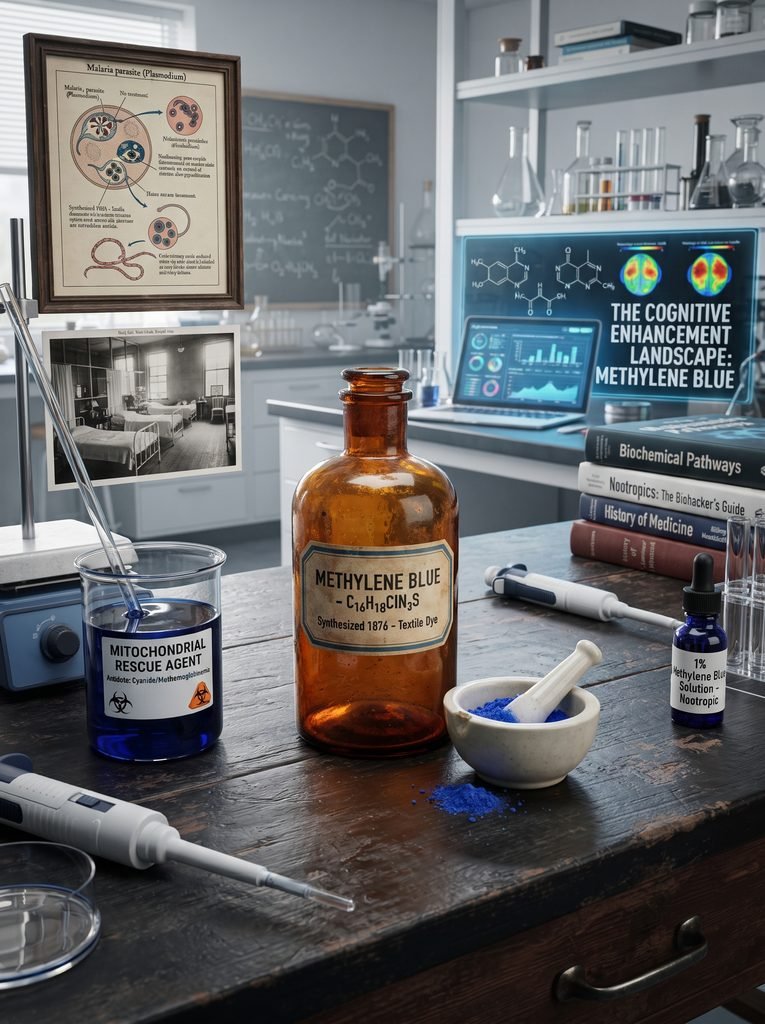
In the sprawling, often reckless landscape of cognitive enhancement, few compounds carry the historical weight, the biochemical elegance, and the profound controversy of methylene blue. Originally synthesized in 1876 as a textile dye, it was subsequently weaponized against malaria, utilized as a psychological stabilizer, and deployed as the primary antidote for cyanide poisoning and methemoglobinemia. Today, it has been co-opted by the biohacking community as a premier nootropic and mitochondrial rescue agent.
But methylene blue is not a gentle botanical extract or a standard vitamin. It is a potent, synthetic phenothiazine derivative that directly manipulates the electron transport chain and alters monoamine neurotransmitter metabolism. When used with absolute precision, it can bypass mitochondrial bottlenecks, flood the brain with ATP, and confer profound neuroprotection. When used blindly, or sourced from unregulated chemical suppliers, it can trigger severe neurotoxicity, hemolytic anemia, and fatal serotonergic crises.
As a strategist focused on systems biology, I view the methylene blue nootropic protocol not as a casual daily supplement, but as a highly targeted pharmacological intervention. Let’s strip away the internet dogma, decode the biophysics of the electron transport chain, and map the exact clinical parameters required to harness this molecule safely.
Is Methylene Blue Safe to Take Orally?
The most critical question in the biohacking community is whether is methylene blue safe to take orally. The answer is entirely dependent on the chemical purity of the source material. This is where the majority of consumers make a catastrophic error.
The Industrial vs. Pharmaceutical Divide
Methylene blue is widely available online, often marketed for aquarium cleaning, textile dyeing, or laboratory staining. These industrial and chemical grades are entirely unfit for human consumption. According to toxicological data on heavy metal contamination in industrial dyes, non-pharmaceutical grade methylene blue is frequently contaminated with highly toxic heavy metals, including arsenic, lead, cadmium, and mercury. Swallowing industrial-grade methylene blue is essentially a slow, deliberate heavy metal poisoning.
To be safe for oral consumption, the compound must be strictly USP (United States Pharmacopeia) grade or pharmaceutical grade. USP-grade methylene blue is synthesized under rigorous Good Manufacturing Practices (GMP), heavily purified, and third-party tested to ensure the absence of toxic metallic impurities. Even then, because it is a synthetic drug, it must be treated with the same respect and dosage precision as a prescription medication.
Methylene Blue Benefits
When sourced correctly and dosed precisely, the methylene blue benefits extend far beyond simple cognitive stimulation. It acts as a systemic metabolic modulator, primarily by rescuing failing mitochondria and acting as a broad-spectrum antimicrobial agent.
1. Mitochondrial Rescue and ATP Synthesis
The primary benefit of methylene blue is its unique ability to act as an artificial electron cycler. In a healthy mitochondrion, electrons flow through Complexes I, II, III, and IV to generate ATP. When Complex I or III is damaged by oxidative stress, toxins, or genetic defects, the electron chain backs up, leaking massive amounts of reactive oxygen species (ROS) and halting ATP production. Methylene blue physically bypasses this bottleneck. It acts as an alternative electron donor and acceptor in the mitochondrial electron transport chain, accepting electrons from NADH and donating them directly to Complex IV (cytochrome c oxidase). This restores ATP production and drastically reduces mitochondrial ROS generation.
2. Antimicrobial and Biofilm Disruption
Long before the advent of modern antibiotics, methylene blue was used to treat infectious diseases. It possesses potent antifungal, antibacterial, and antiparasitic properties. More importantly, it is highly effective at penetrating and disrupting bacterial biofilms, making it a valuable adjunct in stubborn, chronic infections like Lyme disease or Bartonella, particularly when paired with specific light therapies.
3. Dermal and Structural Resilience
Because it concentrates heavily in collagen-rich tissues and acts as a potent localized antioxidant, methylene blue has been shown to stimulate fibroblast proliferation and increase the production of elastin and collagen. When paired with red light therapy, it accelerates tissue repair and dermal remodeling. To understand how to pair this with targeted photobiomodulation, read our protocol on Red Light Therapy Benefits: The Cellular Science of Photobiomodulation.
Methylene Blue Brain: Bypassing the Mitochondrial Bottleneck
The reason this molecule is so highly prized in the longevity community is its specific affinity for the central nervous system. The methylene blue brain connection is driven by its lipophilic nature and its ability to easily cross the blood-brain barrier, accumulating in neural tissue at concentrations significantly higher than in the blood.
Neuroprotection and Memory Consolidation
The brain consumes 20% of the body’s total energy. When neuronal mitochondria falter, the result is brain fog, memory degradation, and eventually, neurodegeneration. By donating electrons directly to cytochrome c oxidase, methylene blue ensures a continuous supply of ATP to highly active neurons. Furthermore, clinical data demonstrates that it enhances memory consolidation and neuroprotection in models of cognitive decline, largely by preventing the aggregation of tau proteins and amyloid-beta plaques, the physical hallmarks of Alzheimer’s disease.
The Mood and Neurotransmitter Shift
Beyond energy production, methylene blue profoundly alters neurochemistry. It acts as a potent, reversible inhibitor of monoamine oxidase A (MAO-A). MAO-A is the enzyme responsible for breaking down serotonin, dopamine, and norepinephrine. By inhibiting this enzyme, methylene blue increases the synaptic concentration of these monoamines, producing a distinct, clean antidepressant and anxiolytic effect. However, this exact mechanism is also the source of its most severe danger.
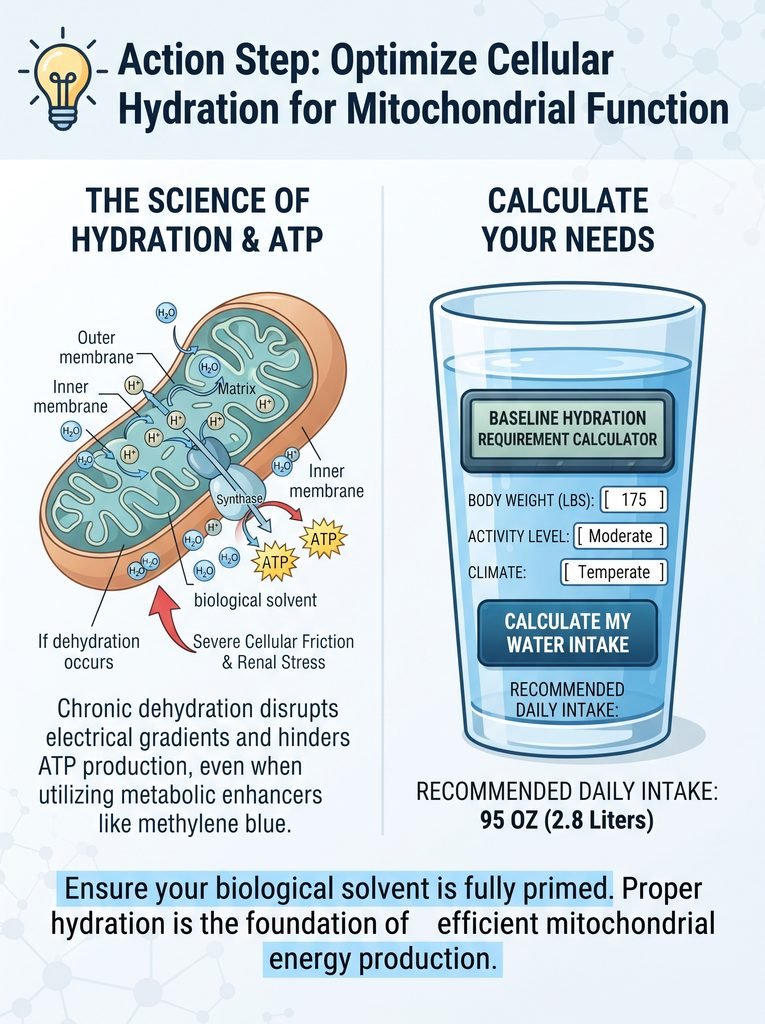
💡 Action Step: Mitochondrial ATP production requires massive amounts of cellular hydration to maintain the electrical gradients across the inner mitochondrial membrane. If you are utilizing metabolic enhancers like methylene blue while chronically dehydrated, you risk severe cellular friction and renal stress. Calculate your exact baseline hydration requirements with our Water Intake Calculator to ensure your biological solvent is fully primed.
Methylene Blue Side Effects: The MAOI and G6PD Traps
Because it is a potent pharmacological agent, the methylene blue side effects can be severe, and in specific populations, life-threatening. You must rigorously screen for contraindications before introducing this molecule.
1. The Serotonin Syndrome Danger
Because methylene blue inhibits MAO-A, it prevents the breakdown of serotonin. If you combine methylene blue with any serotonergic drug—most notably SSRI or SNRI antidepressants (like Lexapro, Zoloft, or Effexor), or even high doses of 5-HTP and Tryptophan—the resulting accumulation of serotonin can trigger Serotonin Syndrome. This is a potentially fatal condition characterized by hyperthermia, autonomic instability, muscle rigidity, and seizures. Clinical Rule: Never combine methylene blue with serotonergic psychiatric medications.
2. The G6PD Contraindication
Glucose-6-Phosphate Dehydrogenase (G6PD) is an enzyme that protects red blood cells from oxidative stress. Methylene blue requires the NADPH generated by the G6PD pathway to cycle between its oxidized and reduced states. In individuals with a genetic G6PD deficiency, administering methylene blue rapidly depletes their NADPH reserves, leaving red blood cells entirely defenseless against oxidative damage. This triggers massive, acute hemolytic anemia. According to hematological guidelines on oxidative drug triggers, methylene blue is strictly contraindicated in individuals with Glucose-6-Phosphate Dehydrogenase (G6PD) deficiency. You must get a simple blood test to confirm your G6PD status before using this compound.
3. The Aesthetic and Gastrointestinal Friction
The most common, albeit benign, side effect is that it will turn your urine (and potentially your stool) a striking blue or green color. At higher doses, it can also cause mild gastrointestinal distress, nausea, or a burning sensation in the urethra during excretion.
Best Methylene Blue Brand: Navigating the Purity Minefield
When hunting for the best methylene blue brand, you must entirely ignore the wellness marketing and focus exclusively on analytical chemistry.
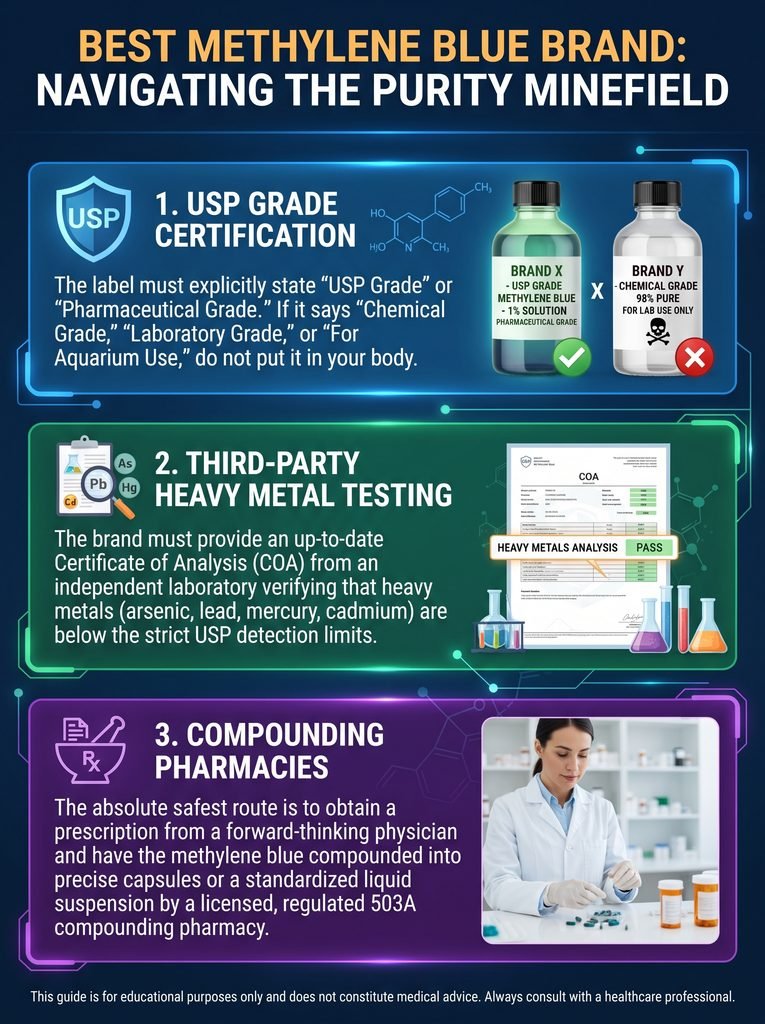
- USP Grade Certification: The label must explicitly state “USP Grade” or “Pharmaceutical Grade.” If it says “Chemical Grade,” “Laboratory Grade,” or “For Aquarium Use,” do not put it in your body.
- Third-Party Heavy Metal Testing: The brand must provide an up-to-date Certificate of Analysis (COA) from an independent laboratory verifying that heavy metals (arsenic, lead, mercury, cadmium) are below the strict USP detection limits.
- Compounding Pharmacies: The absolute safest route is to obtain a prescription from a forward-thinking physician and have the methylene blue compounded into precise capsules or a standardized liquid suspension by a licensed, regulated 503A compounding pharmacy.
Methylene Blue Supplement and Gummies Review
The commercialization of this molecule has led to some absurd product formulations, most notably the methylene blue gummies review trend. Let’s be unequivocal: putting methylene blue into a gummy is a biological and chemical trap.
The Gummy Trap
Gummies require a matrix of sugars, syrups, and gelatin or pectin to maintain their structure. Methylene blue is a highly reactive redox molecule. When suspended in a moist, sugar-heavy gummy matrix for months on a shelf, the compound is highly susceptible to premature oxidation and degradation. Furthermore, the dosing in gummies is notoriously inaccurate. Because methylene blue operates on a razor-thin hormetic curve, taking 5mg too much or 5mg too little drastically alters the biological outcome.
The Superior Supplement Forms
The methylene blue supplement market should be restricted to two formats:
- Standardized Liquid Tinctures: High-quality USP grade liquid drops, suspended in purified water or a stable glycerin base, allowing for precise, micro-dosed titration via a glass dropper. (Note: Always drink the liquid through a straw or chase it immediately with water, as it will temporarily stain your teeth and oral mucosa blue).
- Precision Capsules: Compounded or commercially sealed capsules that guarantee an exact milligram yield, protecting the powder from moisture and light degradation.
Methylene Blue Dosage: Mastering the Hormetic Curve
The most profound aspect of this molecule is its pharmacokinetics. It does not follow a linear “more is better” trajectory. Instead, methylene blue demonstrates a profound hormetic dose-response curve.
The Low-Dose Sweet Spot (The Electron Acceptor)
At low doses, methylene blue acts as an electron cycler and an antioxidant. It enters the mitochondria, facilitates the flow of electrons, and increases ATP production while neutralizing free radicals.
- The Nootropic Microdose: 5 mg to 20 mg total per day. This is sufficient to cross the blood-brain barrier, enhance focus, and provide a mild mood lift without triggering heavy MAO inhibition.
- The Clinical Metabolic Dose: 0.5 mg to 1 mg per kilogram of body weight. This is the threshold used in clinical trials to achieve deep mitochondrial rescue and systemic antimicrobial effects.
The High-Dose Danger (The Pro-Oxidant)
At high doses (typically exceeding 2 mg to 4 mg per kilogram of body weight), the molecule’s behavior completely flips. It becomes a pro-oxidant. It steals electrons from the chain, generates oxidative stress, and acts as a tissue toxin. High doses are reserved strictly for acute, hospital-based emergencies, such as reversing severe methemoglobinemia or cyanide poisoning.
Clinical Rule: For longevity, cognitive enhancement, and metabolic optimization, you must stay strictly on the left side of the hormetic curve. Less is exponentially more.
💡 Action Step: Because methylene blue drastically increases mitochondrial ATP output and cellular metabolism, it can subtly elevate your baseline energy expenditure and alter your fluid dynamics. To ensure you are fueling this upgraded metabolic engine without accruing visceral stress, track your true body composition using our Advanced BMI Calculator and calculate your exact daily energy needs with our TDEE Calculator. Furthermore, to ensure your blood glucose remains stable while utilizing metabolic enhancers, review our protocol on Glycemic Variability and the CGM Protocol.
Final Thoughts
Methylene blue is a masterpiece of synthetic biochemistry. It is a molecular skeleton key that can unlock stalled mitochondrial engines, bypass genetic defects in the electron transport chain, and flood the aging brain with the ATP required for neuroplasticity and memory consolidation. But it is not a toy, and it is certainly not a casual daily vitamin.
To utilize the methylene blue nootropic protocol safely, you must respect its pharmacological power. You must demand absolute USP-grade purity to avoid heavy metal toxicity, you must screen for G6PD deficiency to avoid hemolytic crises, and you must ruthlessly avoid combining it with serotonergic medications. By mastering the hormetic dose, keeping it low and precise, you can harness this controversial molecule to engineer a highly resilient, metabolically dominant biological terrain. Respect the chemistry, honor the curve, and let the electrons flow.
Frequently Asked Questions (FAQ)
1. Is methylene blue safe to take orally?
Is methylene blue safe to take orally? It is safe only if it is strictly USP (pharmaceutical) grade. Industrial, chemical, or aquarium-grade methylene blue is highly toxic and frequently contaminated with heavy metals like arsenic, lead, and cadmium. Furthermore, it is strictly contraindicated for individuals with G6PD deficiency or those taking SSRI antidepressants.
2. How does methylene blue benefit the brain?

The methylene blue brain connection is driven by its ability to easily cross the blood-brain barrier and act as an alternative electron donor in the mitochondrial electron transport chain. It bypasses damaged complexes and donates electrons directly to cytochrome c oxidase (Complex IV), increasing ATP production, reducing oxidative stress, and enhancing memory consolidation and neuroprotection.
3. What are the side effects of methylene blue?
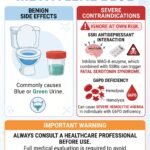
The most common benign methylene blue side effects include blue or green urine. However, severe side effects can occur if contraindications are ignored. Because it inhibits the MAO-A enzyme, combining it with SSRI antidepressants can trigger fatal Serotonin Syndrome. In individuals with G6PD deficiency, it can cause severe hemolytic anemia.
4. What is the best methylene blue dosage for nootropic effects?
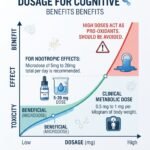
The optimal methylene blue dosage follows a hormetic curve, meaning low doses are beneficial and high doses are toxic. For nootropic and cognitive benefits, a microdose of 5 mg to 20 mg total per day is recommended. Clinical metabolic doses range from 0.5 mg to 1 mg per kilogram of body weight. High doses act as pro-oxidants and should be avoided.
5. Are methylene blue gummies a good supplement?
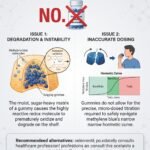
No. A methylene blue gummies review reveals they are highly discouraged. The moist, sugar-heavy matrix of a gummy can cause the highly reactive redox molecule to prematurely oxidize and degrade on the shelf. Furthermore, gummies do not allow for the precise, micro-dosed titration required to safely navigate methylene blue’s narrow hormetic curve.
⚕️ Editorial & Medical Disclaimer
Julian Vance is not a licensed physician or medical professional. All content published on RegenStep.com is thoroughly reviewed against cited primary sources and peer-reviewed literature for educational and informational purposes only. It does not constitute medical advice, diagnosis, or treatment. Methylene blue is a potent pharmacological agent. Always consult a qualified healthcare provider or doctor before initiating methylene blue, particularly to screen for G6PD deficiency and to ensure it does not interact fatally with SSRI/SNRI antidepressants or other serotonergic medications.
#MethyleneBlue #Nootropics #Biohacker

Julian Vance is the writer and editor behind RegenStep, translating peer-reviewed longevity, metabolic, and gut-health research into practical, actionable guides. Julian is not a licensed physician; content is reviewed against cited primary sources and is for informational purposes only. Always consult a qualified healthcare provider for personal medical advice.