
The male longevity and biohacking spaces are entirely obsessed with testosterone. We track our free T levels, we optimize our sleep for nocturnal androgen release, and we lift heavy iron to force our endocrine system to produce more of the ultimate anabolic hormone. But in this relentless pursuit of testosterone, we have completely ignored the shadow hormone that dictates whether that testosterone actually works.
That shadow hormone is estradiol (E2).
In the male body, testosterone and estrogen exist in a delicate, highly regulated seesaw. You need a precise, baseline amount of estrogen for bone density, joint lubrication, cardiovascular health, and libido. But when the biological terrain degrades—when visceral fat accumulates, the liver stalls, and the gut microbiome turns hostile—the seesaw violently tips. The body begins converting your hard-earned testosterone into estrogen at an alarming rate, trapping you in a state of hormonal chaos.
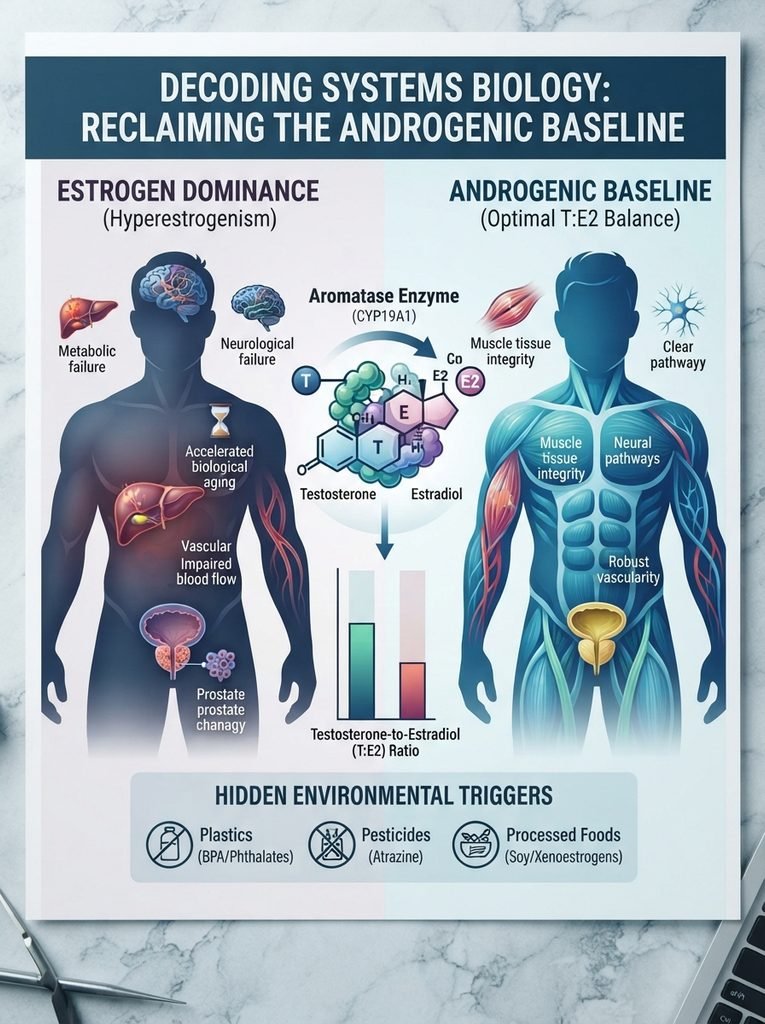
This is estrogen dominance in men. It is not merely a cosmetic issue of water retention or gynecomastia; it is a profound metabolic and neurological failure that accelerates biological aging, destroys erectile function, and drives prostate pathology. As a strategist focused on systems biology, I view the Testosterone-to-Estradiol (T:E2) ratio as one of the most critical biomarkers of male vitality. Let’s decode the biophysics of the aromatase enzyme, map the hidden environmental triggers of estrogen dominance, and build the exact clinical protocol required to reclaim your androgenic baseline.
Estrogen Dominance in Men Symptoms
The clinical presentation of hormonal imbalance is rarely as simple as a single lab value. The estrogen dominance in men symptoms manifest across multiple physiological systems, often misdiagnosed as simple aging, stress, or depression.
When the T:E2 ratio collapses, the androgen receptors are outcompeted, and the estrogen receptors are overstimulated. This triggers a highly specific cascade of physical and psychological fallout:
- Gynecomastia and Adipose Redistribution: The development of sensitive, fibrous breast tissue and a shift in fat storage from the gut to the hips and thighs.
- Erectile Dysfunction and Libido Loss: While massive doses of testosterone can temporarily boost libido, an elevated estradiol level blunts the dopaminergic drive in the brain and alters the nitric oxide pathways required for erectile rigidity.
- Emotional Volatility and Brain Fog: A loss of the “androgenic edge.” Men report increased tearfulness, anxiety, mood lability, and a profound lack of competitive drive.
- Prostate Hypertrophy: While DHT (dihydrotestosterone) gets the blame for prostate enlargement, landmark endocrine research published in the Prostate journal demonstrates that estradiol acts synergistically with DHT to drive benign prostatic hyperplasia (BPH) and localized inflammation.
Side Effects of High Estrogen in Men
Beyond the daily symptoms, the long-term side effects of high estrogen in men are deeply destructive to your healthspan. Chronically elevated E2 accelerates the closure of the epiphyseal plates in younger men, drives systemic water retention that elevates blood pressure, and alters lipid metabolism. According to cardiovascular data published by the American Heart Association (AHA), an inverted T:E2 ratio in aging men is heavily correlated with increased arterial stiffness, endothelial dysfunction, and a higher risk of ischemic cardiovascular events.
What Causes High Estrogen in Men
To fix the ratio, you must identify the leak. What causes high estrogen in men is rarely a failure of the testes; it is almost always a failure of the peripheral metabolic terrain.
1. The Aromatase Trap and Visceral Adiposity
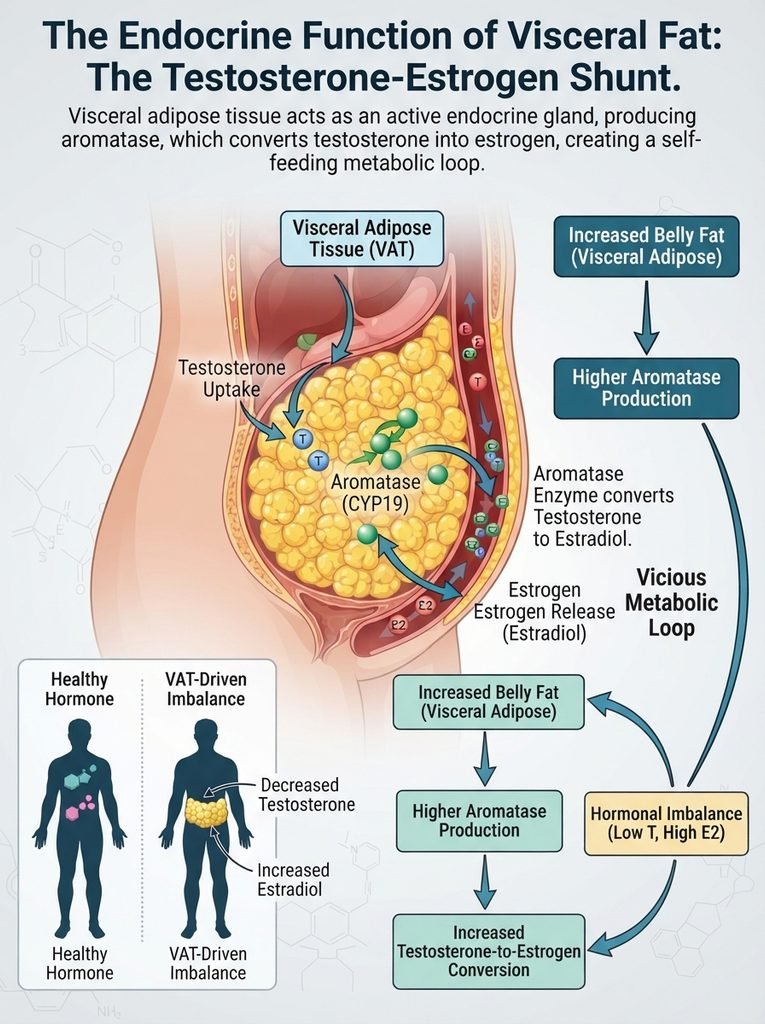
The primary driver of estrogen dominance is an enzyme called aromatase (CYP19A1). Aromatase’s sole biological job is to convert testosterone into estradiol. While it is present in the brain and bones, the highest concentration of aromatase in the modern male is found in visceral adipose tissue (the hard, inflammatory fat packed around your internal organs).
According to foundational endocrine research on adipose tissue, visceral fat is not inert storage; it is a massive, active endocrine gland. Every pound of belly fat you carry acts as an independent estrogen factory, relentlessly siphoning your free testosterone and converting it into estradiol. The more fat you gain, the more aromatase you produce; the more aromatase you produce, the lower your testosterone drops and the higher your estrogen spikes, creating a vicious, self-feeding metabolic loop.
💡 Action Step: You cannot out-supplement the aromatase activity of visceral fat. You must physically dismantle the endocrine gland that is stealing your testosterone. Track your true metabolic risk and central adiposity using our Advanced BMI Calculator and our Body Fat Calculator to ensure your biological terrain isn’t actively converting your androgens into estrogens.
2. The Estrobolome and Gut Dysbiosis
Your liver does an excellent job of packaging used estrogen into bile for excretion into the gut. But if your gut microbiome is degraded, that estrogen is never actually eliminated. Specific gut bacteria produce an enzyme called beta-glucuronidase, which “un-packages” the bound estrogen in the colon, allowing it to be reabsorbed directly back into the bloodstream. This collective of bacteria is known as the estrobolome. Microbiome sequencing data published in Gut Microbes demonstrates that a dysbiotic, high-beta-glucuronidase microbiome drastically elevates circulating estrogen levels in men. If you suffer from SIBO, chronic bloating, or leaky gut, you are likely reabsorbing massive amounts of estrogen that your liver already tried to clear. For a comprehensive guide to rebuilding your microbial firewall, read our protocol on Next-Gen Probiotics: Rewilding the Internal Ecosystem.
3. Xenoestrogens and Endocrine Disruptors
The modern environment is saturated with synthetic chemicals that mimic the molecular structure of estradiol. Phthalates in plastics, bisphenols in receipt paper and can linings, and parabens in personal care products act as xenoestrogens. According to warnings issued by the Endocrine Society, these compounds bind to estrogen receptors with high affinity, triggering feminizing and metabolic-disrupting signals even when your endogenous E2 levels are normal.
Effects of Estrogen on Male Body
To understand the pathology, we must respect the physiology. The effects of estrogen on male body systems are profound, and the hormone is not inherently “bad.” In a healthy, lean male with a pristine liver, a baseline level of estradiol is strictly required. It protects the endothelial lining of the blood vessels, maintains bone mineral density, and modulates the central nervous system to prevent severe depression and cognitive rigidity.
The pathology arises when the ratio is broken, or when the liver shunts estrogen down the wrong metabolic pathway. The liver metabolizes estrogen via three primary pathways: 2-OH (the “good,” protective pathway), 4-OH (the highly genotoxic, DNA-damaging pathway), and 16-alpha-OH (the highly proliferative, tissue-building pathway). When a man consumes excessive alcohol, lacks cruciferous vegetables, or is exposed to toxins, the liver shifts toward the 4-OH and 16-alpha pathways, driving cellular proliferation (prostate issues) and oxidative DNA damage.
Effects of Estrogen on Male Body Trans: The Clinical Distinction
When researching the effects of estrogen on male body trans, it is vital to separate pathological endocrine disruption in cisgender men from intentional Gender-Affirming Hormone Therapy (GAHT) in transgender women.
In a transgender woman undergoing feminizing hormone therapy, exogenous estradiol is administered at high, sustained levels, usually paired with androgen blockers to suppress testosterone. The biological effects of this intentional estrogen dominance are the exact therapeutic goals of the transition: the redistribution of subcutaneous fat to the hips and thighs, the development of breast tissue (gynecomastia), the softening of the skin, the reduction of skeletal muscle mass, and the suppression of terminal body hair growth.
The biological mechanism—the binding of E2 to the estrogen receptor—is identical in both populations. The distinction lies entirely in the clinical intent and the baseline endocrinology. For a transgender woman, these profound physiological shifts are life-affirming and medically supervised. For a cisgender male, these exact same shifts, driven accidentally by visceral fat and environmental toxins, represent a pathological degradation of metabolic and sexual vitality.
What is Considered High Estrogen in Men
Biohackers frequently panic when they see their estradiol lab results, but context is everything. What is considered high estrogen in men cannot be determined by looking at Total Estradiol in isolation.
The Reference Ranges
Standard commercial labs typically list the reference range for male serum estradiol as roughly 10 to 40 pg/mL. However, functional and longevity medicine views this range as far too broad.
- The Optimal Zone: For a highly active, lean male, an optimal Total Estradiol level sits between 20 and 30 pg/mL.
- The Danger Zone: Levels consistently above 40 pg/mL, or levels that are disproportionately high relative to Free Testosterone, indicate clinical estrogen dominance.
The T:E2 Ratio and SHBG
The absolute number matters less than the ratio. A highly validated biomarker for male vitality is the Free Testosterone to Free Estradiol ratio. Furthermore, you must evaluate Sex Hormone Binding Globulin (SHBG). SHBG is a protein produced by the liver that binds tightly to testosterone, rendering it inactive, but it binds to estrogen with much lower affinity. If your SHBG is artificially elevated (often due to hyperthyroidism, extreme caloric restriction, or liver stress), your Free Testosterone will crash, leaving your Free Estradiol to dominate the androgen receptors, even if your Total Estradiol looks “normal” on paper.
How to Lower Estrogen in Men
Reclaiming your androgenic baseline does not require blindly shutting down the aromatase enzyme with pharmaceuticals. Crushing your estrogen to zero with an Aromatase Inhibitor (AI) like Anastrozole will destroy your joint cartilage, tank your libido, and induce severe neuro-inflammation. The goal is modulation, not eradication. Understanding how to lower estrogen in men requires a multi-vector approach to the liver, the gut, and the environment.
1. Dismantling the Aromatase Factory
You must aggressively target visceral fat through heavy resistance training and Zone 2 cardiovascular conditioning. By increasing your skeletal muscle mass, you create a massive metabolic sink for glucose, lowering insulin levels and forcing the body to oxidize visceral fat. As the belly shrinks, the aromatase factories are physically destroyed, halting the peripheral conversion of T to E2 at the source. Calculate your exact daily energy expenditure with our TDEE Calculator to ensure your caloric deficit is aggressive enough to burn fat, but safe enough to preserve your androgen-producing lean mass.
2. Upregulating Phase II Liver Detoxification
You must force the liver to metabolize estrogen down the protective 2-OH pathway and efficiently excrete it.
- DIM (Diindolylmethane) and I3C: Found in cruciferous vegetables (broccoli, cauliflower, Brussels sprouts), these compounds heavily upregulate the CYP1A1 and CYP1A2 enzymes, shunting estrogen metabolism toward the safe, protective 2-OH pathway.
- Calcium D-Glucarate: This compound inhibits beta-glucuronidase in the gut. By blocking this enzyme, Calcium D-Glucarate ensures that the estrogen your liver packaged into bile remains bound and is successfully excreted in the stool, rather than being unpacked and reabsorbed.
- Sulforaphane and Glutathione: To support the heavy metabolic load of Phase II detoxification, your liver requires massive amounts of glutathione. Review our masterclass on Glutathione Benefits: How to Naturally Boost Your Master Antioxidant to learn how to flood your hepatic pathways with the exact precursors required for hormonal clearance.
3. The Environmental Audit
You must ruthlessly eliminate xenoestrogens from your daily inputs.
- Filter Your Water: Municipal water is frequently contaminated with trace pharmaceutical estrogens and industrial plasticizers. You must utilize a high-quality reverse osmosis or activated carbon filter. Read our investigation into The Silent Cellular Poisons in Everyday Tap Water to understand how to stop environmental endocrine disruptors from hijacking your receptors.
- Ditch the Plastics: Never heat food in plastic containers. Swap Teflon pans for cast iron or stainless steel. Throw away personal care products containing parabens and phthalates.
Treatment for High Estrogen in Males: The Clinical Protocol
When lifestyle and dietary interventions are insufficient, or when a patient is suffering from severe, acute symptoms of estrogen dominance in men, a more aggressive treatment for high estrogen in males may be required under strict medical supervision.
1. Pharmaceutical Aromatase Inhibitors (AIs)
Drugs like Anastrozole or Letrozole block the aromatase enzyme, halting the conversion of T to E2. Clinical Caveat: These are incredibly potent and should only be used in micro-doses (e.g., 0.25mg twice a week) by men on TRT (Testosterone Replacement Therapy) who are experiencing severe E2 spikes. Crushing E2 to zero with AIs causes severe joint pain, osteoporosis, and anhedonia.
2. Selective Estrogen Receptor Modulators (SERMs)
Drugs like Clomiphene (Clomid) or Enclomiphene do not lower systemic estrogen levels; instead, they block the estrogen receptors in specific tissues (like the hypothalamus and the breast tissue). This is frequently used in fertility clinics to restart the HPTA (Hypothalamic-Pituitary-Gonadal) axis and treat gynecomastia without crashing systemic E2.
3. Zinc and Boron Supplementation
For a natural, non-pharmaceutical approach, high-dose Zinc (30-50mg of Zinc Picolinate or Bisglycinate) acts as a mild, natural aromatase inhibitor. Furthermore, supplementing with 6mg to 10mg of Boron daily has been clinically shown to significantly lower SHBG, thereby increasing Free Testosterone and improving the overall Free T to Free E2 ratio.
💡 Action Step: To ensure your body has the raw structural cholesterol required to synthesize healthy, optimized testosterone, you must consume adequate, high-quality dietary fats and proteins. Calculate your exact daily amino acid and structural requirements with our Protein Intake Calculator to ensure your endocrine system is fully fueled for androgenic dominance.
Final Thoughts
The pursuit of male vitality cannot be achieved by blindly chasing a high testosterone number on a lab sheet. Biology is governed by ratios, balances, and the intricate dance between opposing forces. Estrogen dominance in men is the physical manifestation of a metabolic terrain that has become hostile to androgens—a terrain choked by visceral fat, burdened by a sluggish liver, and poisoned by environmental xenoestrogens.
By shifting your focus from merely “boosting T” to actively managing the T:E2 ratio, you take total control of your endocrine destiny. You dismantle the aromatase factories in your adipose tissue, you upregulate the hepatic pathways that clear toxic estrogen metabolites, and you starve the estrobolome of the dysbiotic bacteria that recycle hormones back into your blood. Stop treating your hormones like isolated numbers. Engineer the biological terrain, respect the shadow hormone, and reclaim the sharp, resilient, androgenic baseline that is your evolutionary birthright.
Frequently Asked Questions (FAQ)
1. What are the symptoms of estrogen dominance in men?
Estrogen dominance in men symptoms include the development of gynecomastia (breast tissue), stubborn visceral belly fat, erectile dysfunction, loss of morning erections, emotional volatility, brain fog, and an increased risk of prostate hypertrophy. It is driven by an inverted Testosterone-to-Estradiol (T:E2) ratio.
2. What causes high estrogen in men?
When asking what causes high estrogen in men, the primary culprit is the aromatase enzyme, which converts testosterone into estrogen. Aromatase is highly concentrated in visceral belly fat, meaning excess body fat directly drives estrogen production. Other major causes include a dysbiotic gut microbiome (the estrobolome) that reabsorbs excreted estrogen, liver dysfunction, and exposure to environmental xenoestrogens (plastics and phthalates).
3. What is considered a high estrogen level in men?
While standard lab ranges often cite 10 to 40 pg/mL as “normal,” functional longevity medicine considers Total Estradiol levels consistently above 30-40 pg/mL to be suboptimal. More importantly, determining what is considered high estrogen in men relies on the Free Testosterone to Free Estradiol ratio. A collapsed T:E2 ratio is the true clinical indicator of estrogen dominance, regardless of the absolute number.
4. How can I naturally lower estrogen in men?
Understanding how to lower estrogen in men requires a multi-vector approach. You can naturally lower estrogen by losing visceral fat (to reduce aromatase activity), consuming cruciferous vegetables or DIM supplements (to promote safe liver estrogen metabolism), taking Calcium D-Glucarate (to prevent the gut from reabsorbing estrogen), and strictly filtering your water to remove xenoestrogens. Zinc and Boron are also highly effective natural modulators.
5. How do the effects of estrogen differ for trans women vs. cis men?
When analyzing the effects of estrogen on male body trans populations versus cisgender men, the clinical intent is the differentiator. In transgender women undergoing Gender-Affirming Hormone Therapy (GAHT), high estrogen is intentionally administered to suppress testosterone and induce feminization (fat redistribution, breast development, skin softening). In cisgender men, these exact same physiological shifts occur accidentally due to metabolic dysfunction (visceral fat and aromatase activity), representing a pathological degradation of male metabolic and sexual vitality.
⚕️ Editorial & Medical Disclaimer
Julian Vance is not a licensed physician or medical professional. All content published on RegenStep.com is thoroughly reviewed against cited primary sources and peer-reviewed literature for educational and informational purposes only. It does not constitute medical advice, diagnosis, or treatment. Always consult a qualified healthcare provider, endocrinologist, or urologist regarding any personal health condition or medical decisions, particularly before initiating hormone modulation protocols, altering your supplementation, or if you are undergoing Gender-Affirming Hormone Therapy (GAHT) or Testosterone Replacement Therapy (TRT).
#MensHealth #HormoneBalance #Testosterone

Julian Vance is the writer and editor behind RegenStep, translating peer-reviewed longevity, metabolic, and gut-health research into practical, actionable guides. Julian is not a licensed physician; content is reviewed against cited primary sources and is for informational purposes only. Always consult a qualified healthcare provider for personal medical advice.