
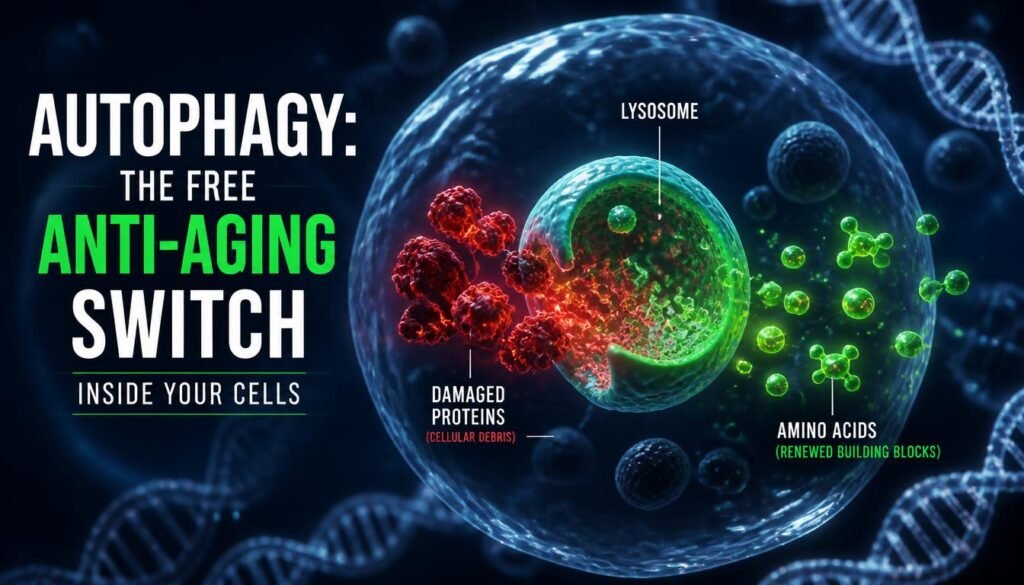
If you want to slow down biological aging, you do not necessarily need expensive peptides, hyperbaric oxygen chambers, or exotic stem cell therapies. You need to activate a built-in biological recycling program that clears out damaged proteins, dysfunctional mitochondria, and senescent “zombie” cells. This process is called autophagy, and it is the most powerful, entirely free anti-aging intervention available to the human body. As a clinician focused on longevity and metabolic optimization, I see patients obsessing over external treatments while completely ignoring their internal cellular hygiene. When this recycling mechanism fails, your tissues accumulate toxic debris, driving systemic inflammation, neurodegeneration, and physical frailty. In this comprehensive guide, we will break down the exact biochemical switches that turn this process on and off, and how to manipulate them to extend your healthspan.
The Biology of Cellular Cleanup
In 2016, Japanese cell biologist Yoshinori Ohsumi was awarded the Nobel Prize in Physiology or Medicine for his groundbreaking discoveries regarding the mechanisms of autophagy. The term literally translates from ancient Greek as “self-eating.” While that sounds alarming, it is actually a profound survival and renewal mechanism that has been conserved through millions of years of evolution.
When your cells accumulate damaged DNA, misfolded proteins, or exhausted mitochondria, these components become toxic. If left unchecked, they drive the hallmarks of aging. To prevent this, your cells wrap this toxic debris in a double-membrane vesicle called an autophagosome. This vesicle then travels to and fuses with a lysosome. The lysosome acts as a cellular incinerator, filled with acidic enzymes that break the junk down into raw amino acids and fatty acids. The cell then uses these recycled raw materials to build brand-new, highly efficient structures.
According to the National Institutes of Health (NIH), this lysosomal degradation pathway is essential for preventing neurodegenerative diseases like Alzheimer’s and Parkinson’s, which are fundamentally driven by the accumulation of misfolded proteins (amyloid-beta and alpha-synuclein) in brain tissue. When you upregulate this process, you are quite literally taking out the microscopic trash that ages your organs.
The Seesaw of Aging: mTOR vs. AMPK
To understand how to control this process, you must understand the two master nutrient-sensing pathways in your body: mTOR and AMPK. They operate on a biological seesaw; when one is up, the other must be down.
mTOR (Mechanistic Target of Rapamycin)
This is the growth and proliferation pathway. It is activated by eating protein (specifically the amino acid leucine) and carbohydrates (via the hormone insulin). When mTOR is high, your body builds tissue, synthesizes muscle, and stores energy. However, when mTOR is active, cellular cleanup is entirely shut down. The body cannot simultaneously build new structures and break down old ones.
AMPK (AMP-activated Protein Kinase)
This is the energy sensor and repair pathway. It is activated by fasting, intense exercise, and cellular energy depletion (low ATP). When AMPK is high, it inhibits mTOR and triggers the pathway of autophagy.
Modern humans chronically activate mTOR by grazing from morning until night. We eat breakfast, snack all day, and eat dinner late, keeping insulin and amino acids constantly elevated. We are perpetually in “growth” mode and never in “repair” mode. To extend your healthspan, you must intentionally swing the seesaw back toward AMPK on a regular basis.
4 Science-Backed Ways to Trigger the Cleanup Process
You cannot simply buy this process in a pill. It must be earned through specific physiological stressors that signal to your body that nutrients are scarce, forcing it to recycle internal components for survival.
1. Time-Restricted Eating and Prolonged Fasting
The most potent physiological trigger for deep autophagy is the complete absence of nutrients. When insulin drops and liver glycogen is depleted, AMPK rises sharply. While a standard 16-hour fast begins to elevate this process, research suggests that the most significant upregulation occurs between hours 24 and 48 of a water fast. However, daily 16:8 intermittent fasting provides a mild, sustainable baseline of cellular cleanup that compounds over months and years.
💡 Action Step: You cannot optimize your cellular repair if your eating window is misaligned with your circadian rhythm. Use our Intermittent Fasting Calculator to design an eating window that ensures you get at least 14 to 16 hours of daily cellular repair without crashing your thyroid or disrupting your sleep architecture.
2. High-Intensity Exercise and Zone 2 Cardio
Muscle contraction requires massive amounts of ATP (cellular energy). As you exercise, you deplete local ATP stores, creating an acute energy crisis in the muscle tissue. This activates AMPK locally, stimulating muscle autophagy (specifically called mitophagy when targeting mitochondria) to clear out damaged cellular engines and replace them with highly efficient new ones. This is why exercise is the most powerful longevity drug we have; it forces the physical cleanup of your largest metabolic organ.
3. Heat and Cold Exposure (Hormetic Stress)
Hormesis is the phenomenon where a short, acute stressor triggers a massive adaptive, protective response. Exposing your body to a sauna (which triggers heat shock proteins) or a cold plunge (which triggers cold shock proteins) forces your cells to repair structural damage, thereby upregulating cellular autophagy. The thermal stress acts as a false signal of environmental scarcity, prompting the body to clean house and prepare for survival. For a complete breakdown of temperature therapies, read our guide: Cold Plunge vs Sauna: Which Actually Extends Lifespan?.
4. Specific Polyphenols and Fasting Mimetics
Certain plant compounds can mimic fasting and exercise at the molecular level, inhibiting mTOR even in the fed state.
- Spermidine: Found in aged cheese, mushrooms, and wheat germ, spermidine is a potent polyamine that directly induces the cleanup pathway.
- EGCG: The primary catechin in green tea has been shown to activate AMPK.
- Curcumin: The active compound in turmeric reduces inflammation while simultaneously upregulating autophagy in neural tissues. Incorporating these compounds through whole foods or high-quality extracts can provide a gentle, daily boost to your cellular hygiene.
The Danger of Chronic Activation (Why You Must Cycle)
A common and dangerous mistake in the biohacking community is the belief that more is always better. Chronic autophagy is just as pathological as never activating it. If you remain in a constant state of AMPK activation and mTOR suppression—through extreme chronic caloric restriction, endless fasting, or overtraining—your body will eventually begin breaking down essential, healthy tissue.
This can lead to severe muscle wasting (sarcopenia), a suppressed immune system, and downregulation of thyroid hormones. Longevity requires a pulse. You must cycle between the breakdown phase (fasting, exercise, AMPK) and the building phase (feeding, resting, mTOR). You need to eat adequate protein to rebuild the tissues you just cleaned out. Use our Protein Intake Calculator to ensure you are fueling the rebuilding phase properly. For more on the dangers of extreme, un-cycled fasting, read The 4-Day Bone Broth Fast: A Dangerous Fad or The Ultimate Gut Reset?.
Signs Your Cellular Cleanup Is Failing
How do you know if your cells are accumulating toxic debris? The symptoms of poor cellular hygiene are often dismissed as “normal aging.” Watch for these clinical red flags:
- Chronic Brain Fog: Accumulation of misfolded proteins in neural tissue disrupts neurotransmitter signaling.
- Slow Physical Recovery: Damaged mitochondria fail to produce adequate ATP, leaving you exhausted after minor exertion.
- Accelerating Skin Aging: Senescent “zombie” cells secrete inflammatory cytokines (the SASP phenotype) that degrade collagen and elastin.
- Persistent Fatigue: A systemic burden of cellular waste forces your immune system into a state of chronic, low-grade activation, draining your energy reserves.
Triggers vs. Inhibitors: A Quick Reference Guide
To help you design your daily longevity protocol, refer to this clinical breakdown of what turns the recycling process on and off:
| Category | Activators (Turns ON the Process) | Inhibitors (Turns OFF the Process) |
|---|---|---|
| Nutrients | Fasting, Black Coffee, Green Tea (EGCG), Spermidine. | Protein (Leucine), Carbohydrates (Insulin), Liquid Calories. |
| Lifestyle | Zone 2 Cardio, HIIT, Sauna, Cold Plunge, Deep Sleep. | Sedentary behavior, Chronic Stress, Sleep Deprivation. |
| Cellular State | Low ATP, High AMP, Low Insulin, High Glucagon. | High ATP, High Insulin, High mTOR, Constant Grazing. |
Final Thoughts
Your cells are constantly accumulating microscopic damage from oxidative stress, environmental toxins, and normal metabolic processes. The ability to harness autophagy is what separates those who age rapidly from those who maintain vitality, cognition, and physical resilience into their later decades. By strategically implementing fasting, intense physical effort, and hormetic stressors, you force your biology to take out the trash. Stop feeding your cells 16 hours a day, give them the silence they need to repair, and watch your biological age reflect the effort.
Frequently Asked Questions (FAQ)
1. What is autophagy and how does it slow aging?
It is a cellular recycling process where your body clears out damaged proteins, dysfunctional mitochondria, and senescent cells. By removing this toxic debris, it reduces systemic inflammation and prevents the accumulation of cellular waste that drives biological aging and neurodegeneration.
2. How many hours of fasting are required to trigger cellular cleanup?
Mild upregulation begins around 14 to 16 hours of fasting as liver glycogen depletes and insulin drops. However, peak activation typically occurs between 24 and 48 hours of a water fast. Daily time-restricted eating provides a sustainable, mild baseline of cellular repair.
3. Does drinking black coffee stop the cellular cleanup process?
No. Black coffee does not spike insulin or activate the mTOR pathway. In fact, the polyphenols and caffeine in black coffee have been shown to independently stimulate AMPK and the cleanup pathway, making it an excellent tool during a fasted state.
4. Can I consume protein and still trigger cellular cleanup?
No. Protein, specifically the amino acid leucine, is a potent activator of the mTOR pathway. Consuming protein immediately shuts down AMPK and halts cellular cleanup. To maintain the fasted state, you must avoid all caloric intake, particularly amino acids and carbohydrates.
5. What are the signs that my cellular cleanup is failing?
Poor cellular hygiene manifests as chronic brain fog, slow physical recovery, accelerating skin aging, and persistent fatigue. These are clinical signs that senescent cells and misfolded proteins are accumulating in your tissues due to a lack of fasting, exercise, or deep sleep.
⚕️ Medical Disclaimer
The content provided on RegenStep.com, including this article authored by Dr. Julian Vance, is strictly for educational and informational purposes only. It is not intended to be a substitute for professional medical advice, diagnosis, or treatment.
Prolonged fasting and extreme hormetic stressors carry inherent risks and may not be suitable for individuals with a history of eating disorders, pregnant or nursing women, or those with advanced metabolic dysregulation. Always consult with your physician or a qualified healthcare provider before beginning any new fasting, exercise, or supplementation protocol, particularly if you are taking prescription medications for blood sugar or blood pressure.
What is autophagy and how does it slow aging?
It is a cellular recycling process where your body clears out damaged proteins, dysfunctional mitochondria, and senescent cells. By removing this toxic debris, it reduces systemic inflammation and prevents the accumulation of cellular waste that drives biological aging and neurodegeneration.
How many hours of fasting are required to trigger cellular cleanup?
Mild upregulation begins around 14 to 16 hours of fasting as liver glycogen depletes and insulin drops. However, peak activation typically occurs between 24 and 48 hours of a water fast. Daily time-restricted eating provides a sustainable, mild baseline of cellular repair.
Does drinking black coffee stop the cellular cleanup process?
No. Black coffee does not spike insulin or activate the mTOR pathway. In fact, the polyphenols and caffeine in black coffee have been shown to independently stimulate AMPK and the cleanup pathway, making it an excellent tool during a fasted state.
Can I consume protein and still trigger cellular cleanup?
No. Protein, specifically the amino acid leucine, is a potent activator of the mTOR pathway. Consuming protein immediately shuts down AMPK and halts cellular cleanup. To maintain the fasted state, you must avoid all caloric intake, particularly amino acids and carbohydrates.
What are the signs that my cellular cleanup is failing?
Poor cellular hygiene manifests as chronic brain fog, slow physical recovery, accelerating skin aging, and persistent fatigue. These are clinical signs that senescent cells and misfolded proteins are accumulating in your tissues due to a lack of fasting, exercise, or deep sleep.

Julian Vance is the writer and editor behind RegenStep, translating peer-reviewed longevity, metabolic, and gut-health research into practical, actionable guides. Julian is not a licensed physician; content is reviewed against cited primary sources and is for informational purposes only. Always consult a qualified healthcare provider for personal medical advice.