
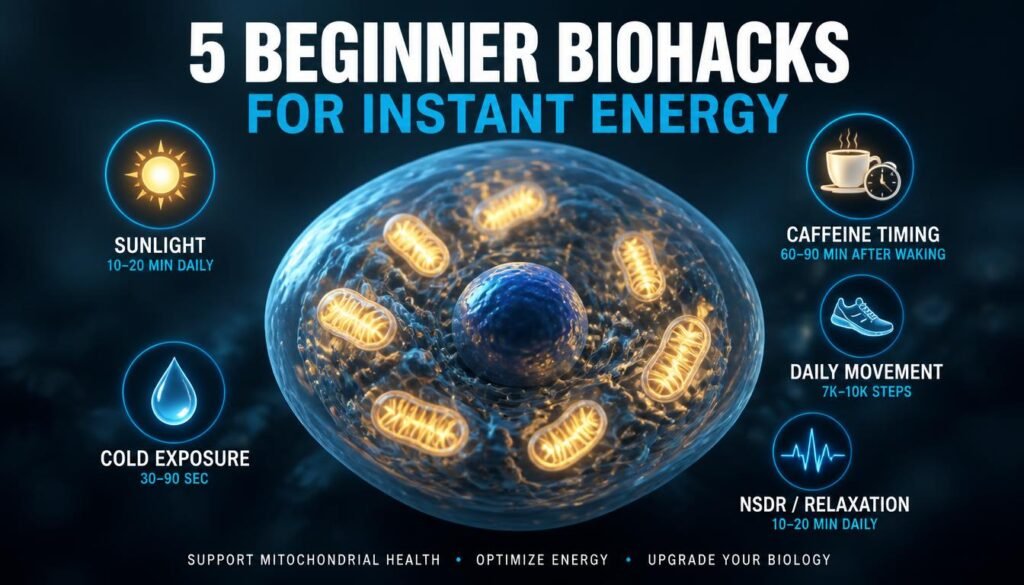
If you are constantly battling the mid-afternoon slump, relying on your third cup of coffee to function, and waking up feeling like you never actually slept, you do not need another expensive supplement or a complicated gadget. You need to understand how your cellular engines actually work. True biological energy is not about consuming more calories or stimulants; it is about optimizing mitochondrial efficiency, managing your neurochemistry, and aligning your biology with your environment. For those just starting to optimize their physiology, the most effective beginner biohacks are completely free, take less than ten minutes a day, and deliver measurable, instant energy upgrades.
As a clinician focused on metabolic health and longevity, I see patients every day who think they have chronic fatigue or a slow metabolism, when in reality, their daily routines are actively suppressing their cellular energy production. The wellness industry wants you to believe that biohacking requires cold plunge tubs, red light therapy panels, and continuous glucose monitors. It does not. In this guide, I will break down the exact neurobiology of fatigue and outline five evidence-based beginner biohacks that you can implement today to radically shift your baseline vitality.
The Biology of Energy: Why You Feel Drained
Before we deploy the beginner biohacks, we must define what biological energy actually is. At the cellular level, energy is a molecule called ATP (Adenosine Triphosphate), produced by your mitochondria. When your mitochondria are dysfunctional—due to poor sleep architecture, chronic stress, or constant grazing—your ATP production plummets, and you feel physically and mentally exhausted.
Furthermore, your perceived energy is heavily dictated by your neurochemistry, specifically the balance between dopamine (drive and motivation) and adenosine (sleep pressure). Most people try to fix low energy by artificially stimulating their nervous system with caffeine and sugar, which only borrows energy from tomorrow to pay for today. The beginner biohacks outlined below do not borrow energy; they optimize the biological pathways that generate it natively.
Hack #1: Delay Your First Caffeine Intake by 90 Minutes
The vast majority of the population wakes up and immediately reaches for coffee. This is a fundamental misunderstanding of sleep neurochemistry and one of the most critical beginner biohacks to correct.
The Adenosine Clearance Mechanism
Throughout the day, your brain accumulates a neurotransmitter called adenosine, which creates “sleep pressure.” When you sleep, your glymphatic system clears this adenosine out. However, if you wake up after a poor night of sleep or simply wake up before the clearance process is fully complete, residual adenosine is still lingering in your brain’s receptors.
Caffeine does not give you energy; it is an adenosine receptor antagonist. It simply blocks the receptors so you cannot feel the fatigue. If you drink coffee immediately upon waking, you block the receptors while the residual adenosine is still floating around. Once the caffeine wears off in the early afternoon, all that un-cleared adenosine rushes back into the receptors simultaneously, causing the dreaded 2:00 PM crash.
The Protocol: Wait 90 to 120 minutes after waking before consuming your first milligram of caffeine. This allows your natural morning cortisol pulse to wake you up and gives your brain time to clear the residual adenosine naturally. When the caffeine eventually wears off, the receptors are clean, and the afternoon crash is eliminated.
Hack #2: Anchor Your Circadian Rhythm with Morning Photons
Your master biological clock, the suprachiasmatic nucleus (SCN), sits in your hypothalamus and dictates the timing of every hormone in your body, including cortisol (for daytime energy) and melatonin (for nighttime sleep). The SCN is set entirely by light entering your eyes.
The Cortisol Awakening Response (CAR)
Viewing bright, natural sunlight within 30 to 60 minutes of waking triggers a healthy, acute spike in cortisol known as the Cortisol Awakening Response. This is not the chronic, damaging stress cortisol; this is the vital biological signal that tells your brain it is daytime, elevates your core body temperature, and increases dopamine and epinephrine for focus and drive.
If you wake up and stay in a dimly lit house, or only look at artificial screens, your SCN never gets the signal to start the day. Your energy remains sluggish, and worse, the timer for melatonin release 14 hours later is never set, ruining your sleep architecture that night. For a deep dive into how poor sleep destroys your next-day energy, read our guide on Why Your Sleep Architecture Matters More Than Hours in Bed.
The Protocol: Step outside within 30 minutes of waking. Get 5 to 10 minutes of direct sunlight in your eyes (no sunglasses, do not stare at the sun, but do not wear a hat that blocks the overhead light). If it is overcast, aim for 15 to 20 minutes. This single habit is arguably the most powerful of all beginner biohacks for sustaining all-day energy.
Hack #3: The 60-Second Cold Shower Shock
You do not need a $15,000 ice bath to get the neurological benefits of cold exposure. A standard shower with a cold water dial is all you need to trigger a massive release of catecholamines.
The Dopamine and Norepinephrine Spike
Research published in the European Journal of Applied Physiology demonstrated that intermittent cold water exposure increases baseline dopamine levels by up to 250% and norepinephrine by 530%. Unlike the sharp, fleeting dopamine spike you get from scrolling social media or eating sugar—which is followed by a baseline crash—the dopamine increase from cold exposure is sustained for hours, providing a long, steady baseline of motivation, focus, and physical energy.
Furthermore, the shock of cold water forces you to control your breathing under stress, which strengthens your prefrontal cortex’s ability to override the panic signals from your amygdala. This builds profound mental resilience that carries over into your workday.
The Protocol: At the end of your normal morning shower, turn the water to the coldest setting. Step into it for 30 to 60 seconds. Focus entirely on extending your exhalations to calm your heart rate. If 60 seconds is too much, start with 15 seconds. The goal is not to suffer; the goal is to trigger the neurological adaptation. For more on how temperature manipulation alters your biology, see Cold Plunge vs Sauna: Which Actually Extends Lifespan?.
Hack #4: The 10-Minute Post-Meal Walk
The mid-afternoon energy crash is rarely just a lack of sleep; it is almost always a blood glucose disposal issue. When you eat a meal, especially one containing carbohydrates, your blood sugar rises. If you immediately sit down at a desk or on the couch, your muscles are inactive, and your pancreas must pump out massive amounts of insulin to force that glucose into your cells. This massive insulin spike is followed by a reactive blood sugar crash (hypoglycemia), leaving you brain-fogged and exhausted.
Mitochondrial Biogenesis and GLUT4 Translocation
Skeletal muscle is the largest metabolic sink in the human body. When you contract your muscles through walking, a mechanical process occurs that moves GLUT4 receptors to the surface of the muscle cells. These receptors act as doors, pulling glucose out of the bloodstream and into the muscle to be burned for energy without requiring a massive insulin response.
By simply moving your body after a meal, you flatten your glucose curve, prevent the reactive insulin crash, and keep your energy perfectly stable. This is one of the most practical beginner biohacks for office workers and those with sedentary lifestyles.
The Protocol: Within 30 minutes of finishing your largest meals (especially lunch), go for a brisk 10 to 15-minute walk. You do not need to break a sweat or change into gym clothes; you just need to activate the calf and thigh muscles to act as a glucose sink.
💡 Action Step: To ensure your meals are properly aligned with your daily energy expenditure and fasting windows, use our TDEE Calculator to find your baseline caloric needs, and our Intermittent Fasting Calculator to design an eating schedule that prevents chronic insulin elevation.
Hack #5: Non-Sleep Deep Rest (NSDR) and the Physiological Sigh
Chronic stress keeps your autonomic nervous system locked in a sympathetic (fight-or-flight) state. In this state, your body diverts blood flow away from your prefrontal cortex and digestive tract, and your mitochondria downregulate ATP production because the body perceives an immediate threat. You cannot feel energized and focused if your nervous system thinks it is being chased.
Resetting the Vagus Nerve
To instantly shift out of this stress state and reclaim your cognitive energy, you must manually stimulate the vagus nerve to activate the parasympathetic (rest-and-digest) nervous system. The fastest, most clinically validated way to do this in real-time is through the “Physiological Sigh,” a breathing pattern popularized by neurobiologist Dr. Andrew Huberman at Stanford University.
Alternatively, practicing Non-Sleep Deep Rest (NSDR) or Yoga Nidra for 10 to 20 minutes in the mid-afternoon has been shown to replenish dopamine in the basal ganglia and restore cognitive focus faster than a nap, without the sleep inertia (grogginess) that naps often cause. For a deeper understanding of nervous system regulation, read The Vagus Nerve Reset: How to Calm Your Gut Through Your Nervous System.
The Protocol:
- For instant stress relief (The Physiological Sigh): Take two quick inhales through the nose (until your lungs are completely full), followed by one long, slow exhale through the mouth. Repeat this 3 to 5 times. This physically offloads carbon dioxide and slows the heart rate in real-time.
- For afternoon fatigue (NSDR): Search for a free “10-minute NSDR” audio track on YouTube or Spotify. Lie down, close your eyes, and follow the body scan instructions. You will wake up with restored mental clarity.
Summary Table: The 5 Beginner Biohacks Quick Reference
To integrate these protocols into your daily routine, refer to this clinical breakdown:
| Biohack | Primary Biological Target | Optimal Timing | Expected Energy Outcome |
|---|---|---|---|
| 1. Delay Caffeine (90 Mins) | Adenosine receptor clearance. | Morning (Wait 90 mins after waking). | Eliminates the 2:00 PM afternoon crash. |
| 2. Morning Sunlight | Circadian rhythm & Cortisol Awakening Response. | Within 30-60 mins of waking. | Sustained daytime alertness and better nighttime sleep. |
| 3. Cold Shower Shock | Dopamine and Norepinephrine baseline elevation. | End of morning shower (30-60 secs). | Hours of sustained motivation, focus, and physical drive. |
| 4. Post-Meal Walk | GLUT4 translocation & glucose disposal. | Within 30 mins after lunch/dinner. | Prevents reactive hypoglycemia and post-meal brain fog. |
| 5. NSDR / Physiological Sigh | Vagus nerve stimulation & autonomic reset. | Mid-afternoon or during acute stress. | Rapid restoration of cognitive focus and reduction of fatigue. |
Final Thoughts
The most profound shifts in human physiology do not always require expensive interventions. The five beginner biohacks outlined above—delaying caffeine, viewing morning sunlight, utilizing cold exposure, walking after meals, and manually resetting your nervous system—are entirely free, yet they address the root neurological and metabolic causes of fatigue.
By respecting your adenosine clearance, anchoring your circadian rhythm, and managing your blood glucose, you stop borrowing energy from your future self and start optimizing the cellular engines you already have. Implement these protocols consistently for just seven days, and you will experience an energy upgrade that no amount of caffeine could ever provide.
Frequently Asked Questions (FAQ)
1. What are the best beginner biohacks for more energy?
The most effective beginner biohacks for instant energy include delaying your first caffeine intake by 90 minutes to clear adenosine, viewing direct sunlight within 30 minutes of waking to set your circadian rhythm, taking a 60-second cold shower to elevate dopamine, and going for a 10-minute walk after meals to stabilize blood glucose.
2. Why should I wait 90 minutes to drink coffee after waking up?
Waiting 90 minutes allows your brain to naturally clear residual adenosine (the sleep-pressure molecule) and lets your natural morning cortisol pulse wake you up. If you drink coffee immediately, the caffeine blocks the receptors temporarily, leading to a severe energy crash in the afternoon once the caffeine wears off and the adenosine floods back in.
3. Does a cold shower actually give you more energy?
Yes. Clinical studies show that cold water exposure can increase baseline dopamine levels by up to 250% and norepinephrine by 530%. Unlike the fleeting spike from sugar or social media, the dopamine increase from cold exposure is sustained for hours, providing long-lasting focus, motivation, and physical energy.
4. How does a post-meal walk prevent the afternoon energy crash?
Walking after a meal contracts your skeletal muscles, which moves GLUT4 receptors to the cell surface. These receptors pull glucose out of your bloodstream and into the muscle to be burned for energy without requiring a massive insulin spike. This prevents the reactive blood sugar crash that causes severe afternoon brain fog and fatigue.
5. What is NSDR and how does it restore energy?
Non-Sleep Deep Rest (NSDR) is a guided relaxation protocol that shifts your autonomic nervous system from a stressed sympathetic state into a parasympathetic state. A 10 to 20-minute NSDR session has been shown to replenish dopamine in the brain’s basal ganglia and restore cognitive focus faster than a nap, without causing grogginess.
⚕️ Medical Disclaimer
The content provided on RegenStep.com, including this article authored by Dr. Julian Vance, is strictly for educational and informational purposes only. It is not intended to be a substitute for professional medical advice, diagnosis, or treatment.
Protocols involving cold water exposure or drastic changes to caffeine and dietary habits may not be suitable for individuals with cardiovascular conditions, Raynaud’s syndrome, or severe metabolic dysregulation. Always consult with your physician or a qualified healthcare provider before beginning any new biohacking, temperature exposure, or dietary protocol, particularly if you have a pre-existing medical condition or are taking prescription medications.
What are the best beginner biohacks for more energy?
The most effective beginner biohacks for instant energy include delaying your first caffeine intake by 90 minutes to clear adenosine, viewing direct sunlight within 30 minutes of waking to set your circadian rhythm, taking a 60-second cold shower to elevate dopamine, and going for a 10-minute walk after meals to stabilize blood glucose.
Why should I wait 90 minutes to drink coffee after waking up?
Waiting 90 minutes allows your brain to naturally clear residual adenosine (the sleep-pressure molecule) and lets your natural morning cortisol pulse wake you up. If you drink coffee immediately, the caffeine blocks the receptors temporarily, leading to a severe energy crash in the afternoon once the caffeine wears off and the adenosine floods back in.
Does a cold shower actually give you more energy?
Yes. Clinical studies show that cold water exposure can increase baseline dopamine levels by up to 250% and norepinephrine by 530%. Unlike the fleeting spike from sugar or social media, the dopamine increase from cold exposure is sustained for hours, providing long-lasting focus, motivation, and physical energy.
How does a post-meal walk prevent the afternoon energy crash?
Walking after a meal contracts your skeletal muscles, which moves GLUT4 receptors to the cell surface. These receptors pull glucose out of your bloodstream and into the muscle to be burned for energy without requiring a massive insulin spike. This prevents the reactive blood sugar crash that causes severe afternoon brain fog and fatigue.
What is NSDR and how does it restore energy?
Non-Sleep Deep Rest (NSDR) is a guided relaxation protocol that shifts your autonomic nervous system from a stressed sympathetic state into a parasympathetic state. A 10 to 20-minute NSDR session has been shown to replenish dopamine in the brain’s basal ganglia and restore cognitive focus faster than a nap, without causing grogginess.

Julian Vance is the writer and editor behind RegenStep, translating peer-reviewed longevity, metabolic, and gut-health research into practical, actionable guides. Julian is not a licensed physician; content is reviewed against cited primary sources and is for informational purposes only. Always consult a qualified healthcare provider for personal medical advice.