
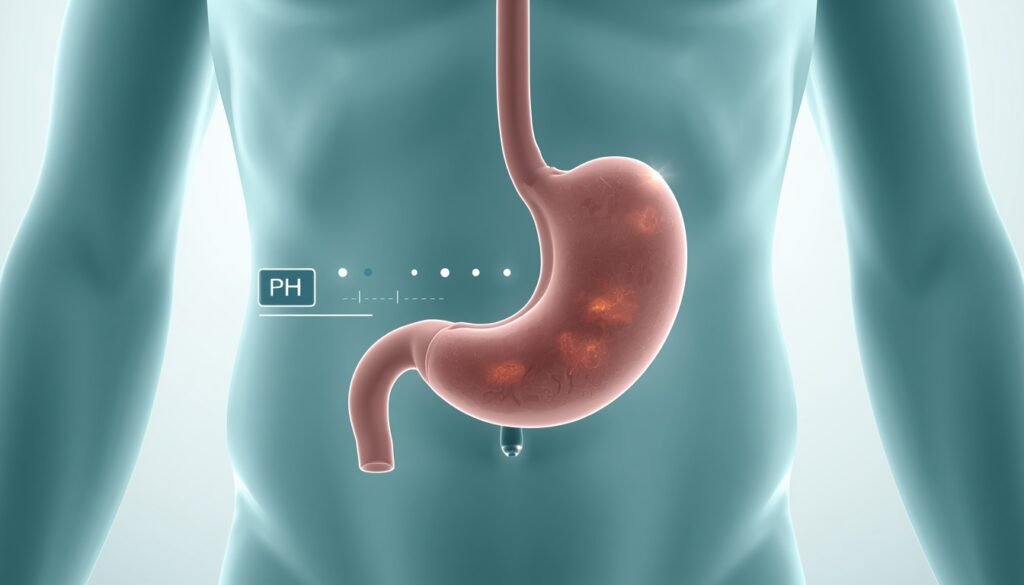
Let me tell you about Maria, a 52-year-old who took antacids after every meal for years, convinced she had “too much acid.” Her bloating and reflux never really went away—they slowly got worse. When she was finally evaluated properly, the surprise was that her problem may have been the opposite of what she assumed. This is one of the most counterintuitive topics in gut health: the symptoms of too little stomach acid can look almost identical to too much. And getting the direction wrong can send you down the wrong path for years.
Short answer: Low stomach acid, or hypochlorhydria, is when your stomach doesn’t produce enough hydrochloric acid to properly digest food and absorb nutrients. Signs include bloating, burping, feeling overly full after protein meals, and nutrient deficiencies (especially B12 and iron). Common causes are aging, H. pylori infection, long-term acid-blocking medications, chronic stress, and hypothyroidism. Fixing it means identifying the cause with a doctor—not guessing.
What Is Low Stomach Acid?
Your stomach acid isn’t a design flaw to be neutralized—it’s essential. Hydrochloric acid does at least four critical jobs:
- Digests protein by activating the enzyme pepsin.
- Unlocks nutrients for absorption—especially vitamin B12, iron, calcium, magnesium, and zinc.
- Acts as a barrier, killing many bacteria and pathogens before they get further into your gut.
- Signals the release of downstream digestive enzymes.
When acid runs low (hypochlorhydria) or nearly absent (achlorhydria), all four of these jobs suffer—which is why the effects show up all over the body, not just in the stomach.
The Counterintuitive Twist: Low Acid Can Feel Like High Acid
Here’s the trap Maria fell into—and the single most important safety point in this article. Symptoms like bloating, burping, and reflux are commonly assumed to mean high acid, so people reach for antacids. But those same symptoms can occur with low acid, when poorly digested food ferments and pushes stomach contents upward. You cannot reliably tell the difference from symptoms alone. This matters enormously, because treating suspected “low acid” with acid supplements when you actually have an ulcer, gastritis, or true acid reflux can make things worse. Proper evaluation comes first—always.
Signs & Symptoms of Low Stomach Acid
Low acid can’t be confirmed by symptoms, but these raise suspicion:
- Bloating, gas, and burping—especially within 30–60 minutes of a protein-heavy meal
- Feeling uncomfortably full after normal-sized meals
- Reflux that doesn’t respond to antacids (or worsens on them)
- Undigested food visible in stool
- Nutrient deficiencies, especially vitamin B12, iron, and zinc
- Fatigue, brittle nails, hair thinning, and skin issues (often downstream of those deficiencies)
- Recurrent SIBO (small intestinal bacterial overgrowth) that keeps coming back
Low vs. High Stomach Acid: How to Tell the Difference
Here’s what surprises most people. Acid reflux and GERD are fundamentally a valve problem, not an acid-quantity problem. At the base of your esophagus sits the lower esophageal sphincter (LES), a muscular ring that’s supposed to keep stomach contents down. As authoritative sources explain, a weakened or relaxed LES is what causes acid reflux and GERD—acid escapes upward past the failing valve, regardless of whether the total amount of acid is high, normal, or even low.
This is why the “high acid” framing is misleading. And it explains the twist: low stomach acid can also cause reflux. When acid is insufficient, food digests poorly and lingers, fermenting and producing gas. That gas raises pressure in the stomach, which can trigger the LES to relax and let contents reflux—creating “heartburn” that has nothing to do with excess acid. Same symptom, opposite cause.
Signs That Lean Toward Reflux or “High” Acid
- Classic burning chest pain (heartburn), often sharp
- Symptoms worse when lying down or bending over, or after large/trigger-food meals
- Sour regurgitation or acid taste in the mouth
- Relief from antacids or acid-reducing medication
- Triggered by caffeine, alcohol, smoking, fatty or spicy foods; associated with obesity or hiatal hernia
Side-by-Side: Which One Might It Be?
| Clue | Leans Reflux / “High” | Leans Low Acid |
|---|---|---|
| Main sensation | Sharp burning heartburn | Heaviness, fullness, bloating |
| Response to antacids | Usually improves | Little help, or worse |
| Timing | Worse lying down / after triggers | Soon after protein meals |
| Nutrient status | Usually normal | Low B12, iron common |
These are tendencies, not proof. Plenty of people don’t fit neatly into either column—which is exactly why the next section matters.
How It Is Properly Diagnosed
Rather than guessing, a doctor can actually find out. Depending on your symptoms, that may include testing for H. pylori, an upper endoscopy to look for inflammation or ulcers, esophageal pH monitoring (which measures acid reflux directly), a nutrient panel (B12, iron), and markers like gastrin. This is how you get a real answer instead of a coin flip—and it’s especially important if antacids aren’t working, because “the medicine isn’t helping” is often the clue that you’ve been treating the wrong condition.
What Causes Low Stomach Acid?
The main drivers:
- Aging. Acid production can decline with age—though, honestly, true age-related hypochlorhydria appears less common than popular wellness content suggests, so age alone isn’t a diagnosis.
- H. pylori infection. This common bacterium can suppress acid production; eradicating it often restores normal levels.
- Acid-blocking medications. Long-term proton pump inhibitors (PPIs) and H2-blockers deliberately reduce acid—sometimes appropriately, sometimes for longer than necessary.
- Chronic stress. Ongoing stress can impair the “rest and digest” state needed for good acid secretion.
- Hypothyroidism / Hashimoto’s. Thyroid dysfunction is strongly associated with low acid.
- Autoimmune atrophic gastritis. An autoimmune attack on acid-producing cells—this one specifically needs a gastroenterology workup.
- Nutrient shortfalls. Zinc and other minerals are needed to make acid in the first place.
Why It Matters: The Downstream Effects
👤 Human Evidence. The consequences of chronically low acid are well-documented, and much of the strongest evidence comes from studying long-term acid-blocker use:
- Vitamin B12 deficiency. Systematic reviews link long-term PPI use to measurable changes in B12 status, because acid is needed to release B12 from food.
- Mineral malabsorption. Reviews associate reduced acid with lower calcium and magnesium status, contributing to bone fragility and fall risk.
- Higher infection risk. With the acid barrier weakened, enteric infections like C. difficile and pneumonia become more likely.
- SIBO. Acid normally stops gut bacteria from colonizing the small intestine; low acid removes that gatekeeper.
🦠 See Where Your Digestion Stands
Digestive symptoms rarely point to a single cause. Get a quick, structured read on your overall gut health to help you and your doctor decide what’s worth investigating—low acid, SIBO, or something else.
How to Fix Low Stomach Acid (Safely)
Notice the word safely. Here’s the responsible, evidence-aligned sequence:
- Get properly evaluated first. Ask your doctor about testing for H. pylori, a nutrient panel (B12, iron, ferritin), thyroid function, and—if indicated—markers like gastrin and pepsinogen or a SIBO breath test. Importantly, the popular at-home “baking soda” and apple cider vinegar tests are not reliable or validated—don’t base decisions on them.
- Treat the root cause. Eradicating H. pylori, optimizing thyroid function, and managing chronic stress often do more than any supplement.
- Fix your meal habits. Eat slowly, chew thoroughly, avoid drowning meals in fluids, keep portions moderate, and eat in a calm state—all support natural acid secretion. This is the safe first step for almost everyone.
- Consider betaine HCl only with guidance. Betaine HCl supplements can acidify the stomach, but there are no large modern trials proving they fix deficiencies, and they are not safe for everyone. Do not use them if you have an ulcer or gastritis, or if you take NSAIDs or acid-reducing drugs—talk to a healthcare provider before trying them.
- Replete nutrients under supervision. If you’re low in B12, iron, or other nutrients, your doctor can guide correction.
- Never stop acid-blockers abruptly. PPIs are prescribed for real reasons, and stopping suddenly can cause rebound acid that feels worse. If you’re concerned about long-term use, ask your doctor about a supervised review or taper—current guidelines support periodic reassessment.
Low acid rarely travels alone—it’s often part of a bigger digestive picture. Since it impairs protein digestion specifically, adequate protein matters (dial in your target with our Protein Intake Calculator), and rebuilding the gut environment helps too—see how long it takes to heal your gut lining and The Dysbiosis Blueprint.
Red Flags: See a Doctor Promptly
Some symptoms are never something to self-treat. Seek medical care right away if you have unexplained weight loss, difficulty or pain swallowing, black or bloody stools, vomiting blood, persistent vomiting, signs of anemia, or new digestive symptoms starting after age 60. These can signal serious conditions—including ulcers, atrophic gastritis, or stomach cancer—that require prompt evaluation, not supplements.
The Bottom Line
Low stomach acid is real, underappreciated, and genuinely capable of driving bloating, poor digestion, and nutrient deficiencies—but it’s also easy to misdiagnose, because its symptoms mirror the opposite problem. The smart path isn’t to grab vinegar or acid pills based on a hunch; it’s to get properly evaluated, treat the actual cause, fix your meal habits, and use acid support only under guidance. Maria stopped guessing, got tested, treated the real driver, and finally felt better after years of chasing the wrong problem. When it comes to your stomach acid, direction matters—so find out which way yours is really going before you act.
Frequently Asked Questions
What are the signs of low stomach acid?
Common clues include bloating, burping, and fullness after protein meals, reflux that doesn’t respond to antacids, undigested food in stool, recurrent SIBO, and nutrient deficiencies—especially vitamin B12, iron, and zinc. However, these overlap with other conditions, so they raise suspicion rather than confirm a diagnosis.
What causes low stomach acid?
The main causes are aging, H. pylori infection, long-term acid-blocking medications (PPIs and H2-blockers), chronic stress, hypothyroidism or Hashimoto’s, autoimmune atrophic gastritis, and deficiencies in minerals like zinc that are needed to produce acid.
Is my reflux from low or high stomach acid?
You can’t reliably tell from symptoms alone—reflux and bloating can occur with either. This is why proper evaluation matters. Treating suspected low acid with supplements when you actually have an ulcer or true acid reflux can worsen the problem, so see a doctor before acting.
Does apple cider vinegar fix low stomach acid?
There’s no reliable evidence that apple cider vinegar diagnoses or corrects low stomach acid, and the popular at-home vinegar and baking-soda “tests” are not validated. It can also irritate an inflamed stomach or esophagus. Don’t rely on it in place of proper assessment.
Is betaine HCl safe to take?
Not for everyone. Betaine HCl can acidify the stomach, but it lacks strong trial evidence and should not be used by people with ulcers or gastritis, or those taking NSAIDs or acid-reducing medications. Always talk to a healthcare provider before trying it.
Can low stomach acid cause vitamin B12 deficiency?
Yes. Stomach acid helps release B12 from food, so low acid—including from long-term acid-blocker use—is associated with reduced B12 status, which systematic reviews have documented. B12 deficiency can cause fatigue and cognitive symptoms, so testing and correction under medical guidance is important.
Are the baking soda or apple cider vinegar tests accurate?
No. The at-home baking soda burp test and the apple cider vinegar test are not validated or reliable ways to measure stomach acid. Vinegar can also irritate an inflamed stomach or esophagus. Don’t base treatment decisions on them.
What happens if I take acid supplements but actually have GERD?
It can make things worse. If you have GERD, an ulcer, or gastritis and take acid supplements like betaine HCl or vinegar assuming you have low acid, you can worsen the irritation and tissue damage. This is why guessing is risky and proper diagnosis matters.
References
- Cleveland Clinic. Hypochlorhydria (Low Stomach Acid): Symptoms, Tests, Treatment. my.clevelandclinic.org/health/diseases/23392-hypochlorhydria
- Effects of Proton Pump Inhibitors in Vitamin B12 Deficiency: A Systematic Review. PMC, 2022. ncbi.nlm.nih.gov/pmc/articles/PMC9762528
- Proton Pump Inhibitors: Evidence-Based Review of Indications, Harms, and Deprescribing. PMC. ncbi.nlm.nih.gov/pmc/articles/PMC12471631
- Long-Term PPI Use in Older Adults: Do PPIs Deplete Nutrients? PMC. ncbi.nlm.nih.gov/pmc/articles/PMC12456669
Medical Disclaimer: This article is educational and not medical advice. Low stomach acid cannot be diagnosed from symptoms alone—its signs closely mimic high-acid conditions and even serious disease. Do not self-treat with acid supplements, and never stop a prescribed acid-reducing medication, without your doctor. This information is meant to complement, not replace, professional care.
What Is Low Stomach Acid?
Your stomach acid isn’t a design flaw to be neutralized—it’s essential. Hydrochloric acid does at least four critical jobs: When acid runs low (hypochlorhydria) or nearly absent (achlorhydria), all four of these jobs suffer—which is why the effects show up all over the body, not just in the stomach.
Side-by-Side: Which One Might It Be?
These are tendencies, not proof. Plenty of people don’t fit neatly into either column—which is exactly why the next section matters.
What are the signs of low stomach acid?
Common clues include bloating, burping, and fullness after protein meals, reflux that doesn’t respond to antacids, undigested food in stool, recurrent SIBO, and nutrient deficiencies—especially vitamin B12, iron, and zinc. However, these overlap with other conditions, so they raise suspicion rather than confirm a diagnosis.
What causes low stomach acid?
The main causes are aging, H. pylori infection, long-term acid-blocking medications (PPIs and H2-blockers), chronic stress, hypothyroidism or Hashimoto’s, autoimmune atrophic gastritis, and deficiencies in minerals like zinc that are needed to produce acid.
Is my reflux from low or high stomach acid?
You can’t reliably tell from symptoms alone—reflux and bloating can occur with either. This is why proper evaluation matters. Treating suspected low acid with supplements when you actually have an ulcer or true acid reflux can worsen the problem, so see a doctor before acting.
Does apple cider vinegar fix low stomach acid?
There’s no reliable evidence that apple cider vinegar diagnoses or corrects low stomach acid, and the popular at-home vinegar and baking-soda “tests” are not validated. It can also irritate an inflamed stomach or esophagus. Don’t rely on it in place of proper assessment.
Is betaine HCl safe to take?
Not for everyone. Betaine HCl can acidify the stomach, but it lacks strong trial evidence and should not be used by people with ulcers or gastritis, or those taking NSAIDs or acid-reducing medications. Always talk to a healthcare provider before trying it.
Can low stomach acid cause vitamin B12 deficiency?
Yes. Stomach acid helps release B12 from food, so low acid—including from long-term acid-blocker use—is associated with reduced B12 status, which systematic reviews have documented. B12 deficiency can cause fatigue and cognitive symptoms, so testing and correction under medical guidance is important.

Julian Vance is the writer and editor behind RegenStep, translating peer-reviewed longevity, metabolic, and gut-health research into practical, actionable guides. Julian is not a licensed physician; content is reviewed against cited primary sources and is for informational purposes only. Always consult a qualified healthcare provider for personal medical advice.