
For the better part of two decades, the longevity space has been utterly captivated by the “red wine paradox.” The discovery that a specific polyphenol found in the skin of grapes could activate survival genes in yeast and mice triggered a massive commercial gold rush. Resveratrol became the undisputed king of the anti-aging supplement aisle. But as analytical chemistry and human pharmacokinetic trials caught up to the initial petri-dish hype, a glaring biological bottleneck emerged: the human liver is ruthlessly efficient at destroying resveratrol before it ever reaches your systemic circulation.
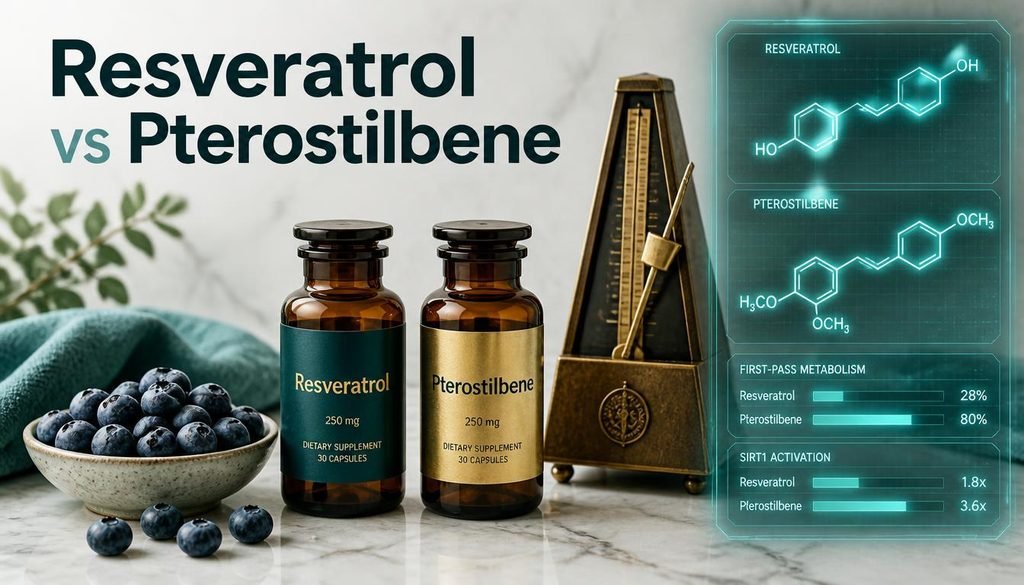
Enter pterostilbene. Chemically, it is resveratrol’s dimethylated cousin, found primarily in the skin of wild blueberries and the heartwood of the Indian kino tree. By swapping two hydroxyl groups for two methoxy groups, nature created a molecule that is fundamentally more lipophilic (fat-soluble). This minor structural tweak completely alters the pharmacokinetic profile, allowing the molecule to bypass hepatic destruction, cross the blood-brain barrier, and actually interact with your cellular machinery.
Let’s bypass the marketing noise and look strictly at the molecular reality. We are going to dissect the exact biochemical differences between these two stilbenoids, expose the hidden metabolic costs of high-dose polyphenol therapy, and map out the precise stacking protocols required to turn these compounds into genuine biological software updates.
Pterostilbene and Resveratrol Together: Synergistic Stacking or Redundant Overkill?
The most common question in advanced biohacking circles is whether you should stack pterostilbene and resveratrol together to maximize the activation of the SIRT1 pathway (the primary longevity gene responsible for DNA repair and epigenetic silencing).
From a purely mechanistic standpoint, stacking them is largely redundant. Both molecules act as allosteric activators of the SIRT1 enzyme. They bind to the exact same catalytic domain to lower the activation energy required for SIRT1 to deacetylate target proteins. Flooding the receptor with both compounds simultaneously does not yield a synergistic 1+1=3 effect; it simply results in competitive binding, where the more bioavailable molecule (pterostilbene) outcompetes the less bioavailable one (resveratrol), rendering the resveratrol biologically useless and financially wasteful.
The Better Stack: SIRT1 Activators + NAD+ Precursors
Instead of stacking two SIRT1 activators, you must pair the activator with its required fuel. SIRT1 is an NAD+-dependent deacetylase. It literally cannot function without consuming Nicotinamide Adenine Dinucleotide (NAD+). If you take a massive dose of pterostilbene to upregulate SIRT1 activity, but your cellular NAD+ pools are depleted (which is common in aging adults), you will simply stall the enzyme and potentially crash your cellular energy reserves.
The optimal protocol pairs a highly bioavailable SIRT1 activator (Pterostilbene) with an NAD+ precursor (like NMN or Nicotinamide Riboside). This ensures that when the genetic “switch” is flipped on, the cellular “battery” is fully charged to execute the repair process.
Furthermore, because SIRT1 activation and polyphenol metabolism heavily tax the body’s methylation pathways, this stack must be paired with a methyl donor like TMG (Trimethylglycine) to prevent the dangerous depletion of your systemic SAMe pool.
Pterostilbene vs Resveratrol Dosage: The Pharmacokinetic Reality
To understand the pterostilbene vs resveratrol dosage debate, you have to understand the concept of first-pass metabolism. When you swallow a standard resveratrol capsule, it is absorbed through the intestines and immediately shunted via the portal vein to the liver. The liver recognizes it as a foreign xenobiotic and aggressively conjugates it with glucuronic acid and sulfate to make it water-soluble so it can be excreted in urine.
Clinical pharmacokinetic studies show that the bioavailability of intact, unconjugated resveratrol in human blood plasma is less than 1%. You could swallow 1,000mg of resveratrol, and your systemic tissues might only see a few milligrams of the active molecule.
The Methoxy Advantage
Pterostilbene’s two methoxy groups act as a biochemical shield. They prevent the liver’s phase II conjugation enzymes from easily tagging the molecule for destruction. As a result, the oral bioavailability of pterostilbene is estimated to be roughly 80%. Furthermore, its elimination half-life is significantly longer (roughly 4 to 5 hours, compared to resveratrol’s 1 to 2 hours).
The Clinical Translation: Because of this massive disparity in bioavailability and half-life, the dosing math is entirely non-linear.
- 500mg of standard Resveratrol yields roughly the same peak plasma concentration of active stilbenoids as 50mg of Pterostilbene.
- Taking 1,000mg of resveratrol to match a 100mg dose of pterostilbene is a biological error. You are not getting double the benefit; you are simply forcing your liver to process 950mg of useless, glucuronidated waste, which places unnecessary metabolic stress on your hepatic clearance pathways.
When evaluating pterostilbene vs resveratrol dosage, less is exponentially more, provided you are using the methylated, highly bioavailable form.
Pterostilbene vs Astaxanthin: The Antioxidant Showdown
Biohackers frequently ask me to compare pterostilbene vs astaxanthin, assuming they are interchangeable “anti-aging antioxidants.” This is a fundamental misunderstanding of cellular biology. They are entirely different classes of molecules that operate in completely different physical compartments of the cell.
Astaxanthin: The Membrane Spanner
Astaxanthin is a xanthophyll carotenoid (the pigment that makes salmon and flamingos pink). Its unique molecular structure allows it to physically span the entire lipid bilayer of the cell membrane, with its polar end groups anchoring in the aqueous environments on both the inside and outside of the cell. It acts as an “internal sunscreen” and a structural rivet, stabilizing the mitochondrial membrane and physically quenching singlet oxygen and lipid peroxyl radicals. It does not enter the nucleus; it does not alter gene expression. It is purely a structural, physical defender.
Pterostilbene: The Genetic Switch
Pterostilbene is a polyphenol. It is not a physical shield; it is a signaling molecule. It crosses the cell membrane, enters the cytoplasm, and travels directly into the nucleus. Once inside, it activates the Nrf2 pathway (the master regulator of endogenous antioxidant enzymes like glutathione and superoxide dismutase) and the SIRT1 pathway. It doesn’t just neutralize a free radical; it instructs the cell’s DNA to manufacture thousands of internal antioxidant enzymes.
The Verdict: They do not compete; they complement. Astaxanthin protects the physical architecture of the mitochondria and cell membranes from oxidative destruction, while pterostilbene enters the nucleus and upregulates the genetic software required for cellular cleanup and DNA repair. A comprehensive longevity stack utilizes both.
Pterostilbene Supplement: Navigating the Commercial Landscape
The physical form of your pterostilbene supplement dictates whether it actually reaches your bloodstream or passes straight through your digestive tract. In its raw, isolated state, pterostilbene is a highly crystalline, lipophilic powder. If you swallow a standard dry capsule of this powder on an empty stomach, it will clump together in the aqueous environment of your GI tract, resulting in terrible absorption.
The Delivery Matrix
To force a lipophilic molecule into the bloodstream, it must be emulsified or complexed. When shopping for a pterostilbene supplement, look for these specific delivery technologies:
- Cyclodextrin Inclusion Complexes: Cyclodextrins are ring-shaped sugar molecules with a hydrophobic (fat-loving) core and a hydrophilic (water-loving) exterior. The pterostilbene molecule is tucked inside the core, allowing it to dissolve easily in the watery environment of the gut and be efficiently transported across the intestinal wall.
- Liposomal Encapsulation: The compound is wrapped in a phospholipid bilayer (usually sunflower or soy lecithin). This mimics the structure of your own cell membranes, allowing the pterostilbene to bypass standard digestion and fuse directly with the enterocytes (gut cells) for direct lymphatic absorption.
- Lipid Co-Formulation: If you are using a standard powder capsule, it must be taken with a fat source. Swallowing it with a spoonful of extra virgin olive oil, full-fat yogurt, or an Omega-3 fish oil capsule will trigger bile release, emulsifying the compound and drastically increasing its uptake.
Pterostilbene Benefits: Beyond the SIRT1 Hype
While SIRT1 activation gets all the headlines, the actual pterostilbene benefits observed in human and advanced mammalian trials extend far beyond a single genetic pathway. Because it is highly lipophilic, pterostilbene excels in tissues that are heavily lipid-dependent, namely the brain and the vascular endothelium.
1. Neuroprotection and Cognitive Resilience
Unlike resveratrol, which struggles to cross the blood-brain barrier in meaningful concentrations, pterostilbene easily penetrates the central nervous system. Once in the brain, it modulates the PPAR-alpha pathway, reducing neuroinflammation and protecting hippocampal neurons from excitotoxicity. Furthermore, it upregulates Brain-Derived Neurotrophic Factor (BDNF), the critical protein required for neuroplasticity and the formation of new memory circuits.
2. Endothelial Function and Nitric Oxide
Your vascular health is entirely dependent on the endothelium—the single layer of cells lining your blood vessels. Pterostilbene protects these cells from oxidative stress and upregulates endothelial nitric oxide synthase (eNOS). This increases the production of nitric oxide, a potent vasodilator that keeps arteries flexible, lowers blood pressure, and ensures optimal microcirculation to your organs.
3. Metabolic Flexibility and Lipid Partitioning
Pterostilbene is a potent activator of AMPK (the cellular energy sensor) and PPAR-gamma. This dual activation improves insulin sensitivity and forces the body to oxidize fatty acids rather than store them. If you are actively trying to reduce visceral adiposity and improve your metabolic baseline, pterostilbene acts as a powerful adjunct to dietary interventions. Track your true metabolic progress and visceral fat risk using our Advanced BMI Calculator and our Body Fat Calculator to ensure your cellular interventions are translating into measurable body recomposition.
Pterostilbene vs Resveratrol Reddit: Decoding the Biohacking Forums
If you spend time searching pterostilbene vs resveratrol reddit, you will find a highly polarized community. Half the users claim pterostilbene gave them boundless energy and cleared their brain fog. The other half report severe anxiety, insomnia, and a strange “wired but tired” sensation.
As a strategist analyzing patient data, I can tell you that the negative anecdotal reports are almost never caused by the molecule itself. They are caused by a profound misunderstanding of hepatic biochemistry—specifically, the Methylation Trap.
The Methylation Trap Explained
When your liver processes polyphenols like pterostilbene, it uses a phase II detoxification pathway called methylation. The enzyme COMT (Catechol-O-methyltransferase) attaches a methyl group to the polyphenol to make it water-soluble for excretion.
Where does the liver get these methyl groups? It pulls them from your body’s universal methyl donor pool: SAMe (S-adenosylmethionine).
If you take high doses of pterostilbene (e.g., 250mg+ daily) without supporting your methylation cycle, you will rapidly drain your SAMe reserves. When SAMe drops, your body can no longer efficiently methylate neurotransmitters (like dopamine and serotonin) or clear homocysteine. The result? A massive spike in unmethylated catecholamines (causing severe anxiety, racing heart, and insomnia) and a toxic accumulation of homocysteine (which damages blood vessels and accelerates brain atrophy).
The Fix: The negative Reddit reviews are easily solved. If you are taking pterostilbene, you must pair it with a methyl donor like TMG (Trimethylglycine) or methylated B-vitamins to replenish the SAMe pool. Once the methylation trap is avoided, the “wired” side effects vanish, leaving only the clean, cellular benefits.
Best Pterostilbene Supplement: The Quality Matrix
Because the raw material is expensive to synthesize and purify, the market is flooded with adulterated products. When hunting for the best pterostilbene supplement, you must look past the flashy branding and demand biochemical transparency.
- Patented Raw Materials: Look for brands that utilize patented, clinically validated raw materials like pTeroPure®. This form is synthesized to exact pharmaceutical standards, guaranteeing >99% purity and the absence of toxic synthesis byproducts.
- Third-Party COAs: The brand must provide an up-to-date Certificate of Analysis from an independent lab (like Eurofins or Alkemist Labs) verifying the exact milligram yield and confirming the absence of heavy metals and microbial contamination.
- Avoid “Proprietary Blends”: If pterostilbene is hidden inside a “Longevity Matrix” proprietary blend, it is almost certainly under-dosed. The exact milligram amount must be explicitly stated on the label.
- The Lipid Pairing: The best formulations will either use a liposomal delivery system or co-formulate the pterostilbene with a lipid (like MCT oil powder or olive leaf extract) to ensure immediate micellization in the gut.
💡 Action Step: Polyphenol therapy works best when your baseline metabolic environment is optimized. Pterostilbene activates AMPK, but AMPK requires a physiological stressor to fully express its benefits. Pair your supplementation with circadian-aligned time-restricted eating. Use our Intermittent Fasting Calculator to design a fasting window that synergizes with the AMPK-activating properties of the polyphenol, and calculate your exact daily energy needs with our TDEE Calculator.
Pterostilbene Dosage: The Clinical Sweet Spot
Determining the optimal pterostilbene dosage requires balancing SIRT1 activation against the aforementioned methylation burden. More is not better; precision is better.
The Maintenance Protocol (General Longevity)
- Dose: 50mg to 100mg daily.
- Timing: Taken in the morning with a fat-containing meal (e.g., eggs, avocado, or full-fat yogurt).
- Synergy: This dose is sufficient to maintain baseline Nrf2 and SIRT1 activity without placing a heavy tax on the liver’s methylation pathways.
The Acute Metabolic Protocol (Insulin Resistance / High Visceral Fat)
- Dose: 150mg to 250mg daily.
- Timing: Taken 30 minutes before your largest, most carbohydrate-heavy meal of the day. Pterostilbene has been shown to blunt post-prandial glucose spikes and improve acute insulin sensitivity.
- Mandatory Support: At this dosage, you must supplement with 500mg to 1,000mg of TMG (Trimethylglycine) to protect your SAMe pool and prevent homocysteine accumulation.
The Neuro-Cognitive Protocol
- Dose: 50mg to 100mg of a liposomal or cyclodextrin-complexed pterostilbene.
- Timing: Taken in the late morning. Because it crosses the blood-brain barrier efficiently, the liposomal form at a lower dose provides a massive cognitive boost, enhancing focus and working memory via BDNF upregulation, without causing the peripheral over-stimulation associated with massive systemic doses.
Final Thoughts
The evolution from resveratrol to pterostilbene represents a maturation in longevity science. We have moved past the naive assumption that simply swallowing a plant extract will magically reverse aging, and we have embraced the complex reality of human pharmacokinetics. Pterostilbene is not just a “better resveratrol“; it is a fundamentally different biological tool. Its lipophilic nature allows it to bypass hepatic destruction, penetrate the blood-brain barrier, and directly interface with the genetic machinery that governs cellular survival.
But with this enhanced bioavailability comes a responsibility to manage the metabolic downstream effects. By respecting the dosage thresholds, pairing the compound with targeted methyl donors, and combining it with foundational lifestyle interventions like circadian fasting and Zone 2 cardiovascular training, you transform a simple supplement into a profound catalyst for biological resilience. Stop relying on the flawed pharmacokinetics of the past, and start engineering your cellular environment with precision.
Frequently Asked Questions (FAQ)
1. What is the main difference between resveratrol and pterostilbene?
The primary difference is bioavailability. Pterostilbene has two methoxy groups instead of hydroxyl groups, making it highly lipophilic (fat-soluble). This allows it to bypass the liver’s first-pass metabolism, resulting in roughly 80% oral bioavailability compared to resveratrol’s less than 1% bioavailability.
2. Should I take pterostilbene and resveratrol together?
Stacking them is generally redundant because they compete for the same SIRT1 receptor binding sites. Since pterostilbene is vastly more bioavailable, it will outcompete resveratrol, making the resveratrol a waste of money. A better stack is pairing pterostilbene with an NAD+ precursor (like NMN) to fuel the SIRT1 enzyme.
3. Why does pterostilbene cause anxiety in some people?
High doses of pterostilbene can cause anxiety and insomnia due to the “methylation trap.” The liver uses methyl groups (from SAMe) to metabolize and excrete the polyphenol. If you do not replenish these methyl groups with a supplement like TMG (Trimethylglycine), your body cannot properly methylate neurotransmitters like dopamine, leading to a “wired” and anxious state.
4. What is the best dosage for pterostilbene?
For general longevity and cellular maintenance, a pterostilbene dosage of 50mg to 100mg daily taken with a fat source is optimal. For acute metabolic support or insulin sensitization, doses of 150mg to 250mg can be used, but must be paired with a methyl donor like TMG to prevent homocysteine accumulation.
5. Is pterostilbene better than astaxanthin for anti-aging?
They serve entirely different biological functions and are best used together. Astaxanthin is a carotenoid that physically spans the cell membrane to quench free radicals and protect mitochondrial architecture. Pterostilbene is a polyphenol that enters the nucleus to alter gene expression (activating SIRT1 and Nrf2). They are complementary, not competitive.
⚕️ Editorial & Medical Disclaimer
Julian Vance is not a licensed physician or medical professional. All content published on RegenStep.com is thoroughly reviewed against cited primary sources and peer-reviewed literature for educational and informational purposes only. It does not constitute medical advice, diagnosis, or treatment. Always consult a qualified healthcare provider or doctor regarding any personal health condition or medical decisions, particularly before initiating high-dose polyphenol therapy or altering your methylation pathways, as these compounds can interact with prescription medications and underlying metabolic conditions.

Julian Vance is the writer and editor behind RegenStep, translating peer-reviewed longevity, metabolic, and gut-health research into practical, actionable guides. Julian is not a licensed physician; content is reviewed against cited primary sources and is for informational purposes only. Always consult a qualified healthcare provider for personal medical advice.