
Most skincare advice starts and ends at the surface — serums, retinoids, SPF. But a growing body of microbiome research points to a driver of visible skin aging that has nothing to do with what you put on your face: the state of your gut. The gut-brain-skin axis describes a real, mechanistic pathway connecting intestinal bacteria to systemic inflammation to the collagen and barrier function of your skin — and it may explain why some people’s skin ages faster than their chronological age would predict.
The gut is not a passive digestive tube
A synthesis of nearly 200 studies on the gut-brain connection makes a point worth sitting with: the digestive system is an active communicator, not a one-way pipe. It produces more than 30 hormones that regulate appetite and mood, and — notably — over 90% of the body’s serotonin originates in the gut. Specialized intestinal cells called neuropods form direct, fast connections to nerves including the vagus nerve, shaping food preferences and reward responses before you’re consciously aware of them (Longevity.Technology). We covered the vagus nerve side of this system in our piece on the vagus nerve hack for autoimmune flare-ups — the skin connection is the same nerve, a different downstream effect.
How dysbiosis actually reaches your face
The skin-specific mechanism has been mapped in more detail. A 2024 review in Frontiers in Physiology lays out the chain of events plainly: as gut microbial composition shifts with age, diet, or stress, the tight junctions that normally seal the intestinal lining become more permeable — the condition commonly called “leaky gut.” That permeability lets bacterial components, particularly lipopolysaccharide (LPS), cross into systemic circulation.
Once in the bloodstream, LPS triggers the release of pro-inflammatory cytokines — IL-1β, TNF-α, and IL-6 — and chronic, low-level exposure to these signaling molecules drives what researchers call “inflammaging.” The review specifically found that certain bacterial groups, including Clostridiales and Staphylococcus, were positively correlated with markers of cellular senescence, while Akkermansia and Coriobacteriaceae were negatively correlated — meaning more of the “good” strain tracked with less senescence (Frontiers in Physiology, 2024).
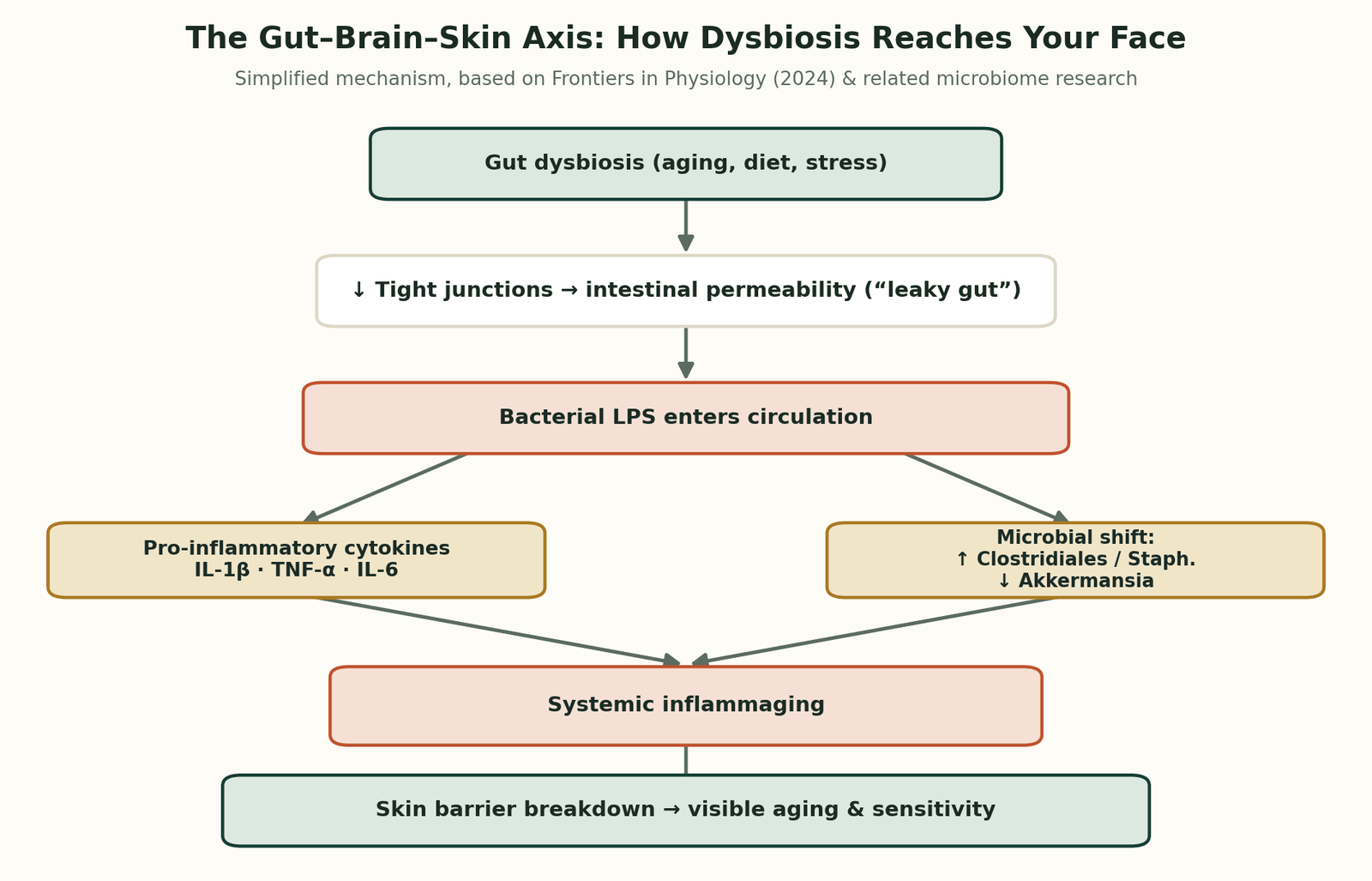
That’s the same net effect described in the accumulated evidence: age-related gut dysbiosis “accentuates inflammaging by further promoting senescent cell accumulation and compromising the host’s immune response” — which shows up on the outside as a compromised skin barrier, increased sensitivity, and accelerated visible aging.
Why Akkermansia keeps coming up
Akkermansia muciniphila is one of the more consistently studied “longevity-associated” gut bacteria, and its inverse relationship with senescence markers in the skin-aging literature isn’t an isolated finding — it shows up across gut-health and metabolic research generally. If you want to go deeper on how to support Akkermansia levels through diet, we’ve written a full breakdown in Akkermansia, pomegranate, and cranberries as a natural GLP-1 strategy, which covers the food-based levers most people can pull without supplementation.
The histamine and gut-lining connection
Two other pieces of this system are worth connecting. A compromised, permeable gut lining is also a common precursor to histamine-related symptoms — bloating, flushing, and brain fog — which we cover in our histamine intolerance guide. And because the gut lining itself is what’s failing in “leaky gut,” direct repair strategies matter: our L-glutamine gut-repair protocol and 4-day bone broth reset both target the tight-junction integrity that this entire cascade depends on. If you’ve tried the basics and nothing is sticking, it’s worth reading why your gut isn’t healing even though you’re doing everything right.
Practical steps to support the axis
- Feed short-chain fatty acid (SCFA) producers. The Firmicutes-to-Bacteroidetes ratio in the gut plays a pivotal role in SCFA generation, which supports gut barrier integrity beyond the digestive tract itself. Fiber-rich, polyphenol-rich foods (berries, pomegranate, leafy greens) feed these bacteria directly.
- Address tight-junction integrity, not just “probiotics” broadly. A scattershot probiotic isn’t the same as a targeted one — match your strategy to your actual symptoms using our symptom-based probiotic guide.
- Treat chronic stress as a skin-aging variable, not just a mood issue. Stress is a direct driver of intestinal permeability, which puts it upstream of the entire inflammaging cascade described above.
- Don’t ignore recurring digestive symptoms in the name of skincare. If bloating, irregular digestion, or reflux are ongoing, the inflammatory signal reaching your skin is unlikely to resolve until the gut issue is addressed directly.
Frequently asked questions
Is the gut-skin-brain axis the same thing as the gut-brain axis?
They overlap. The gut-brain axis describes bidirectional gut-to-brain signaling broadly (mood, cognition, appetite). The gut-skin dimension is a specific downstream consequence of the same dysbiosis and inflammatory pathway, expressed in skin tissue rather than the central nervous system.
How long does it take to see a skin difference after improving gut health?
There’s no universally validated timeline in the research; cellular turnover in skin generally takes several weeks, so most practitioners suggest evaluating a consistent gut-support protocol over at least 8–12 weeks before judging results.
Can probiotics alone fix inflammaging-driven skin aging?
Unlikely on their own. The research points to a systemic pathway involving barrier integrity, specific bacterial ratios, and chronic inflammation — probiotics are one lever among several, not a standalone fix.
This article summarizes emerging research for educational purposes and is not medical advice. Speak with a healthcare provider about persistent digestive or skin symptoms.

Julian Vance is the writer and editor behind RegenStep, translating peer-reviewed longevity, metabolic, and gut-health research into practical, actionable guides. Julian is not a licensed physician; content is reviewed against cited primary sources and is for informational purposes only. Always consult a qualified healthcare provider for personal medical advice.