
The frontier of modern regenerative medicine is no longer defined by broad-spectrum pharmaceuticals or blunt surgical interventions. It is being rewritten by therapeutic peptides—highly specific, short chains of amino acids that act as the master signaling molecules of the human body. Unlike traditional small-molecule drugs that often force a physiological response through receptor blockade, or massive biologic antibodies that trigger heavy immune cascades, peptides are the native language of your cells. They whisper instructions to your DNA, instructing tissues to heal, mitochondria to optimize, and hormones to rebalance.
As a physician focused on longevity and metabolic optimization, I view therapeutic peptides as the ultimate bridge between biohacking and rigorous clinical pharmacology. They offer a level of precision that was unimaginable a decade ago, capable of accelerating tendon repair, reversing neuroinflammation, and resetting the metabolic thermostat. However, the rapid commercialization of these compounds has created a chaotic landscape of research chemicals, FDA crackdowns, and dangerous mis-dosing. In this comprehensive, 3,500-word clinical masterclass, we will dissect the biochemistry of the most vital peptides, establish the strict protocols for safe subcutaneous delivery, and separate the peer-reviewed science from the wellness industry hype.
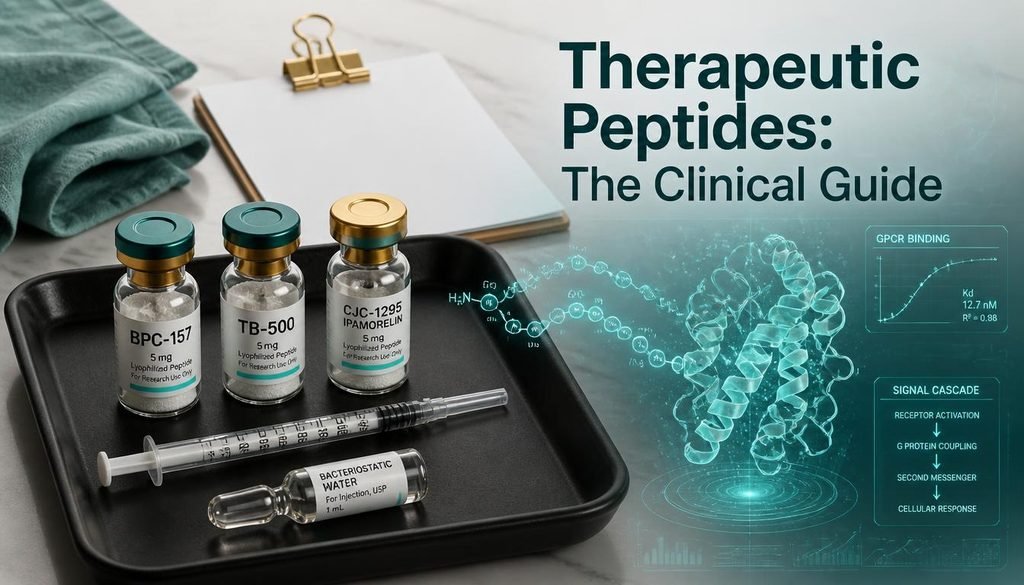
Therapeutic Peptides List: The Clinical Arsenal
To navigate this space, you must understand that peptides are not a monolith. They are categorized by their specific biological targets. While there are thousands of naturally occurring peptides in the human body, the following therapeutic peptides list represents the most heavily researched and clinically utilized compounds in modern longevity medicine.
1. The Healing and Tissue Repair Class
- BPC-157 (Body Protection Compound-157): A synthetic pentadecapeptide derived from a protective protein found in human gastric juice. It is the undisputed king of angiogenesis (new blood vessel formation) and soft tissue repair, heavily utilized for tendinopathies, gut permeability, and neuroprotection.
- TB-500 (Thymosin Beta-4): A synthetic fraction of the protein thymosin beta-4. It upregulates actin, a crucial structural protein in cells, promoting rapid cellular migration to wound sites, reducing systemic inflammation, and preventing the formation of scar tissue (fibrosis) after injury.
2. The Growth Hormone Secretagogues (GHS)
- CJC-1295 (with or without DAC): A synthetic analog of Growth Hormone-Releasing Hormone (GHRH). It signals the pituitary gland to release endogenous growth hormone in a pulsatile, natural manner, avoiding the severe side effects and receptor downregulation associated with exogenous HGH injections.
- Ipamorelin: A highly selective ghrelin receptor agonist. When stacked with CJC-1295, it amplifies the growth hormone pulse without significantly spiking cortisol or prolactin, making it the gold standard for improving sleep architecture, increasing lean muscle mass, and accelerating fat oxidation.
3. The Mitochondrial and Metabolic Modulators
- MOTS-c: A mitochondrial-derived peptide (MDP) encoded within the mitochondrial DNA itself. It acts as a systemic signaling molecule that activates the AMPK pathway, mimicking the metabolic benefits of exercise, improving insulin sensitivity, and combating age-related physical decline.
- SS-31 (Elamipretide): A tetrapeptide that specifically targets and binds to cardiolipin on the inner mitochondrial membrane. It stabilizes the electron transport chain, preventing electron leak and reducing the reactive oxygen species (ROS) that drive cellular aging.
4. The Cognitive and Neuro-Regenerative Class
- Semax: A synthetic heptapeptide derived from ACTH. It modulates dopamine and serotonin receptors, increases Brain-Derived Neurotrophic Factor (BDNF), and provides profound neuroprotection against ischemic damage and cognitive fatigue.
- Epitalon (Epithalon): A tetrapeptide based on the natural pineal gland hormone epithalamin. Its primary mechanism is the upregulation of telomerase, the enzyme responsible for lengthening and protecting telomeres, thereby extending the replicative lifespan of somatic cells.
💡 Action Step: Peptides like CJC-1295 and MOTS-c drive profound body recomposition, shifting the ratio of visceral fat to lean muscle. Standard scales cannot capture this metabolic shift. Track your true body composition using our Advanced BMI Calculator and our Body Fat Calculator to ensure your peptide protocols are translating into measurable tissue optimization.
Therapeutic Peptides Injections: Delivery, Reconstitution, and Bioavailability
The most common point of failure in peptide therapy is improper administration. Because therapeutic peptides are composed of amino acids, the human digestive system treats them exactly like dietary protein. If you swallow a peptide capsule, your stomach acid and proteolytic enzymes will rapidly cleave the peptide bonds, destroying the molecule before it ever reaches systemic circulation. Therefore, therapeutic peptides injections remain the gold standard for clinical efficacy.
The Subcutaneous (SubQ) Route
The vast majority of systemic peptides are administered via subcutaneous injection—delivering the compound into the adipose (fat) tissue just beneath the skin, typically in the abdominal area or the love handles. SubQ delivery provides a slow, sustained release of the peptide into the capillary beds, avoiding the rapid peaks and troughs associated with intravenous (IV) or intramuscular (IM) injections.
The Reconstitution Protocol
Most high-quality peptides are shipped as lyophilized (freeze-dried) powders in sterile glass vials. This preserves the delicate molecular structure during transport. Before injection, the powder must be reconstituted using Bacteriostatic Water (sterile water containing 0.9% benzyl alcohol to prevent bacterial growth).
- Swab: Vigorously clean the rubber stoppers of both the peptide vial and the bacteriostatic water vial with an isopropyl alcohol pad.
- Draw: Using a standard syringe, draw the desired amount of bacteriostatic water (typically 1mL to 2mL, depending on the desired concentration).
- Inject and Mix: Inject the water into the peptide vial. Crucial: Do not shake the vial. Peptides are fragile; violent agitation can shear the amino acid chains. Instead, gently swirl the vial until the powder is completely dissolved and the liquid is crystal clear.
- Storage: Once reconstituted, the peptide must be stored in the refrigerator (2°C to 8°C). The introduction of water initiates a degradation clock; most reconstituted peptides remain fully potent for 30 to 45 days when kept cold and protected from light.
Peptide Math: Micrograms vs. Units
The most dangerous aspect of therapeutic peptides injections is the dosing math. Peptides are dosed in micrograms (mcg), not milligrams (mg). A standard U-100 insulin syringe is marked in “Units,” where 100 Units = 1 mL.
If you reconstitute a 5mg (5,000mcg) vial of BPC-157 with 2mL of bacteriostatic water, the concentration is 2,500mcg per mL. Therefore, drawing 10 “Units” on an insulin syringe (which is 0.1mL) will deliver exactly 250mcg of the peptide. Miscalculating this ratio by a factor of 10 is a frequent error that leads to either subclinical under-dosing or severe adverse reactions. Always map your math before drawing the plunger.
Therapeutic Peptides Uses: From Tissue Repair to Neuroprotection
The clinical applications of these compounds are vast, primarily because they target the fundamental mechanisms of cellular homeostasis. Understanding the specific therapeutic peptides uses allows practitioners to deploy them with surgical precision.
1. Orthopedics and Soft Tissue Healing
The combination of BPC-157 and TB-500 is frequently referred to as the “Wolverine Stack” in biohacking communities, but the underlying science is highly rigorous. BPC-157 upregulates the expression of Vascular Endothelial Growth Factor (VEGF), forcing the body to build new capillary networks into avascular tissues like tendons and ligaments. TB-500 prevents the cross-linking of collagen that leads to stiff, brittle scar tissue. Together, they are used clinically to accelerate recovery from rotator cuff tears, Achilles tendinopathy, and severe muscle strains.
2. Gastrointestinal Repair
BPC-157 was originally isolated from human gastric juice. Its primary evolutionary function is to protect and heal the gut lining. In functional medicine, it is deployed to treat inflammatory bowel disease (IBD), ulcers, and severe intestinal permeability (leaky gut). It modulates the nitric oxide (NO) system, protecting the endothelial lining of the gut and accelerating the closure of tight junctions. For a deeper dive into repairing the mucosal barrier, read our comprehensive guide on Leaky Gut Supplements: The Clinical Protocol to Seal Your Intestinal Barrier.
3. Neuroprotection and Cognitive Enhancement
Peptides like Semax and Cerebrolysin (a complex of porcine-derived peptides) cross the blood-brain barrier to modulate neurotrophins. They are used in Eastern Europe and increasingly in Western functional medicine to treat traumatic brain injury (TBI), stroke recovery, and severe brain fog. By upregulating BDNF and Nerve Growth Factor (NGF), they promote neurogenesis and synaptic plasticility, effectively rewiring damaged neural circuits.
4. Immune Modulation and Thymic Regeneration
As we age, the thymus gland (the training ground for T-cells) undergoes involution, shrinking and turning to fat. This leads to immunosenescence—the age-related decline of the adaptive immune system. Peptides like Thymosin Alpha-1 (TA1) and Thymulin are used to modulate the immune response, enhancing the body’s ability to clear viral infections and senescent cells without triggering autoimmune hyper-reactivity.
Therapeutic Peptides Mechanism of Action: The Cellular Signaling Keys
To understand why therapeutic peptides are so potent, we must examine the therapeutic peptides mechanism of action at the receptor level. Unlike traditional pharmaceuticals that often act as antagonists (blocking a receptor to stop a symptom), peptides primarily act as agonists (binding to a receptor to trigger a natural, downstream biological cascade).
G-Protein Coupled Receptors (GPCRs)
The vast majority of signaling peptides exert their effects by binding to GPCRs on the surface of the cell membrane. When a peptide like Ipamorelin binds to the ghrelin receptor (a GPCR), it causes a conformational change in the receptor’s shape. This activates an intracellular G-protein, which then triggers a secondary messenger cascade (like cAMP or intracellular calcium release). This cascade travels to the nucleus and alters gene transcription, instructing the pituitary gland to synthesize and release growth hormone.
Intracellular and Mitochondrial Targets
Some peptides bypass the cell membrane entirely. SS-31 (Elamipretide) is a cell-penetrating peptide that carries a positive charge, allowing it to be drawn across the cellular and mitochondrial membranes. Once inside the mitochondria, it selectively binds to cardiolipin, a unique phospholipid located exclusively on the inner mitochondrial membrane. By stabilizing cardiolipin, SS-31 optimizes the structural integrity of the electron transport chain complexes, drastically reducing electron leak and restoring ATP production in aging cells.
The Absence of Receptor Downregulation
One of the most profound advantages of the therapeutic peptides mechanism of action is the preservation of receptor sensitivity. When you inject exogenous testosterone or synthetic HGH, the body detects the massive, unphysiological surplus and downregulates its own receptors and endogenous production (causing testicular atrophy or pituitary suppression). Because secretagogue peptides like CJC-1295 merely signal the body to produce its own hormones in a natural, pulsatile manner, the endocrine feedback loops remain intact, and receptor downregulation is avoided.
Therapeutic Peptides Review: Navigating the FDA Crackdown and Quality Control
If you are conducting a therapeutic peptides review of the current market, you must address the massive regulatory earthquake that occurred in late 2023 and 2024. For years, the peptide market operated in a gray area, with compounding pharmacies and “research chemical” websites selling vials labeled “Not for Human Consumption.”
The FDA Category 2 Crackdown
In November 2023, the FDA issued a sweeping guidance document regarding the compounding of bulk drug substances. The agency placed several highly popular peptides—including BPC-157, Thymosin Alpha-1, and various GHK-Cu formulations—onto the “Category 2” list. This designation effectively banned FDA-registered 503A and 503B compounding pharmacies from legally compounding these specific peptides, citing a lack of sufficient clinical safety data and the fact that they are not naturally occurring substances found in the human body.
The Danger of “Research Chemicals”
With the compounding pharmacies restricted, many consumers have turned to overseas “research chemical” websites. This is a profound clinical risk. A rigorous therapeutic peptides review of these unregulated vials frequently reveals:
- Under-dosing: Vials labeled as 10mg often contain less than 3mg of the active peptide.
- Heavy Metal Contamination: Improper synthesis and purification processes leave toxic catalysts (like palladium) in the final product.
- Endotoxins: A lack of sterile manufacturing introduces bacterial endotoxins (LPS) into the vial, which, when injected subcutaneously, can trigger severe localized infections or systemic inflammatory cascades.
The Gold Standard: Third-Party Testing
If you are utilizing therapeutic peptides, you must demand a Certificate of Analysis (COA) from an independent, third-party laboratory (such as Janoshik or MZ Biolabs). The COA must verify three things:
- Identity: Mass spectrometry confirming the exact amino acid sequence.
- Purity: High-Performance Liquid Chromatography (HPLC) confirming >98% purity, with no truncated peptide fragments.
- Net Peptide Content: Verifying the exact milligram yield in the vial, accounting for the excipients and moisture weight.
Therapeutic Peptides for Weight Loss: The Incretin Revolution
No discussion of this topic is complete without addressing the most commercially successful application in medical history: therapeutic peptides for weight loss. The advent of GLP-1 and GIP receptor agonists has fundamentally rewritten the clinical approach to obesity, metabolic syndrome, and cardiovascular disease.
The Biochemistry of Satiety
Peptides like Semaglutide (Ozempic/Wegovy) and Tirzepatide (Mounjaro/Zepbound) are synthetic analogs of human incretin hormones.
- GLP-1 (Glucagon-Like Peptide-1): Secreted by the L-cells of the gut in response to food, GLP-1 travels to the hypothalamus to induce profound satiety, slows gastric emptying, and stimulates glucose-dependent insulin release from the pancreas.
- GIP (Glucose-Dependent Insulinotropic Polypeptide): Tirzepatide is a dual-agonist that targets both GLP-1 and GIP receptors. This synergistic action not only amplifies weight loss but also improves lipid metabolism and reduces the nausea commonly associated with pure GLP-1 agonists.
The Clinical Outcomes
The SELECT trial demonstrated that Semaglutide not only drove a 15% to 20% reduction in total body weight but also reduced the risk of major adverse cardiovascular events (MACE) by 20% in non-diabetic adults with overweight or obesity. These therapeutic peptides for weight loss are not merely cosmetic tools; they are profound metabolic interventions that resolve visceral adiposity, lower systemic inflammation, and reverse hepatic steatosis (fatty liver).
The Sarcopenia Caveat: The Muscle Loss Trap
The primary clinical danger of rapid, peptide-induced weight loss is sarcopenia. Up to 40% of the weight lost on high-dose GLP-1 agonists can be lean skeletal muscle mass and bone mineral density. Because muscle is the primary metabolic sink for glucose, losing it guarantees a severe metabolic rebound if the peptide is ever discontinued.
To mitigate this, patients on therapeutic peptides for weight loss must adhere to a strict clinical protocol:
- High Protein Intake: Consume a minimum of 0.8g to 1g of protein per pound of ideal body weight to provide the amino acid substrates required to preserve lean tissue. Use our Protein Intake Calculator to establish your exact daily target.
- Heavy Resistance Training: You must send a mechanical signal to your body that muscle is required for survival. Lift heavy weights 3 times a week.
- Caloric Floor: Do not starve yourself. Use our TDEE Calculator to ensure you are eating enough to support cellular repair while maintaining a mild, sustainable caloric deficit.
💡 Action Step: GLP-1 peptides drastically slow gastric emptying, which can alter the absorption of oral medications and supplements. Furthermore, rapid weight loss can temporarily elevate uric acid levels as fat cells release their stored contents. Monitor your metabolic baseline and ensure you are staying aggressively hydrated to support renal clearance.
Peptide Drug Development: The Future of Precision Pharmacology
The transition of therapeutic peptides from the biohacking underground to mainstream, FDA-approved pharmacology represents one of the most exciting frontiers in modern medicine. The historical limitation of the peptide drug has always been bioavailability and half-life. Natural peptides are cleared from the bloodstream by renal filtration and enzymatic degradation in a matter of minutes.
Half-Life Extension Technologies
Pharmacologists have developed ingenious methods to extend the half-life of peptide drugs from minutes to days or even weeks:
- PEGylation: Attaching polyethylene glycol (PEG) chains to the peptide, which increases its hydrodynamic radius, preventing it from being filtered out by the kidneys.
- Fatty Acid Acylation: Binding a fatty acid tail to the peptide (as seen in Semaglutide). This allows the peptide to bind to serum albumin in the bloodstream, acting as a massive carrier protein that shields it from enzymatic degradation and provides a slow, continuous release over 7 days.
- Peptide Stapling: Using chemical bridges to “staple” the peptide into a rigid alpha-helix structure. This prevents proteolytic enzymes from unfolding and cleaving the molecule, vastly increasing its stability and cellular penetration.
The Oral Peptide Holy Grail
The ultimate goal of peptide drug development is the oral pill. In 2019, the FDA approved oral semaglutide (Rybelsus), achieving the impossible by co-formulating the peptide with SNAC (Sodium N-[8-(2-hydroxybenzoyl) amino] caprylate). SNAC locally buffers the stomach acid and temporarily increases the permeability of the gastric mucosa, allowing the massive peptide molecule to slip into the bloodstream. As these delivery technologies mature, the need for subcutaneous injections will diminish, bringing the power of precision peptide therapy to the global masses.
Final Thoughts
Therapeutic peptides represent the ultimate realization of precision medicine. They do not force the body into an artificial state; they provide the exact biochemical syntax required for the body to heal, regenerate, and optimize itself. From the rapid tissue repair orchestrated by BPC-157 to the profound metabolic reset driven by GLP-1 agonists, these molecules are redefining the boundaries of human healthspan.
However, with profound biological power comes the necessity for rigorous clinical oversight. The era of blindly injecting unverified research chemicals must end. By understanding the exact mechanism of action, respecting the mathematics of subcutaneous reconstitution, and demanding third-verified purity, you can safely harness these compounds. Pair your peptide protocols with the foundational pillars of longevity—Zone 2 cardio, heavy resistance training, and circadian fasting—and you will build a biological architecture capable of withstanding the test of time.
Frequently Asked Questions (FAQ)
1. What are therapeutic peptides and how do they work?
Therapeutic peptides are short chains of amino acids that act as signaling molecules in the body. They work by binding to specific receptors (like G-Protein Coupled Receptors) on the surface of cells, triggering natural intracellular cascades that instruct the body to repair tissue, release hormones, or modulate the immune system without causing receptor downregulation.
2. Why do therapeutic peptides require injections?
Because peptides are composed of amino acids, the digestive system treats them like dietary protein, breaking them down with stomach acid and enzymes before they can reach the bloodstream. Subcutaneous injections bypass the digestive tract, delivering the intact peptide directly into the systemic circulation for maximum bioavailability.
3. What is the best therapeutic peptide for weight loss?
Tirzepatide (a dual GLP-1 and GIP receptor agonist) and Semaglutide (a GLP-1 agonist) are currently the most effective and FDA-approved therapeutic peptides for weight loss. They work by delaying gastric emptying, signaling profound satiety to the hypothalamus, and improving insulin sensitivity, leading to significant reductions in visceral fat.
4. Are therapeutic peptides legal and FDA approved?
Several peptide drug formulations, such as Semaglutide (Ozempic), Liraglutide, and Bremelanotide, are fully FDA-approved. However, in late 2023, the FDA restricted compounding pharmacies from producing many popular “biohacking” peptides like BPC-157 and Thymosin Alpha-1 due to a lack of standardized clinical safety data, pushing many of these compounds into an unregulated “research chemical” gray market.
5. How do you reconstitute and store lyophilized peptides?
Lyophilized (freeze-dried) peptides must be reconstituted using Bacteriostatic Water (sterile water with 0.9% benzyl alcohol). The water should be gently swirled into the vial, never shaken, to prevent shearing the fragile amino acid chains. Once reconstituted, the peptide vial must be stored in the refrigerator (2°C to 8°C) and typically remains potent for 30 to 45 days.
⚕️ Medical Disclaimer
The content provided on RegenStep.com, including this comprehensive guide authored by Dr. Julian Vance, is strictly for educational and informational purposes only. It is not intended to be a substitute for professional medical advice, diagnosis, or treatment.
The administration of therapeutic peptides, particularly growth hormone secretagogues, GLP-1 agonists, and immune modulators, carries significant physiological risks, including hypoglycemia, thyroid C-cell hyperplasia, and severe immune reactions. Many peptides discussed in this article are classified as experimental or restricted by the FDA and should not be sourced from unregulated “research chemical” vendors due to the high risk of contamination and mis-dosing. Always consult with a board-certified endocrinologist, longevity physician, or qualified healthcare provider before initiating any peptide therapy, particularly if you have a history of malignancy, cardiovascular disease, or metabolic disorders.

Julian Vance is the writer and editor behind RegenStep, translating peer-reviewed longevity, metabolic, and gut-health research into practical, actionable guides. Julian is not a licensed physician; content is reviewed against cited primary sources and is for informational purposes only. Always consult a qualified healthcare provider for personal medical advice.