
You can spend eight hours in bed, wake up, and still feel as though your brain is wrapped in wet cotton. The modern obsession with “total sleep time” is a profound biological error. Time in bed is merely the container; the actual restorative magic lies entirely within the structural organization of your sleep cycles. To truly optimize REM sleep and deep slow-wave sleep, you must stop treating sleep as a passive state of unconsciousness and start treating it as a highly orchestrated, neurochemically active performance.
As a physician focused on longevity and cognitive optimization, I review wearable sleep data from executives, athletes, and biohackers every week. The pattern is universally tragic: they are investing in $5,000 mattresses and blackout curtains, yet their sleep architecture is in ruins. Their deep sleep is fragmented by undiagnosed airway resistance, and their REM sleep is chemically annihilated by evening alcohol and late-night screen exposure. In this comprehensive, 3,500-word clinical masterclass, we will dissect the exact neurochemistry of the 90-minute ultradian rhythm, expose the supplements and foods that act as architectural levers, and provide the precise evening protocol required to double your restorative cycles and reclaim your cognitive dominance.
How to Architect the Perfect Night
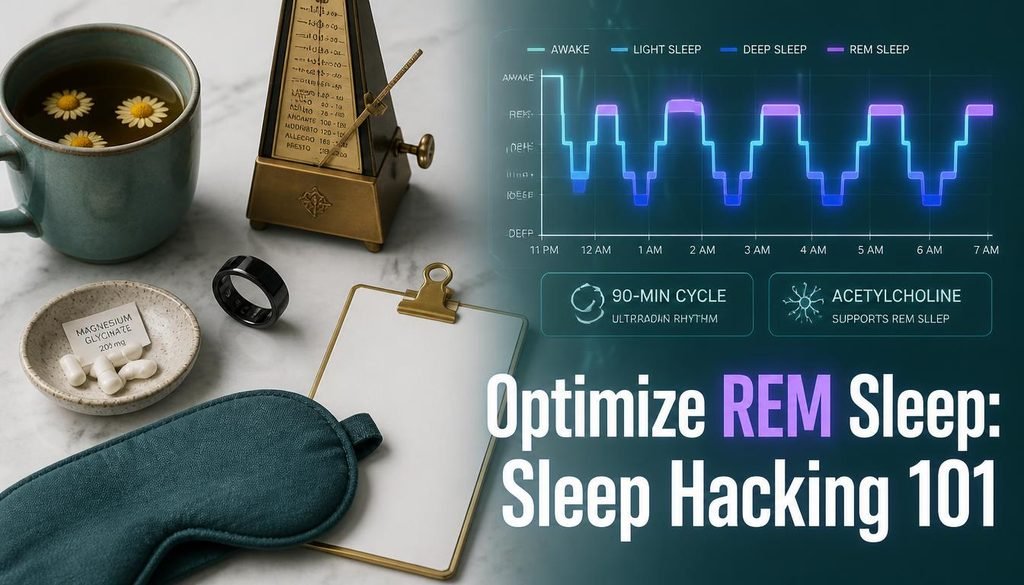
Before we can hack the system, we must understand the blueprint. Sleep is not a uniform descent into darkness; it is a cyclical journey through distinct neurological states, each governed by a specific master neurotransmitter. A healthy adult cycles through these stages four to six times a night, with each cycle lasting roughly 90 minutes.
The Deep Sleep Imperative (NREM Stage 3)
Deep sleep, or slow-wave sleep, dominates the first half of the night. During this phase, your brainwaves slow to massive, synchronized delta waves (0.5 to 4 Hz). Your core body temperature drops, your blood pressure falls, and your pituitary gland releases its largest daily pulse of human growth hormone. This is the physical rebuild phase. Furthermore, deep sleep is when the glymphatic system opens its floodgates, washing cerebrospinal fluid through your brain tissue to clear neurotoxic waste, including beta-amyloid plaques.
The REM Sleep Imperative (Rapid Eye Movement)
As the night progresses, deep sleep diminishes and REM sleep expands, dominating the final two cycles before you wake. During REM, your brain is highly active—almost as active as when you are awake—but your body is paralyzed (REM atonia) to prevent you from acting out your dreams. Neurochemically, REM is characterized by a massive spike in acetylcholine (driving learning and memory) and a complete shutdown of norepinephrine (the stress molecule). This unique chemical environment allows your brain to process emotional memories, strip them of their visceral pain, and connect disparate ideas to foster creative problem-solving. It is your overnight therapist.
If you want to optimize REM sleep, you must protect the final two hours of your night. Cutting your sleep short from 8 hours to 6 hours does not reduce your REM sleep by 25%; it slashes it by up to 90%, because you are amputating the exact cycles where REM lives.
Increase REM Sleep Naturally
You cannot force your brain into REM sleep through sheer willpower; you must create the precise physiological conditions that allow the brainstem to initiate it. Here are the foundational, non-negotiable levers for natural REM enhancement.
1. Circadian Anchoring and the Melatonin Cascade
REM sleep is heavily dependent on a robust circadian rhythm. The timer for your nocturnal melatonin release is set the moment photons of sunlight hit the melanopsin receptors in your eyes.
- The Protocol: Within 30 minutes of waking, get 10 to 15 minutes of direct outdoor sunlight in your eyes (no sunglasses). This anchors your suprachiasmatic nucleus (SCN) and sets a 14-to-16-hour timer for melatonin synthesis. Without this morning anchor, your evening melatonin pulse will be weak and delayed, fragmenting your sleep architecture and blunting REM onset.
2. Thermal Manipulation (The Core Temperature Drop)
To enter and maintain deep sleep and transition smoothly into REM, your core body temperature must drop by roughly 2 to 3 degrees Fahrenheit. If your bedroom is too warm, or if you eat a heavy, thermogenic meal right before bed, your body cannot shed this heat.
- The Protocol: Set your bedroom temperature to 65°F–68°F (18°C–20°C). Take a hot shower or sauna session 90 minutes before bed. The heat draws blood to the surface of your skin; when you step out into the cool air, your core rapidly dumps heat, triggering the exact thermoregulatory signal required for deep sleep onset.
3. Vagal Toning and Parasympathetic Dominance
You cannot enter REM sleep if your sympathetic nervous system (fight-or-flight) is active. High circulating cortisol and adrenaline actively suppress the brainstem nuclei responsible for initiating REM.
- The Protocol: Implement a 10-minute Non-Sleep Deep Rest (NSDR) or Yoga Nidra protocol before bed. This guided relaxation manually stimulates the vagus nerve, shifting your autonomic nervous system into a parasympathetic state and clearing residual adrenaline from your bloodstream.
💡 Action Step: Visceral fat is the silent destroyer of sleep architecture. Excess central adiposity pushes against the diaphragm when you lie supine, collapsing the airway and triggering hundreds of micro-arousals that pull you out of REM and into light sleep. Standard scales cannot detect this hidden threat. Track your true metabolic risk using our Advanced BMI Calculator and our Body Fat Calculator to ensure your airway remains unobstructed during the night.
What Can I Take to Increase REM Sleep?
The supplement industry is flooded with “sleep aids” that act as blunt sedatives. Sedation is not sleep; it is merely the temporary suppression of consciousness. True optimize REM sleep protocols utilize compounds that facilitate natural sleep architecture without blunting the REM stage.
The REM-Preserving Stack
- Magnesium L-Threonate or Glycinate (200-400mg): Magnesium acts as a natural calcium-channel blocker, calming the nervous system. The L-Threonate form specifically crosses the blood-brain barrier to enhance synaptic density, while Glycinate provides glycine, which lowers core body temperature.
- L-Theanine (100-200mg): An amino acid found in green tea that increases alpha brain waves, promoting a state of relaxed alertness and easing the transition into sleep without acting as a sedative.
- Apigenin (50mg): A derivative of chamomile that binds to benzodiazepine receptors in the brain, acting as a mild, non-addictive anxiolytic to quiet the “racing mind” that prevents sleep onset.
- Inositol (900mg – 2g): A pseudo-vitamin that modulates serotonin and dopamine receptors. High-dose myo-inositol is highly effective at reducing nocturnal anxiety and preventing the 3 AM cortisol awakenings that destroy late-night REM cycles.
The REM Destroyers (What to Avoid)
If you want to optimize REM sleep, you must ruthlessly eliminate the compounds that chemically block it:
- Alcohol: The ultimate REM assassin. While it may help you lose consciousness faster, alcohol metabolism severely fragments the second half of the night and actively suppresses REM sleep.
- THC / Cannabis: Like alcohol, THC drastically reduces the time spent in REM sleep. Chronic users often report a cessation of dreaming; when they quit, they experience a massive, chaotic “REM rebound” as the brain attempts to recover lost processing time.
- Late Caffeine: With a quarter-life of 12 hours, a 2 PM coffee is still actively blocking your adenosine (sleep pressure) receptors at midnight, reducing both deep and REM sleep density.
Too Much REM Sleep Symptoms
In longevity medicine, we operate on the principle of the Goldilocks zone: more is not always better. While REM deprivation is a modern epidemic, an excess of REM sleep—often referred to as REM rebound or hypersomnia—can be equally distressing and is a clinical red flag for underlying pathology.
The Symptoms of REM Excess
- Vivid, Exhausting Nightmares: If your brain is spending an inordinate amount of time in REM, you may experience intense, emotionally taxing dreams that leave you waking up feeling psychologically drained rather than refreshed.
- Sleep Inertia and Grogginess: Waking up directly out of a prolonged REM cycle (rather than light sleep) causes severe sleep inertia. You feel disoriented, heavy, and cognitively foggy for hours.
- Daytime Fatigue and Narcolepsy: Paradoxically, too much REM at night can correlate with severe daytime sleepiness, a hallmark of narcolepsy, where the brain inappropriately intrudes REM sleep into waking hours.
- Depressive Episodes: Clinical depression is heavily correlated with an overabundance of REM sleep and a rapid onset of REM upon falling asleep (shortened REM latency). The brain is over-processing negative emotional loops.
Why Does REM Rebound Happen?
REM rebound typically occurs after a period of severe REM deprivation. If you have been drinking alcohol nightly, taking SSRI antidepressants (which heavily suppress REM), or suffering from untreated sleep apnea, and you suddenly stop the offending agent, your brain will aggressively overcompensate, flooding your night with intense, unbroken REM cycles to clear the emotional and cognitive backlog.
What Foods Increase REM Sleep?
Your brain requires specific biochemical precursors to synthesize the neurotransmitters that govern the sleep-wake cycle. While you cannot eat a food and instantly fall asleep, strategic evening nutrition can heavily favor the production of serotonin, melatonin, and acetylcholine.
1. Tryptophan-Rich Proteins + Complex Carbohydrates
Tryptophan is the essential amino acid precursor to serotonin, which is subsequently converted into melatonin. However, tryptophan competes with other large neutral amino acids (LNAAs) to cross the blood-brain barrier.
- The Hack: Consuming a small amount of complex carbohydrates (like a half-sweet potato or a small bowl of oats) 90 minutes before bed triggers a mild insulin release. Insulin drives the competing amino acids into your muscle tissue, leaving tryptophan with a “clear lane” to cross the blood-brain barrier and convert to melatonin. Ensure you are hitting your daily amino acid baseline using our Protein Intake Calculator.
2. Tart Cherry Juice
Montmorency tart cherries are one of the few natural dietary sources of exogenous melatonin. Clinical trials have shown that consuming 8 ounces of tart cherry juice twice daily can increase total sleep time and improve sleep efficiency, indirectly protecting the fragile REM cycles at the end of the night.
3. Kiwi Fruit
A landmark study from Taipei Medical University found that consuming two kiwis one hour before bed for four weeks significantly improved sleep onset, duration, and efficiency. Kiwis are exceptionally high in serotonin and antioxidants like Vitamin C, which help mitigate the oxidative stress that disrupts sleep architecture.
4. Choline-Rich Foods (For Acetylcholine)
Because REM sleep is driven by the neurotransmitter acetylcholine, ensuring adequate dietary choline is vital. Pasture-raised egg yolks, wild-caught salmon, and organ meats provide the raw materials your brainstem needs to initiate and sustain REM atonia and dreaming.
<h7>How to Enter REM Sleep Immediately</h7>
From a strict neurobiological standpoint, it is impossible for a healthy human brain to enter REM sleep immediately upon closing your eyes. Normal sleep onset latency requires you to pass through Stage 1 (light sleep) and Stage 2 (sleep spindles) before descending into Deep Sleep. REM typically does not occur until 90 minutes into the sleep cycle.
If you are entering REM sleep within 15 minutes of falling asleep (a phenomenon known as Sleep Onset REM Periods, or SOREMPs), it is not a “biohacking success.” It is a clinical indicator of severe sleep deprivation, narcolepsy, or acute withdrawal from REM-suppressing medications.
The “Wake Back to Bed” (WBTB) Protocol
If your goal is to experience prolonged, highly vivid REM sleep (often utilized by lucid dreamers), you can hack the ultradian rhythm using the WBTB method:
- Set an alarm for roughly 4.5 to 6 hours after you fall asleep.
- Wake up and stay awake for 20 to 30 minutes. Keep the lights dim and read a physical book (no screens).
- Return to bed. Because your deep sleep requirements have already been met in the first half of the night, your brain will bypass deep sleep and drop almost immediately into a massive, prolonged REM cycle.
Clinical Warning: Do not use WBTB if you are sleep-deprived or suffer from insomnia. It is an advanced tool for exploring consciousness, not for foundational health.
<h8>Lack of REM Sleep Symptoms</h8>
When you chronically fail to optimize REM sleep, the neurological and emotional consequences are swift and severe. Because REM is the phase where the brain processes emotional data and consolidates procedural memory, a deficit manifests primarily in your waking psychology and cognitive agility.
- Emotional Dysregulation: The amygdala (the brain’s emotional threat-detector) becomes up to 60% more reactive when REM-deprived. You become irritable, anxious, and highly reactive to minor stressors.
- Impaired Creative Problem Solving: REM sleep connects unrelated neural networks. Without it, you lose the ability to “think outside the box” or find novel solutions to complex problems.
- Poor Motor Skill Consolidation: If you are learning a new sport, instrument, or physical skill, the actual “saving” of that motor memory happens during REM. Lack of REM halts physical learning.
- Increased Appetite and Weight Gain: REM deprivation disrupts the balance of leptin and ghrelin, driving intense cravings for high-glycemic, ultra-processed foods the following day. To manage the metabolic fallout of poor sleep, track your baseline energy needs with our TDEE Calculator.
<h9>Is REM Sleep Good or Bad?</h9>
This is a trick question that requires a nuanced, clinical answer. REM sleep is absolutely vital for a healthy, resilient, and creative human brain. It is the ultimate psychological defense mechanism, stripping the visceral pain from traumatic memories and preserving the narrative.
However, REM sleep can become “bad” or maladaptive in specific clinical contexts:
- PTSD and Nightmares: In individuals with severe Post-Traumatic Stress Disorder, the noradrenergic system fails to shut down during REM. The brain attempts to process the trauma but is flooded with stress chemicals, resulting in terrifying, repetitive nightmares. In these cases, clinicians may temporarily prescribe REM-suppressing medications (like Prazosin) to give the patient psychological rest.
- Depression: As mentioned, depressed individuals often have an overabundance of REM sleep, ruminating on negative emotional loops.
- The Deep Sleep Trade-Off: If your sleep is highly fragmented (due to noise, light, or apnea), your brain will prioritize Deep Sleep for physical survival at the direct expense of REM. You cannot “hack” your way into more REM if your foundational deep sleep and airway patency are compromised.
What Causes Lack of REM Sleep?
If your wearable tracker shows a dismal REM percentage, you must identify the architectural thief. The most common culprits include:
- Obstructive Sleep Apnea (OSA): The physical collapse of the airway causes oxygen desaturation. The brain panics, releases a spike of cortisol and adrenaline, and pulls you out of REM into light sleep to wake you up and breathe. If you snore or wake up with a dry mouth and morning headache, get a home sleep study immediately.
- SSRI and SNRI Antidepressants: These medications heavily suppress REM sleep. While they may alleviate acute depressive symptoms, the long-term architectural cost is a massive reduction in REM density.
- Blue Light Exposure After Dark: Artificial blue light from LEDs and screens tricks the SCN into believing it is noon, halting melatonin production and delaying the onset of the first sleep cycle, ultimately compressing the REM-heavy cycles at the end of the night.
- Circadian Misalignment: Going to bed at 2 AM and waking at 10 AM misaligns your sleep with the natural drop in environmental temperature and the rise of morning cortisol, severely blunting REM efficiency. Align your feeding and fasting windows to support your circadian rhythm using our Intermittent Fasting Calculator.
The Ultimate Evening Protocol to Optimize REM Sleep
To synthesize this biochemistry into an actionable routine, implement this 90-minute pre-sleep protocol:
- T-Minus 120 Minutes: Close the kitchen. Digestion raises core body temperature and heart rate, fragmenting early sleep cycles.
- T-Minus 90 Minutes: Dim all overhead lights. Switch to floor lamps with amber or red bulbs. Put on blue-light-blocking glasses if you must look at a screen.
- T-Minus 60 Minutes: Consume a small, REM-supporting snack if needed (e.g., a kiwi and a small handful of walnuts, or a half-cup of tart cherry juice).
- T-Minus 45 Minutes: Take your targeted supplement stack (Magnesium Glycinate, L-Theanine, Apigenin).
- T-Minus 30 Minutes: Hot shower or sauna to initiate the core temperature drop.
- T-Minus 10 Minutes: Get into a cool (65°F) room. Perform 10 minutes of NSDR or diaphragmatic breathing to stimulate the vagus nerve and shut down the sympathetic nervous system.
Final Thoughts
To optimize REM sleep is to reclaim the most powerful cognitive and emotional reset button in human biology. It is not enough to simply close your eyes and hope for the best. You must fiercely protect your sleep architecture from the chemical and environmental assaults of the modern world.
By anchoring your circadian rhythm with morning light, utilizing targeted amino acids to calm the nervous system, eliminating REM-destroying toxins like alcohol, and ensuring your airway remains clear of visceral fat, you provide your brain with the exact biochemical environment it needs to process, heal, and consolidate. Stop treating sleep as the time you lose, and start treating it as the ultimate performance-enhancing drug. Master your architecture, and your waking life will reflect the profound, quiet power of a fully restored mind.
Frequently Asked Questions (FAQ)
1. How can I optimize REM sleep naturally?
To optimize REM sleep naturally, anchor your circadian rhythm with 10 minutes of morning sunlight, drop your bedroom temperature to 65-68°F, and avoid alcohol and THC, which chemically suppress REM. Additionally, practicing Non-Sleep Deep Rest (NSDR) before bed lowers cortisol, allowing the brainstem to smoothly transition into REM cycles.
2. What supplements increase REM sleep?
Unlike heavy sedatives that blunt REM, supplements like Magnesium L-Threonate, L-Theanine, Apigenin, and high-dose Myo-Inositol help calm the nervous system and lower core body temperature, facilitating natural sleep architecture and protecting the fragile REM cycles in the second half of the night.
3. What are the symptoms of lack of REM sleep?
Symptoms of REM sleep deprivation include severe emotional dysregulation (irritability and anxiety), poor creative problem-solving, impaired motor skill consolidation, and increased cravings for high-glycemic foods due to disruptions in leptin and ghrelin hormones.
4. Can you enter REM sleep immediately?
No. A healthy brain must pass through light sleep and deep sleep before entering REM, which typically takes 90 minutes. Entering REM immediately upon falling asleep (Sleep Onset REM Periods) is a clinical red flag indicating severe sleep deprivation, narcolepsy, or withdrawal from REM-suppressing substances.
5. What causes a lack of REM sleep?
The most common causes of REM sleep deprivation are alcohol consumption, THC use, untreated obstructive sleep apnea (which causes micro-arousals), SSRI antidepressants, and late-night blue light exposure, which delays melatonin production and compresses the REM-heavy cycles at the end of the night.
⚕️ Medical Disclaimer
The content provided on RegenStep.com, including this comprehensive guide authored by Dr. Julian Vance, is strictly for educational and informational purposes only. It is not intended to be a substitute for professional medical advice, diagnosis, or treatment.
Sleep architecture manipulation and the use of targeted sleep supplements can interact with prescription medications, particularly psychiatric drugs, sedatives, and blood pressure medications. If you suspect you have obstructive sleep apnea, narcolepsy, or chronic insomnia, seek a formal evaluation from a board-certified sleep medicine physician. Never abruptly discontinue prescribed sleep or antidepressant medications without direct medical supervision, as this can trigger severe REM rebound and withdrawal syndromes.

Julian Vance is the writer and editor behind RegenStep, translating peer-reviewed longevity, metabolic, and gut-health research into practical, actionable guides. Julian is not a licensed physician; content is reviewed against cited primary sources and is for informational purposes only. Always consult a qualified healthcare provider for personal medical advice.