
If you have ever looked in the mirror and felt a profound disconnect between the date on your driver’s license and the physical reality of your energy, cognition, and recovery, you have intuitively grasped the core premise of modern longevity medicine. Your birth certificate dictates your chronological age—a rigid, unyielding metric of orbital mechanics. But your cells operate on an entirely different timeline. Biological age testing is the rigorous, quantifiable science of measuring the actual molecular wear-and-tear, epigenetic drift, and metabolic decay occurring inside your tissues. It is the ultimate feedback loop for anyone serious about extending their healthspan.
As a physician focused on cellular aging and metabolic optimization, I see patients spending thousands of dollars on peptides, hyperbaric oxygen, and exotic supplements, yet they have absolutely no objective data to prove whether these interventions are actually slowing their biological clock. Without measurement, longevity is just guesswork. In this comprehensive, 3,500-word clinical breakdown, we will dissect the biochemical reality of epigenetic clocks, expose the commercial scams of outdated telomere testing, and outline the exact testing and intervention protocols required to not just measure your biological age, but actively reverse it.
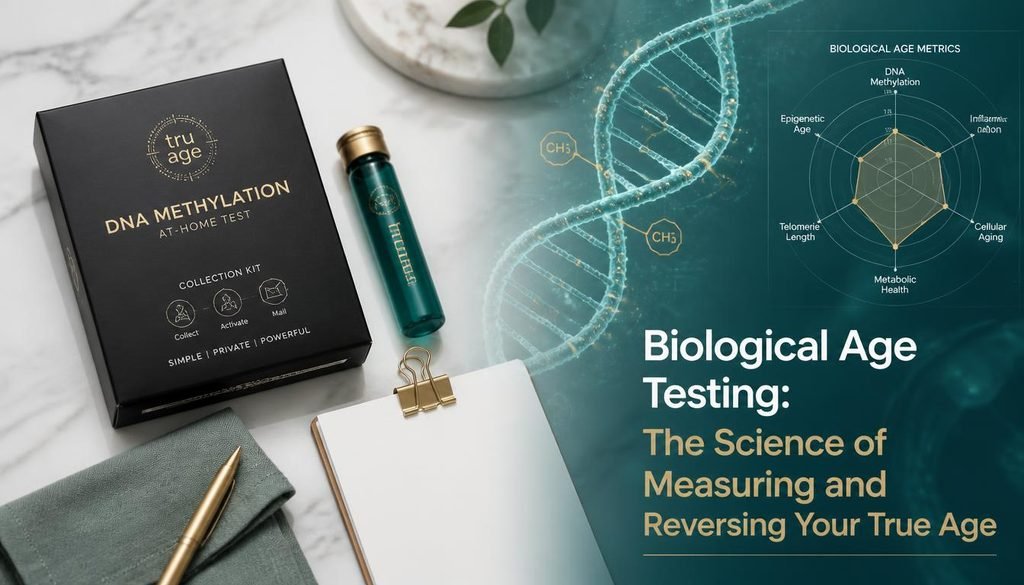
The Biology of Time: Chronological vs. Biological Age
To understand the value of biological age testing, we must first separate the calendar from the cell. Chronological age is simply the number of years you have been exposed to gravity, UV radiation, and environmental toxins. It is a fixed metric that ticks upward at a constant rate.
Biological age, however, measures the cumulative impact of the “Hallmarks of Aging”—genomic instability, telomere attrition, epigenetic alterations, mitochondrial dysfunction, and cellular senescence. It reflects how your specific genome has interacted with your unique lifestyle, diet, sleep architecture, and toxic burden.
Two individuals born on the exact same day in 1975 can have drastically different biological ages at 50. One might possess the cellular vitality, arterial elasticity, and mitochondrial density of a 40-year-old, while the other exhibits the accelerated epigenetic decay and systemic inflammation of a 65-year-old. Biological age testing provides a single, actionable number that captures this divergence, shifting the clinical focus from merely surviving the calendar to actively engineering cellular youth.
How Does Biological Age Testing Work? The Evolution of the Clocks
Modern longevity testing relies on complex machine-learning algorithms that analyze specific biomarkers of aging to generate your physiological age. The science has evolved rapidly over the last decade, moving from blunt estimations to highly precise predictors of mortality.
1. First-Generation Epigenetic Clocks (Horvath and Hannum)
The breakthrough in biological age testing occurred in 2013 when Dr. Steve Horvath discovered that by analyzing the methylation status of 353 specific CpG sites across the human genome, he could predict a person’s chronological age with astonishing accuracy.
DNA methylation is an epigenetic mechanism where chemical tags (methyl groups) are attached to your DNA, acting like volume knobs that turn specific genes on or off without altering the underlying genetic code. As we age, these methylation patterns drift in highly predictable ways. However, first-generation clocks had a fatal clinical flaw: they were trained to predict chronological age. If you were a highly optimized biohacker whose biological age was 10 years younger than your chronological age, the Horvath clock would simply flag your test as an “error” or “outlier,” because it was mathematically anchored to the calendar, not to your healthspan.
2. Second-Generation Clocks (GrimAge and PhenoAge)
To fix this, researchers trained new algorithms not on chronological age, but on time-to-death and clinical morbidity.
- GrimAge: Developed by Ake Lu and Steve Horvath, GrimAge incorporates DNA methylation surrogates for plasma proteins (like TIMP1 and GDF15) and smoking pack-years. It is currently one of the most robust predictors of all-cause mortality and age-related diseases.
- PhenoAge: Developed by Dr. Morgan Levine, this clock combines DNA methylation data with clinical blood markers (like albumin and CRP) to calculate your phenotypic age.
3. Third-Generation Clocks (DunedinPACE): The Speedometer
The absolute gold standard in modern biological age testing is DunedinPACE (Pace of Aging Computed from the Epigenome). Developed by researchers tracking a single birth cohort in Dunedin, New Zealand, from birth to midlife, this algorithm does not measure your static age; it measures your pace of aging.
DunedinPACE tells you how many biological years you are aging for every one chronological year. A pace of 1.0 means you are aging at the normal rate. A pace of 0.85 means you are aging 15% slower than the calendar. This is the ultimate tool for tracking interventions, because if you start a new fasting or Zone 2 cardio protocol, you can retest in 6 months and see if your pace has slowed, long before your static biological age shifts.
The Telomere Trap: Why It Is Outdated
For years, commercial companies marketed telomere length testing as the ultimate at-home age test. Telomeres are the protective caps at the ends of chromosomes that shorten with each cellular division. While critically important to the biology of aging, measuring them in peripheral blood leukocytes is a terrible proxy for whole-body biological age. Telomere length fluctuates wildly based on acute stress, recent infections, and immune cell turnover. In the context of precision biological age testing, telomere arrays are largely considered a commercial relic, vastly outperformed by DNA methylation arrays.
Comparing Main Biological Age Test Types
Choosing the right clinical panel depends on your budget, your desired level of granularity, and whether you want a static snapshot or a dynamic speedometer. Refer to this clinical matrix to navigate the current landscape of longevity testing.
| Test Type | Mechanism of Action | Accuracy & Predictive Power | Best Use Case |
|---|---|---|---|
| DunedinPACE (Epigenetic) | Measures DNA methylation at specific CpG sites to calculate the pace of biological aging. | Highest. Highly sensitive to short-term lifestyle changes and predicts morbidity. | Biohackers tracking the immediate efficacy of fasting, exercise, and supplement protocols. |
| GrimAge / PhenoAge (Epigenetic) | Measures DNA methylation surrogates for plasma proteins and clinical biomarkers. | High. Excellent at predicting time-to-death and age-related disease onset. | Establishing a deep, static baseline of your overall mortality risk and organ health. |
| Blood Biomarker Panels (KDM) | Uses standard clinical blood tests (HbA1c, CRP, Albumin) fed into the Klemera-Doubal algorithm. | Moderate to High. Excellent for assessing current metabolic environment. | Budget-conscious individuals wanting actionable, lifestyle-based feedback without DNA arrays. |
| Telomere Length (qPCR / Flow-FISH) | Measures the physical length of protective chromosome caps in white blood cells. | Low. Highly variable; poorly correlated with short-term lifestyle interventions. | General curiosity; largely outdated for precision longevity tracking. |
| Transcriptomics / Proteomics | Analyzes RNA expression and circulating protein levels in the blood. | Emerging. Highly detailed but currently expensive and complex to interpret. | Advanced clinical research and deep-dive functional medicine diagnostics. |
The Blood Biomarker Alternative: PhenoAge on a Budget
If a $300+ DNA methylation test is outside your current budget, you can still achieve a highly accurate estimation of your biological age using standard, inexpensive blood work. Dr. Morgan Levine’s PhenoAge algorithm was specifically designed to bridge the gap between deep epigenetics and routine clinical pathology.
By inputting just 9 standard biomarkers into the PhenoAge calculator, you can generate a highly reliable biological age score. These markers are deeply tied to the metabolic and inflammatory pathways we target daily at RegenStep:
- HbA1c: Your 3-month average blood glucose (targets insulin resistance).
- C-Reactive Protein (CRP): Your master marker of systemic inflammation.
- Albumin: A marker of liver function and systemic nutritional status.
- Alkaline Phosphatase (ALP): Liver and bone health.
- Creatinine: Kidney filtration efficiency.
- Glucose: Fasting blood sugar.
- Red Cell Distribution Width (RDW): A powerful, often ignored predictor of cardiovascular mortality and cellular aging.
- White Blood Cell Count (WBC): Immune system activation and chronic infection.
- Lymphocyte Percent: Adaptive immune system resilience.
💡 Action Step: Your biological age is heavily driven by visceral adiposity and metabolic inflexibility. Fat cells are not inert storage; they are active endocrine organs that pump out the very inflammatory cytokines (like CRP) that accelerate your epigenetic clock. Track your true body composition using our Advanced BMI Calculator and our Body Fat Calculator to ensure you are eliminating the inflammatory fat that ages your DNA.
Can You Actually Reverse Your Biological Age? (The Clinical Evidence)
The most common question I receive in clinical practice is whether the number generated by biological age testing is fixed, or if it can be rolled back. The answer, backed by landmark clinical trials, is a resounding yes. Biological age is highly malleable.
The TRIIM Trial: Reversing the Epigenetic Clock
In 2019, Dr. Greg Fahy and colleagues published the results of the TRIIM (Thymus Regeneration, Immunorestoration, and Insulin Mitigation) trial. The goal was to regenerate the thymus gland (which shrinks with age, destroying immune function) using a cocktail of recombinant human growth hormone (rhGH), DHEA, and Metformin.
While the thymus regeneration was successful, the secondary finding shocked the longevity community. When the researchers analyzed the participants’ blood using first- and second-generation epigenetic clocks, they found that the one-year intervention had reversed the participants’ biological age by an average of 2.5 years. They had literally aged backward at the epigenetic level.
The Lifestyle Intervention (The Fahy/Gray Pilot Study)
You do not need prescription hormones to reverse your clock. A subsequent pilot study led by Dr. Kara Fitzgerald utilized a comprehensive, 8-week lifestyle intervention focused on diet, sleep, exercise, and relaxation. The protocol included:
- A nutrient-dense, low-carbohydrate, plant-rich diet.
- Targeted probiotics and phytonutrients (like curcumin and EGCG).
- Strict sleep hygiene and daily stress reduction.
After just 8 weeks, the intervention group showed a statistically significant reduction in biological age as measured by the Horvath DNAmAge clock, proving that aggressive, multi-modal lifestyle optimization can rapidly alter DNA methylation patterns.
The Protocol: How to Test, Track, and Intervene
To utilize biological age testing as a genuine medical tool rather than a novelty, you must implement a structured, cyclical protocol.
Step 1: Establish the Baseline (Month 0)
Order a comprehensive epigenetic test that includes both a static clock (like GrimAge) and a pace clock (DunedinPACE). Simultaneously, run a comprehensive metabolic blood panel to establish your PhenoAge baseline. Document your current sleep architecture, Zone 2 cardio volume, and fasting protocols.
Step 2: The Multi-Modal Intervention (Months 1–6)
You cannot out-supplement a toxic lifestyle. To slow your DunedinPACE and reverse your GrimAge, you must attack the Hallmarks of Aging from multiple vectors:
- Mitochondrial Biogenesis: Commit to 3 to 4 hours of Zone 2 cardio per week to build the cellular engines that clear reactive oxygen species. (Read our deep dive: Zone 2 Cardio Longevity: The Mitochondrial Engine).
- Cellular Cleanup: Implement time-restricted eating to trigger autophagy and clear senescent “zombie” cells. Use our Intermittent Fasting Calculator to design a circadian-aligned 16:8 window.
- Epigenetic Substrates: Ensure you are providing the raw materials for DNA methylation. This requires adequate methyl donors (TMG, Folate, B12) and NAD+ precursors to fuel the Sirtuin enzymes that maintain epigenetic stability. (Read: NAD+ Supplements Longevity: The Biochemical Reality).
- Glymphatic Clearance: Protect your deep, slow-wave sleep, which is when the brain clears neurotoxins and the body releases growth hormone. (Read: Why Your Sleep Architecture Matters More Than Hours in Bed).
Step 3: The Retest and Calibration (Month 6 to 12)
Retest your DunedinPACE and blood biomarkers. If your pace of aging has dropped below 0.90, your interventions are working at the deepest cellular level. If your pace remains above 1.0, you must investigate hidden stressors: undiagnosed sleep apnea, chronic cortisol elevation, hidden gut infections, or heavy metal toxicity. Use our TDEE Calculator and Protein Intake Calculator to ensure you are not inadvertently under-eating and triggering a chronic catabolic stress response.
Troubleshooting: When Your Biological Age Goes Up
It is entirely possible to initiate a rigorous longevity protocol, retest your biological age, and find that the number has increased. This is a common source of panic, but it usually points to one of three specific clinical errors:
- The Overtraining Trap: If you have aggressively increased your HIIT or heavy lifting volume without adequate recovery, you have spiked systemic inflammation (CRP) and cortisol. The epigenetic clock registers this chronic sympathetic nervous system overload as accelerated aging.
- The Caloric Restriction Error: Severe, chronic caloric deficits downregulate thyroid function and sex hormones. The body perceives this as a famine, accelerating epigenetic drift to preserve immediate survival at the cost of long-term tissue maintenance more here.
- The Detoxification Crisis: If you have recently initiated a heavy sauna protocol or aggressive binder protocol to clear heavy metals and PFAS, the transient mobilization of these toxins can temporarily spike oxidative stress and inflammation, artificially aging your epigenetic clock in the short term.
Final Thoughts
Biological age testing represents the transition of longevity medicine from the realm of philosophy into the realm of hard, quantifiable data. You are no longer forced to guess whether your morning cold plunge, your 16-hour fast, or your glycine supplementation is actually protecting your genome. The epigenetic clocks provide the ultimate mirror, reflecting the exact biochemical reality of your daily choices.
By utilizing advanced tools like DunedinPACE to measure your pace of aging, and PhenoAge to track your metabolic environment, you gain the power to steer your biology. Stop leaving your healthspan to the mercy of the calendar. Measure your cellular decay, deploy targeted, multi-modal interventions, and watch as your biological age bends to your will, securing a future defined not just by more years, but by unrelenting vitality.
Frequently Asked Questions (FAQ)
1. What is the most accurate biological age test?
Currently, DNA methylation tests utilizing second and third-generation epigenetic clocks are the most accurate. GrimAge is highly accurate for predicting overall mortality and disease risk, while DunedinPACE is considered the gold standard for measuring the actual “pace” of aging and tracking the short-term efficacy of lifestyle interventions.
2. Can you actually reverse your biological age?
Yes. Clinical trials, including the landmark TRIIM study and subsequent lifestyle intervention trials, have demonstrated that targeted protocols involving diet, sleep optimization, stress management, and specific supplements can measurably reverse epigenetic aging, lowering your biological age by several years in a matter of months.
3. Is telomere length testing worth it for longevity?
No. While telomere shortening is a hallmark of aging, measuring telomere length in peripheral blood cells is highly variable and poorly correlated with short-term lifestyle changes. DNA methylation (epigenetic) testing provides a vastly more accurate, granular, and actionable assessment of your true biological age.
4. How often should I take a biological age test?
For optimal tracking, it is recommended to undergo biological age testing every 6 to 12 months. This timeframe allows enough cellular turnover and lifestyle adaptation to register meaningful, statistically significant changes on an epigenetic or blood biomarker panel like DunedinPACE or PhenoAge.
⚕️ Medical Disclaimer
The content provided on RegenStep.com, including this comprehensive guide authored by Dr. Julian Vance, is strictly for educational and informational purposes only. It is not intended to be a substitute for professional medical advice, diagnosis, or treatment.
Biological age testing and epigenetic clocks are advanced diagnostic tools that should be interpreted in the context of your overall clinical picture. Interventions aimed at altering biological age, including intense fasting, heavy resistance training, and targeted supplementation, carry inherent risks and may not be suitable for individuals with underlying metabolic, cardiovascular, or psychiatric conditions. Always consult with your physician or a qualified longevity specialist before initiating any new diagnostic testing, dietary, or exercise protocol.

Julian Vance is the writer and editor behind RegenStep, translating peer-reviewed longevity, metabolic, and gut-health research into practical, actionable guides. Julian is not a licensed physician; content is reviewed against cited primary sources and is for informational purposes only. Always consult a qualified healthcare provider for personal medical advice.