
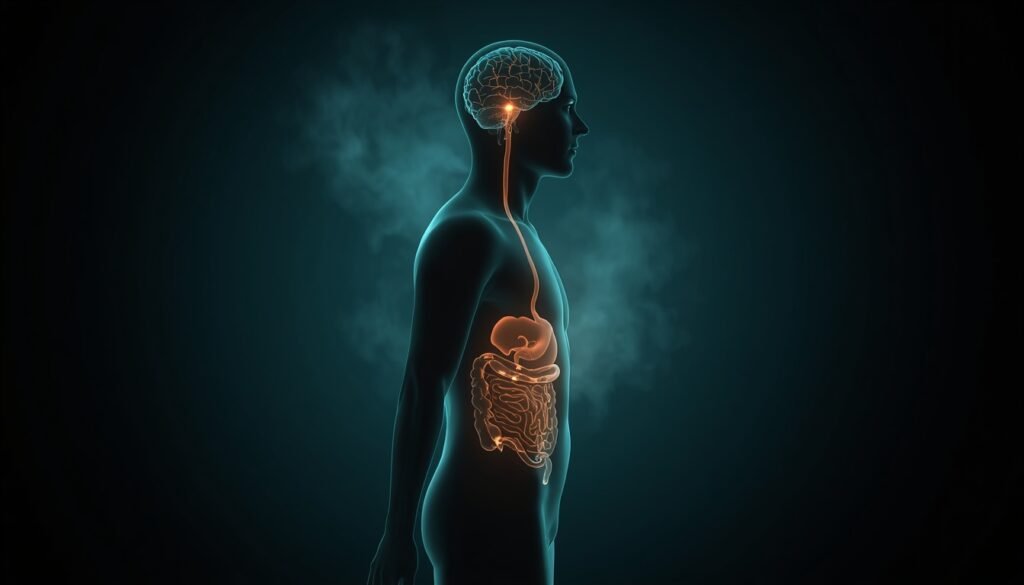
Let me introduce you to Rachel, a 39-year-old attorney who came to me convinced she was developing early dementia. “I lose words mid-sentence,” she told me. “I read the same paragraph three times. By 2 p.m. my head feels like it’s full of wet cotton.” She had seen a neurologist. Her brain scan was clean. What nobody had asked her about was her gut—the chronic bloating, the irregular digestion, the way her worst mental fog reliably followed certain meals. Rachel didn’t have a brain problem. She had a barrier problem, and it started about three feet below her skull.
Here is the short answer: the symptom of leaky gut that most people completely miss isn’t in the gut at all—it’s brain fog. When the intestinal barrier becomes too permeable, bacterial toxins slip into the bloodstream, ignite low-grade inflammation, and that inflammation travels to the brain, where it disrupts the very cells responsible for clear thinking. You keep looking for the cause in your head. It’s living in your gut.
Brain Fog Is a Gut Symptom (Most People Never Make the Connection)
We’re trained to think of digestive problems as staying in the digestive tract: bloating, gas, cramping, irregularity. So when the symptom shows up as slowed thinking, poor word recall, difficulty concentrating, or a heavy mental fatigue that no amount of coffee fixes, we file it under “stress” or “getting older” and never trace it back to the source. That’s the diagnostic blind spot. As one clinical framing puts it, brain fog is often an inflammation-based signal—not a reflection of your intelligence, discipline, or motivation.
To understand why, you need to understand the barrier that’s failing.
The One-Cell-Thick Border Protecting Your Bloodstream
The lining of your small intestine is a marvel of biological engineering—and terrifyingly thin. In places it is only a single cell thick, sealed together by structures called tight junctions: proteins (with names like ZO-1, occludin, and claudins) that act like molecular door locks between cells. This barrier is selectively permeable by design. It’s supposed to let digested nutrients pass into your blood while keeping bacteria, toxins, and undigested food particles locked inside the gut, where they belong.
When those tight junctions loosen—a state clinicians call increased intestinal permeability—the locks fail. The gaps between cells widen, and things that were never meant to enter your bloodstream start slipping through. Chief among them is a molecule called LPS.
LPS: The Trigger That Connects Gut to Brain
Lipopolysaccharide (LPS) is a component of the outer wall of certain gram-negative bacteria that live in your gut. Inside the gut, it’s harmless. But when a permeable barrier lets LPS translocate into the bloodstream, your immune system treats it as a full-blown invasion—a state researchers call metabolic endotoxemia. The result is chronic, low-grade systemic inflammation.
And here is the critical part: that inflammation does not stay in your body. It reaches your brain. Circulating LPS and inflammatory cytokines can cross or disrupt the blood-brain barrier and activate microglia—the brain’s resident immune cells. Chronically activated microglia produce neuroinflammation: oxidative stress, mitochondrial dysfunction, and impaired neurotransmitter metabolism inside your brain. That neuroinflammatory state is what you experience, subjectively, as fog.
The Gut-Brain Axis: Four Channels, One Conversation
LPS is only one route. The gut and brain are in constant two-way communication through the gut-brain axis, which runs on at least four channels at once:
- The immune channel: inflammatory cytokines generated in the gut signal the brain (the pathway described above).
- The vagus nerve: a direct neural cable between gut and brainstem that carries signals in both directions.
- Microbial metabolites: beneficial bacteria produce short-chain fatty acids (SCFAs) like butyrate, which actually strengthen the blood-brain barrier by upregulating its tight-junction proteins. When gut disruption cuts SCFA production, the brain’s own barrier weakens.
- The endocrine/HPA channel: the gut and your stress-hormone system talk directly, which is why chronic stress and elevated cortisol both increase intestinal permeability.
Notably, roughly 90% of your dietary tryptophan is routed through the kynurenine pathway in the gut, with the remainder used to make serotonin—another reason gut dysfunction reverberates in mood and cognition. This is a genuine, peer-reviewed field of study, documented in journals covering neurogastroenterology and psychiatry, not fringe speculation.
That same signalling loop does not stop at the brain. The balance of species in your intestine also shapes mood and inflammatory skin conditions through the gut-brain-skin axis, where overall microbiome diversity—not any single strain—turns out to be the metric that predicts how you feel and how your skin behaves.
A Necessary Note on Honesty
You deserve the straight version. Increased intestinal permeability is real, measurable, and increasingly linked to inflammatory and cognitive symptoms in the research literature. The popular label “leaky gut syndrome,” however, runs ahead of the clinical consensus—it is not yet an established standalone diagnosis in conventional medicine, and it’s sometimes used to explain far more than the evidence supports. Both things are true at once: the mechanism is legitimate, and the marketing around it is often overblown. We’ll stay on the evidence. For the fuller picture, see our companion piece, Leaky Gut Syndrome 2026: Science-Backed Realities.
What Actually Damages the Barrier
Intestinal permeability doesn’t appear randomly. The usual drivers are:
- Dysbiosis — an imbalanced microbiome that starves the gut lining of protective butyrate. This is often the root; read The Dysbiosis Blueprint for the full collapse sequence.
- Chronic stress — elevated cortisol directly loosens tight junctions and alters gut motility.
- Ultra-processed foods and emulsifiers — which irritate and thin the protective mucus layer.
- NSAID overuse and alcohol — both are well-documented barrier disruptors.
- Nutrient deficiencies — low zinc and magnesium impair the barrier’s ability to repair itself.
- Constant grazing — never leaving gaps between meals suppresses the gut’s built-in cleanup system (more on this below).
The Repair Protocol: How to Seal the Barrier
The good news is that the intestinal lining regenerates quickly when you remove the assault and supply the raw materials. A structured approach:
- Remove the triggers first. Cut ultra-processed foods, minimize alcohol, and stop unnecessary NSAID use. You cannot patch a wall while you’re still hitting it with a hammer.
- Feed the barrier’s builders. The amino acid L-glutamine is a primary fuel for intestinal cells, and adequate overall protein supplies the building blocks (including glycine and collagen) for repair. Make sure you’re hitting your targets—check with our Protein Intake Calculator.
- Restore butyrate. Diverse plant fiber (aim for a wide variety, ~30g/day) feeds the bacteria that produce barrier-protecting SCFAs. Polyphenol-rich foods help re-seed a healthy ecosystem.
- Fix the stress channel. Because cortisol directly increases permeability, sleep and stress management aren’t “nice to have”—they’re gut interventions.
- Address underlying overgrowth. If bloating and fog track together, a condition like SIBO may be driving it; see SIBO: The Hidden Gut Infection Behind IBS.
⏳ Give Your Gut Time to Clean House
Your small intestine has a built-in cleanup crew called the migrating motor complex—a wave that sweeps out residue and bacteria. But it only runs during fasting. Constant snacking shuts it off, letting bacteria and irritation build. Spacing your meals with a proper fasting window lets this housekeeping system do its job. Use our calculator to build one around your schedule.
Can You Test For It?
Functional practitioners use markers such as serum zonulin (a regulator of tight junctions), LPS / LPS-binding protein (an endotoxemia marker), hs-CRP (systemic inflammation), and stool calprotectin (intestinal inflammation). These can be informative, but interpret them with a knowledgeable clinician—the tests have real limitations, and a single marker rarely tells the whole story. Your symptom pattern—especially fog that tracks with digestion and specific foods—is often more useful than any single lab value.
When To See a Doctor
Brain fog has many possible causes, and not all of them are the gut. See a physician if your cognitive symptoms are severe, worsening, or accompanied by red flags like unexplained weight loss, blood in the stool, persistent fever, neurological changes, or significant memory loss. Gut-driven fog is common—but so are conditions that need proper medical evaluation, and the two should never be assumed interchangeable.
The Bottom Line
The leaky-gut symptom you’ve been ignoring is the one you’d least expect: the fog in your head. A compromised intestinal barrier lets bacterial toxins into your blood, that sparks inflammation, and that inflammation reaches your brain and clouds it. The mechanism is real, even if the “syndrome” label gets oversold. Rachel’s fog lifted—not from a brain drug, but from rebuilding her gut barrier, feeding her microbiome, managing her stress, and giving her digestion room to reset. Sometimes the clearest path to a sharper mind runs straight through your gut.
Frequently Asked Questions
Can leaky gut really cause brain fog?
There is a credible, research-supported mechanism. Increased intestinal permeability can allow bacterial toxins like LPS into the bloodstream, triggering systemic inflammation. That inflammation and its cytokines can reach the brain, activate its immune cells (microglia), and cause neuroinflammation that manifests as brain fog. The mechanism is well-documented, though much human evidence is still emerging.
What are the symptoms of leaky gut?
Commonly reported symptoms include bloating, gas, food sensitivities, irregular digestion, fatigue, and—often overlooked—cognitive symptoms like brain fog, poor concentration, and mood changes. Symptoms that flare with specific foods or stress are a notable pattern.
How does the gut affect the brain?
Through the gut-brain axis, which uses four channels: immune signaling (cytokines), the vagus nerve, microbial metabolites like short-chain fatty acids that protect the blood-brain barrier, and the endocrine/stress-hormone (HPA) system. Disruption in the gut can send inflammatory and chemical signals that alter brain function.
How do you test for leaky gut?
Functional markers include serum zonulin, LPS or LPS-binding protein, hs-CRP, and stool calprotectin. These can provide useful data but have limitations and should be interpreted by a knowledgeable clinician alongside your symptoms rather than in isolation.
How long does it take to heal a leaky gut?
The intestinal lining regenerates relatively quickly, and many people notice improvement within several weeks to a few months once triggers are removed and the barrier is supported with adequate protein, fiber, and stress management. Timelines vary based on the underlying cause and its severity.
Is leaky gut syndrome a real medical diagnosis?
Increased intestinal permeability is a real, measurable phenomenon studied in mainstream research. However, “leaky gut syndrome” as a broad standalone diagnosis is not yet fully accepted in conventional medicine and is sometimes used to explain more than the evidence supports. The mechanism is legitimate; some of the marketing around it is overstated.
Can You Test For It?
Functional practitioners use markers such as serum zonulin (a regulator of tight junctions), LPS / LPS-binding protein (an endotoxemia marker), hs-CRP (systemic inflammation), and stool calprotectin (intestinal inflammation). These can be informative, but interpret them with a knowledgeable clinician—the tests have real limitations, and a single marker rarely tells the whole story. Your symptom pattern—especially fog that tracks with digestion and specific foods—is often more useful than any single lab value.
Can leaky gut really cause brain fog?
There is a credible, research-supported mechanism. Increased intestinal permeability can allow bacterial toxins like LPS into the bloodstream, triggering systemic inflammation. That inflammation and its cytokines can reach the brain, activate its immune cells (microglia), and cause neuroinflammation that manifests as brain fog. The mechanism is well-documented, though much human evidence is still emerging.
What are the symptoms of leaky gut?
Commonly reported symptoms include bloating, gas, food sensitivities, irregular digestion, fatigue, and—often overlooked—cognitive symptoms like brain fog, poor concentration, and mood changes. Symptoms that flare with specific foods or stress are a notable pattern.
How does the gut affect the brain?
Through the gut-brain axis, which uses four channels: immune signaling (cytokines), the vagus nerve, microbial metabolites like short-chain fatty acids that protect the blood-brain barrier, and the endocrine/stress-hormone (HPA) system. Disruption in the gut can send inflammatory and chemical signals that alter brain function.
How do you test for leaky gut?
Functional markers include serum zonulin, LPS or LPS-binding protein, hs-CRP, and stool calprotectin. These can provide useful data but have limitations and should be interpreted by a knowledgeable clinician alongside your symptoms rather than in isolation.
How long does it take to heal a leaky gut?
The intestinal lining regenerates relatively quickly, and many people notice improvement within several weeks to a few months once triggers are removed and the barrier is supported with adequate protein, fiber, and stress management. Timelines vary based on the underlying cause and its severity.
Is leaky gut syndrome a real medical diagnosis?
Increased intestinal permeability is a real, measurable phenomenon studied in mainstream research. However, “leaky gut syndrome” as a broad standalone diagnosis is not yet fully accepted in conventional medicine and is sometimes used to explain more than the evidence supports. The mechanism is legitimate; some of the marketing around it is overstated.

Julian Vance is the writer and editor behind RegenStep, translating peer-reviewed longevity, metabolic, and gut-health research into practical, actionable guides. Julian is not a licensed physician; content is reviewed against cited primary sources and is for informational purposes only. Always consult a qualified healthcare provider for personal medical advice.