
Muscle loss is the mechanical route from independence to decline. Read the complete guide to extending healthspan.
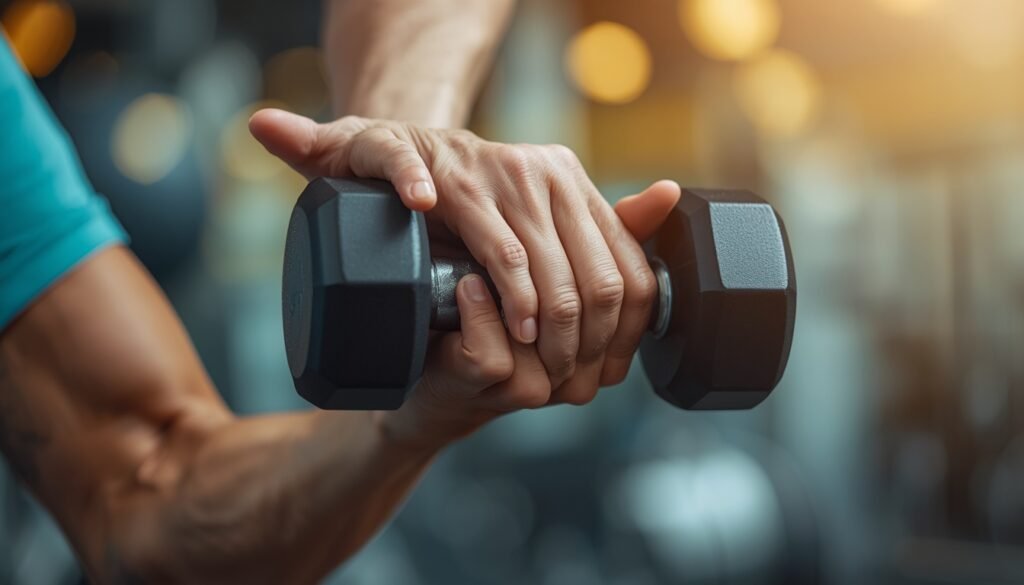
Let me tell you about Frank, a 66-year-old who noticed his world quietly shrinking. He’d started avoiding stairs, gripping the handrail hard, and turning down his grandkids’ invitations to play because he was afraid of falling. “I just figured this is what getting old feels like,” he told me. It isn’t. Frank had sarcopenia—age-related muscle loss—and he’d accepted it as a life sentence. The truth I gave him is the one I want to give you: sarcopenia is not an inevitable part of aging, and in most cases, it can be halted and substantially reversed. The tools are simpler than you’d think.
Short answer: Sarcopenia is the progressive loss of muscle mass, strength, and function that comes with age. The single most effective way to stop and reverse it is progressive resistance training, backed by adequate protein (1.2–1.5 g/kg/day) and vitamin D. In studies, this combination has reduced sarcopenia to zero in a matter of weeks. Your muscles remain responsive to training at every age.
What Is Sarcopenia?
Sarcopenia is now recognized as a genuine muscle disease, not just a cosmetic change. Under the widely used EWGSOP2 criteria (European Working Group on Sarcopenia in Older People), it’s defined by:
- Low muscle strength — the primary marker (e.g., grip strength below 27 kg in men, 16 kg in women, or a slow 5-time chair-rise).
- Low muscle quantity or quality — confirmed by reduced muscle mass (measured by DXA or bioimpedance).
- Low physical performance — used to gauge severity (e.g., slow gait speed).
Note that strength loss (sometimes called dynapenia) often comes first and predicts falls and disability even before mass declines—which is why we care so much about strength as an early warning. It’s closely tied to grip strength as a longevity marker.
How Common Is It—and How Fast Does It Happen?
👤 Human Evidence. Sarcopenia affects roughly 1–29% of community-dwelling older adults, and can exceed 50% in institutionalized or medically complex populations. The underlying decline starts earlier than most people realize: muscle begins declining around age 30 and accelerates after 60, with strength typically fading faster than mass. The takeaway isn’t fear—it’s urgency. The earlier you act, the more muscle you protect.
What Causes Age-Related Muscle Loss?
- Anabolic resistance. Aging muscle responds less to protein, so the same meal builds less muscle than it once did.
- Inflammaging. Chronic low-grade inflammation promotes muscle breakdown.
- Disuse. A sedentary lifestyle is a powerful accelerator—muscle you don’t use, you lose.
- Under-nutrition. Inadequate protein and calories starve muscle of raw materials.
- Neurological and hormonal changes. Loss of motor units and declining anabolic hormones both contribute.
Can Sarcopenia Be Reversed?
👤 Human Evidence — and this is the good news. Yes. Sarcopenia is one of the most treatable conditions of aging. Systematic reviews confirm that exercise can reverse the core signs—low muscle mass, low strength, and poor performance. In one striking trial, 12 weeks of progressive resistance training plus nutritional counseling reduced sarcopenia prevalence from 35% to 0% in the intervention group. Your muscles don’t stop listening to training as you age—they just need you to make the call.
The #1 Treatment: Progressive Resistance Training
👤 Human Evidence. Across the research, one intervention consistently outperforms all others: resistance training. A meta-analysis of 24 randomized controlled trials found it significantly improved grip strength, gait speed, knee-extension strength, and functional test performance. It is, unambiguously, first-line therapy. How to apply it:
- Train 2–3 times per week, targeting all major muscle groups.
- Use progressive overload — gradually increase weight or resistance as you get stronger. This is the key ingredient.
- Include some power work — moving weights with intent (safely) improves the fast, functional strength that prevents falls.
- Start where you are. Bands, bodyweight, or machines all work; a trainer or physical therapist can help you begin safely.
⚖️ The Scale Can Hide Muscle Loss—Check This Instead
You can lose muscle and gain fat while your weight stays the same—a dangerous combination called sarcopenic obesity. Body weight alone won’t catch it. Estimating your body fat percentage gives you a truer picture of your muscle-to-fat balance, so you know what you’re really working with.
The #2 Pillar: Protein & Nutrition
Training is the stimulus; nutrition is the building material. To fight sarcopenia, aim for 1.2–1.5 grams of protein per kilogram of body weight daily, spread across meals of 30–40 grams, each with enough leucine to trigger muscle synthesis. Two supporting nutrients matter too:
- Vitamin D — correcting a deficiency supports muscle function; ask your doctor to check your level.
- Omega-3s, creatine, and HMB — useful adjuncts with supporting evidence, best layered on top of the basics.
For the full breakdown of how much protein you need with age, see How Much Protein Do You Really Need After 50? and dial in your target with our Protein Intake Calculator.
How to Screen Yourself for Sarcopenia
You can get an early read at home with simple checks (these screen, they don’t diagnose):
| Test | Possible Warning Sign |
|---|---|
| SARC-F questionnaire | Difficulty with strength, walking, rising from a chair, climbing stairs, or a history of falls. |
| Chair-rise test | Taking longer than ~15 seconds to stand up from a chair 5 times without using your arms. |
| Grip strength | Weak grip (below ~27 kg men / ~16 kg women on a dynamometer). |
| Gait speed | Walking slower than ~0.8 meters per second over a short distance. |
If several apply, bring them to your doctor for a proper evaluation.
Your Simple Anti-Sarcopenia Plan
- Lift 2–3x/week with progressive resistance—non-negotiable.
- Hit your protein target (1.2–1.5 g/kg), well distributed.
- Check and correct vitamin D.
- Move all day—walking and daily activity fight disuse.
- Add balance work to reduce fall risk.
- Re-test every few months to track progress.
Explore more in our Metabolism & Weight Loss library.
When To See a Doctor
See a physician if you’re experiencing noticeable weakness, frequent falls, difficulty with daily tasks, or unexplained muscle loss—these warrant formal assessment and can signal underlying conditions. A doctor or physical therapist can confirm a diagnosis and design a safe, effective program. Everything here is meant to complement that professional care.
The Bottom Line
Sarcopenia is common, consequential, and—most importantly—treatable. It’s driven by anabolic resistance, inflammation, and disuse, but it yields to a simple, powerful prescription: progressive resistance training, adequate protein, and vitamin D. The muscle you build protects your strength, your balance, and your independence for decades. Frank started lifting twice a week with a trainer and raised his protein. Within a few months he was back on the stairs—and back on the floor playing with his grandkids. Aging takes muscle by default. You can take it back on purpose.
Frequently Asked Questions
What is sarcopenia?
Sarcopenia is the age-related loss of muscle mass, strength, and physical function, now recognized as a muscle disease. It’s diagnosed using criteria like the EWGSOP2 standard, which assesses low muscle strength (the primary marker), low muscle mass, and reduced physical performance.
Can sarcopenia be reversed?
Yes, in most cases it can be substantially reversed. Progressive resistance training, combined with adequate protein, has been shown to improve muscle mass, strength, and function—one trial reduced sarcopenia prevalence from 35% to 0% in 12 weeks. Muscles stay responsive to training at any age.
What is the best exercise for sarcopenia?
Progressive resistance (strength) training is the single most effective intervention, consistently shown to improve strength, muscle mass, and physical performance. Aim for 2–3 sessions per week targeting all major muscle groups, gradually increasing resistance, ideally combined with balance work.
How much protein do I need for sarcopenia?
For fighting sarcopenia, aim for about 1.2–1.5 grams of protein per kilogram of body weight daily, distributed across meals of 30–40 grams each. Combining this with resistance training is far more effective than either alone.
How do I know if I have sarcopenia?
Warning signs include weakness, difficulty rising from a chair, slow walking, and frequent falls. Simple self-screens include the SARC-F questionnaire, a timed chair-rise test, grip strength, and gait speed. If several apply, see a doctor for a formal diagnosis.
At what age does muscle loss start?
Muscle decline begins around age 30 and accelerates after 60, with strength often declining faster than muscle mass. Acting early—through strength training and adequate protein—preserves the most muscle over time.
References
- Cruz-Jentoft AJ, et al. Sarcopenia: revised European consensus on definition and diagnosis (EWGSOP2). Age and Ageing, 2019. ncbi.nlm.nih.gov/pmc/articles/PMC6322506
- Optimal resistance training prescriptions in older adults with sarcopenia: systematic review & meta-analysis. Aging Clin Exp Res, 2025. link.springer.com/article/10.1007/s40520-025-03235-w
- Strength Training and Nutrition Help Prevent Sarcopenia (12-week RCT). PMC. ncbi.nlm.nih.gov/pmc/articles/PMC12295157
- Isometric strength training in sarcopenia and dynapenia (prevalence & progression data). PMC. ncbi.nlm.nih.gov/pmc/articles/PMC12250102
- Shen Y, et al. Exercise for sarcopenia in older people: systematic review and network meta-analysis. J Cachexia Sarcopenia Muscle, 2023.
Medical Disclaimer: This article is for educational purposes only and is not medical advice. Before starting a new exercise program—especially if you’re older, frail, or have a medical condition—get clearance from your physician. Sarcopenia should be formally diagnosed and managed by a healthcare professional. This information is meant to complement, not replace, professional care.
Related Reading
- how TRF2 controls the muscle stem cells behind sarcopenia
- why losing muscle ages your entire body, not just your strength
What Is Sarcopenia?
Sarcopenia is now recognized as a genuine muscle disease, not just a cosmetic change. Under the widely used EWGSOP2 criteria (European Working Group on Sarcopenia in Older People), it’s defined by: Note that strength loss (sometimes called dynapenia) often comes first and predicts falls and disability even before mass declines—which is why we care so much about strength as an early warning. It’s closely tied to grip strength as a longevity marker.
How Common Is It—and How Fast Does It Happen?
👤 Human Evidence. Sarcopenia affects roughly 1–29% of community-dwelling older adults, and can exceed 50% in institutionalized or medically complex populations. The underlying decline starts earlier than most people realize: muscle begins declining around age 30 and accelerates after 60, with strength typically fading faster than mass. The takeaway isn’t fear—it’s urgency. The earlier you act, the more muscle you protect.
Can Sarcopenia Be Reversed?
👤 Human Evidence — and this is the good news. Yes. Sarcopenia is one of the most treatable conditions of aging. Systematic reviews confirm that exercise can reverse the core signs—low muscle mass, low strength, and poor performance. In one striking trial, 12 weeks of progressive resistance training plus nutritional counseling reduced sarcopenia prevalence from 35% to 0% in the intervention group. Your muscles don’t stop listening to training as you age—they just need you to make the call.
What is sarcopenia?
Sarcopenia is the age-related loss of muscle mass, strength, and physical function, now recognized as a muscle disease. It’s diagnosed using criteria like the EWGSOP2 standard, which assesses low muscle strength (the primary marker), low muscle mass, and reduced physical performance.
Can sarcopenia be reversed?
Yes, in most cases it can be substantially reversed. Progressive resistance training, combined with adequate protein, has been shown to improve muscle mass, strength, and function—one trial reduced sarcopenia prevalence from 35% to 0% in 12 weeks. Muscles stay responsive to training at any age.
What is the best exercise for sarcopenia?
Progressive resistance (strength) training is the single most effective intervention, consistently shown to improve strength, muscle mass, and physical performance. Aim for 2–3 sessions per week targeting all major muscle groups, gradually increasing resistance, ideally combined with balance work.
How much protein do I need for sarcopenia?
For fighting sarcopenia, aim for about 1.2–1.5 grams of protein per kilogram of body weight daily, distributed across meals of 30–40 grams each. Combining this with resistance training is far more effective than either alone.
How do I know if I have sarcopenia?
Warning signs include weakness, difficulty rising from a chair, slow walking, and frequent falls. Simple self-screens include the SARC-F questionnaire, a timed chair-rise test, grip strength, and gait speed. If several apply, see a doctor for a formal diagnosis.

Julian Vance is the writer and editor behind RegenStep, translating peer-reviewed longevity, metabolic, and gut-health research into practical, actionable guides. Julian is not a licensed physician; content is reviewed against cited primary sources and is for informational purposes only. Always consult a qualified healthcare provider for personal medical advice.