
Tissue repair is the ultimate biological bottleneck. When you are fifteen, a torn hamstring or a fractured tibia is a temporary inconvenience; your body’s embryonic healing pathways are still highly active, flooding the injury site with growth factors and stem cells. But as you cross into your third and fourth decades, those regenerative pathways downregulate. The biological general contractors of your youth go into early retirement. You are left with a sluggish, highly inflammatory healing process that frequently results in stiff, fibrotic scar tissue rather than functional, native tissue.
This is where the strategic application of signaling molecules changes the paradigm. Peptides for tissue repair are not pharmaceuticals that force a physiological response through receptor blockade. They are short chains of amino acids that act as biological information. They are the exact chemical keys required to unlock dormant angiogenic, osteogenic, and fibroblastic pathways.
However, the commercial wellness space has turned peptides into a chaotic gray market of exaggerated claims and regulatory landmines. To actually leverage these compounds, you must understand the specific structural demands of the tissue you are trying to heal. A tendon requires a completely different biochemical environment than a healing bone or a post-surgical incision. Let’s strip away the biohacking dogma and map the precise molecular reality of structural regeneration.
Peptides for Healing Tendons
Tendons are the body’s steel cables, transferring the massive mechanical force of muscle contraction into skeletal movement. But they possess a fatal architectural flaw: they are largely avascular. Unlike muscle tissue, which is wrapped in a dense web of capillaries, the core of a tendon (particularly the Achilles or the supraspinatus) exists in a hypoxic desert.
When you suffer a tendinopathy or a partial tear, the immune system struggles to deliver the raw materials required for repair. The resulting healing process is notoriously slow, often devolving into chronic, degenerative tendinosis where the tissue fails to heal and instead accumulates disorganized, micro-torn collagen.
Overcoming the Avascular Barrier
To heal a tendon, you must force the body to build new blood vessels into the hypoxic core. This process, known as angiogenesis, is the primary target when deploying peptides for healing tendons. By upregulating Vascular Endothelial Growth Factor (VEGF), you can temporarily increase the microvascular density of the injured tendon, delivering oxygen, amino acids, and immune cells directly to the site of degradation.
Simultaneously, you must stimulate the local fibroblasts to lay down new Type I collagen in a parallel, organized alignment, rather than the chaotic, cross-linked web that forms standard scar tissue. This requires a dual-peptide approach that targets both the vascular supply and the cellular cytoskeleton.
Best Peptide for Tendon Repair
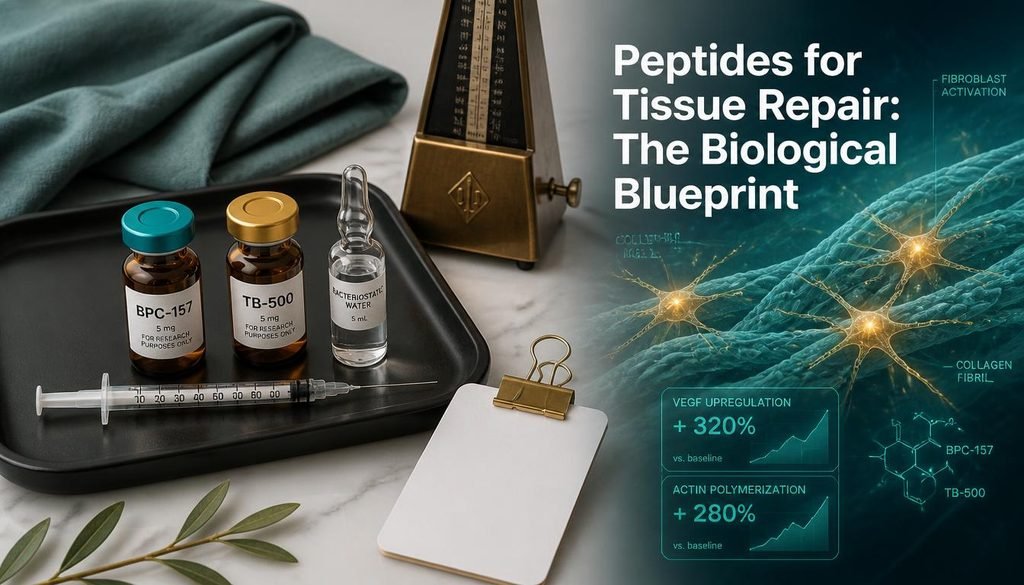
If there is a undisputed heavyweight in the realm of soft tissue regeneration, it is the combination of BPC-157 and Thymosin Beta-4 (TB-500). When evaluating the best peptide for tendon repair, these two compounds operate in perfect biochemical synergy.
BPC-157: The Angiogenic Trigger
Body Protection Compound-157 is a synthetic pentadecapeptide derived from a protective protein found in human gastric juice. Its primary mechanism in tendon repair is the aggressive upregulation of the nitric oxide (NO) system and VEGF. By increasing local nitric oxide production, BPC-157 induces vasodilation and stimulates the proliferation of endothelial cells, effectively forcing new capillary networks into the avascular tendon. Furthermore, it upregulates the expression of growth hormone receptors in tendon fibroblasts, making the local tissue hyper-responsive to your body’s endogenous repair signals.
TB-500: The Cellular Migrator
While BPC-157 builds the roads (blood vessels), TB-500 drives the traffic. TB-500 is a synthetic fraction of the protein thymosin beta-4. Its primary biological function is the sequestration and regulation of actin, the most abundant structural protein in the cellular cytoskeleton. When a tendon is injured, TB-500 upregulates actin polymerization, which literally gives fibroblasts and endothelial cells the mechanical “legs” they need to migrate rapidly through the extracellular matrix to the site of the tear. It also heavily modulates matrix metalloproteinases (MMPs), preventing the excessive enzymatic degradation of healthy collagen surrounding the injury.
Peptides for Healing Ligaments
Ligaments connect bone to bone and serve as the primary stabilizers of your joints. While they share structural similarities with tendons, their extracellular matrix is fundamentally different. Ligaments require a higher ratio of elastin to collagen to accommodate the dynamic stretching and recoil required for joint stability.
When a ligament tears (such as an ACL or MCL), the healing process is plagued by the formation of rigid, inelastic scar tissue. A healed ligament that lacks elastin is a joint waiting to fail again.
GHK-Cu: The Matrix Remodeler
When selecting peptides for healing ligaments, GHK-Cu (Glycyl-L-Histidyl-L-Lysine complexed with copper) is a critical addition to the protocol. GHK-Cu is a naturally occurring human tripeptide that declines drastically with age.
In the context of ligament repair, GHK-Cu acts as a master regulator of tissue remodeling. It stimulates the synthesis of both collagen and elastin, but more importantly, it modulates the activity of proteoglycans and glycosaminoglycans (GAGs) in the extracellular matrix. This ensures that the newly formed ligament tissue retains its viscoelastic properties, rather than healing as a stiff, brittle band of fibrotic tissue. Furthermore, copper is a mandatory cofactor for the enzyme lysyl oxidase, which is responsible for the cross-linking of collagen and elastin fibers. Without adequate copper at the injury site, the structural integrity of the healing ligament is severely compromised.
Peptides for Healing Broken Bones
Bone is not a static, calcified rock; it is a highly vascular, metabolically active organ that undergoes continuous remodeling. The healing of a fracture or a severe stress reaction requires a massive metabolic sink. The body must first form a hematoma, transition that into a soft fibrocartilaginous callus, and finally mineralize that callus into hard, woven bone before remodeling it into lamellar bone.
The Growth Hormone Axis and IGF-1
While BPC-157 plays a role in the early angiogenic phase of bone healing by establishing the blood supply to the fracture site, the actual mineralization and osteoblast proliferation require a systemic anabolic signal. This is where growth hormone secretagogues become the premier peptides for healing broken bones.
Compounds like CJC-1295 (without DAC) and Ipamorelin are utilized to stimulate the pituitary gland to release endogenous growth hormone in a natural, pulsatile manner. This avoids the severe side effects, insulin resistance, and receptor downregulation associated with injecting exogenous synthetic HGH.
The spike in endogenous growth hormone drives the liver to produce Insulin-like Growth Factor 1 (IGF-1). IGF-1 is a potent stimulator of osteoblast activity and chondrocyte proliferation. It accelerates the transition from the soft callus phase to the hard callus phase, significantly reducing the time a fracture remains vulnerable to displacement. Furthermore, the deep, slow-wave sleep induced by this peptide stack maximizes the nocturnal release of natural repair hormones. Ensure you are providing the raw mineral substrates (Calcium, Phosphorus, Vitamin K2, and D3) required for this accelerated mineralization process.
Best Peptides for Joint Pain
Joint pain is the most common complaint in longevity and sports medicine, yet it is the most misunderstood. The pain rarely originates from the cartilage itself, as articular cartilage is aneural (lacking nerve endings). The pain originates from the highly innervated synovial membrane and the subchondral bone, driven by localized inflammation, synovial fluid degradation, and mechanical friction.
Managing the Synovial Microenvironment
When evaluating the best peptides for joint pain, we must accept a biological reality: no peptide will magically regrow a fully worn-away meniscus or reverse bone-on-bone osteoarthritis. Cartilage lacks a direct blood supply, making systemic peptide delivery highly inefficient.
However, peptides can profoundly alter the inflammatory microenvironment of the joint, halting the enzymatic destruction of the remaining cartilage and resolving the synovitis that causes the pain.
- BPC-157 (Local or Systemic): By modulating the nitric oxide system, BPC-157 reduces synovial inflammation and promotes the health of the subchondral bone, which often becomes sclerotic and painful in osteoarthritis.
- Thymosin Alpha-1 (TA1): Joint degradation is heavily driven by an overactive, senescent local immune response. TA1 modulates the immune system, shifting macrophages from the pro-inflammatory M1 phenotype to the tissue-repairing M2 phenotype, effectively calming the “fire” inside the joint capsule.
- Pentosan Polysulfate Sodium (PPS): While technically a complex carbohydrate rather than a pure peptide, PPS is frequently utilized in regenerative clinics for joint pain. It stimulates the synthesis of hyaluronic acid, improving the viscosity of the synovial fluid and providing a mechanical cushion for the degrading joint.
💡 Action Step: Systemic inflammation is the enemy of joint repair. If you are carrying excess visceral fat, your adipose tissue is actively pumping out TNF-alpha and IL-6, which directly degrade joint cartilage. Track your true metabolic risk using our Advanced BMI Calculator and our Body Fat Calculator to ensure your systemic inflammatory baseline isn’t sabotaging your localized peptide therapy.
Peptides for Healing After Surgery
Surgery is controlled trauma. Whether it is a joint replacement, an abdominal procedure, or a spinal fusion, the scalpel initiates a massive, systemic inflammatory cascade. Furthermore, the inevitable post-operative protocol—broad-spectrum antibiotics, heavy NSAIDs, and opioid analgesics—wreaks havoc on the gut microbiome and the mucosal lining.
The Systemic Defense Protocol
Deploying peptides for healing after surgery requires a dual approach: modulating the systemic immune response to prevent excessive scar tissue formation, and protecting the gastrointestinal tract from the pharmaceutical fallout.
- BPC-157 for Gut Protection: Post-operative NSAIDs (like Toradol or Ibuprofen) are notorious for causing gastric ulcers and increasing intestinal permeability. BPC-157 was literally discovered in gastric juice; its primary evolutionary function is to protect and heal the gut lining. Administering BPC-157 perioperatively (before and after surgery) acts as a biological shield, preventing NSAID-induced enteropathy and maintaining the integrity of the gut barrier, which in turn prevents systemic endotoxemia from stalling the healing process.
- Thymosin Alpha-1 (TA1) for Immune Modulation: Surgical trauma suppresses the adaptive immune system while simultaneously triggering acute, uncontrolled inflammation. TA1 restores immune homeostasis. It enhances the function of regulatory T-cells (T-regs), preventing the immune system from attacking the healing tissue while maintaining vigilance against post-operative hospital-acquired infections.
- GHK-Cu for Scar Tissue Prevention: Surgical incisions heal via secondary intention, heavily prone to fibrotic, raised scarring. Topical or injectable GHK-Cu applied to the healing incision (once closed) regulates collagen synthesis and promotes the regeneration of normal skin architecture rather than disorganized scar tissue.
Peptides for Recovery from Injury
General injury recovery—whether from a severe muscle strain, a crush injury, or a high-impact contusion—requires a rapid clearance of necrotic (dead) cellular debris followed by the precise rebuilding of the contractile tissue.
The Macrophage Shift
The transition from the inflammatory phase of healing to the proliferative phase is governed by a shift in macrophage polarization. M1 macrophages arrive first to clear dead tissue and bacteria, but if they linger, they cause chronic inflammation and tissue damage. They must transition into M2 macrophages, which secrete the growth factors required for tissue rebuilding.
Peptides for recovery from injury must facilitate this M1-to-M2 shift. BPC-157 and TB-500 are highly effective here. TB-500, in particular, prevents the formation of adhesions (internal scar tissue) within the muscle belly by regulating the extracellular matrix remodeling enzymes. This ensures that the healed muscle retains its contractile elasticity, rather than healing with a rigid, non-contractile knot of fibrotic tissue that will inevitably tear again under load.
To fuel this massive cellular turnover, your body requires a continuous stream of bioavailable amino acids. Calculate your exact daily requirements using our Protein Intake Calculator to ensure you are providing the glycine, proline, and hydroxyproline required for collagen and elastin synthesis. Furthermore, utilize our TDEE Calculator to ensure you are eating at maintenance or a slight surplus; tissue repair is highly energy-expensive, and a caloric deficit will stall the healing cascade.
Peptides for Injury Recovery BPC-157: The Master Regulator
It is impossible to discuss this topic without dedicating a deep dive to the most heavily researched and clinically utilized compound in the space. When analyzing peptides for injury recovery BPC-157 stands alone due to its pleiotropic (multi-system) effects.
The Nitric Oxide Paradox
The exact mechanism of BPC-157 has eluded researchers for years, primarily because it doesn’t bind to a single, easily identifiable receptor. Instead, it appears to act as a master modulator of the Nitric Oxide (NO) system.
In a healthy state, NO is a vital vasodilator. In an injured state, the NO system becomes dysregulated, leading to either excessive vasoconstriction (starving the tissue of blood) or excessive vasodilation (causing chronic edema and swelling). BPC-157 acts as a biological thermostat. It upregulates NO production in ischemic (oxygen-starved) tissues to drive angiogenesis, but it downregulates NO in hyper-inflamed tissues to reduce edema. This bidirectional modulation is why it is effective for both acute tears and chronic, degenerative tendinopathies.
The FAK and Paxillin Pathway
At the cellular level, BPC-157 interacts with Focal Adhesion Kinase (FAK) and paxillin. These are the proteins that allow cells to physically anchor to the extracellular matrix and pull themselves along the collagen scaffolding. By upregulating the FAK/paxillin pathway, BPC-157 essentially gives fibroblasts the mechanical traction they need to close a wound or bridge a tendon tear.
The Regulatory Reality: The FDA Crackdown
As a strategist, I must address the elephant in the room. For years, BPC-157 was easily accessible through FDA-registered 503A and 503B compounding pharmacies. However, in late 2023, the FDA issued a sweeping guidance document placing BPC-157 on the “Category 2” list, effectively banning compounding pharmacies from producing it. The agency cited a lack of sufficient clinical safety data and the fact that it is a synthetic sequence not naturally found in the human body.
This regulatory earthquake has pushed the market into a dangerous gray area. Patients are now forced to source BPC-157 from overseas “research chemical” websites. This carries profound risks: under-dosed vials, heavy metal contamination from improper synthesis, and bacterial endotoxins from non-sterile manufacturing. If you are navigating the peptides for injury recovery BPC-157 landscape, you must demand third-party Certificates of Analysis (COAs) verifying identity, purity (>98%), and net peptide content, or work with a physician who has access to legal, FDA-compliant clinical trial pathways.
The Metabolic Foundation: You Cannot Signal What You Cannot Build
The most critical error biohackers make with tissue repair peptides is treating them as standalone cures. Peptides are the signal; they are the foreman shouting orders at the construction site. But if you do not deliver the bricks, the mortar, and the heavy machinery, the foreman is just yelling at an empty lot.
Tissue repair is an anabolic, energy-expensive process.
- Amino Acid Saturation: Collagen synthesis requires massive amounts of glycine, proline, and Vitamin C. If your dietary protein is inadequate, the fibroblasts stimulated by TB-500 will simply stall.
- Mechanical Loading: Peptides upregulate the cellular machinery, but mechanical tension dictates the alignment of the new tissue. A healing tendon injected with BPC-157 that is kept in a rigid boot without progressive, controlled mechanical loading will heal with disorganized, weak collagen. You must pair peptide therapy with a rigorous, phased physical therapy protocol.
- Circadian Sleep Architecture: The vast majority of growth hormone release, and the subsequent IGF-1 driven tissue repair, occurs during deep, slow-wave sleep. If your sleep architecture is fragmented by alcohol, blue light, or stress, you are blunting the very hormonal cascade the peptides are trying to amplify. Utilize our Intermittent Fasting Calculator to ensure your feeding windows align with your circadian rhythm, optimizing nocturnal repair.
Final Thoughts
The application of peptides for tissue repair represents a profound shift from managing structural degradation to actively engineering biological regeneration. By understanding the specific architectural demands of tendons, ligaments, bones, and joints, you can deploy targeted signaling molecules to accelerate angiogenesis, modulate the immune response, and organize the extracellular matrix.
But respect the biology. These compounds are powerful levers, not magic wands. They require a foundation of adequate protein, precise mechanical loading, and deep, restorative sleep to execute their instructions. Navigate the shifting regulatory landscape with extreme caution, demand third-party purity testing, and pair your peptide protocols with the foundational pillars of metabolic health. When the signal is clear and the building blocks are present, the human body remains an astonishingly resilient machine.
Frequently Asked Questions (FAQ)
1. What is the best peptide for tendon repair?
The most effective protocol for tendon repair combines BPC-157 and TB-500. BPC-157 upregulates VEGF and the nitric oxide system to force new blood vessels into the avascular tendon, while TB-500 regulates actin polymerization, allowing fibroblasts to rapidly migrate to the tear and lay down organized collagen.
2. Can peptides help heal broken bones faster?
Yes. While BPC-157 helps establish the initial blood supply to the fracture site, growth hormone secretagogues like CJC-1295 and Ipamorelin are highly effective for bone healing. They stimulate the pituitary gland to release endogenous growth hormone, which spikes IGF-1 levels, accelerating the mineralization of the soft callus into hard bone.
3. Why is BPC-157 banned by compounding pharmacies?
In late 2023, the FDA placed BPC-157 on the “Category 2” list of bulk drug substances, effectively banning FDA-registered compounding pharmacies from producing it. The FDA cited a lack of sufficient clinical safety data and the fact that it is a synthetic sequence not naturally found in the human body, pushing the market toward unregulated “research chemical” vendors.
4. What peptides are best for healing after surgery?
BPC-157 is critical post-surgery to protect the gut lining from the damaging effects of NSAIDs and antibiotics. Thymosin Alpha-1 (TA1) is utilized to modulate the systemic immune response, preventing excessive inflammation while protecting against hospital-acquired infections. GHK-Cu can be used topically to minimize fibrotic scar tissue at the incision site.
5. Do peptides regrow cartilage in joints?
No. Articular cartilage lacks a direct blood supply, making systemic peptide delivery highly inefficient, and no peptide can magically regrow a fully worn-away meniscus. However, peptides like BPC-157 and Thymosin Alpha-1 can profoundly reduce synovial inflammation and modulate the immune response, resolving the pain and halting the enzymatic degradation of the remaining cartilage.
⚕️ Editorial & Medical Disclaimer
Julian Vance is not a licensed physician or medical professional. All content published on RegenStep.com is thoroughly reviewed against cited primary sources and peer-reviewed literature for educational and informational purposes only. It does not constitute medical advice, diagnosis, or treatment. Always consult a qualified healthcare provider or doctor regarding any personal health condition or medical decisions, particularly before initiating any peptide protocol, as these compounds carry significant physiological risks and may interact with prescription medications or underlying metabolic conditions.

Julian Vance is the writer and editor behind RegenStep, translating peer-reviewed longevity, metabolic, and gut-health research into practical, actionable guides. Julian is not a licensed physician; content is reviewed against cited primary sources and is for informational purposes only. Always consult a qualified healthcare provider for personal medical advice.