
Protein is one pillar of a metabolic diet. The full insulin resistance food guide shows how it fits with fiber, fat, and meal timing.
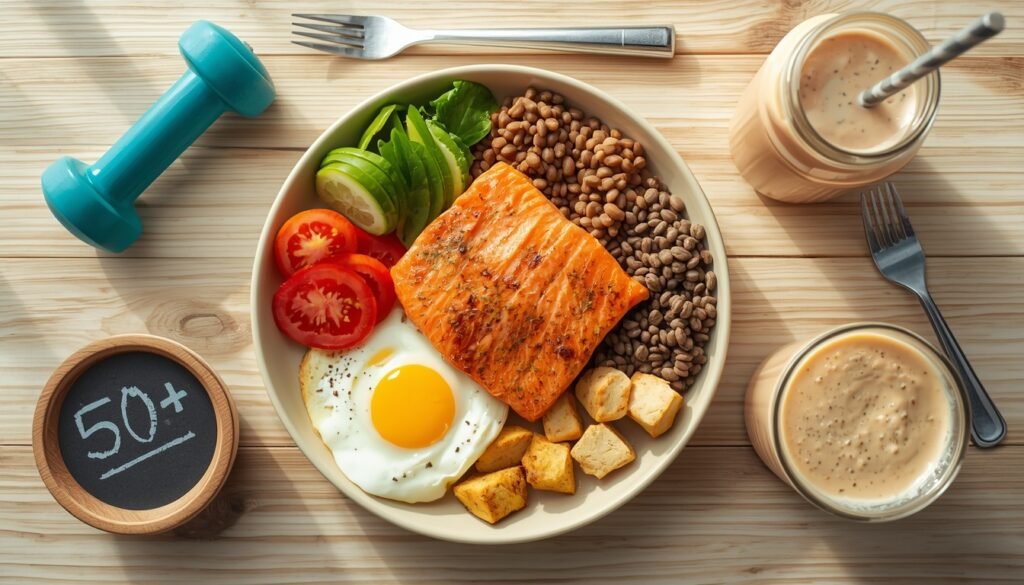
Let me tell you about Linda, a 58-year-old who did “everything right.” She ate healthy, walked daily, and hit the official protein RDA. Yet she was slowly getting weaker—jars were harder to open, stairs left her winded, and she’d lost a visible amount of muscle tone. “I don’t understand,” she said. “I’m eating the recommended amount.” And there was the problem: the “recommended amount” she was following—the RDA—was never designed for someone her age. After 50, the rules change, and following the wrong number quietly costs you muscle, strength, and independence.
Short answer: Most healthy adults over 50 need 1.0 to 1.2 grams of protein per kilogram of body weight per day—considerably more than the standard 0.8 g/kg RDA. If you’re active or trying to preserve muscle, aim for 1.2 to 1.6 g/kg. For a 150-lb (68 kg) person, that’s roughly 82 to 109 grams a day. Protein becomes more important with age, not less.
How Important Is Protein After 50?
👤 Human Evidence. Critically important—here’s why your needs actually rise:
- Anabolic resistance. Aging muscle becomes less responsive to protein. A 20-gram serving that builds muscle efficiently in a 25-year-old produces a blunted response in an older adult, who may need 30–40 grams per meal for the same effect.
- Sarcopenia. Age-related muscle loss starts around 30 and accelerates after 60, driving frailty, falls, and loss of independence. Adequate protein is one of the most modifiable defenses.
- Bone health. Bone is roughly 50% protein by volume; higher intake is linked to better bone density (alongside adequate calcium and vitamin D).
- Immunity and recovery. Protein fuels immune function and wound healing, both of which decline with age.
Muscle isn’t vanity after 50—it’s the currency of staying strong, mobile, and independent. It’s closely tied to another longevity marker; see our guide to grip strength and lifespan.
How Much Protein Do You Really Need After 50?
Expert consensus from the PROT-AGE Study Group and the European Society for Clinical Nutrition and Metabolism (ESPEN) lays it out clearly:
| Your Situation | Target (g/kg/day) | Example: 68 kg (150 lb) |
|---|---|---|
| Healthy, sedentary | 1.0–1.2 g/kg | ~68–82 g |
| Active / preserving muscle | 1.2–1.6 g/kg | ~82–109 g |
| Illness / sarcopenia | 1.2–1.5 g/kg | ~82–102 g |
| Recovery from surgery/injury | up to 2.0 g/kg | up to ~136 g |
| Moderate–severe kidney disease | Restricted—follow doctor | Individualized |
(To convert: your weight in pounds ÷ 2.2 = kilograms.)
The RDA Is a Floor, Not a Target
The famous 0.8 g/kg RDA is the amount needed to prevent deficiency in the average adult—it was never intended as an optimal target for older adults, and multiple expert groups now consider it insufficient for anyone over 60. Aiming for the RDA after 50, as Linda did, is like aiming for the minimum passing grade and wondering why you’re not thriving. Aim higher.
It’s Not Just How Much—It’s When
Because of anabolic resistance, distribution matters as much as total. Rather than one big protein dinner, spread intake across 3–4 meals of 30–40 grams each, ideally with at least 3 grams of the amino acid leucine per meal (leucine is the key trigger for muscle protein synthesis, and is abundant in whey, eggs, dairy, meat, and soy). This meal-by-meal approach stimulates muscle-building far more effectively than lopsided intake.
🥩 Get Your Exact Number in 30 Seconds
The right target depends on your weight, age, and activity level. Skip the guesswork—our calculator applies these clinical guidelines to give you a personalized daily protein goal you can actually hit.
5 Signs You Might Not Be Getting Enough Protein
Outright protein deficiency is rare in developed countries, but mild inadequacy is common in older adults. Watch for these signals:
- Muscle loss and weakness. Shrinking muscle, reduced strength, and everyday tasks feeling harder—the earliest and most important sign.
- Frequent infections and slow healing. Protein fuels your immune system; shortfalls show up as more illness and wounds that linger.
- Thinning hair, brittle nails, and skin changes. These tissues are protein-built and often show strain early.
- Constant hunger and cravings. Protein is the most satiating macronutrient; low intake leaves you perpetually snacky.
- Fatigue, and in severe cases, swelling (edema). Low protein can sap energy, and significant deficiency can cause fluid retention—a red flag needing medical care.
Is 70 Grams of Protein Too Much for a Woman?
No—for most women, 70 grams is appropriate, and often on the modest side. A 60 kg (132 lb) woman at 1.2 g/kg needs about 72 grams; a 65 kg woman needs about 78 grams. So 70 grams is a reasonable daily target for an average woman, not an excessive one. Active women or those working to preserve muscle after menopause may benefit from even more. The idea that 70 grams is “too much” for a woman is a myth rooted in the outdated, too-low RDA.
Is 100 Grams of Protein a Day Too Much?
For most healthy adults, no. An 80 kg (176 lb) person needs about 96 grams at 1.2 g/kg, and up to 128 grams if active. So 100 grams sits comfortably within the healthy, beneficial range—especially after 50.
The persistent worry is kidneys, so let’s settle it: 👤 Human Evidence shows that in people with healthy kidneys (or only mild impairment), protein intakes of 1.2–1.5 g/kg do not damage kidney function in long-term studies. An 18-month trial in adults aged 75+ eating about 1.4 g/kg even improved muscle and grip strength while renal function stayed clinically stable. The one real exception: people with moderate-to-severe chronic kidney disease, who do need to restrict protein under a nephrologist’s guidance. For everyone else, 100 grams is safe.
Best Protein Sources After 50
- High-leucine animal proteins: whey, eggs, dairy, poultry, fish, lean meat—most efficient for overcoming anabolic resistance.
- Quality plant proteins: soy/tofu, tempeh, lentils, beans, and quinoa; combine varieties across the day for a complete amino acid profile.
- Convenient boosters: Greek yogurt, cottage cheese, and a whey or soy protein shake are easy ways to hit 30–40 g at a meal.
Pair protein with resistance training—the combination is far more effective for muscle than either alone. Explore more in our Metabolism & Weight Loss library, and see how the world’s longest-lived people get much of their protein from legumes.
When To See a Doctor
Talk to your physician or a registered dietitian before significantly increasing protein if you have kidney disease, are on dialysis, or have another chronic condition. Also seek care if you notice unexplained muscle wasting, swelling, or persistent weakness. Protein optimization is powerful, but it works best as part of a plan tailored to your health.
The Bottom Line
After 50, protein isn’t something to cut back on—it’s something to prioritize. Aim for 1.0–1.2 g/kg if you’re healthy, and 1.2–1.6 g/kg if you’re active or defending your muscle, spread across meals of 30–40 grams. The old RDA is a floor, not a goal, and worries about 70 or 100 grams being “too much” simply don’t hold up for healthy adults. Linda raised her protein, added twice-weekly strength training, and within months was opening those jars again. Your muscle is your armor for the decades ahead—feed it accordingly.
Frequently Asked Questions
How important is protein after 50?
Very important, and increasingly so with age. Aging causes anabolic resistance (muscle responds less to protein) and accelerating muscle loss (sarcopenia), so adequate protein becomes essential for maintaining strength, bone density, immunity, and independence. Protein needs actually rise after 50, not fall.
How much protein do I really need after 50?
Most healthy adults over 50 need 1.0–1.2 g of protein per kg of body weight daily, rising to 1.2–1.6 g/kg if active or preserving muscle. For a 150-lb (68 kg) person, that’s roughly 82–109 grams per day—more than the standard 0.8 g/kg RDA, which was not designed for older adults.
What are the signs of protein deficiency?
Five common signs are: muscle loss and weakness, frequent infections or slow wound healing, thinning hair and brittle nails, constant hunger and cravings, and fatigue (with swelling/edema in severe cases). Mild inadequacy is common in older adults even when outright deficiency is rare.
Is 70 grams of protein too much for a woman?
No. For most women, 70 grams is an appropriate daily target and often on the modest side. A 60–65 kg woman needs roughly 72–78 grams at 1.2 g/kg. Active women or those preserving muscle after menopause may benefit from more.
Is 100 grams of protein a day too much?
For most healthy adults, no. It falls within the healthy, beneficial range, especially after 50. In people with healthy kidneys, intakes of 1.2–1.5 g/kg don’t harm kidney function. The exception is moderate-to-severe chronic kidney disease, which requires protein restriction under medical guidance.
Does high protein damage your kidneys?
Not in people with healthy kidneys. Long-term studies show higher protein intakes (1.2–1.5 g/kg) do not impair renal function in those without pre-existing kidney disease. Only individuals with moderate-to-severe chronic kidney disease need to restrict protein, and should do so under a nephrologist’s care.
References
- Bauer J, et al. Evidence-Based Recommendations for Optimal Dietary Protein Intake in Older People (PROT-AGE). JAMDA, 2013. sciencedirect.com/science/article/pii/S1525861013003265
- Deutz NEP, et al. Protein intake and exercise for optimal muscle function with aging (ESPEN Expert Group). Clinical Nutrition, 2014. espen.org/files/PIIS0261561414001113.pdf
- Administration for Community Living (ACL). Nutrition Needs for Older Adults: Protein. acl.gov
- Dietary Protein Needs and Skeletal Muscle of Older Adults. J Gerontol A Biol Sci Med Sci, 2023. academic.oup.com/biomedgerontology/article/78/Supplement_1/67/7199271
- High-Protein Nutritional Guidance and Sarcopenia in Adults ≥75 with T2DM (renal safety). PMC. ncbi.nlm.nih.gov/pmc/articles/PMC12608599
Medical Disclaimer: This article is for educational purposes only and is not medical advice. Protein targets here are for generally healthy adults. If you have chronic kidney disease or another medical condition, your protein needs may differ—always follow your physician or dietitian. This information is meant to complement, not replace, professional care.
How Important Is Protein After 50?
👤 Human Evidence. Critically important—here’s why your needs actually rise: Muscle isn’t vanity after 50—it’s the currency of staying strong, mobile, and independent. It’s closely tied to another longevity marker; see our guide to grip strength and lifespan.
How Much Protein Do You Really Need After 50?
Expert consensus from the PROT-AGE Study Group and the European Society for Clinical Nutrition and Metabolism (ESPEN) lays it out clearly: (To convert: your weight in pounds ÷ 2.2 = kilograms.)
Is 70 Grams of Protein Too Much for a Woman?
No—for most women, 70 grams is appropriate, and often on the modest side. A 60 kg (132 lb) woman at 1.2 g/kg needs about 72 grams; a 65 kg woman needs about 78 grams. So 70 grams is a reasonable daily target for an average woman, not an excessive one. Active women or those working to preserve muscle after menopause may benefit from even more. The idea that 70 grams is “too much” for a woman is a myth rooted in the outdated, too-low RDA.
Is 100 Grams of Protein a Day Too Much?
For most healthy adults, no. An 80 kg (176 lb) person needs about 96 grams at 1.2 g/kg, and up to 128 grams if active. So 100 grams sits comfortably within the healthy, beneficial range—especially after 50. The persistent worry is kidneys, so let’s settle it: 👤 Human Evidence shows that in people with healthy kidneys (or only mild impairment), protein intakes of 1.2–1.5 g/kg do not damage kidney function in long-term studies. An 18-month trial in adults aged 75+ eating about 1.4 g/kg even improved muscle and grip strength while renal function stayed clinically stable. The one real exception: people with moderate-to-severe chronic kidney disease, who do need to restrict protein under a nephrologist’s guidance. For everyone else, 100 grams is safe.
How important is protein after 50?
Very important, and increasingly so with age. Aging causes anabolic resistance (muscle responds less to protein) and accelerating muscle loss (sarcopenia), so adequate protein becomes essential for maintaining strength, bone density, immunity, and independence. Protein needs actually rise after 50, not fall.
How much protein do I really need after 50?
Most healthy adults over 50 need 1.0–1.2 g of protein per kg of body weight daily, rising to 1.2–1.6 g/kg if active or preserving muscle. For a 150-lb (68 kg) person, that’s roughly 82–109 grams per day—more than the standard 0.8 g/kg RDA, which was not designed for older adults.
What are the signs of protein deficiency?
Five common signs are: muscle loss and weakness, frequent infections or slow wound healing, thinning hair and brittle nails, constant hunger and cravings, and fatigue (with swelling/edema in severe cases). Mild inadequacy is common in older adults even when outright deficiency is rare.
Is 70 grams of protein too much for a woman?
No. For most women, 70 grams is an appropriate daily target and often on the modest side. A 60–65 kg woman needs roughly 72–78 grams at 1.2 g/kg. Active women or those preserving muscle after menopause may benefit from more.

Julian Vance is the writer and editor behind RegenStep, translating peer-reviewed longevity, metabolic, and gut-health research into practical, actionable guides. Julian is not a licensed physician; content is reviewed against cited primary sources and is for informational purposes only. Always consult a qualified healthcare provider for personal medical advice.