
We spend an inordinate amount of time obsessing over the duration of our sleep. We track our hours, we wear smart rings to measure our sleep stages, and we swallow melatonin to force our eyes shut. But if your thermal environment is misaligned with your evolutionary biology, no amount of time in bed will yield true restoration. You cannot hack your sleep architecture if your room is actively fighting your nervous system.
The transition from wakefulness into deep, slow-wave sleep is not merely a neurological switch; it is a profound thermodynamic event. Your brain requires a highly specific, measurable drop in core body temperature to initiate and maintain the deepest phases of physical and cognitive repair. When your bedroom environment prevents this thermal drop, your autonomic nervous system is forced to stay online, fragmenting your sleep cycles and robbing you of the hormonal and glymphatic benefits of the night.
As a strategist focused on human performance and longevity, I view the bedroom thermostat not as a matter of personal comfort, but as a critical biological lever. Let’s decode the neurobiology of the preoptic area, dismantle the commercial myths of “cozy” sleeping temperatures, and engineer the exact thermal protocols required to maximize your deep sleep.
The Biophysics of the Core Temperature Drop
To understand the best temperature for deep sleep, we must first look at the master control center for thermoregulation: the preoptic area of the hypothalamus. This region acts as the body’s biological thermostat, constantly comparing your core body temperature (CBT) to your skin temperature.
According to foundational neurobiological research on sleep thermoregulation published by the National Institutes of Health (NIH), the onset of sleep is strictly gated by a drop in core body temperature of roughly 2°F to 3°F (1°C to 1.5°C). This drop is not passive; it is an active, vasodilatory process. As your circadian clock signals the approach of night, the blood vessels in your extremities (hands, feet, and face) dilate. This shunts warm blood from your core to your skin, where the heat is radiated out into the environment, effectively cooling your internal organs and brain.
If your bedroom is too warm, this thermal gradient collapses. The heat cannot escape your skin, your core temperature remains elevated, and the preoptic area refuses to trigger the GABAergic neurons required to initiate slow-wave sleep. You might fall asleep from sheer exhaustion, but you will bounce out of deep sleep and into light, fragmented stages as your body struggles to offload heat. To understand how this thermal fragmentation destroys your overall sleep stages, read our masterclass on Sleep Architecture: Why the Stages Matter More Than the Hours.
Optimal Temperature for Sleeping Celsius
For those operating outside the imperial system, or for biohackers looking at international clinical data, defining the optimal temperature for sleeping Celsius requires translating the physiological sweet spot into metric terms.
The consensus among sleep medicine academies is that the ideal ambient room temperature for an adult to maximize deep sleep falls between 15.5°C and 19.5°C (60°F to 67°F).
The Microclimate Factor
It is vital to understand that 15.5°C to 19.5°C refers to the ambient room air, not the temperature directly against your skin. If you were to sleep naked in a 15.5°C room, your body would trigger a cold-stress response, spiking cortisol and activating the sympathetic nervous system to generate heat via shivering or brown fat thermogenesis.
The goal is to create a sleep microclimate—the localized thermal environment between your skin and your bedding. While the room air is a crisp 18°C, the microclimate under a breathable duvet should hover around 30°C to 32°C (86°F to 89°F), which is the true thermoneutral zone for human skin. The cool room air acts as a heat sink, continuously pulling excess metabolic heat away from your body through the breathable layers, facilitating that critical core temperature drop.
The Ideal Room Temperature for Sleeping is 75: Debunking the Myth
If you search for HVAC guidelines or general home comfort standards, you will frequently encounter the claim that the ideal room temperature for sleeping is 75 degrees Fahrenheit (roughly 24°C). From a pure energy-efficiency and waking-comfort standpoint, 75°F feels “cozy” and prevents you from waking up shivering. But from a neurobiological and sleep-architecture standpoint, 75°F is a disaster.
The Slow-Wave Killer
When your ambient room temperature sits at 75°F (24°C), the thermal gradient between your skin and the air is too narrow to efficiently offload core heat. Clinical polysomnography data from the American Academy of Sleep Medicine (AASM) demonstrates that sleeping in environments above 75°F significantly suppresses slow-wave sleep (NREM Stage 3) and fragments REM sleep.
At 75°F, your body is forced to rely on active cooling mechanisms, primarily sweating. Sweating during sleep leads to localized dehydration, increases skin humidity, and disrupts the microclimate, causing micro-arousals that you don’t consciously remember but which completely destroy your Heart Rate Variability (HRV) and nocturnal recovery. If you want to track how a 75°F room is silently tanking your autonomic recovery, review our protocol on Autonomic Health and HRV Tracking.
75°F is the temperature of a living room, not a recovery chamber. Drop the thermostat.
Ideal Sleeping Temperature for Adults
For the vast majority of healthy adults, the ideal sleeping temperature for adults anchors firmly at 65°F (18.3°C). This specific temperature provides the perfect ambient heat sink to pull warmth away from the body, while allowing standard bedding to maintain a comfortable microclimate.
The Visceral Fat Insulation Trap
There is a biological caveat to the 65°F rule: body composition. Adipose tissue, particularly subcutaneous fat, acts as a highly effective thermal insulator. If you are carrying excess body fat, your body will struggle to radiate core heat through the skin, meaning you may need a slightly cooler room (closer to 60°F or 15.5°C) to achieve the same core temperature drop as a leaner individual.
Furthermore, visceral fat is highly metabolically active and generates excess internal heat. To ensure your body composition isn’t acting as a thermal barrier to your deep sleep, track your true metabolic risk and adipose burden using our Advanced BMI Calculator and our Body Fat Calculator.
Ideal Sleeping Temperature for Women
While the 65°F baseline applies broadly, female physiology introduces distinct hormonal variables that shift the thermoneutral zone. The ideal sleeping temperature for women is not static; it fluctuates with the menstrual cycle and undergoes profound shifts during perimenopause and menopause.
The Luteal Phase Shift
During the luteal phase of the menstrual cycle (the week or two before menstruation), the corpus luteum secretes massive amounts of progesterone. Progesterone is highly thermogenic; it actively raises core body temperature by roughly 0.5°F to 1.0°F. According to endocrine research on circadian thermoregulation, this elevated baseline means the preoptic area requires a cooler ambient environment to achieve the necessary relative drop for sleep onset. Women in their luteal phase often find they need the room 2 to 3 degrees cooler than during their follicular phase to achieve the same depth of sleep.
Perimenopause and Vasomotor Symptoms
As estrogen levels fluctuate and eventually decline during perimenopause and menopause, the hypothalamus’s thermoregulatory set-point becomes highly unstable, triggering vasomotor symptoms (hot flashes and night sweats). The sudden, massive vasodilation dumps core heat into the skin, soaking the microclimate and causing severe sleep fragmentation. For women navigating this transition, the ambient room temperature should be dropped to the lower end of the spectrum (60°F to 63°F / 15.5°C to 17°C), paired with moisture-wicking, highly breathable bedding (like percale cotton or bamboo) to rapidly clear the heat and sweat from the microclimate.
Ideal Temperature for Sleeping for Baby
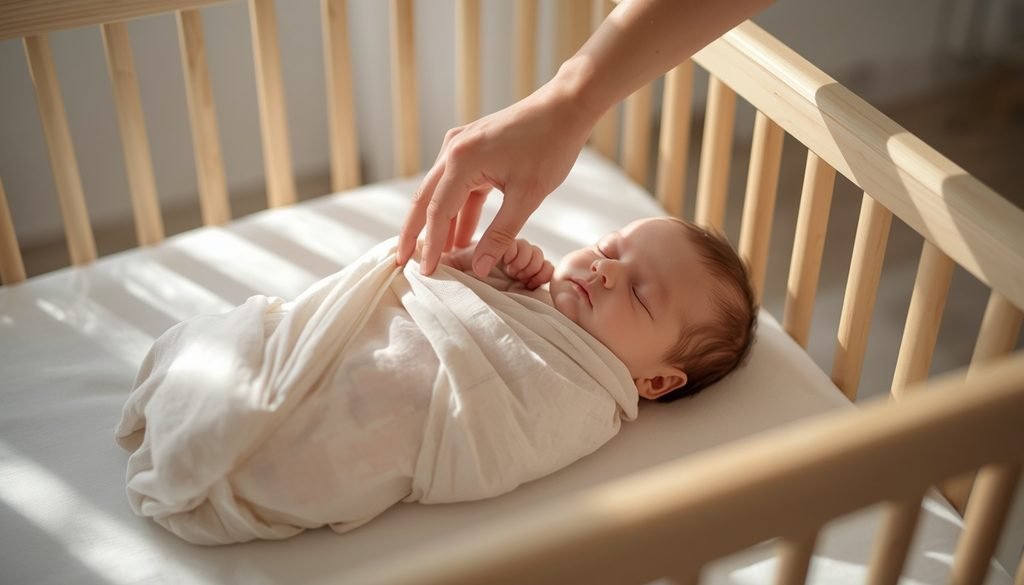
Infant thermoregulation is fundamentally different from adult thermoregulation. When determining the ideal temperature for sleeping for baby, the stakes are vastly higher, as improper thermal environments are a primary modifiable risk factor for Sudden Infant Death Syndrome (SIDS).
The 68°F to 72°F Rule
The American Academy of Pediatrics (AAP) guidelines on safe sleep environments recommend keeping the infant’s room between 68°F and 72°F (20°C to 22°C). This is slightly warmer than the adult ideal, but still distinctly cool.
Babies have a high surface-area-to-mass ratio, meaning they lose heat rapidly, but they also possess immature sweating mechanisms and cannot efficiently shed heat if they become overheated. Overheating an infant (dressing them in heavy fleece, swaddling too tightly, or keeping the room at 75°F) traps their metabolic heat, driving up their core temperature and suppressing the arousal mechanisms in the brainstem that would normally wake them if they stopped breathing.
The rule of thumb is to dress the baby in one more layer than you would wear to be comfortable in that exact room, and never place a loose blanket in the crib. The room should feel comfortably cool to a lightly clothed adult.
Ideal Temperature for Sleeping in Winter
The modern winter bedroom is a thermoregulatory nightmare. When establishing the ideal temperature for sleeping in winter, the primary enemy is not the cold outside; it is the artificial, dry heat inside.
The Central Heating Trap
In an effort to stay warm, most people crank their central heating to 72°F or higher at night. This creates a double biological penalty. First, the ambient air is far too warm to allow the core temperature drop required for deep sleep. Second, forced-air heating systems drastically reduce indoor relative humidity, often dropping it below 20%.
Breathing dry, warm air all night dehydrates the mucosal lining of the upper airway, thickening mucus, triggering mouth-breathing, and vastly increasing the severity of snoring and obstructive sleep apnea. Mouth-breathing destroys nitric oxide production and fragments sleep architecture.
The Winter Protocol: Turn the central thermostat down to 65°F (18.3°C). Use a warm, high-quality duvet (like goose down or a breathable wool topper) to maintain the microclimate. Crucially, run a cool-mist humidifier in the bedroom to keep the relative humidity between 40% and 50%. This protects your airway, maintains nasal breathing, and allows the cool air to facilitate deep sleep.
Best Temperature for Sleep in Summer
Summer introduces a different variable that is just as destructive as winter heat: humidity. The best temperature for sleep in summer must account for the body’s primary active cooling mechanism—evaporative cooling (sweating).
The Humidity Bottleneck
If your room is 70°F but the humidity is 80%, your sweat cannot evaporate. It simply pools on your skin, creating a hot, suffocating microclimate that traps heat and triggers continuous micro-arousals.
According to biophysical models of human heat stress, the “feels like” temperature in your bed is dictated by the humidity index. To optimize summer sleep, you must prioritize dehumidification alongside cooling.
- The Target: Set the air conditioning to 65°F to 68°F (18°C to 20°C), but ensure the AC unit is running long enough cycles to pull moisture out of the air.
- Airflow: Utilize a ceiling fan or a bedside fan. Moving air accelerates the evaporation of microscopic sweat from the skin, vastly improving the body’s ability to offload core heat even if the ambient temperature is slightly higher.
Best Temperature for Sleeping Without Blanket
There is a growing trend among biohackers and minimalists to ditch the duvet entirely. But determining the best temperature for sleeping without blanket requires a strict understanding of the naked thermoneutral zone.
The 86°F Reality vs. The Microclimate Hack
Biophysically, the true thermoneutral zone for a completely naked, uncovered human resting in a bed is roughly 86°F (30°C). If you set your bedroom to 86°F, you will sleep fine without a blanket, but you will likely suffer from severe stagnant air, sweat accumulation, and poor air quality. If you sleep without a blanket in a standard 65°F room, your skin will rapidly lose heat, triggering a sympathetic cold-stress response that completely blocks REM sleep.
The Solution: If you refuse to use a traditional blanket, you must use a lightweight, highly breathable top sheet (like linen or bamboo) and keep the room at 70°F to 72°F (21°C to 22°C). The single sheet provides just enough insulation to trap a microscopic layer of warm air against the skin (creating the microclimate), while the slightly cooler room air pulls away the excess metabolic heat. Alternatively, many biohackers utilize a specialized cooling mattress pad (like an Eight Sleep or ChiliPad) set to 68°F, which actively pulls heat away from the body without the need for top covers.
💡 Action Step: Thermoregulation is heavily dependent on adequate systemic hydration. If you are chronically dehydrated, your body cannot efficiently utilize vasodilation and micro-sweating to cool the core, leading to nocturnal thermal trapping. Calculate your exact baseline hydration requirements with our Water Intake Calculator to ensure your cooling mechanisms are fully primed before bed. Furthermore, ensure your evening meals align with your biological clock to prevent diet-induced thermogenesis from disrupting your sleep, using our Circadian Rhythm Fasting Protocol.
Final Thoughts
The pursuit of elite cognitive and physical recovery cannot be achieved in a thermally hostile environment. The best temperature for deep sleep is not a matter of subjective preference; it is a strict biological requirement dictated by the preoptic area of the hypothalamus.
By dropping your ambient room temperature to the 60°F–67°F range, you provide the necessary thermal gradient for your body to offload core heat, initiate vasodilation, and seamlessly transition into the deep, slow-wave sleep required for cellular repair and glymphatic clearance. Stop fighting your biology with heavy blankets and 75-degree thermostats. Engineer your sleep environment, respect the thermal gatekeeper, and watch as your biological resilience and morning clarity reach entirely new heights.
Frequently Asked Questions (FAQ)
1. What is the best temperature for deep sleep?
The best temperature for deep sleep for most adults is an ambient room temperature between 60°F and 67°F (15.5°C to 19.5°C), with 65°F (18.3°C) being the clinical gold standard. This cool environment facilitates the 2°F to 3°F drop in core body temperature required to initiate and maintain slow-wave sleep.
2. Is the ideal room temperature for sleeping 75 degrees?
No. While the claim that the ideal room temperature for sleeping is 75 degrees is common in HVAC guidelines for waking comfort, it is biologically too warm for deep sleep. At 75°F (24°C), the thermal gradient is too narrow to efficiently offload core body heat, which suppresses slow-wave sleep, fragments REM cycles, and triggers nocturnal sweating.
3. What is the optimal temperature for sleeping in Celsius?
The optimal temperature for sleeping Celsius is between 15.5°C and 19.5°C. This range provides the ideal ambient heat sink to pull metabolic heat away from the body while allowing breathable bedding to maintain a comfortable microclimate directly against the skin.
4. What is the ideal sleeping temperature for women?
The ideal sleeping temperature for women fluctuates with hormonal cycles. During the luteal phase (pre-menstruation), progesterone raises core body temperature, often requiring the room to be 2 to 3 degrees cooler (around 62°F / 16.5°C). Perimenopausal and menopausal women experiencing hot flashes also benefit from cooler rooms (60°F to 63°F) paired with moisture-wicking bedding.
5. What is the ideal temperature for sleeping for a baby?
The ideal temperature for sleeping for baby safety is between 68°F and 72°F (20°C to 22°C), as recommended by the American Academy of Pediatrics. This is slightly warmer than the adult ideal but cool enough to prevent overheating, which is a primary modifiable risk factor for Sudden Infant Death Syndrome (SIDS).
⚕️ Editorial & Medical Disclaimer
Julian Vance is not a licensed physician or medical professional. All content published on RegenStep.com is thoroughly reviewed against cited primary sources and peer-reviewed literature for educational and informational purposes only. It does not constitute medical advice, diagnosis, or treatment. Always consult a qualified healthcare provider or doctor regarding any personal health condition or medical decisions, particularly concerning infant sleep safety, sleep apnea, or severe thermoregulatory disorders.
#DeepSleep #SleepHacks #LongevityLifestyle

Julian Vance is the writer and editor behind RegenStep, translating peer-reviewed longevity, metabolic, and gut-health research into practical, actionable guides. Julian is not a licensed physician; content is reviewed against cited primary sources and is for informational purposes only. Always consult a qualified healthcare provider for personal medical advice.