
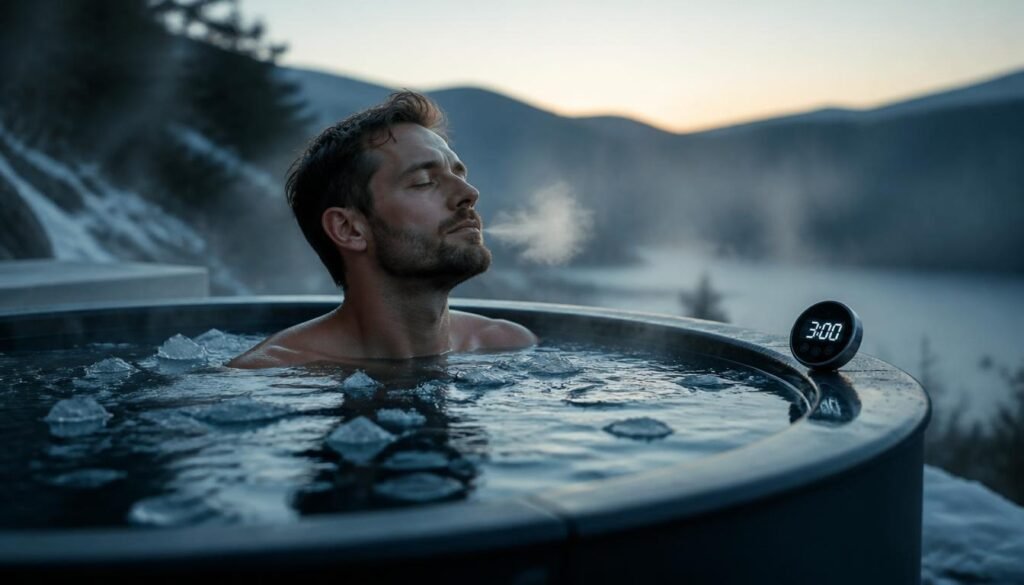
Let me introduce you to Mark, a 48-year-old triathlete who came to me convinced that more was always better. He had turned his backyard cold plunge into a competition with himself—first five minutes, then eight, then a white-knuckled ten minutes in 4°C water every single morning. “I feel like a warrior for about an hour,” he told me, “then I crash. My sleep is wrecked, my resting heart rate is up, and I’m getting sick more often, not less.” Mark hadn’t built a longevity habit. He had built a chronic stressor. When we cut his sessions to three minutes, three times a week, every one of those markers reversed within a month.
Here is the short answer: for the metabolic, hormonal, and mental benefits that make cold exposure worth doing, roughly 2 to 3 minutes per session—about 11 minutes total per week—is the effective dose. Staying in for 10 minutes at a time does not multiply the benefit. It flattens the reward, spikes your stress hormones, and—in cold enough water or the wrong body—introduces real physiological danger. Cold plunging is hormesis, not an endurance event. And with hormesis, the dose is the entire game.
Cold exposure is free, which makes it a useful benchmark. See what the paid regenerative market offers in our reality check.
Cold Plunging Is Hormesis—Not a Test of Willpower
The single biggest mistake in the cold plunge world is treating time in the water as a badge of honor. Biologically, that framing is backwards. Cold exposure belongs to the same family of stressors as exercise, sauna heat, and fasting—a family scientists call hormetic stressors. The defining feature of hormesis is a dose-response curve: a low-to-moderate dose triggers a protective, adaptive response, while a high dose of the exact same stressor causes damage.
Think of it like lifting weights. A challenging set makes you stronger. Grinding out reps to total failure every day, with no recovery, breaks you down. Cold water is identical. The brief, sharp stress of a 3-minute plunge tells your cells to fortify—upregulating antioxidant defenses, activating brown fat, and sharpening your stress resilience. Push far past that threshold and you flip from “adaptive signal” to “chronic damage.” If you want the deeper mechanism behind why brief, controlled stress makes you biologically stronger, read our guide to Hormesis: The Science of How Low-Dose Stress Makes You Stronger.
What Actually Happens in the First 3 Minutes
The benefits people chase from cold plunging are front-loaded. Almost all of them are triggered within the first two to three minutes:
- The norepinephrine surge. Within seconds of immersion, your body releases a flood of norepinephrine—a catecholamine that can rise to two or three times baseline and stay elevated for hours. This is the source of the sharpened focus, elevated mood, and mental clarity that make the practice addictive. It happens fast, and it does not require you to suffer for ten minutes.
- Brown fat activation. Cold recruits brown adipose tissue, a metabolically active fat that burns energy to generate heat. Repeated short exposures increase its activity, contributing to a modest, sustained metabolic boost.
- The cold-shock response settles. The first 20–60 seconds trigger a gasp reflex and hyperventilation. Once you control your breathing and that response fades, the “work” of the session is essentially done. Everything after that is diminishing returns.
This front-loading is the biological reason 3 minutes is enough. You are not waiting for benefits to accumulate over time—you are triggering a switch, and the switch flips early.
The 11-Minute Rule: The Real Science of “Enough”
The most useful number in cold exposure research comes from the work of Danish physiologist Dr. Susanna Søeberg, whose peer-reviewed study on winter swimmers (published in Cell Reports Medicine) helped define what a cold plunge even is. Her research, later popularized by Stanford’s Dr. Andrew Huberman, points to a simple weekly target:
Roughly 11 minutes of total cold exposure per week, split across 2 to 4 sessions, in water cold enough to feel genuinely uncomfortable but safe to stay in.
Read that carefully: 11 minutes total—not per session. Four sessions of under three minutes hits the target. So does three sessions of about 3.5 minutes. The research shows clear diminishing returns beyond this weekly volume—more time does not equal more benefit. In fact, Søeberg’s own advice on the “best” protocol is to keep varying the temperature and duration rather than chasing a single heroic number. Distribution beats duration: three short plunges a week outperform one punishing marathon session, both for physiology and—critically—for building a habit you’ll actually keep.
This “minimum effective dose” principle isn’t unique to cold. It’s the same logic driving the shift toward GLP-1 microdosing, where doctors are finding the smallest dose that triggers the benefit while avoiding the harm of maxing out. The body rewards precision, not brute force.
Why 10 Minutes Isn’t “Extra Credit”—It’s a Different Event
Here is where the honesty matters. For a healthy adult in typical plunge water (10–15°C / 50–59°F), a single 10-minute session is unlikely to cause clinically significant hypothermia—core temperature drops slowly, and research indicates dangerous hypothermia is improbable before roughly 30 minutes even in colder water. So why call long sessions dangerous? Because “not immediately hypothermic” is a very low bar, and several distinct risks scale sharply with time and cold:
- Afterdrop on exit. When you climb out, cold blood pooled in your constricted limbs rushes back toward your core, and your core temperature can keep falling after you’re already out of the water. The longer and colder the plunge, the larger this afterdrop—which is why prolonged sessions can leave you shivering uncontrollably and lightheaded minutes later. Persistent, uncontrollable shivering is your signal that the session should have ended already.
- Autonomic conflict. Cold water simultaneously fires your sympathetic nervous system (cold shock, racing heart) and, through cold on the face, your parasympathetic diving reflex (which slows the heart). This tug-of-war on the heart’s rhythm can provoke dangerous arrhythmias, and the risk is meaningfully higher for anyone with underlying cardiovascular disease. Longer submersion and dunking the face amplify it.
- The cold-shock response is a genuine hazard. The gasp-and-hyperventilate reflex in the first minutes is implicated in cold-water drowning deaths—even in strong swimmers. Extending sessions and losing manual dexterity as your hands go numb only widens the window for something to go wrong. (See the physiology of the cold-shock response and the broader cold-water immersion literature.)
- Chronic cortisol and blunted recovery. This was Mark’s problem. Push past the hormetic dose repeatedly and cold exposure stops being a crisp adaptive signal and becomes a source of chronically elevated stress hormones—wrecking sleep, elevating resting heart rate, and suppressing immune function. You get the damage half of the dose-response curve with none of the extra reward.
Time and Temperature Are One Dial, Not Two
You cannot talk about duration without temperature, because they are a combined dose. A 90-second plunge at 4°C is a completely different physiological event than a 5-minute plunge at 14°C. The colder the water, the less time you need—and the more dangerous overstaying becomes. The smartest way to progress as a beginner is to hold a moderate temperature (around 15°C / 59°F) and adjust duration, not to chase ever-colder water for ever-longer sits.
Your Evidence-Based Cold Plunge Protocol
| Stage | Temperature | Per Session | Weekly Target |
|---|---|---|---|
| Weeks 1–2 (Adapt) | ~15°C / 59°F | 30–60 seconds. Only goal: get in, control the breath, get out. | 2–3 short sessions |
| Weeks 3–4 (Build) | 12–15°C / 54–59°F | 1–2 minutes | ~11 min total |
| Week 5+ (Protocol) | 10–13°C / 50–55°F | 2–3 minutes | ~11 min across 2–4 sessions |
Two rules that override everything above: (1) Get your breathing under control before you start counting the session—the plunge truly begins once your breath settles. (2) Exit on uncontrollable shivering. That’s your body telling you the useful dose is over and the risk is climbing.
Finish on cold and let your body rewarm itself naturally rather than jumping into a hot shower—the shivering rewarm process is part of the metabolic effect (the “Søeberg principle”). If you’re cold plunging for recovery around training, note that plunging immediately after a heavy resistance workout can blunt muscle adaptation, so leave several hours between lifting and your plunge.
❄️ Turn Cold Exposure Into a Metabolic Strategy
Cold plunging activates brown fat and nudges your daily energy burn upward—but you can’t optimize what you don’t measure. Find your true daily calorie needs first, then layer cold exposure on top as a metabolic accelerator.
Who Should Not Cold Plunge (Or Should Ask a Doctor First)
Cold plunging is not universally safe. The autonomic and cardiovascular stress of cold immersion makes it genuinely risky for some people. Talk to your physician before starting if you have heart disease, uncontrolled high blood pressure, a history of arrhythmia, Raynaud’s, are pregnant, or have any condition affecting circulation or cold tolerance. Never plunge alone in open or very cold water, and never treat it as a competition. This is a place where “pushing through” is the opposite of wisdom.
The Bottom Line
The cold plunge lie is that suffering longer buys you more. It doesn’t. The reward is front-loaded into the first few minutes, capped at roughly 11 minutes a week, and actively degraded—sometimes dangerously—by pushing to ten-minute marathons. Get in, control your breath, trigger the switch, and get out. Then let consistency, not heroics, do the work. That’s how a hormetic stressor becomes a genuine longevity habit instead of just another way to grind yourself down.
Cold is only one lever. To see how it fits alongside heat, fasting, and circadian timing in a complete resilience strategy, explore more in our Longevity Habits library.
Frequently Asked Questions
How long should I stay in a cold plunge?
For most people, 2 to 3 minutes per session is the sweet spot, aiming for roughly 11 minutes of total cold exposure per week across 2 to 4 sessions. Beginners should start with 30 to 60 seconds and build gradually. Colder water requires less time.
Is a 10-minute cold plunge dangerous?
For a healthy adult in 10–15°C water, a single 10-minute session is unlikely to cause immediate hypothermia, but it offers no extra benefit and raises the risk of a larger afterdrop, chronically elevated stress hormones, and—especially in colder water or in people with heart conditions—dangerous heart-rhythm disturbances. Longer is not better.
How many times per week should I cold plunge?
Two to four sessions per week is ideal. Distributing your weekly 11 minutes across several short plunges produces better adaptation and habit adherence than one long session.
Should I end on cold or warm up with a hot shower?
Ending on cold and letting your body rewarm naturally maximizes the metabolic effect, because the shivering rewarm process itself burns energy and extends the benefit. Jumping straight into hot water short-circuits part of that response.
Does cold plunging actually boost metabolism?
Yes, modestly. Cold exposure activates brown adipose tissue, which burns energy to produce heat, and repeated short exposures can increase this activity over time. It’s a supporting lever, not a replacement for diet and training—knowing your daily energy needs is the foundation.
Who should avoid cold plunging?
Anyone with heart disease, uncontrolled hypertension, a history of arrhythmia, Raynaud’s, circulation disorders, or who is pregnant should consult a physician first. Never plunge alone in very cold or open water.
How long should I stay in a cold plunge?
For most people, 2 to 3 minutes per session is the sweet spot, aiming for roughly 11 minutes of total cold exposure per week across 2 to 4 sessions. Beginners should start with 30 to 60 seconds and build gradually. Colder water requires less time.
Is a 10-minute cold plunge dangerous?
For a healthy adult in 10–15°C water, a single 10-minute session is unlikely to cause immediate hypothermia, but it offers no extra benefit and raises the risk of a larger afterdrop, chronically elevated stress hormones, and—especially in colder water or in people with heart conditions—dangerous heart-rhythm disturbances. Longer is not better.
How many times per week should I cold plunge?
Two to four sessions per week is ideal. Distributing your weekly 11 minutes across several short plunges produces better adaptation and habit adherence than one long session.
Should I end on cold or warm up with a hot shower?
Ending on cold and letting your body rewarm naturally maximizes the metabolic effect, because the shivering rewarm process itself burns energy and extends the benefit. Jumping straight into hot water short-circuits part of that response.
Does cold plunging actually boost metabolism?
Yes, modestly. Cold exposure activates brown adipose tissue, which burns energy to produce heat, and repeated short exposures can increase this activity over time. It’s a supporting lever, not a replacement for diet and training—knowing your daily energy needs is the foundation.
Who should avoid cold plunging?
Anyone with heart disease, uncontrolled hypertension, a history of arrhythmia, Raynaud’s, circulation disorders, or who is pregnant should consult a physician first. Never plunge alone in very cold or open water.

Julian Vance is the writer and editor behind RegenStep, translating peer-reviewed longevity, metabolic, and gut-health research into practical, actionable guides. Julian is not a licensed physician; content is reviewed against cited primary sources and is for informational purposes only. Always consult a qualified healthcare provider for personal medical advice.