
We have been culturally conditioned to view a steady, unyielding heartbeat as the ultimate hallmark of cardiovascular health. We look at a smartwatch, see a resting heart rate of exactly 60 beats per minute, and assume the engine is running perfectly. But in the realm of systems biology and autonomic health, a perfectly regular heartbeat is not a sign of vigor; it is a clinical red flag. It is the rigid, mechanical rhythm of an exhausted system that has lost its ability to adapt.
True biological resilience is defined by variability. Heart Rate Variability (HRV) is the millisecond-by-millisecond fluctuation in the time interval between consecutive heartbeats. It is the physical manifestation of the tug-of-war between your sympathetic nervous system (the gas pedal) and your parasympathetic nervous system (the brakes). When your HRV is high, your autonomic nervous system is agile, responsive, and capable of rapidly shifting gears to meet the demands of your environment. When your HRV collapses, you are biologically rigid, trapped in a state of chronic sympathetic overdrive, and highly vulnerable to systemic burnout.
As a strategist focused on human performance and longevity, I view HRV not merely as a fitness metric, but as the master readout of your biological age and your capacity to handle stress. Let’s strip away the consumer wearable hype, decode the neurocardiac biophysics of the vagus nerve, and map the exact behavioral protocols required to optimize heart rate variability and engineer an unshakeable physiological baseline.

What is a normal HRV
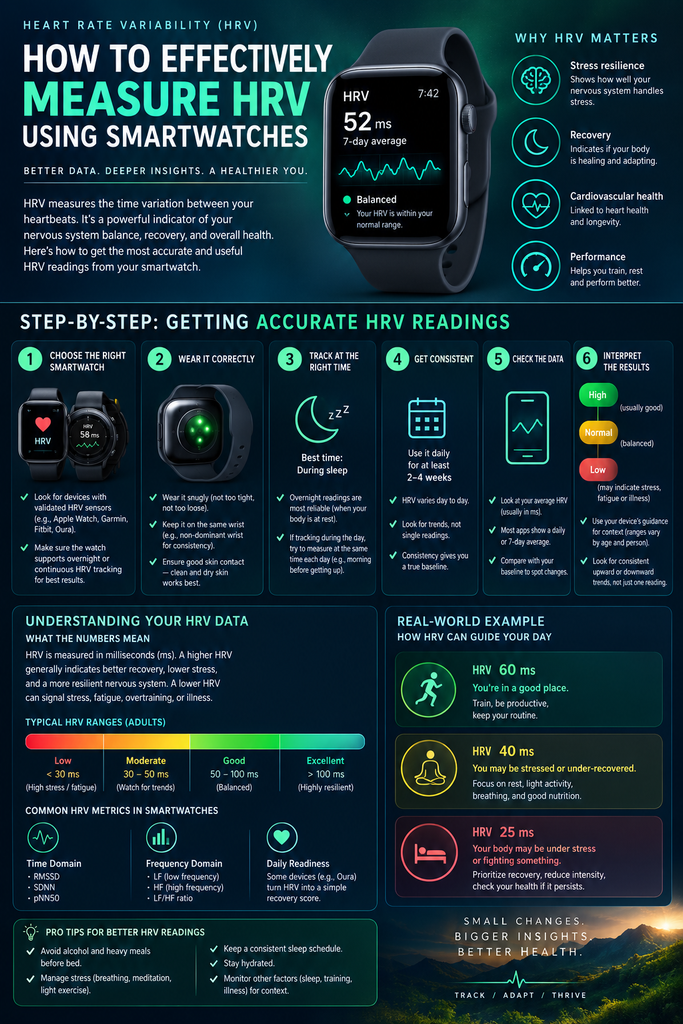
To understand what is “normal,” we first have to understand what is actually being measured. The gold standard metric for HRV in consumer wearables (like Oura, Whoop, and Apple Watch) is RMSSD (Root Mean Square of Successive Differences). RMSSD specifically isolates the high-frequency variations in your heart rate, which are driven almost exclusively by the parasympathetic nervous system via the vagus nerve.
When you inhale, your heart rate slightly accelerates as sympathetic tone increases. When you exhale, the vagus nerve releases acetylcholine onto the sinoatrial node of the heart, acting as a chemical brake that decelerates the heart rate. The greater the difference between the inhalation peak and the exhalation trough, the higher your RMSSD.
According to foundational cardiovascular data published by the American Heart Association (AHA), a high HRV indicates a robust, healthy heart that can efficiently modulate its output. But defining a “normal” HRV is notoriously difficult because it is highly individualized. A “normal” RMSSD for a highly conditioned 25-year-old endurance athlete might be 90 milliseconds (ms), while a “normal” RMSSD for a healthy, sedentary 60-year-old might be 25 ms.
Therefore, chasing a specific number based on population averages is a biological error. The goal is not to achieve the highest number in your demographic; the goal is to establish your own personal baseline and systematically engineer an upward trend.
Heart rate variability chart by age
While individual baselines are paramount, understanding the macro-level heart rate variability chart by age provides critical context for how our autonomic nervous system degrades over time. Epidemiological data published in Circulation demonstrates a steady, predictable decline in vagal tone as we age.
- Ages 20–25: Average RMSSD ranges from 50 ms to 100+ ms.
- Ages 35–45: Average RMSSD drops to 30 ms to 60 ms.
- Ages 55–65: Average RMSSD narrows to 20 ms to 40 ms.
- Ages 75+: Average RMSSD often falls below 20 ms.
The Biological Reality of the Decline
This age-related drop is not strictly inevitable; it is largely driven by the cumulative burden of modern lifestyle inputs. Chronic psychological stress, visceral adiposity, sedentary behavior, and circadian disruption progressively downregulate the sensitivity of the baroreceptors (the pressure sensors in your carotid arteries). As the baroreflex dulls, the brainstem loses its ability to rapidly modulate the heart rate via the vagus nerve.
However, longitudinal studies of master athletes show that individuals who maintain rigorous aerobic conditioning and metabolic flexibility can preserve the HRV of a 30-year-old well into their 60s. The decline is a reflection of our environment, not an unalterable law of genetics.
What is a good HRV
If population charts are flawed, how do you define what is a good HRV? In the context of wearable tracking, a “good” HRV is defined by three specific behavioral characteristics:
- Baseline Stability: Your 7-day or 30-day rolling average is stable or slowly trending upward. Wild, erratic day-to-day swings indicate an autonomic system that is struggling to find homeostasis.
- Nocturnal Dominance: HRV should be measured exclusively during deep, slow-wave sleep. A “good” HRV is one that spikes during the first half of the night (when parasympathetic recovery is maximal) and remains elevated compared to your waking hours. If your nocturnal HRV is lower than your daytime HRV, your body is failing to recover.
- Rapid Rebound: A highly resilient autonomic system will take a hit from an acute stressor (a heavy lifting session, a poor night of sleep, a stressful workday), show a temporary dip in HRV, and then rapidly rebound to baseline within 24 to 48 hours. A system that stays suppressed for days after a minor stressor lacks autonomic agility.
What is a low HRV
When your wearable alerts you that your HRV is suppressed, it is providing a real-time readout of systemic allostatic load. What is a low HRV in a practical sense? It means your sympathetic nervous system is dominating the conversation. Your body is stuck in a state of “fight or flight,” perceiving a threat that requires immediate energy mobilization at the expense of long-term repair and digestion.
The Drivers of Autonomic Suppression
A low HRV is rarely caused by a single factor; it is the sum of your biological friction.
- Metabolic Chaos: Consuming highly processed carbohydrates late at night forces your pancreas to secrete massive amounts of insulin while you sleep. This glycemic volatility triggers a sympathetic stress response, crushing your nocturnal HRV. To understand how blood sugar swings destroy your autonomic recovery, read our deep dive on Glycemic Variability and Metabolic Flexibility.
- Alcohol and Toxins: Alcohol is a profound autonomic disruptor. Even a single glass of wine before bed forces the liver to prioritize ethanol clearance over cellular repair, keeping the heart rate elevated and HRV suppressed for the entire night.
- Visceral Adiposity: Fat stored around the internal organs is not inert; it is an active endocrine gland pumping out inflammatory cytokines like IL-6 and TNF-alpha. This systemic inflammation directly irritates the autonomic ganglia, blunting vagal tone. Track your true metabolic risk and visceral fat burden using our Advanced BMI Calculator.
- Circadian Misalignment: Staring at blue-light-emitting screens after sunset halts melatonin production and tricks the suprachiasmatic nucleus into believing it is noon, keeping the sympathetic nervous system locked in the “on” position.
What is a dangerously low HRV
There is a profound difference between a temporarily suppressed HRV due to a hard workout and a chronically, deeply suppressed HRV. What is a dangerously low HRV? When your RMSSD drops significantly below your personal baseline and stays there for weeks, it is no longer just a sign of stress; it is a clinical warning sign of systemic pathology.
1. Impending Illness and Immune Activation
Before you ever feel the first scratch of a sore throat or the ache of a fever, your innate immune system detects a pathogen and initiates a massive inflammatory cascade. This cytokine release immediately suppresses the vagus nerve to conserve energy for the immune response. A sudden, unexplained 20% to 30% drop in your baseline HRV is one of the most accurate early-warning biomarkers for an impending viral or bacterial infection.
2. Overtraining Syndrome and Autonomic Exhaustion
In endurance athletes and heavy lifters, a chronically low HRV indicates that the central nervous system is failing to recover from mechanical and metabolic damage. If you continue to push through a deeply suppressed HRV, you risk crossing the threshold into clinical Overtraining Syndrome, characterized by severe insomnia, mood disturbances, hormonal crashes, and a massively elevated risk of musculoskeletal injury.
3. Cardiovascular and Autonomic Neuropathy
In a clinical setting, a dangerously low HRV (often measured via SDNN in 24-hour Holter monitors) is a powerful, independent predictor of mortality following a myocardial infarction. According to landmark cardiology data published in Circulation, a severely depressed HRV indicates autonomic neuropathy—the physical degradation of the nerves controlling the heart. It means the heart has lost its ability to adapt to sudden changes in blood pressure, vastly increasing the risk of fatal arrhythmias and sudden cardiac death.
Best exercise to increase HRV
If you want to permanently raise your autonomic ceiling, you must subject your cardiovascular system to the right kind of mechanical stress. The best exercise to increase HRV is not high-intensity interval training (HIIT); it is sustained, low-intensity aerobic conditioning, specifically Zone 2 Cardio.
The Mechanism of Laminar Shear Stress
When you engage in Zone 2 cardio (exercising at a pace where you can maintain a conversation, but it requires effort), you create a massive, continuous demand for oxygen in your Type I slow-twitch muscle fibers. This drives a high volume of blood through your arterial network, creating a smooth, frictionless force known as laminar shear stress against the endothelial lining of your blood vessels.
According to vascular physiology research published in the Journal of Applied Physiology, this specific mechanical shear stress upregulates endothelial nitric oxide synthase (eNOS), flooding the bloodstream with nitric oxide. This not only dilates the blood vessels and lowers blood pressure, but it also sends a direct, potent signal to the brainstem to upregulate parasympathetic vagal tone.
The HIIT Trap
High-Intensity Interval Training is a massive sympathetic stressor. It is highly effective for increasing VO2 max and mitochondrial density, but it acutely tanks your HRV. If your autonomic baseline is already low due to life stress, poor sleep, or metabolic dysfunction, stacking frequent HIIT sessions on top of it will drive your HRV into the ground.
To optimize heart rate variability, you must build a massive aerobic base. Commit to 3 to 4 hours of Zone 2 cardio per week, and limit your high-intensity, sympathetic-spiking sessions to just one or two per week. For a comprehensive guide to building this mitochondrial engine without destroying your nervous system, read our masterclass on Zone 2 Cardio: The Mitochondrial Engine.
How to increase HRV naturally
Building a high HRV is not about finding a single biohack; it is about removing the chronic friction that keeps your sympathetic nervous system activated. How to increase HRV naturally requires a multi-vector approach to lifestyle design.
1. Circadian Fasting and Digestive Rest
Digestion is a highly energy-expensive, sympathetic-driven process. If you eat a heavy meal right before bed, your autonomic nervous system is forced to manage the metabolic load of digestion while simultaneously trying to initiate deep, parasympathetic sleep. The result is a fragmented night and a crushed morning HRV.
- The Protocol: Close the kitchen a minimum of three hours before sleep. Use our Intermittent Fasting Calculator to design a feeding window that aligns with your natural circadian rhythm, ensuring your digestive system is entirely offline when your head hits the pillow.
2. Vagal Toning and Respiratory Sinus Arrhythmia
The vagus nerve is the physical highway of the parasympathetic nervous system. You can manually stimulate it through specific respiratory patterns. Because the vagus nerve is highly sensitive to the mechanical stretch of the diaphragm, slow, deep diaphragmatic breathing forces the heart rate to decelerate, artificially raising your HRV in real-time and training the baroreflex to become more sensitive over time.
3. Thermal Hormesis (Cold Exposure)
Acute cold exposure is a profound autonomic stressor, but the recovery from that stressor drives massive parasympathetic rebound. When you expose your face or body to cold water, you trigger the mammalian dive reflex, which immediately stimulates the trigeminal and vagus nerves, slowing the heart rate and conserving oxygen. Regular cold exposure trains the autonomic nervous system to rapidly shift from a high-sympathetic state back to a high-parasympathetic state, vastly improving your overall HRV baseline.
4. Hydration and Blood Volume
The baroreceptors in your neck rely on adequate blood volume and pressure to accurately sense your physiological state and modulate the vagus nerve. Chronic, low-grade dehydration reduces plasma volume, forcing the heart to beat faster and more rigidly to maintain cardiac output, which suppresses HRV. Calculate your exact baseline hydration requirements with our Water Intake Calculator and ensure you are consuming mineralized water to support optimal vascular tone.
💡 Action Step: The physical architecture of your sleep dictates your nocturnal HRV. If your sleep is fragmented by noise, light, or temperature fluctuations, your brain will trigger micro-arousals that spike cortisol and suppress the vagus nerve. To ensure your nervous system is actually recovering, read our protocol on Sleep Architecture: Why the Stages Matter More Than the Hours.
How to improve HRV quickly
While raising your baseline HRV takes months of consistent aerobic conditioning and metabolic optimization, there are acute, real-time interventions you can deploy to shift your autonomic state in a matter of minutes. If you are in the middle of a high-stress event, a panic response, or a sympathetic spiral, how to improve HRV quickly relies on hacking the brainstem’s respiratory and cranial nerve centers.
1. The Physiological Sigh (Cyclic Sighing)
Popularized by neurobiologists at Stanford, the physiological sigh is the fastest, most scientifically validated way to offload carbon dioxide and manually engage the parasympathetic brake in real-time.
- The Execution: Take two sharp inhales through the nose (one deep, followed immediately by a second, shorter “top-off” inhale to fully inflate the alveoli in the lungs), followed by a long, slow, extended exhale through the mouth.
- The Mechanism: The double inhale pops open collapsed alveoli, maximizing the surface area for gas exchange. The extended exhale physically compresses the thoracic cavity, slowing the heart rate and triggering a massive vagal response. Just 1 to 3 minutes of cyclic sighing can acutely lower your heart rate and raise your HRV during an acute stress response. According to clinical trials published in Cell Reports Medicine, just five minutes of daily cyclic sighing significantly improves mood and resting autonomic tone.
2. Resonant Frequency Breathing
Every human body has a specific respiratory rate at which the cardiovascular and respiratory systems achieve perfect resonance, maximizing baroreflex sensitivity and HRV. For the vast majority of adults, this “resonant frequency” is exactly 5.5 breaths per minute (an inhale of roughly 5.5 seconds, and an exhale of roughly 5.5 seconds).
- The Execution: Use a visual pacer app or a metronome set to 5.5 breaths per minute. Breathe smoothly, without pausing at the top or bottom of the breath, for 10 to 20 minutes. This specific cadence forces the heart rate and blood pressure waves to synchronize, creating a state of profound autonomic coherence.
3. Cold Water Face Immersion
If you are caught in a severe sympathetic spiral and cannot control your breathing, use the mammalian dive reflex. Fill a bowl with ice water and submerge your face (specifically the forehead and the area around the eyes) for 15 to 30 seconds. The intense thermal shock to the trigeminal nerve instantly overrides the sympathetic panic response, forcing the vagus nerve to dump acetylcholine onto the heart and drastically slowing the heart rate.
Final Thoughts
To optimize heart rate variability is to reclaim your biological sovereignty. HRV is not just a number on a screen; it is the physical manifestation of your body’s capacity to navigate the friction of the modern world without breaking down. It is the proof that your nervous system is agile, your mitochondria are efficient, and your vascular system is resilient.
By abandoning the pursuit of a perfectly steady heart rate and instead embracing the dynamic, jazz-like variability of a highly tuned autonomic engine, you change your relationship with stress. You stop viewing stressors as threats to be avoided, and start viewing them as inputs to be managed. Build your aerobic base in Zone 2, protect your nocturnal recovery with circadian fasting, manually stimulate the vagus nerve when the world demands it, and watch as your biological resilience expands to meet the demands of a long, vibrant healthspan.
Frequently Asked Questions (FAQ)
1. What is a normal HRV for my age?
Heart Rate Variability (measured via RMSSD) naturally declines with age. A normal range for a healthy 25-year-old is typically 50 to 100 milliseconds (ms), while a healthy 60-year-old might range from 20 to 40 ms. However, individual baselines vary wildly based on fitness and genetics; tracking your personal trend is far more important than comparing yourself to population averages.
2. What is the best exercise to increase HRV?
The best exercise to increase HRV is sustained, low-intensity Zone 2 cardiovascular training. Zone 2 cardio creates laminar shear stress in the blood vessels, which upregulates nitric oxide production and sends a potent signal to the brainstem to increase parasympathetic vagal tone. High-intensity interval training (HIIT) is a sympathetic stressor that temporarily suppresses HRV.
3. What is a dangerously low HRV?
What is a dangerously low HRV? It is one that drops significantly below your personal baseline and remains suppressed for weeks. Clinically, a severely depressed HRV indicates autonomic neuropathy, chronic systemic inflammation, overtraining syndrome, or an impending acute illness, and is a strong independent predictor of cardiovascular mortality and arrhythmia risk.
4. How can I improve my HRV quickly in an emergency?
The fastest way to acutely improve HRV and calm the nervous system is the “physiological sigh”: taking two sharp inhales through the nose to fully inflate the lungs, followed by a long, slow exhale through the mouth. Additionally, splashing ice-cold water on your face triggers the mammalian dive reflex, instantly stimulating the vagus nerve and slowing the heart rate.
5. Why is my HRV so low even though I exercise?
If your HRV is low despite regular exercise, you may be overtraining, consuming alcohol or heavy meals too close to bedtime, or suffering from hidden metabolic stressors like visceral adiposity and glycemic variability. Exercise is a stressor; if your sleep, nutrition, and circadian rhythms are not optimized to recover from that stress, your autonomic nervous system will remain suppressed.
⚕️ Editorial & Medical Disclaimer
Julian Vance is not a licensed physician or medical professional. All content published on RegenStep.com is thoroughly reviewed against cited primary sources and peer-reviewed literature for educational and informational purposes only. It does not constitute medical advice, diagnosis, or treatment. Always consult a qualified healthcare provider or doctor regarding any personal health condition or medical decisions, particularly before initiating rigorous cardiovascular training, thermal stress protocols, or if you have a history of cardiac arrhythmias or autonomic dysfunction.
#HRV #StressRelief #Biohacker

Julian Vance is the writer and editor behind RegenStep, translating peer-reviewed longevity, metabolic, and gut-health research into practical, actionable guides. Julian is not a licensed physician; content is reviewed against cited primary sources and is for informational purposes only. Always consult a qualified healthcare provider for personal medical advice.