
When nothing seems to work, the missing variable is usually diversity. Read our guide to the gut-brain-skin axis.
Medical Disclaimer: This article is educational and not medical advice. Persistent digestive symptoms can signal conditions—like celiac disease, IBD, SIBO, or others—that require professional diagnosis. If your gut isn’t improving, see a doctor rather than self-treating indefinitely. This information is meant to complement, not replace, professional care.
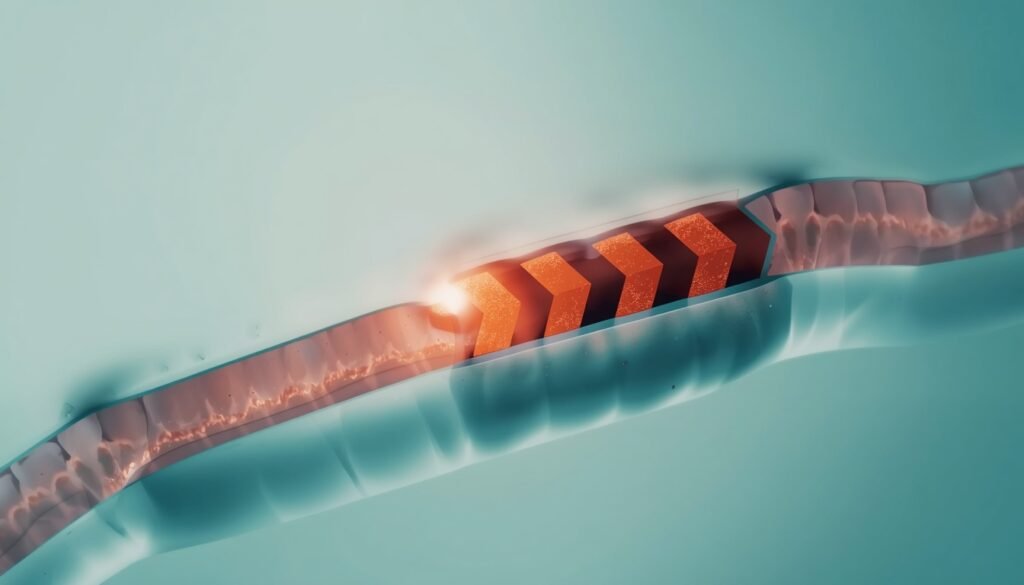
Let me tell you about Priya, a 36-year-old who did everything the internet told her to. Bone broth, L-glutamine, cut out gluten, took a probiotic. Six months later, still bloated, still reactive to half the foods she ate. “I’ve spent hundreds of dollars,” she told me, exhausted. “Why isn’t my gut healing?” It’s one of the most common questions I hear—and the answer is almost never “you need one more supplement.” Usually, something is actively blocking the healing, and until you find it, no protocol will work.
Short answer: Your gut lining is built to heal fast—so if it isn’t, something is standing in the way. The most common reasons are: you haven’t fully removed the real trigger, chronic stress and poor sleep are re-damaging the barrier daily, there’s an undiagnosed root cause (like SIBO or low stomach acid), you’re not giving it enough time, you keep switching protocols, or you’re neglecting your microbiome. Fix the blocker, and healing usually follows.
Your Gut Wants to Heal—So What’s Stopping It?
Remember this: the cells lining your gut are among the fastest-renewing in your body, replacing themselves every few days. That means the default state of your gut is trying to heal, constantly. So when it doesn’t, the problem usually isn’t a lack of healing power—it’s an ongoing force working against it. Let’s find yours.
Reason 1: You Haven’t Removed the Real Trigger
This is the big one. You cannot heal a wound while you keep re-opening it. If you’re still consuming the things that damage the gut barrier—ultra-processed foods, dietary emulsifiers, excess alcohol, or frequent NSAIDs like ibuprofen—then all the glutamine in the world is fighting a losing battle. Many people cut the obvious triggers but miss hidden ones, especially emulsifiers buried in “healthy” foods. Audit everything, not just the usual suspects.
Reason 2: Chronic Stress Is Sabotaging Your Barrier
👤 Human & 🔬 Animal Evidence. This is the most overlooked blocker of all. Chronic stress keeps your cortisol elevated—and cortisol directly breaks down the tight junctions between your gut cells, increasing intestinal permeability and promoting dysbiosis. Research on chronic psychosocial stress shows it triggers gut inflammation and barrier permeability through brain-gut signaling. In other words: you can eat a perfect diet, but if you’re living in a state of constant stress, you’re chemically re-damaging your gut lining every single day. This is why stress management isn’t optional—it’s a gut treatment.
Reason 3: You’re Not Sleeping Enough
🔬 Animal Evidence. Sleep is when your body repairs, and the gut is no exception. Studies show chronic sleep deprivation impairs the gut barrier, raises stress hormones and inflammatory cytokines, and shifts the microbiome unfavorably. If you’re running on six hours a night, you’re undercutting the very repair process you’re trying to support. Protecting 7–9 hours isn’t a luxury—it’s part of the protocol.
Reason 4: There’s an Undiagnosed Root Cause
Sometimes healing stalls because you’re treating the symptom while a hidden driver runs unchecked. Common culprits include SIBO (small intestinal bacterial overgrowth), an H. pylori infection, low stomach acid (which lets bacteria overgrow and impairs digestion), undiagnosed celiac disease, or a food intolerance you haven’t identified. No amount of gut-soothing supplements will overcome an active, untreated root cause. This is exactly where a doctor’s workup earns its keep.
Reason 5: You’re Not Giving It Enough Time
Priya’s biggest frustration was timeline. But healing a compromised gut barrier isn’t a two-week job—for moderate damage it typically takes 4–12 weeks, and longer if the damage is significant. Many people quit at the three-week mark, right before progress becomes obvious. If you want the realistic schedule, see how long it actually takes to heal your gut lining. Patience isn’t passive here—it’s part of the treatment.
Reason 6: You’re Protocol-Hopping
Ironically, trying too many things can stall healing. Stacking a dozen supplements, switching approaches every two weeks, and chasing every new trend means nothing gets a fair trial—and it can overwhelm an already-sensitive gut. Consistency beats intensity. Pick an evidence-aligned foundation, remove your triggers, and give it a sustained, unglamorous run rather than a frantic rotation of quick fixes.
Reason 7: You’re Ignoring Your Microbiome
Your gut barrier depends on the bacteria that live on it. Beneficial microbes produce butyrate, the short-chain fatty acid that fuels and strengthens the gut lining. If your diet is low in fiber diversity, you’re starving the exact bacteria that rebuild your barrier. Feeding a diverse microbiome with plants, fiber, and fermented foods is foundational—see The Dysbiosis Blueprint for how to rebuild it.
🦠 Find the Blocker You’re Missing
Not sure which of these is stalling your progress? A structured gut-health check can highlight the factors—stress, sleep, diet, symptoms—most likely holding you back, so you stop guessing and start fixing the right thing.
And don’t overlook the basics of repair fuel—adequate protein supplies the amino acids (like glutamine) your gut uses to rebuild; check your target with our Protein Intake Calculator.
A Smarter Way to Actually Heal
If you’re stuck, stop adding and start subtracting. In order:
- Remove every trigger—including the hidden ones.
- Treat stress and sleep as gut medicine, not afterthoughts.
- Get evaluated for a root cause if symptoms persist (SIBO, H. pylori, low acid, celiac).
- Pick one consistent plan and give it 8–12 weeks.
- Feed your microbiome with diverse fiber and fermented foods.
Explore more in our Gut Health library.
When To See a Doctor
If your gut hasn’t improved after a genuine, consistent effort—or if you have red flags like unexplained weight loss, blood in the stool, chronic diarrhea, severe pain, or persistent vomiting—see a physician. Ongoing symptoms that resist lifestyle change are exactly the situation that warrants proper testing, not another supplement. Getting the right diagnosis is often the missing piece.
The Bottom Line
If your gut isn’t healing, it’s rarely because you haven’t found the magic supplement—it’s because something is actively blocking a process your body desperately wants to complete. The usual suspects are an unremoved trigger, chronic stress, poor sleep, an undiagnosed root cause, impatience, protocol-hopping, or a neglected microbiome. Priya’s turnaround didn’t come from a new product. It came from addressing her relentless work stress, fixing her sleep, and getting tested—which revealed the SIBO no supplement was ever going to fix. Find your blocker, remove it, and let your remarkable, fast-healing gut do what it was built to do.
Frequently Asked Questions
Why isn’t my gut healing even though I’m eating well?
Diet is only part of the picture. Common reasons healing stalls despite a good diet include chronic stress and poor sleep (which damage the gut barrier via cortisol), an undiagnosed root cause like SIBO or low stomach acid, hidden dietary triggers such as emulsifiers, not allowing enough time, or constantly switching protocols. Identifying and removing the active blocker is usually the key.
Can stress stop your gut from healing?
Yes. Chronic stress keeps cortisol elevated, which breaks down the tight junctions in your gut lining and increases intestinal permeability. Research shows psychosocial stress can trigger gut inflammation and barrier dysfunction, meaning ongoing stress can re-damage your gut daily and prevent healing regardless of your diet.
Does lack of sleep affect gut healing?
Yes. Chronic sleep deprivation has been shown to impair the gut barrier, raise stress hormones and inflammatory signals, and disrupt the microbiome. Since repair happens largely during rest, insufficient sleep directly undermines gut healing. Aim for 7–9 hours of quality sleep.
How do I know if I have an undiagnosed gut condition?
Persistent symptoms that don’t respond to consistent lifestyle changes are a signal to get evaluated. Conditions like SIBO, H. pylori infection, low stomach acid, celiac disease, or IBD can block healing. A doctor can order appropriate tests such as breath tests, stool tests, blood work, or endoscopy.
How long should gut healing take?
The surface lining renews within days, but full barrier repair usually takes 4–12 weeks for mild-to-moderate damage, and longer if it’s significant. Many people give up too early. Consistency over a couple of months matters more than any single intervention.
Am I taking too many gut supplements?
Possibly. Stacking many supplements and switching protocols frequently can overwhelm a sensitive gut and means nothing gets a fair trial. A simpler, consistent, evidence-aligned approach—centered on removing triggers and feeding the microbiome—usually works better than an ever-changing pile of products.
References
- Neurobiological Implications of Chronic Stress and Metabolic Dysregulation in IBD (cortisol & gut barrier). PMC. pmc.ncbi.nlm.nih.gov/articles/PMC11431196
- Stress-activated brain-gut circuits disrupt intestinal barrier integrity. PMC. ncbi.nlm.nih.gov/pmc/articles/PMC10635315
- Chronic Sleep Deprivation Causes Impaired Gut Barrier (microbiome & metabolome analysis). PMC, 2024. ncbi.nlm.nih.gov/pmc/articles/PMC11673394
Your Gut Wants to Heal—So What’s Stopping It?
Remember this: the cells lining your gut are among the fastest-renewing in your body, replacing themselves every few days. That means the default state of your gut is trying to heal, constantly. So when it doesn’t, the problem usually isn’t a lack of healing power—it’s an ongoing force working against it. Let’s find yours.
Why isn’t my gut healing even though I’m eating well?
Diet is only part of the picture. Common reasons healing stalls despite a good diet include chronic stress and poor sleep (which damage the gut barrier via cortisol), an undiagnosed root cause like SIBO or low stomach acid, hidden dietary triggers such as emulsifiers, not allowing enough time, or constantly switching protocols. Identifying and removing the active blocker is usually the key.
Can stress stop your gut from healing?
Yes. Chronic stress keeps cortisol elevated, which breaks down the tight junctions in your gut lining and increases intestinal permeability. Research shows psychosocial stress can trigger gut inflammation and barrier dysfunction, meaning ongoing stress can re-damage your gut daily and prevent healing regardless of your diet.
Does lack of sleep affect gut healing?
Yes. Chronic sleep deprivation has been shown to impair the gut barrier, raise stress hormones and inflammatory signals, and disrupt the microbiome. Since repair happens largely during rest, insufficient sleep directly undermines gut healing. Aim for 7–9 hours of quality sleep.
How do I know if I have an undiagnosed gut condition?
Persistent symptoms that don’t respond to consistent lifestyle changes are a signal to get evaluated. Conditions like SIBO, H. pylori infection, low stomach acid, celiac disease, or IBD can block healing. A doctor can order appropriate tests such as breath tests, stool tests, blood work, or endoscopy.
How long should gut healing take?
The surface lining renews within days, but full barrier repair usually takes 4–12 weeks for mild-to-moderate damage, and longer if it’s significant. Many people give up too early. Consistency over a couple of months matters more than any single intervention.
Am I taking too many gut supplements?
Possibly. Stacking many supplements and switching protocols frequently can overwhelm a sensitive gut and means nothing gets a fair trial. A simpler, consistent, evidence-aligned approach—centered on removing triggers and feeding the microbiome—usually works better than an ever-changing pile of products.

Julian Vance is the writer and editor behind RegenStep, translating peer-reviewed longevity, metabolic, and gut-health research into practical, actionable guides. Julian is not a licensed physician; content is reviewed against cited primary sources and is for informational purposes only. Always consult a qualified healthcare provider for personal medical advice.