
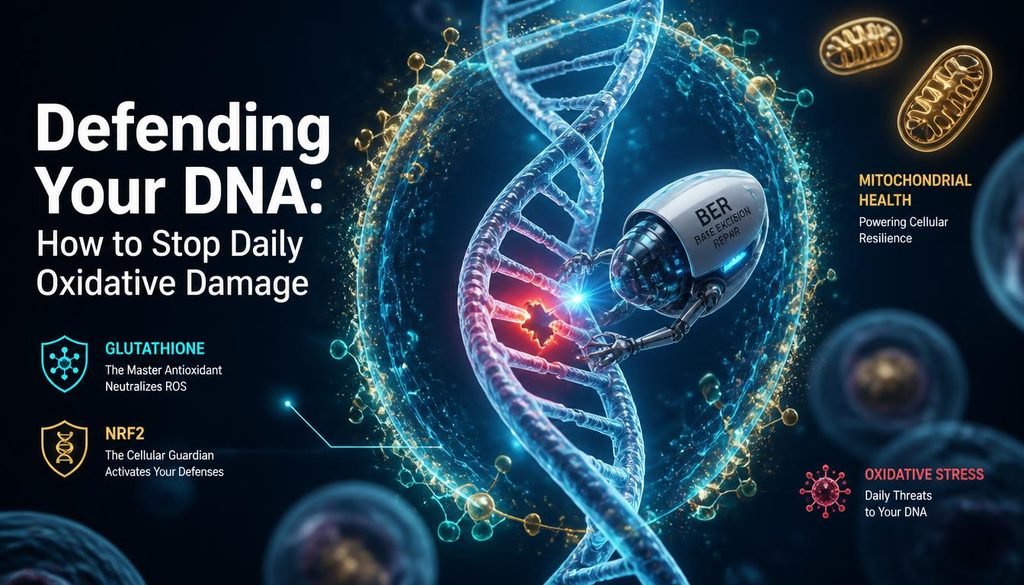
Every single second of your life, an invisible, microscopic war is raging inside your cells. While you sit reading this article, the roughly 37 trillion cells in your body are enduring a relentless bombardment from highly reactive, electron-stealing molecules known as free radicals. According to conservative estimates in molecular biology, the DNA inside every single one of your cells suffers between 10,000 and 100,000 oxidative hits every single day. If left unchecked, this daily oxidative DNA damage leads to genetic mutations, cellular senescence, accelerated telomere attrition, and ultimately, the clinical manifestations of aging and cancer.
As a physician focused on longevity and cellular optimization, I see patients who spend thousands of dollars on exotic peptides and hyperbaric oxygen, yet completely ignore the foundational integrity of their genome. The wellness industry has heavily marketed the concept of “antioxidants,” but they have fundamentally misunderstood the biochemistry. Popping high-dose synthetic Vitamin C or Vitamin E pills does not defend your DNA; in fact, it often blunts your body’s natural adaptive signaling and accelerates biological aging. True genomic defense requires upregulating your endogenous master switches, managing your transition metals, and respecting the delicate balance of cellular hormesis.
In this comprehensive, 3,500-word clinical breakdown, we will dissect the exact molecular mechanisms of oxidative DNA damage, expose the dangerous “Antioxidant Paradox” that plagues modern biohacking, and outline the precise 5-pillar protocol required to activate your Nrf2 pathway, fortify your Base Excision Repair enzymes, and defend your genetic code for the decades to come.
The Biochemistry of the Assault: Reactive Oxygen Species (ROS)
To understand how to defend your DNA, you must first understand the nature of the attacker. Reactive Oxygen Species (ROS) are highly unstable molecules that contain one or more unpaired electrons. Because electrons naturally want to exist in pairs, these rogue molecules violently tear through your cellular architecture, stealing electrons from the first stable molecule they encounter—be it a lipid membrane, a structural protein, or your precious DNA.
The Hydroxyl Radical and the Fenton Reaction
Not all ROS are created equal. Superoxide (O2•−) and hydrogen peroxide (H2O2) are relatively mild and actually serve as vital cellular signaling molecules. The true villain in the story of oxidative DNA damage is the hydroxyl radical (•OH). The hydroxyl radical is the most reactive and destructive free radical known to science. It has a half-life of roughly one nanosecond and will indiscriminately destroy whatever biological structure is within a nanometer of its creation.
The hydroxyl radical is primarily born inside your cells via the Fenton Reaction. This occurs when mild hydrogen peroxide interacts with unbound, free-floating transition metals—specifically iron and copper. If you have high levels of stored ferritin (iron) or consume excess unbound copper while simultaneously experiencing mitochondrial stress, you are essentially creating a biochemical factory for hydroxyl radicals directly inside your nucleus.
8-oxo-dG: The Signature Lesion of Aging
When the hydroxyl radical attacks the DNA double helix, it most frequently targets guanine, one of the four nucleotide bases that make up your genetic code. The oxidation of guanine creates a specific, highly mutagenic lesion known as 8-oxo-2′-deoxyguanosine (8-oxo-dG).
When your cellular replication machinery (DNA polymerase) encounters an 8-oxo-dG lesion during cell division, it frequently misreads it as thymine instead of cytosine. This results in a G:C to T:A transversion mutation. If this mutation occurs in a tumor suppressor gene (like p53), it removes the brakes on cellular division, paving the way for oncogenesis. If it occurs in a structural gene, it leads to the production of misfolded, dysfunctional proteins that accumulate and drive the physical degradation of your tissues.
The Telomere Vulnerability
Your telomeres—the protective caps at the ends of your chromosomes—are exceptionally vulnerable to oxidative DNA damage. Telomeres are composed of repeating sequences of TTAGGG. Because guanine is highly susceptible to oxidation, and because the Base Excision Repair (BER) machinery is less efficient at the very ends of chromosomes, telomeres act as “lightning rods” for oxidative stress. Research published in the Journal of Biological Chemistry demonstrates that oxidative stress accelerates telomere shortening far faster than the natural end-replication problem. You cannot protect your biological age without defending your telomeres from ROS.
The 4 Primary Sources of Daily Oxidative Damage
Your DNA is not being attacked randomly; the assault is driven by specific, modifiable lifestyle and environmental factors. Here are the four primary engines of oxidative DNA damage.
1. Mitochondrial ROS Leakage (The Internal Engine)
Your mitochondria are the power plants of the cell, generating ATP via the Electron Transport Chain (ETC). As detailed in our deep dive on Mitochondrial Health: The Real Secret to Endless Daily Stamina, the ETC is not perfectly efficient. Roughly 1% to 3% of the electrons passing through the chain “leak” out and prematurely bind with oxygen, forming superoxide. When your mitochondria are damaged, senescent, or overwhelmed by excess caloric intake, this leakage increases exponentially, flooding the cell with ROS that migrate directly to the nucleus.
2. Environmental Toxins and Xenobiotics
Every time you are exposed to a synthetic chemical—be it glyphosate on your food, phthalates in your plastics, volatile organic compounds (VOCs) in your paint, or heavy metals in your water—your liver must detoxify it. The Cytochrome P450 enzyme system in the liver neutralizes these toxins, but the process of detoxification inherently generates massive amounts of oxidative byproducts. A high toxic burden forces your liver into a state of chronic oxidative stress, depleting your systemic antioxidant reserves.
3. Chronic Inflammation and the Respiratory Burst
When your immune system detects a chronic, low-grade threat (such as visceral fat, a hidden dental infection, or a leaky gut), macrophages and neutrophils are continuously activated. These immune cells intentionally generate ROS via an enzyme called NADPH oxidase in a process known as the “respiratory burst” to kill pathogens. However, in a state of chronic, sterile inflammation (like metabolic syndrome), this respiratory burst fires indiscriminately, causing massive collateral oxidative DNA damage to your own healthy bystander cells. To assess your hidden inflammatory burden, track your visceral fat using our Advanced BMI Calculator.
4. Blue Light and Phototoxicity
While UV radiation from the sun is a well-known cause of direct DNA damage (creating pyrimidine dimers), modern artificial blue light (from LEDs, screens, and energy-efficient bulbs) penetrates deeper into the skin and retina. High-energy visible (HEV) blue light interacts with intracellular chromophores (like porphyrins and flavins), exciting them and causing them to transfer energy to oxygen, generating singlet oxygen and ROS. This is why chronic screen time is increasingly linked to macular degeneration and premature skin aging.
The Antioxidant Paradox: Why High-Dose Pills Fail
For decades, the mainstream nutritional dogma dictated that to stop oxidative DNA damage, you simply needed to consume massive doses of exogenous antioxidants: 1,000 mg of Vitamin C, 400 IU of Vitamin E, and synthetic beta-carotene.
This approach has been an unmitigated disaster in human clinical trials. The infamous SELECT trial found that high-dose Vitamin E supplementation actually increased the risk of prostate cancer. Studies on marathon runners showed that high-dose Vitamin C and E supplementation completely blunted the beneficial adaptations to exercise, preventing the formation of new mitochondria and negating the insulin-sensitizing effects of training.
The Blunting of ROS Signaling (Hormesis)
Why do antioxidant pills fail and sometimes cause harm? Because they ignore the biological necessity of ROS signaling. In a healthy cell, a mild spike in ROS (such as the one generated during a heavy lifting session or a sauna visit) is the exact signal that travels to the nucleus to upregulate your body’s internal defense genes. This is the essence of hormesis.
When you flood your system with high-dose synthetic antioxidants, you act as a “ROS sponge.” You mop up the vital signaling molecules before they can reach the nucleus. Your brain perceives that there is no stress, and therefore, it downregulates the production of your endogenous, highly potent antioxidant enzymes. You trade a temporary, artificial chemical shield for the degradation of your body’s permanent, biological armor.
The Master Switch: The Nrf2 Pathway and Endogenous Defense
To truly defend your DNA, you must stop relying on exogenous sponges and start upregulating your endogenous machinery. The master regulator of your cellular defense system is the Nrf2 (Nuclear factor erythroid 2-related factor 2) pathway.
The Keap1-Nrf2-ARE Mechanism
Under normal, non-stressed conditions, Nrf2 is bound in the cell’s cytoplasm by a repressor protein called Keap1. Keap1 acts like a leash, constantly tagging Nrf2 for ubiquitination and destruction by the proteasome.
However, when the cell experiences mild oxidative stress, or when it is exposed to specific phytochemicals (like sulforaphane or curcumin), the cysteine residues on the Keap1 protein are modified. This causes Keap1 to change shape and release Nrf2. The freed Nrf2 rapidly translocates into the cell nucleus, binds to the Antioxidant Response Element (ARE), and initiates the transcription of over 200 cytoprotective genes.
These genes code for the most powerful antioxidants in human biology, including:
- Glutathione (GSH): The master intracellular antioxidant.
- Superoxide Dismutase (SOD): The enzyme that converts toxic superoxide into mild hydrogen peroxide.
- Catalase: The enzyme that converts hydrogen peroxide into harmless water and oxygen.
- Heme Oxygenase-1 (HO-1): An enzyme that breaks down pro-oxidant heme into protective biliverdin and carbon monoxide.
By activating Nrf2, a single molecule of a phytochemical can trigger the production of thousands of molecules of endogenous enzymes, providing a sustained, catalytic defense against oxidative DNA damage that no vitamin pill could ever match.
The 5-Pillar Protocol to Defend Your DNA
To build an impenetrable shield around your genome, you must implement this clinical, multi-system protocol.
Pillar 1: Nutritional Nrf2 Activators (The Phytochemical Arsenal)
You must consume specific plant compounds that have evolved to mildly stress your cells, thereby triggering the Nrf2 pathway.
- Sulforaphane: Found in cruciferous vegetables, sulforaphane is the most potent naturally occurring Nrf2 activator. It modifies the Keap1 sensor, freeing Nrf2. Clinical Tip: Sulforaphane is not present in the raw plant; it is created when the precursor glucoraphanin mixes with the enzyme myrosinase. To maximize yield, chop your broccoli or broccoli sprouts and let them sit for 40 minutes before cooking, or add a pinch of raw mustard seed powder to cooked crucifers to reintroduce the myrosinase enzyme.
- EGCG (Epigallocatechin gallate): The primary catechin in green tea. EGCG not only scavenges ROS but directly upregulates the expression of SOD and Catalase.
- Curcumin: The active polyphenol in turmeric. Curcumin is a potent Nrf2 activator and directly inhibits the NF-kB inflammatory pathway, shutting down the respiratory burst of macrophages. (Always consume with piperine/black pepper and a fat source for bioavailability).
Pillar 2: Optimizing the Glutathione Matrix
Glutathione is a tripeptide made of three amino acids: glutamate, cysteine, and glycine. The rate-limiting step in its synthesis is the availability of cysteine. As we age, or under conditions of chronic metabolic stress, our intracellular pools of cysteine and glycine become severely depleted.
- GlyNAC Supplementation: As highlighted in our guide on the 5 Non-Negotiable Longevity Supplements, supplementing with a combination of Glycine and N-Acetyl Cysteine (NAC) provides the exact rate-limiting precursors required to restore youthful glutathione levels. Clinical trials at Baylor College of Medicine showed that GlyNAC supplementation in older adults reversed intracellular glutathione deficiency, reduced oxidative stress, and improved mitochondrial dysfunction.
- Whey Protein Isolate: High-quality, cold-processed whey protein is naturally rich in gamma-glutamylcysteine, a highly bioavailable precursor that bypasses the rate-limiting step of glutathione synthesis. Ensure you are hitting your daily amino acid targets using our Protein Intake Calculator.
Pillar 3: Managing Transition Metals (The Iron Problem)
Because the Fenton Reaction requires unbound iron to create the devastating hydroxyl radical, managing your iron stores is a non-negotiable aspect of defending your DNA.
- The Ferritin Target: Men and post-menopausal women do not have a natural mechanism to excrete excess iron (unlike pre-menopausal women who lose it via menstruation). Over time, iron accumulates in the liver, brain, and heart. You want your serum Ferritin levels to be optimally between 40 and 80 ng/mL. If your ferritin is above 150 or 200 ng/mL, you are hoarding the raw material for hydroxyl radical production.
- The Protocol: If your ferritin is high, donate blood (therapeutic phlebotomy) 2 to 4 times a year. Furthermore, avoid cooking acidic foods (like tomato sauce) in cast-iron skillets, and do not consume coffee or tea with your meals, as the tannins and polyphenols will bind to dietary iron and prevent its hyper-absorption.
Pillar 4: Melatonin as the Mitochondrial Shield
Most people view melatonin purely as a circadian sleep hormone. This is a massive biological oversight. Melatonin is actually a master mitochondrial antioxidant. Unlike other antioxidants, melatonin easily crosses all biological membranes, including the blood-brain barrier and the mitochondrial inner membrane.
- The Antioxidant Cascade: When melatonin neutralizes a free radical, it does not become a pro-oxidant itself. Instead, it breaks down into a cascade of stable metabolites (AMK and AFMK), each of which is capable of scavenging additional free radicals. One molecule of melatonin can theoretically neutralize up to 10 ROS molecules.
- The Protocol: Protect your endogenous melatonin production by strictly avoiding blue light after sunset. For targeted DNA defense, many longevity clinicians recommend 300mcg to 1mg of sublingual melatonin taken 60 minutes before bed. To ensure this translates into deep, restorative cellular cleanup, optimize your sleep cycles as detailed in Why Your Sleep Architecture Matters More Than Hours in Bed.
Pillar 5: Hormetic Stress and Autophagy
You must clear out the proteins and mitochondria that have already been irreversibly damaged by oxidative DNA damage and ROS. If left in the cell, these damaged structures continue to leak free radicals, creating a vicious cycle.
- Fasting and AMPK: Time-restricted eating and prolonged fasting activate the AMPK pathway, which inhibits mTOR and triggers autophagy (the cellular recycling process) and mitophagy (the specific clearing of dead mitochondria). Use our Intermittent Fasting Calculator to design a safe, circadian-aligned fasting window. For a deep dive into this process, read Autophagy: The Free Anti-Aging Switch Inside Your Cells.
- Sauna and Heat Shock Proteins: Regular sauna use triggers the release of Heat Shock Proteins (HSPs). HSPs act as molecular chaperones that physically unfold and repair oxidized, misfolded proteins before they can form toxic aggregates in your brain and tissues.
💡 Action Step: Oxidative stress is heavily driven by visceral adiposity and poor metabolic flexibility. Fat cells are not inert storage; they are active endocrine organs that pump out inflammatory cytokines, driving the immune system’s respiratory burst. Track your true body composition and metabolic risk using our Body Fat Calculator and align your daily energy expenditure with our TDEE Calculator.
How to Measure Your DNA Damage: The 8-OHdG Test
You cannot manage what you do not measure. Standard blood tests do not tell you if your DNA is actively being shredded by hydroxyl radicals. To objectively measure your rate of oxidative DNA damage, you must utilize a specific urinary biomarker test.
The 8-OHdG Urine Assay
When the Base Excision Repair (BER) enzymes successfully identify and snip out an oxidized guanine base (8-oxo-dG) from your DNA, that damaged fragment is excreted in your urine. By measuring the concentration of 8-hydroxy-2′-deoxyguanosine (8-OHdG) in a 24-hour urine collection or a first-morning void, functional medicine practitioners can calculate your exact daily rate of DNA oxidation.
- High Levels: Indicate that your rate of oxidative damage is outpacing your endogenous defense and repair capacity. This is a massive red flag for accelerated aging and oncogenesis risk.
- The Protocol: Test your baseline 8-OHdG, implement the 5-Pillar Protocol for 90 days, and retest. A successful intervention will show a marked decrease in urinary 8-OHdG, proving that your Nrf2 pathway and glutathione matrix are successfully defending your genome.
The Comet Assay (Single Cell Gel Electrophoresis)
For a more direct, cellular view of DNA strand breaks, researchers use the Comet Assay. White blood cells are embedded in agarose, lysed, and subjected to an electric field. If the DNA is heavily oxidized and fragmented, the broken strands migrate outward, creating a “tail” that looks like a comet under a fluorescent microscope. The longer the “Olive Tail Moment,” the more severe the oxidative DNA damage. While mostly used in clinical research, some advanced longevity clinics now offer this as a functional biomarker panel.
The Base Excision Repair (BER) Machinery: Fueling the Fix
Defending your DNA is not just about preventing the damage; it is about rapidly repairing the damage that inevitably occurs. The primary mechanism for fixing 8-oxo-dG lesions is the Base Excision Repair (BER) pathway. This is a highly coordinated, multi-enzyme process that requires specific nutritional cofactors to function efficiently.
- OGG1 (8-oxoguanine glycosylase): This enzyme recognizes the oxidized guanine and snips it out of the DNA strand.
- APE1 (AP endonuclease): Cuts the DNA backbone at the empty site.
- DNA Polymerase Beta: Inserts the correct, healthy cytosine base.
- DNA Ligase: Seals the final nick in the sugar-phosphate backbone.
This enzymatic cascade is highly dependent on Zinc, Magnesium, and Folate (Vitamin B9). Zinc is a structural component of the OGG1 enzyme; without adequate intracellular zinc, the enzyme cannot fold properly to recognize the lesion. Folate is required to supply the methyl groups and nucleotide precursors necessary for DNA polymerase to synthesize the patch. If you are deficient in these cofactors, the repair machinery stalls, leaving single-strand breaks that can collapse into lethal double-strand breaks during cellular replication.
Summary Table: Exogenous Sponges vs. Endogenous Shields
To visualize the paradigm shift required to defend your genome, compare the outdated antioxidant model with the modern longevity protocol:
| Feature | The Outdated “Antioxidant Pill” Model | The Modern Nrf2 & Endogenous Model |
|---|---|---|
| Primary Tool | High-dose Vitamin C, E, and synthetic beta-carotene. | Sulforaphane, GlyNAC, Melatonin, and Hormetic Stress. |
| Mechanism | Acts as a chemical “sponge,” directly neutralizing ROS. | Upregulates genetic transcription (Nrf2) to build internal enzymes. |
| Impact on ROS Signaling | Blunts ROS signaling; prevents exercise adaptation and mitochondrial biogenesis. | Respects ROS signaling; uses mild stress to trigger massive adaptive defense. |
| Duration of Action | Hours (rapidly excreted or oxidized). | Days (enzymes like SOD and Catalase persist and recycle). |
| Clinical Outcome | Failed trials; potential increase in mortality and cancer risk. | Reduced 8-OHdG, preserved telomeres, enhanced cellular resilience. |
Troubleshooting: When Antioxidants Cause Harm
There are specific scenarios where attempting to aggressively lower oxidative DNA damage can backfire, particularly in the context of exercise and cancer therapy.
The Exercise Blunting Effect
If you take 1,000 mg of Vitamin C and 400 IU of Vitamin E immediately before or after a heavy resistance training or HIIT session, you will neutralize the ROS spike required to activate the PGC-1α pathway. You will effectively tell your body that no stress occurred, preventing the formation of new mitochondria and blunting the insulin-sensitizing effects of the workout. Rule: Avoid high-dose exogenous antioxidants within 4 hours of intense exercise.
The Oncology Contraindication
If a patient is actively undergoing radiation therapy or certain types of chemotherapy (which rely on generating massive oxidative stress to induce apoptosis in cancer cells), taking high-dose antioxidants can inadvertently protect the tumor cells from the treatment. The oncological consensus is to avoid aggressive antioxidant supplementation during active cytotoxic treatment phases unless directed by the treating oncologist.
Final Thoughts
Defending your DNA is the ultimate upstream intervention in longevity medicine. You cannot out-supplement, out-exercise, or out-medicate a genome that is continuously fracturing under the weight of unresolvable oxidative stress. The daily bombardment of 100,000 ROS hits per cell is a biological certainty, but the accumulation of those errors into clinical disease is entirely optional.
By shifting your focus away from synthetic vitamin sponges and toward the upregulation of your endogenous Nrf2 pathway, the optimization of your glutathione matrix, and the strict management of transition metals like iron, you provide your Base Excision Repair enzymes with the time and the raw materials they need to keep your genetic code pristine. Respect the power of hormesis, clear out the damaged mitochondria, and watch as your biological age reflects the profound, microscopic resilience of your defended DNA.
Frequently Asked Questions (FAQ)
1. What causes oxidative DNA damage?
Oxidative DNA damage is primarily caused by Reactive Oxygen Species (ROS), particularly the hydroxyl radical, which is generated via the Fenton reaction when hydrogen peroxide interacts with unbound iron or copper. Other major causes include mitochondrial electron leakage, chronic inflammation, environmental toxins, and high-energy blue light exposure.
2. Why are high-dose antioxidant pills like Vitamin C considered bad?
High-dose exogenous antioxidants act as “ROS sponges” that mop up the vital free radical signaling molecules your body needs to trigger adaptation. Taking high-dose Vitamin C or E can blunt the beneficial effects of exercise, prevent mitochondrial biogenesis, and downregulate your body’s own powerful endogenous antioxidant enzymes like glutathione and superoxide dismutase.
3. What is the Nrf2 pathway and how does it protect DNA?
The Nrf2 pathway is the master genetic regulator of your cellular defense system. When activated by mild stress or specific phytochemicals (like sulforaphane), Nrf2 enters the cell nucleus and triggers the transcription of over 200 protective genes, including those that produce glutathione, catalase, and superoxide dismutase, providing a massive, sustained antioxidant shield.
4. How can I test my level of oxidative DNA damage?
The most accessible clinical test is the urinary 8-OHdG (8-hydroxy-2′-deoxyguanosine) assay. When your DNA repair enzymes snip out oxidized guanine bases, they are excreted in the urine. High levels of urinary 8-OHdG indicate that your rate of oxidative DNA damage is outpacing your cellular defense and repair capacity.
5. Does high iron levels cause DNA damage?
Yes. Excess stored iron (high ferritin) acts as a catalyst in the Fenton reaction, converting mild hydrogen peroxide into the highly destructive hydroxyl radical. Men and post-menopausal women should monitor their ferritin levels and consider therapeutic blood donation if levels exceed optimal ranges (typically above 100-150 ng/mL) to prevent iron-driven oxidative stress.
⚕️ Medical Disclaimer
The content provided on RegenStep.com, including this comprehensive guide authored by Dr. Julian Vance, is strictly for educational and informational purposes only. It is not intended to be a substitute for professional medical advice, diagnosis, or treatment.
Protocols involving therapeutic phlebotomy, high-dose supplementation (such as GlyNAC or sulforaphane extracts), and intense hormetic stressors carry inherent risks and may interact with prescription medications or underlying genetic conditions (such as hemochromatosis or G6PD deficiency). Never alter your treatment plan, particularly if you are undergoing active oncological therapy, without direct supervision from your primary care physician or oncologist. Always consult with a qualified healthcare provider before implementing new dietary, fasting, or supplementation protocols.

Julian Vance is the writer and editor behind RegenStep, translating peer-reviewed longevity, metabolic, and gut-health research into practical, actionable guides. Julian is not a licensed physician; content is reviewed against cited primary sources and is for informational purposes only. Always consult a qualified healthcare provider for personal medical advice.